
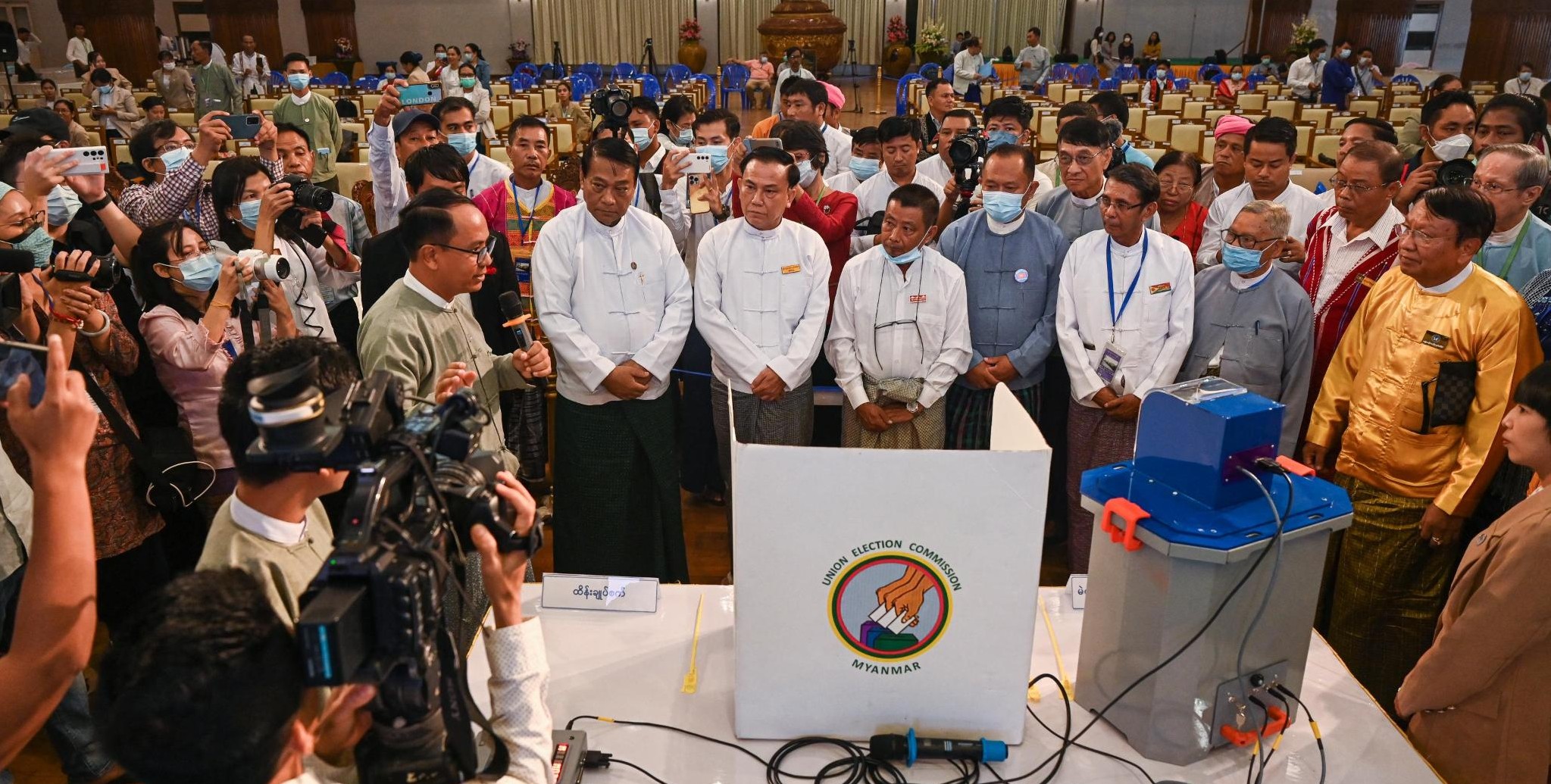

As Myanmar’s military presses ahead with tightly controlled elections scheduled to begin later this month, new prosecutions, sweeping restrictions, and mounting arrests underscore why critics see the process as a calculated effort to entrench power rather than restore democracy.
As Myanmar’s ruling military prepares to launch phased elections from December 28, the junta has confirmed it is seeking to prosecute more than 200 people under new laws designed to prevent any form of opposition, criticism, or protest related to the vote. Rights groups, international monitors, and opposition factions say the measures amount to a legalized campaign of repression, further discrediting polls already dismissed as neither free nor fair.
According to state media, junta home affairs minister Tun Tun Naung said on December 17 that authorities are pursuing legal action against 229 individuals accused of attempting to disrupt or undermine the election process. The prosecutions rely on legislation introduced in July that grants sweeping powers to criminalize acts deemed to obstruct or criticize the vote.
The announcement comes as Myanmar remains locked in widespread conflict following the military’s seizure of power in February 2021, which overturned a landslide election victory by Aung San Suu Kyi’s National League for Democracy. Nearly four years on, the country is fractured by civil war, with resistance forces controlling significant territory and rejecting the junta’s claims that elections can deliver national reconciliation. International observers hold much the same opinion, with many flatly calling the planned elections a sham.
A LEGAL FRAMEWORK BUILT TO SILENCE
The July legislation, officially framed as protecting the election from “obstruction, disruption and destruction,” has drawn sharp criticism for its breadth and severity. The law forbids public criticism of the vote, bans protests, and criminalizes acts ranging from damaging ballot papers to intimidating election workers. Penalties range from lengthy prison terms to sentences of up to 20 years for more serious offences.
Convictions are handed down in Myanmar’s opaque court system, which operates under military oversight and offers little in the way of transparency or due process. Human rights organizations say the law has already been applied with sweeping interpretation, allowing authorities to pursue cases over minimal online activity or symbolic acts of dissent.
In recent months, arrests have been made for social media posts questioning the legitimacy of the polls, including one case in which a man was sentenced in September to seven years in prison with hard labour after posting a comment critical of the election. Other cases have reportedly involved Facebook users accused of reacting to anti-election content, including through emojis.
State media has also reported the arrest of artists accused of undermining the vote. In October, a film director, an actor, and a comedian were detained for allegedly making “false and misleading criticism” of fellow artists who participated in a pro-election film. At least one of those arrested has since been prosecuted for physically confronting an election organizer.
OPPOSITION UNDER PRESSURE
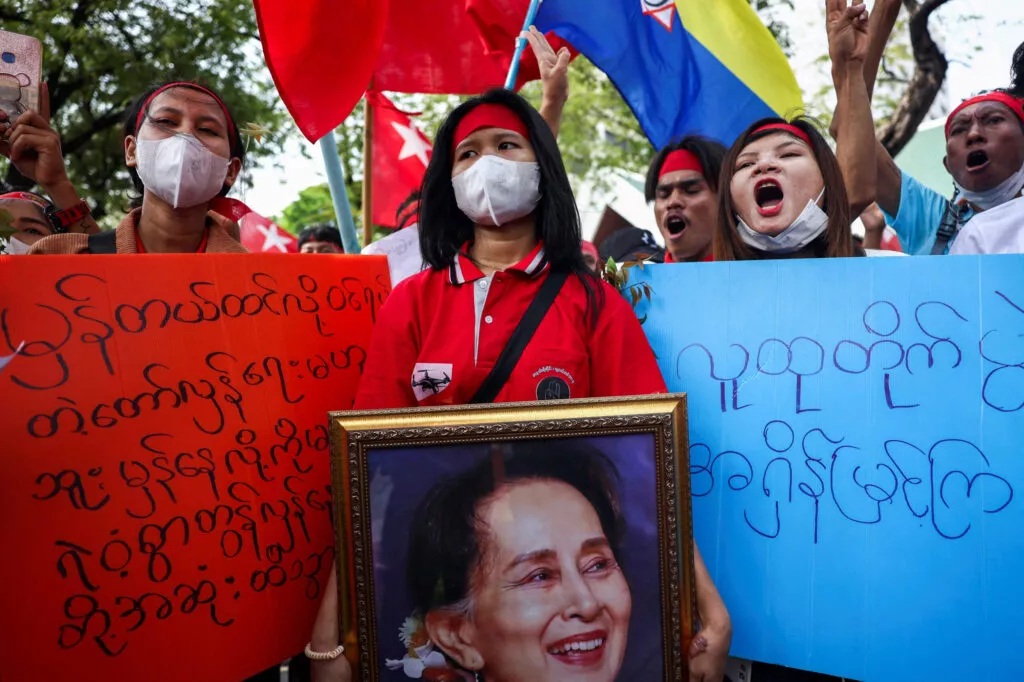
While the junta is intensifying its efforts to suppress dissent within areas it controls, opposition forces have made clear they will not recognize the elections and plan to block polling where possible. Resistance groups aligned with the parallel National Unity Government have dismissed the vote as a staged exercise designed to legitimize continued military rule.
The military, meanwhile, has launched fresh offensives in several regions in recent weeks, widely seen as an attempt to secure territory before polling begins. Analysts say the push reflects concern within the junta over its limited reach, with large parts of the country effectively beyond its administrative control.
Last week, authorities announced they were seeking to arrest 10 activists accused of staging an anti-election demonstration in Mandalay, where political pamphlets were thrown into the air in a brief public protest. The incident, while small, highlighted the level of security attention now focused on even symbolic acts of resistance.
INTERNATIONAL CONDEMNATION
International reaction to the planned elections has been consistently critical. The United Nations’ special rapporteur on human rights in Myanmar, Tom Andrews, has described the process as a “sham,” citing severe restrictions on free expression, mass political detentions, and the exclusion of opposition parties.
Western governments and election monitoring bodies have echoed those concerns, noting that conditions necessary for a credible vote simply do not exist. Myanmar’s media remains tightly controlled, independent political organizing is effectively banned, and thousands of opposition figures are either imprisoned, in hiding, or living in exile.
According to the Assistance Association for Political Prisoners, more than 22,000 people have been jailed on political grounds since the 2021 coup. Among them is Aung San Suu Kyi, the country’s most prominent democratic figure, who remains imprisoned following a series of closed-door trials widely condemned as politically motivated.
Her party, the National League for Democracy, was dissolved by the junta after it refused to re-register under new electoral laws that critics say were designed to eliminate meaningful competition. The military has continued to repeat unsubstantiated claims of voter fraud in the 2020 election as justification for its seizure of power.
AN ELECTION WITHOUT LEGITIMACY
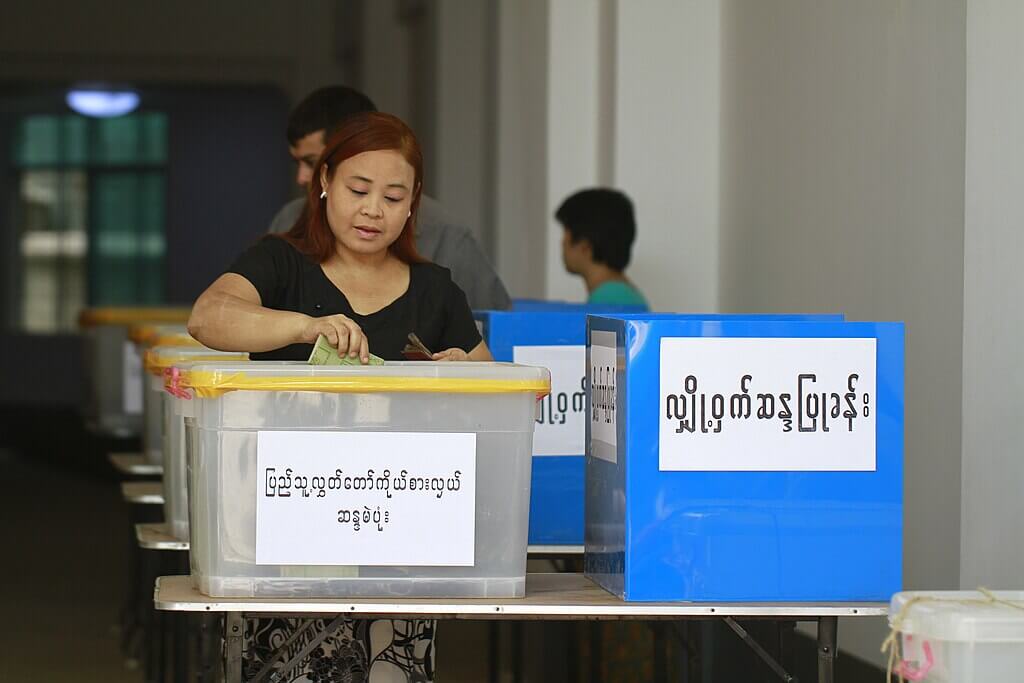
The junta has portrayed the upcoming elections as a step toward stability and reconciliation, arguing that a return to civilian-led governance is possible under military oversight. Results from the phased polling are expected by late January 2026, though it remains unclear how voting will be conducted in conflict-affected regions.
Observers note that even if polling proceeds as planned, the absence of major opposition groups, combined with legal restrictions on speech and assembly, leaves little room for genuine political choice. Rather than resolving Myanmar’s crisis, critics argue the election risks deepening divisions and prolonging instability. ASEAN, ever the toothless tiger, has been urged by the Human Rights Watch to “reject” the Myanmar junta’s plan to hold these sham elections.
For many citizens, the legal threats now surrounding the vote reinforce fears that participation, criticism, or even silence carries risk. With hundreds facing prosecution and thousands already behind bars, the election has become another front in the junta’s broader campaign to control political life.
As Myanmar approaches yet another year of living under military rule, the contrast between the junta’s claims of progress and the reality on the ground remains stark. For much of the international community, the coming vote is less a step forward than a reminder of how far the country has drifted from democratic governance.
Sources: CNA, AFP, United Nations, Assistance Association for Political Prisoners, East Asia Forum