


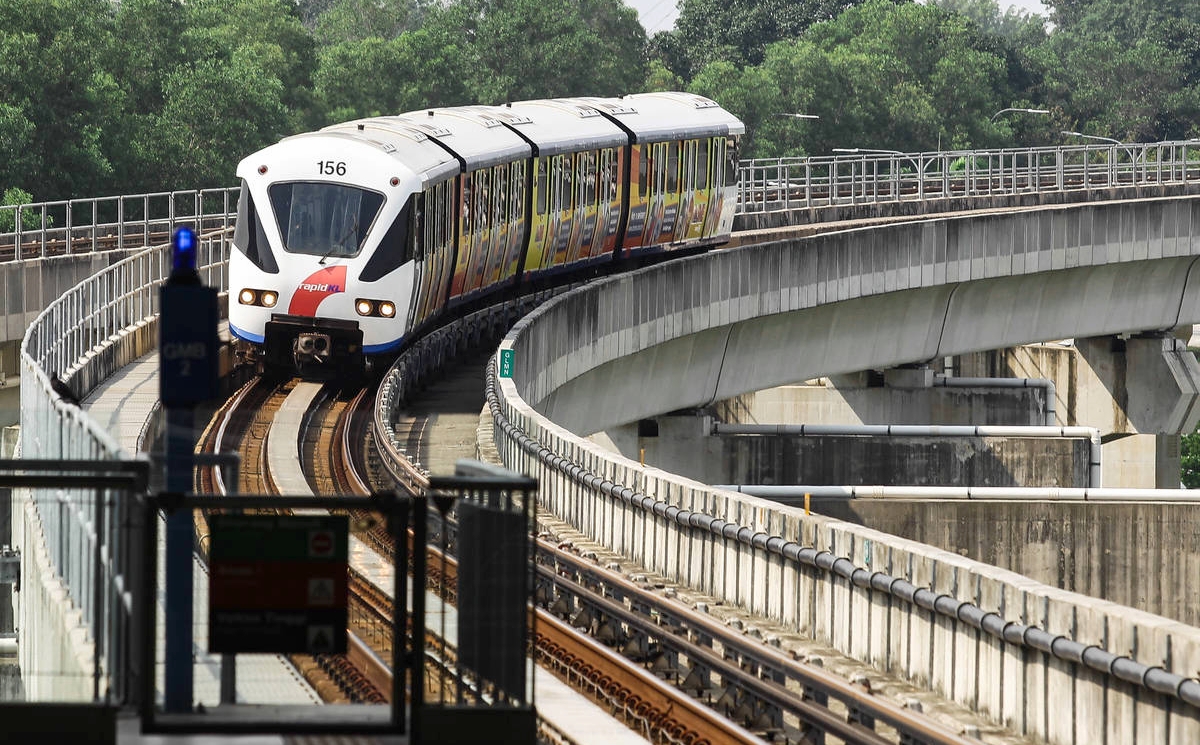
Repeated technical problems on one of Greater Kuala Lumpur’s busiest rail routes are increasingly testing commuters’ patience. While Prasarana has made progress across its wider network, the Kelana Jaya Line remains a conspicuous weak spot.
For many Greater Kuala Lumpur commuters, the Kelana Jaya LRT Line is an essential part of the daily routine. Stretching from Putra Heights to Gombak, it connects residential suburbs, commercial centres, major transport interchanges, and the heart of Kuala Lumpur. It is also one of the network’s busiest routes, carrying an estimated 290,000 passengers each day.
Unfortunately, it has also developed something of a reputation for technical hiccups, service delays, and the too-frequent – and very unwelcome – announcement advising passengers that their journey is about to become considerably longer.
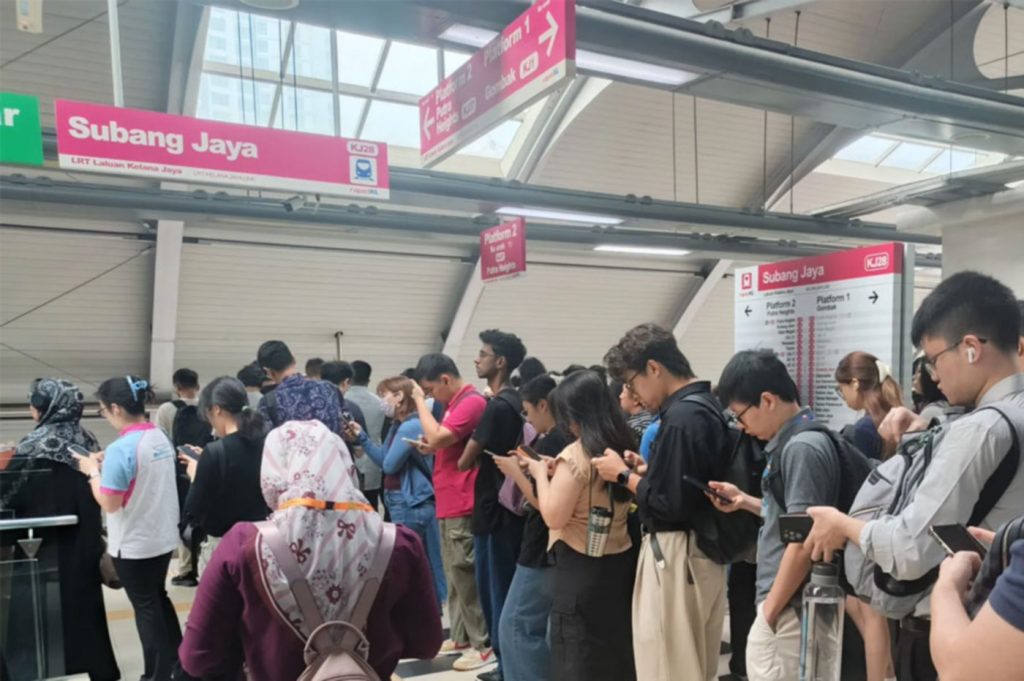
The latest incident, just this morning (November 26), saw a track power disruption between Subang Jaya and Lembah Subang affect four stations: Subang Jaya, Glenmarie, Ara Damansara, and Lembah Subang. Rapid KL introduced alternative train arrangements, with services from either end turning back at the affected stations, a shuttle train operating between them, and free shuttle buses running at intervals of 15 to 20 minutes.
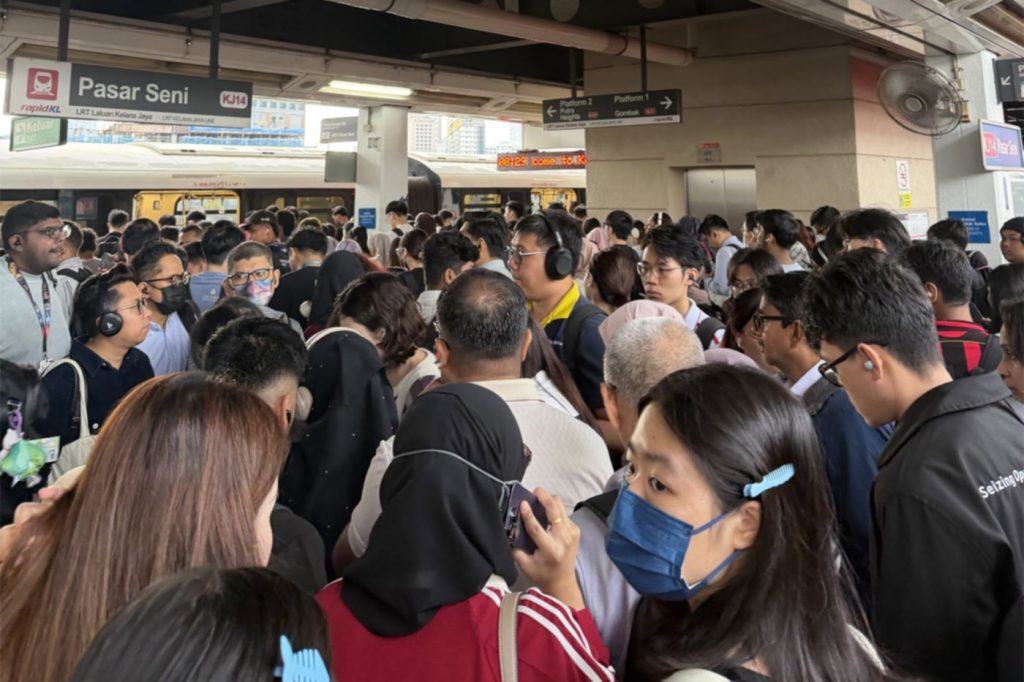
To say the least, it was a substantial inconvenience for anyone travelling through that section, particularly during the hectic morning commute. Passengers were warned to expect longer waits and slower journeys, with alternative routes via the Ampang/Sri Petaling, Kajang, and Putrajaya lines suggested where practical.
The real problem, though, is that today’s incident was hardly an isolated occurrence.
A LINE WITH A RELIABILITY PROBLEM
A look at incidents reported over the past several months reveals a recurring assortment of electrical, signalling, power supply, and rolling stock problems.
In February, a signalling fault temporarily halted services between Gombak and KLCC, with Rapid KL suspecting unstable power supply to the electronic systems controlling trains between Gombak and Ampang Park. August brought further trouble, including a power outage at Universiti station that left a train unable to operate, followed less than a week later by another suspected power supply problem at Putra Heights. The latter required trains to be driven manually, slowing services elsewhere on the line.
Then came September, which also proved to be eventful. A signalling fault at Ampang Park caused a train to stop with its doors misaligned with the platform screen doors, while another disruption involving signalling and communications near USJ 21 required manual operation between USJ 21 and Taipan. Earlier that month, an electrical incident involving a foreign object on the track near Jelatek also prompted inspections, although normal services continued.
In October, the saga continued, with power supply problems affecting the Jelatek and Setiawangsa stations. There was also the separate issue of a train withdrawn from service in July after one of its doors failed to close properly.
Individually, some of these incidents were actually resolved relatively quickly, and not all resulted in a suspension of services. Taken together, however, they paint a picture of a line that appears to be experiencing more than its fair share of technical difficulties.
The publicly reported figures bear this out. Transport Minister Anthony Loke reported in January that the Kelana Jaya Line recorded 16 disruptions in 2025, down from 26 the previous year. That was still considerably more than the Ampang Line’s four, the MRT Kajang Line’s six, and the Putrajaya Line’s two. In fact, it was more than all of them combined!
More concerning is the subsequent deterioration in reliability. In October, Prasarana acting president and group CEO Dr Prodyut Dutt acknowledged that the Kelana Jaya Line had experienced approximately 30% more incidents per kilometre during January to August 2026 than over the corresponding period in 2025. The Ampang Line and Monorail, by comparison, recorded improvements.
This is not simply commuter grumbling. The LRT operator itself has recognized and admitted that the line has a reliability problem.
OLD TRAINS, NEW INVESTMENT
So, what is going wrong? According to Prasarana, much of the trouble originates with the trains themselves. Around 90% of disruptions on the Kelana Jaya Line are attributed to rolling stock issues, with approximately two-thirds of those triggered by the automated Emergency Braking system.
The system is designed to stop a train when onboard sensors detect discrepancies in wheel-speed readings. Cable wear and track vibrations can affect those sensors, triggering emergency braking even when there is no immediate danger. The problem is also linked to the line’s Linear Induction Motor technology, which has been operating since the system opened in 1998.
The fleet comprises 74 trains across three generations, including 26 first-generation units that have been in service for more than 17 years. Prasarana says overhauling trains of this age would cost nearly 90% of the price of a new unit.
That fiscal reality brings commuters, fortunately, a longer-term plan. The operator has ordered 26 new train sets from Chinese manufacturer CRRC Corporation, at a cost exceeding RM1 billion. However, it’s not an immediate fix by any means. The first are not expected to arrive until March 2029, with the full fleet scheduled to be operational by 2031. In the meantime, Prasarana says it has introduced round-the-clock maintenance and engineering interventions to improve reliability, although shortages and lengthy lead times for critical spare parts remain a challenge.
Track replacement work is also being carried out in seven phases, extending through September 2027. This is necessary maintenance, but it means further planned changes to services on selected Sunday mornings.
There is no question that keeping a busy, ageing rail system running is a substantial undertaking, and the recent investment and maintenance initiatives are welcome. Nor should the occasional technical failure be taken as evidence that the entire network is failing.
Nevertheless, for the hundreds of thousands who depend on the Kelana Jaya Line on a regular basis, reliability is not an abstract performance indicator. It determines whether they arrive at work on time, make a connecting train, or spend an unexpected half-hour waiting on a platform and end up getting a scolding from their boss.
Prasarana has acknowledged the problem and outlined a plan to address it. The challenge now is to turn those commitments into a noticeably more dependable service, and unfortunately, it’s not anything that can be done overnight. Commuters have been reasonably patient, but they would surely welcome a period when catching the train becomes the least eventful part of their day.
Sources: Bernama; Malay Mail; SoyaCincau; paultan.org; New Straits Times.