



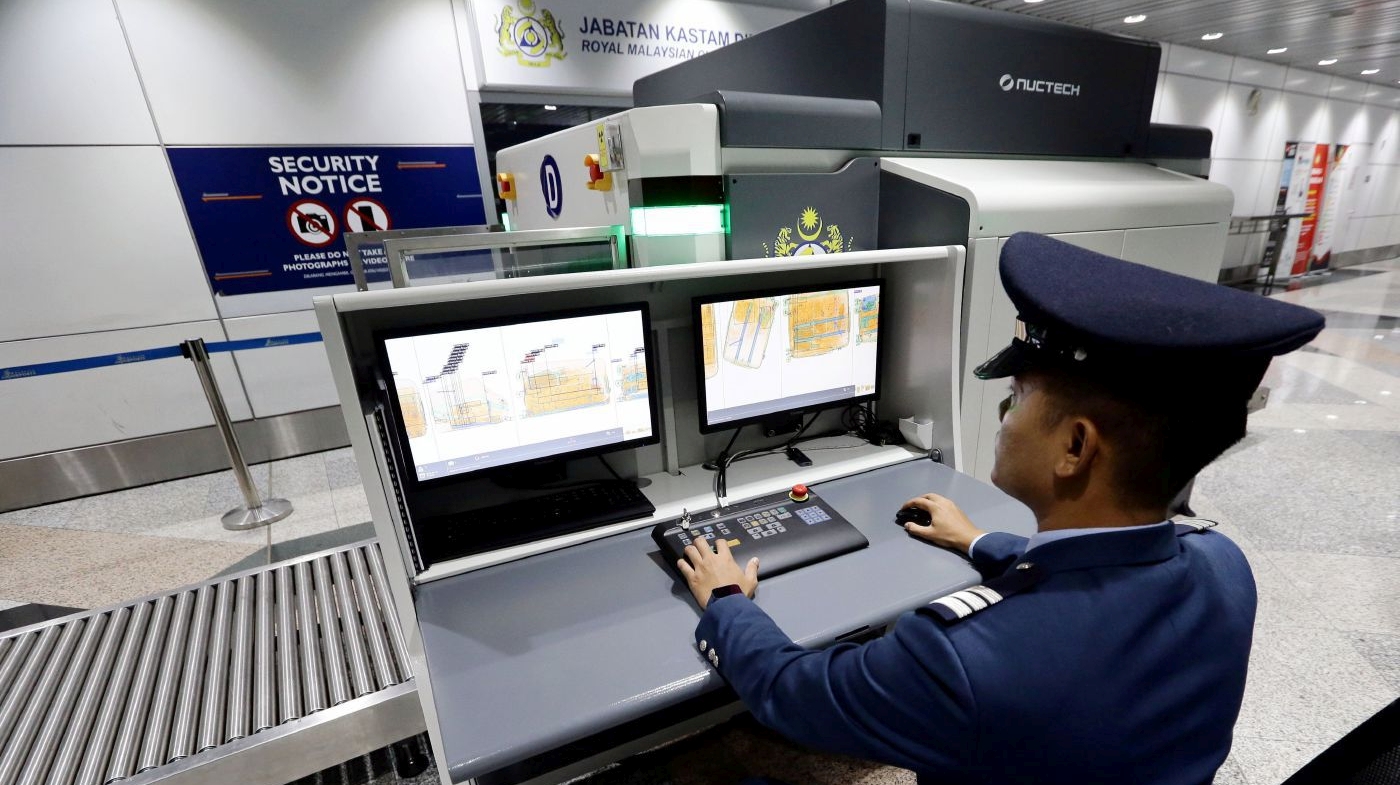
Malaysia’s airport screening systems are designed primarily to identify aviation security threats, not narcotics. However, following a Malaysian pilot’s arrest in Indonesia over alleged drug smuggling, the government is tightening screening procedures and strengthening security checks across the country’s entry points.
Malaysia’s baggage scanners, including those used at Kuala Lumpur International Airport (KLIA), are not equipped with technology specifically designed to detect illegal drugs, Home Minister Saifuddin Nasution Ismail has told Parliament.
In a written reply to Batang Sadong MP Rodiyah Sapiee, Saifuddin explained that existing scanners are intended primarily to identify explosives, weapons, and dangerous metal objects that could threaten aviation safety. Detecting narcotics relies more heavily on screening officers’ expertise, visual assessments, and risk profiling.
The disclosure follows the arrest of a Malaysian co-pilot in Jakarta in July over the alleged smuggling of a large quantity of ecstasy and methamphetamine. Indonesian authorities reportedly discovered the drugs in his luggage after he arrived from Kuala Lumpur, raising questions about how the consignment passed through airport security.
The Malaysian Border Control and Protection Agency (AKPS) subsequently confirmed that the pilot and his baggage had undergone the required screening at KLIA. The scanners, however, did not flag suspicious images that would have prompted additional inspection.
TIGHTER SCREENING AND SECURITY CHECKS
In response to concerns raised by the incident, the government has approved 17 recommendations jointly proposed by the Home Ministry and Transport Ministry to strengthen security at Malaysia’s international entry points.
The measures cover aviation security, national and border security, and physical security and protection. Implementation is being divided into three phases: short-term measures within six months, medium-term measures over six to 24 months, and longer-term improvements beyond 24 months.
Immediate measures include more targeted, risk-based screening of flights, passengers, crew, and baggage considered high-risk. Authorities are also tightening background checks and access controls for airline crew, ground-handling staff, vendors, contractors, and other personnel permitted to enter restricted airport areas.
Drug screening for aviation personnel is also being strengthened, with pre-employment, periodic, and random testing planned for pilots, cabin crew, and relevant airport staff. Increased police visibility at strategic locations forms part of the wider effort.
The government has also tightened vetting procedures for new and renewed airport passes through an enhanced electronic screening system, seeking to reduce the risk of staff abusing their access privileges. The stricter checks apply to personnel working in restricted areas, with security concerns extending beyond airport employees to contractors and service providers.
TECHNOLOGY AND HUMAN JUDGMENT
The latest announcement highlights the distinction between aviation security screening and dedicated narcotics detection. A scanner capable of identifying objects that could threaten aircraft safety does not necessarily have the specialized technology required to identify drugs concealed in baggage.
Authorities have previously indicated that Malaysia remains open to upgrading screening equipment as technology advances. Any improvements, however, will need to work alongside effective procedures, trained personnel, intelligence-sharing, and appropriate risk assessment.
The case has also prompted closer scrutiny of security arrangements involving airline crew, whose professional access and travel privileges can create additional vulnerabilities if abused. The challenge is to strengthen controls without compromising the access and efficiency of international travel. Observers say the government’s phased plan signals a broader review of airport security, with tighter personnel screening and risk-based inspections intended to complement existing equipment while longer-term improvements are developed.
Sources: The Straits Times; The Star; Bernama; and Free Malaysia Today.