

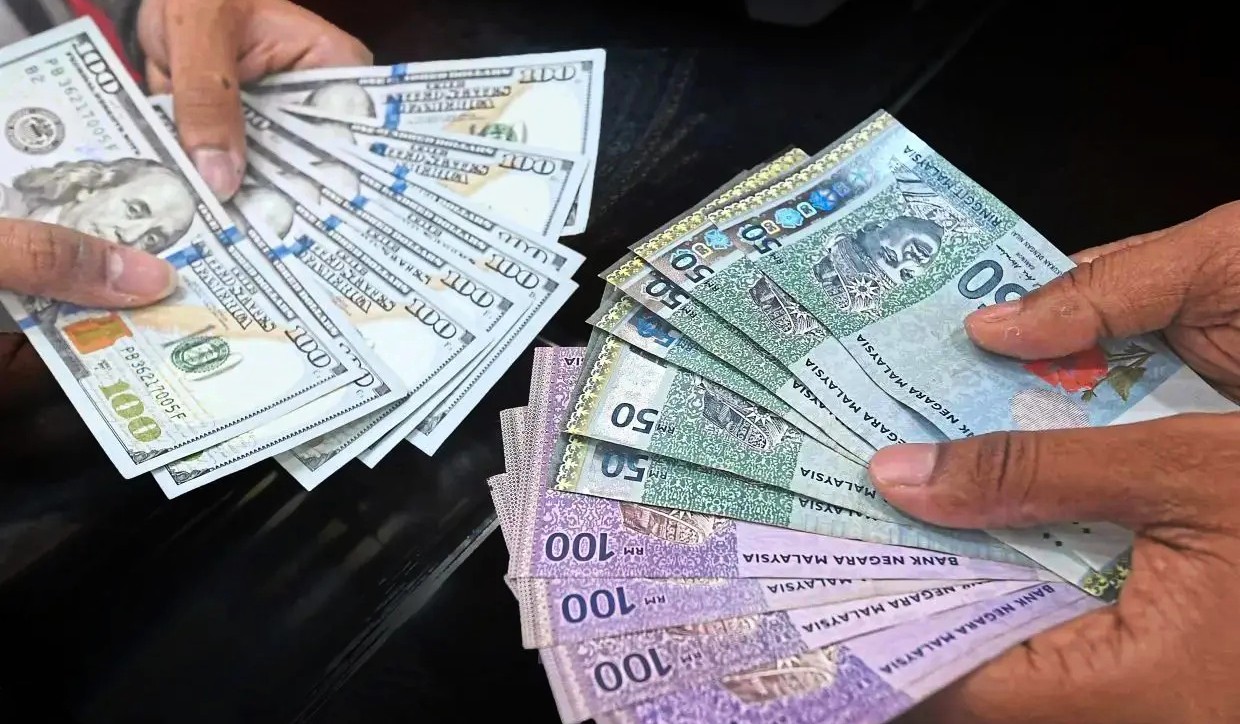
The Malaysian ringgit has risen to its strongest level in years against the U.S. dollar, reflecting improving market sentiment, supportive macro data and greater alignment with major trading-partner currencies.
Malaysia’s ringgit has strengthened to levels not seen in several years against the U.S. dollar, with US$1 now equivalent to around RM3.9565 as of Tuesday afternoon (January 27) — a notable shift from previous trading ranges. The move has attracted attention from businesses, exporters and currency markets across the region, as the ringgit’s resilience stands out amid global currency volatility.
The ringgit’s recent gains have been underpinned by a mix of domestic and external factors. Healthy economic data, including steady GDP growth in the latest quarters, a resilient labour market, and recovering trade volumes have bolstered confidence in Malaysia’s macro outlook. In addition, higher commodity prices — particularly for palm oil and energy — have supported demand for the ringgit in international trade settlement, given Malaysia’s status as a major exporter.
At the same time, global currency markets remain sensitive to shifts in U.S. monetary policy. Any sign of a less hawkish stance from the Federal Reserve can reduce upward pressure on the U.S. dollar, making currencies like the ringgit more attractive by comparison. Analysts have noted that, as the outlook for U.S. interest rates stabilizes, investors are recalibrating portfolios toward emerging-market currencies with stronger fundamentals.
For Malaysian businesses with export exposure, a stronger ringgit can be a double-edged sword. On one hand, it reduces the cost of imported inputs and helps contain inflationary pressures. On the other, it can compress export margins, particularly for manufacturers and commodity producers that price in U.S. dollars. Service sectors tied more closely to domestic demand — tourism, retail, and local services — may feel less direct impact.
Across Southeast Asia, the ringgit’s performance positions it more closely alongside peers such as the Thai baht and Indonesian rupiah, which have also shown periodic strength in recent sessions. Compared with safe-haven currencies like the U.S. dollar and Japanese yen, the ringgit’s stronger footing suggests that investors are willing to take on a degree of emerging-market exposure again, after a period of risk-aversion.
Importantly, the ringgit’s recovery brings Kuala Lumpur in line with many major airports’ pricing corridors, global corporate budgeting assumptions, and multinational financial planning models that had been built on weaker exchange-rate baselines. In practical terms, the current rate provides greater clarity for cost planning in sectors like aviation, construction and international education, where overseas revenue or expenses are denominated in foreign currencies.
That said, currency markets are inherently dynamic, and exchange rates can shift quickly in response to new data — whether it’s inflation figures, trade balances, or geopolitical developments. For now, though, the ringgit’s move closer to a four-to-one relationship with the U.S. dollar underscores growing investor confidence in Malaysia’s economy.
For individuals and travellers, the stronger ringgit offers immediate benefits: increased purchasing power abroad and more favourable terms for foreign spending. For companies engaged in cross-border contracts, it emphasizes the value of proactive hedging and currency risk strategies as part of financial planning.