


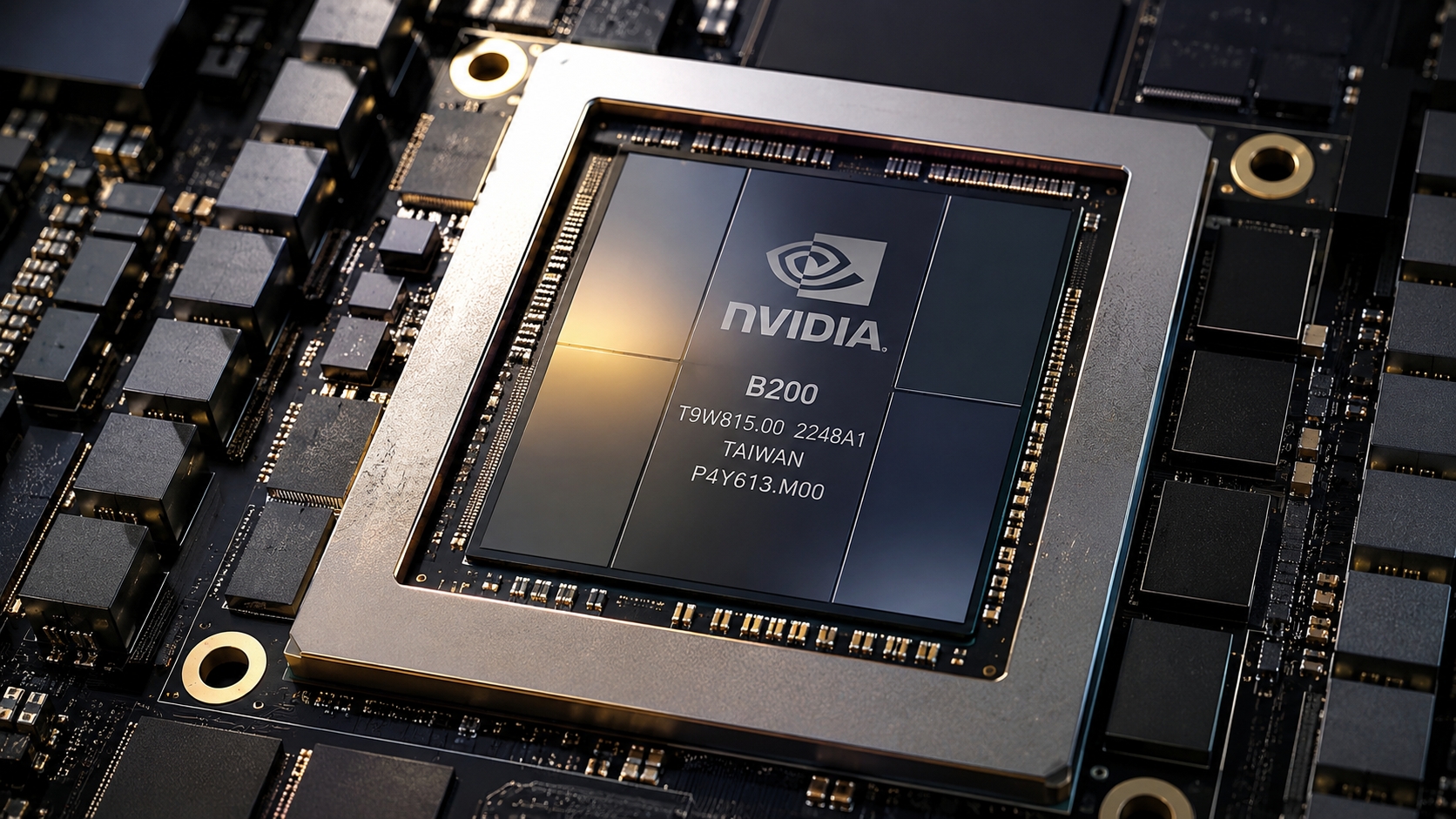
Washington’s latest export restrictions, introduced amid a widening investigation involving Nvidia partner Megaspeed, threaten to complicate the region’s ambitions to become a global AI hub. Malaysia has plenty at stake, with hundreds of billions of ringgit committed to data centre development and mounting questions now being asked about chip movements through the country.
Southeast Asia’s fast-growing data centre industry has quickly run into an unwelcome complication. The United States has tightened controls on advanced artificial intelligence (AI) chips and remote access to computing power, citing concerns that technology supplied to regional data centres could ultimately be diverted to China. Malaysia, Singapore, Indonesia, and Thailand are all directly affected.
The move comes amid a high-profile investigation involving Singapore-based cloud computing company Megaspeed International, which has attracted plenty of attention following the resignation of Nvidia co-founder Jensen Huang as CEO on November 12. Reports of Huang’s personal relationships, including one involving former Megaspeed executive Alice Huang, have added an extraordinary dimension to an already sensitive investigation into alleged semiconductor diversion.
The personal allegations, however, should not be confused with established evidence of espionage. US authorities have investigated Megaspeed since 2024 over potential export-control violations, while a number of reports have raised questions about Alice Huang’s possible links to Chinese intelligence. Reuters has stressed that it has been unable to verify the espionage allegations. Beijing has rejected them, and Singaporean police found insufficient evidence that Alice Huang had committed offences relating to suspected false declarations, although they warned her for providing inaccurate information about her role in the company.
The US Commerce and Justice Departments confirmed on November 16 that their investigation began after officials identified suspicious activity involving potential semiconductor diversion. Investigators requested sales records from Nvidia in May 2025, and the company placed Megaspeed on its ‘no sell’ list the following month. US and Singaporean officials subsequently conducted an on-site inspection at Megaspeed in June 2025, interviewing Alice Huang, who was then the company’s chief executive. The Justice Department later took the lead in the criminal investigation.

WASHINGTON TIGHTENS THE NET
Against this backdrop, the US Bureau of Industry and Security (BIS), part of the Department of Commerce, introduced an interim final rule on November 19, titled Addressing Remote Access to Advanced Semiconductors. It imposes new licensing requirements on exports, re-exports, and in-country transfers of specified advanced semiconductors to Malaysia, Singapore, Indonesia, Thailand, and Brazil.
The rule also targets overseas data centres that provide substantial computing capacity remotely to companies headquartered in countries of concern, including China and Macau. In effect, Washington wants greater oversight not only of where its most advanced chips are shipped, but also of who ultimately gets to use the computing power they provide.
There are exemptions, most notably for qualifying shipments destined for companies headquartered in the United States, or whose ultimate parent company is US-based, provided exporters meet specified reporting requirements. The rule also excludes certain commercial recommender systems, such as those used by online retailers and social media platforms, from the remote-access licensing requirement.
It’s important to note that these new measures do not amount to a blanket prohibition on data centre development or the use of AI technology across the five countries. Rather, they introduce another layer of licensing and due diligence around certain highly advanced chips and the provision of high-volume computing capacity to entities in restricted jurisdictions. For operators, however, that additional scrutiny could mean more paperwork, longer approval processes, and uncertainty over future customers and expansion plans.
The timing is fairly significant. Southeast Asia has become one of the world’s most attractive destinations for data centre investment, thanks to its growing digital economies, improving connectivity, and proximity to major Asian markets. Malaysia and Singapore, in particular, have been positioning themselves as important regional hubs, while Indonesia and Thailand are also seeking to attract investment.
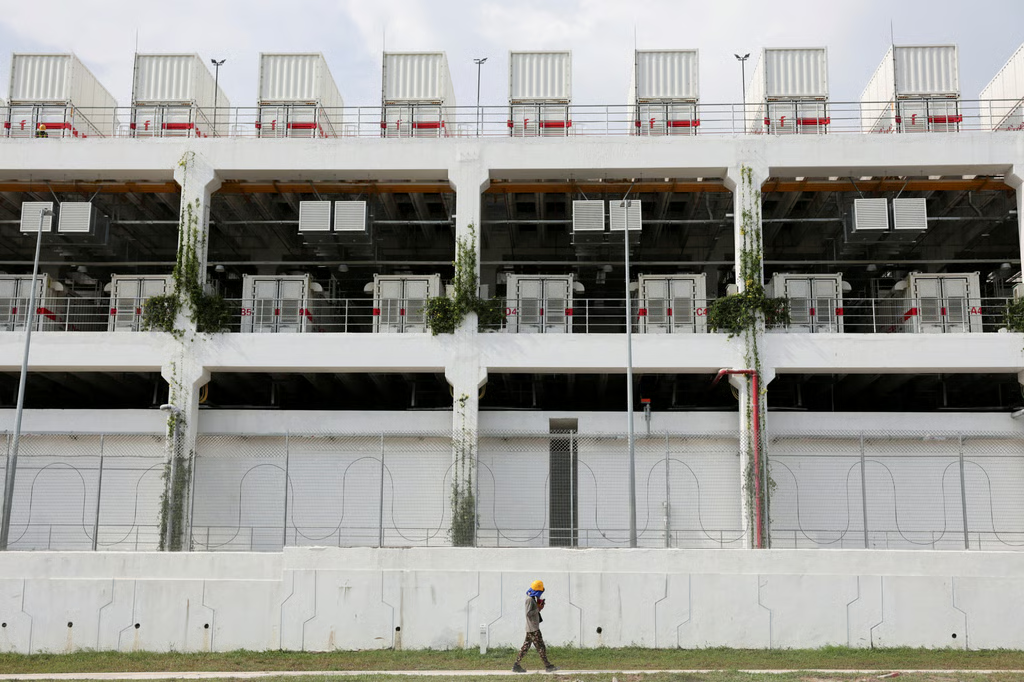
Adib Zalkapli, managing director of geopolitical advisory firm Viewfinder Global Affairs, told the South China Morning Post, “We can expect investments in data centres to slow down.” He added that the vulnerabilities in the export control system were already widely understood, making tighter oversight something that was really just a matter of time.
The potential consequences extend beyond the construction of data centres themselves. These facilities support cloud computing, AI development, financial services, e-commerce, and a growing range of business operations. Restrictions that make advanced computing capacity harder or more expensive to access could affect the wider adoption of AI and the productivity gains governments hope to secure from it.
MALAYSIA HAS PLENTY AT STAKE
For Malaysia, the implications are substantial, but the broader impact is not yet known. The country has become a major destination for data centre investment, with Johor and the Greater Kuala Lumpur region attracting particularly strong interest from international operators. According to the Malaysian Investment Development Authority (MIDA), data-centre-related investments reached RM385.7 billion between 2021 and the first half of 2026. Major operators with an established or expanding presence include Amazon Web Services, Microsoft, Google, Bridge Data Centres, DayOne, AirTrunk, and Vantage Data Centres.
More recently, MIDA reported that data centre and cloud computing projects accounted for RM123.5 billion in approved investments across 86 projects in the first nine months of 2026 alone. The sector represented 35.2% of all approved investments during the period. These figures underline just how much is riding on Malaysia’s ability to maintain investor confidence while meeting increasingly demanding international compliance requirements.
The Nvidia-Megaspeed saga has already brought the issue into sharper focus locally. The company’s Malaysian affiliate, Speedmatrix Sdn Bhd, operates as a tenant at data centres in the country, bringing in its own servers and AI chips. Malaysia’s Ministry of Investment, Trade and Industry (MITI) has confirmed that it is working with the Royal Malaysian Customs Department to establish whether any chips imported by the company were subsequently re-exported and, if so, whether those transactions complied with Malaysian law.
In a statement on November 13, MITI was unequivocal that it had never cleared Megaspeed or Speedmatrix of wrongdoing. It also clarified an important distinction in Malaysia’s own rules: importing AI chips for domestic operations does not currently require a permit or licence. However, since July 2025, anyone seeking to export, re-export, transship, or transit high-performance US AI chips from or through Malaysia must first obtain a permit under the Strategic Trade Act 2010. The statement noted that providing false information to Customs is a serious offence under the Customs Act 1967.
MITI added that Malaysia would conduct its own checks independently and was working with authorities in Singapore and the US. It also made clear that, while Malaysia does not enforce unilateral export controls imposed by other countries, companies operating here are expected to take those controls into account in their international business. The government said that it welcomes data centre investment, but will not allow the country to become a route for circumventing export restrictions.
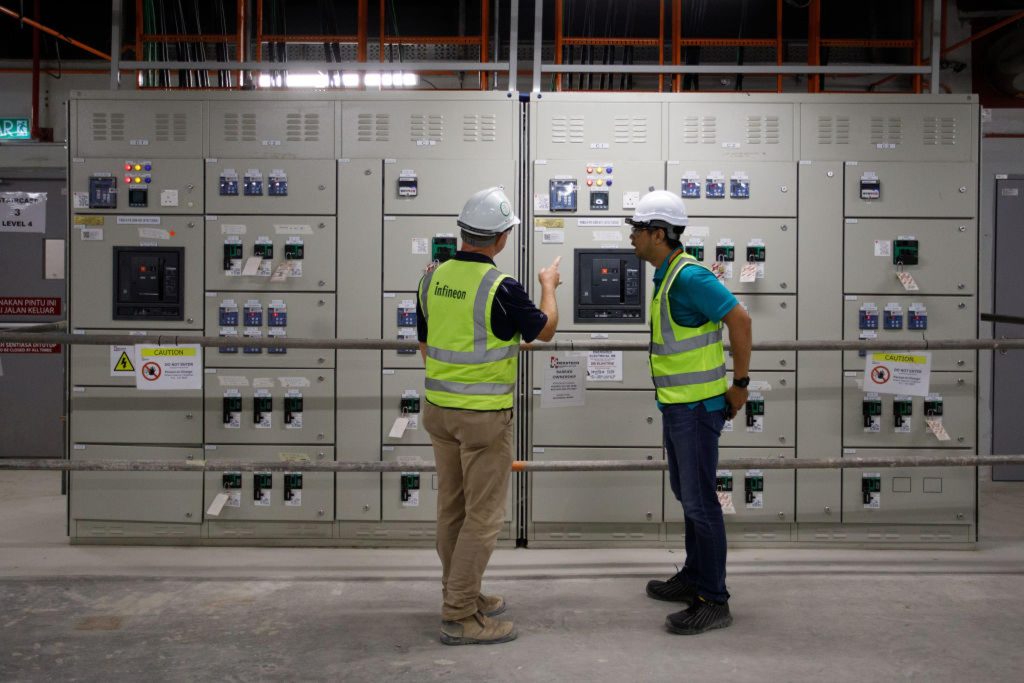
Prime Minister Anwar Ibrahim said on November 13 that there was, at that point, no indication that AI chips linked to the Nvidia-Megaspeed case had been exported from Malaysia. That is an important qualification: the ministry’s checks are ongoing, and no finding of illegal re-export from Malaysia has been established.
The potential commercial impact is not limited to companies with Chinese ownership or customers. Cassey Lee of the ISEAS-Yusof Ishak Institute raised a practical question in comments to the SCMP: “What if you’re a Chinese e-commerce company and based in Southeast Asia? AI is also used for e-commerce. How do you disentangle that?” The concern is that businesses with legitimate operations could face substantial additional scrutiny simply because of their ownership structures, customers, or links to companies in restricted markets.
A NEW TEST FOR THE REGION’S AI AMBITIONS
The US measures could also alter the competitive balance between data centre operators. Large US-based hyperscalers, including Amazon Web Services and Microsoft, may be better placed to meet the requirements and qualify for the stated exemptions. Operators serving Chinese clients, or independent providers leasing out advanced computing capacity, could face greater uncertainty over licensing, utilisation, and expansion.
That could easily have an impact in Malaysia, which has attracted a diverse mix of international investors. The government has signalled that it wants to move beyond hosting the physical infrastructure and become a more significant participant in the digital economy, capturing higher-value work, developing local expertise, and creating opportunities for Malaysian companies.
James Lambert of Oxford Economics warned that more difficult or expensive access to advanced computing could slow the wider adoption of AI. “This will slow the diffusion of AI across the wider economy, potentially affecting the region’s ability to capture those productivity gains,” he said.
There is also a geopolitical dimension. Governments across Southeast Asia have been keen to secure access to advanced technology while maintaining strong commercial relationships with both the US and China. The latest restrictions are another reminder that those ambitions can be complicated by Washington’s strategic priorities, regardless of the investment agreements or trade arrangements countries may have negotiated.
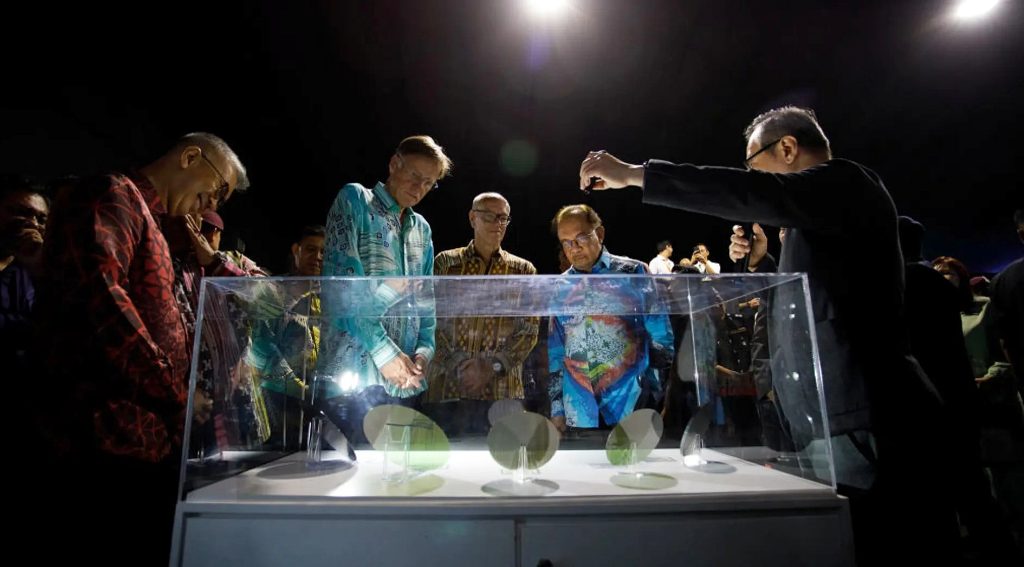
For Malaysia, the immediate task is to establish the facts surrounding the Megaspeed-linked chip movements, demonstrate that its export-control procedures are being enforced, and provide clarity for legitimate investors. The longer-term challenge is to ensure that tighter controls do not undermine the country’s appeal as a regional technology hub.
To be clear, the data centre boom is not necessarily over, and the new rules do not shut the door on investment. But the days when Southeast Asia could promote itself as a convenient, relatively uncomplicated location for AI infrastructure are looking increasingly numbered. In a business where access to the world’s most powerful chips is everything, regulatory certainty and stability is quickly becoming almost as valuable as the hardware itself.
Sources: South China Morning Post; Reuters; US Department of Justice; US Federal Register; Malaysia Ministry of Investment, Trade and Industry (MITI); Malaysian Investment Development Authority (MIDA); Bernama.