


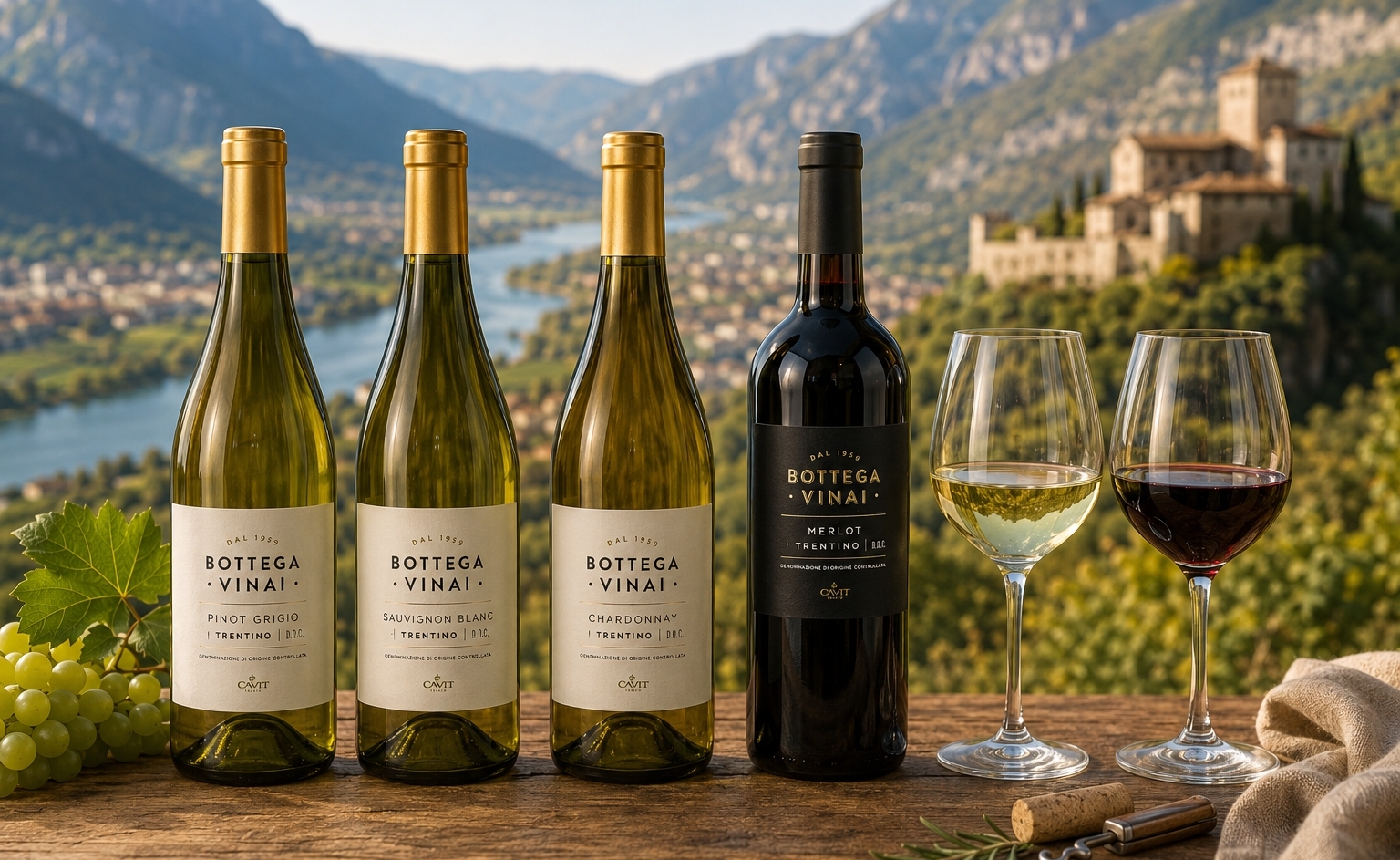
A tasting of four Bottega Vinai wines from Trentino opens the door to a fascinating corner of northern Italy, where wine, geography, language, and centuries of political history remain closely intertwined.
What was meant to be a lazy Sunday afternoon sipping some inviting Italian wines turned out to be a lesson in geography, geopolitics, and history. One of the things that fascinates us about wine is how it opens the door to a whole range of new possibilities and ideas.
Italian wines from Tuscany to Piedmont, Sicily, and Puglia are commonly seen on wine store shelves, but those from Trentino have mostly been tucked away on the bottom shelf, hidden in the corner gathering cobwebs. Perhaps this is because of the confusion of having Trentino, Alto Adige and Südtirol on their labels. While easing the cork from a bottle of Bottega Vinai Pinot Grigio, we knew a crisp, fresh, aromatic, and fruity Italian wine awaited.
But as Alto Adige and Südtirol entered the discussion, our fingers were soon put to good use, asking Google about their association with the distinctly Italian destination of Trentino. The umlaut over the letter ‘u’ in Südtirol suggested German, so what was the association?
On a modern map, Trentino is in Italy, but apparently, until 1919 it was part of German-speaking Austria. Trentino-Alto Adige/Südtirol occupies a unique position in northern Italy, where Italian, German and Ladin (yes, Ladin, not Latin, and a distinct Romance ethno-linguistic group from northern Italy) cultures coexist in the Alps and the Dolomites. This unusual political arrangement is the product of 20th-century turbulence, when the international border was redrawn across a region whose linguistic and cultural divisions did not neatly follow national boundaries.
For centuries, the region formed part of the County of Tyrol and, from 1363, was under Habsburg rule (present-day Austria). Trentino was predominantly Italian-speaking, while the lands now known as South Tyrol (‘sud’ in Südtirol means ‘south’), around Bolzano and extending north towards the Brenner Pass, were predominantly German-speaking. It is important as it is on a strategic trade route between northern and southern Europe.
The decisive border change came with the First World War. In 1915, Italy entered the war against Austria-Hungary, encouraged by the secret Treaty of London, which promised Italy territory including Trentino and South Tyrol. When the Austro-Hungarian Empire collapsed at the end of the war, Italy claimed the territory. In 1919, the Treaty of Saint-Germain formally awarded Trentino and South Tyrol to Italy.
Under Mussolini’s fascist reign, South Tyrol was Italianized; the German language was suppressed, place names were changed, and immigration for Italians from other parts of the country was encouraged.
However, after the Second World War, Austria pressed for greater protection of South Tyrol’s German-speaking population. The 1946 De Gasperi-Gruber Agreement between the two neighbours established the principle of cultural and linguistic protection and greater autonomy. Bolzano/South Tyrol and Trento were granted some autonomy with extensive self-government. Today, Trentino-Alto Adige/Südtirol remains an Italian region, but with two autonomous provinces. South Tyrol officially recognizes German and Italian, with Ladin also protected, making the region one of Europe’s fascinating geographic anomalies.
While the politicians dealt with all things political, the region’s winemakers continued what they had been doing for centuries. This cultural melting pot ensures the region’s uniqueness. Polenta and pasta are commonplace, but so are dumplings like strangolapreti (comprising bread and spinach), rustic sausages, and Wiener schnitzel.
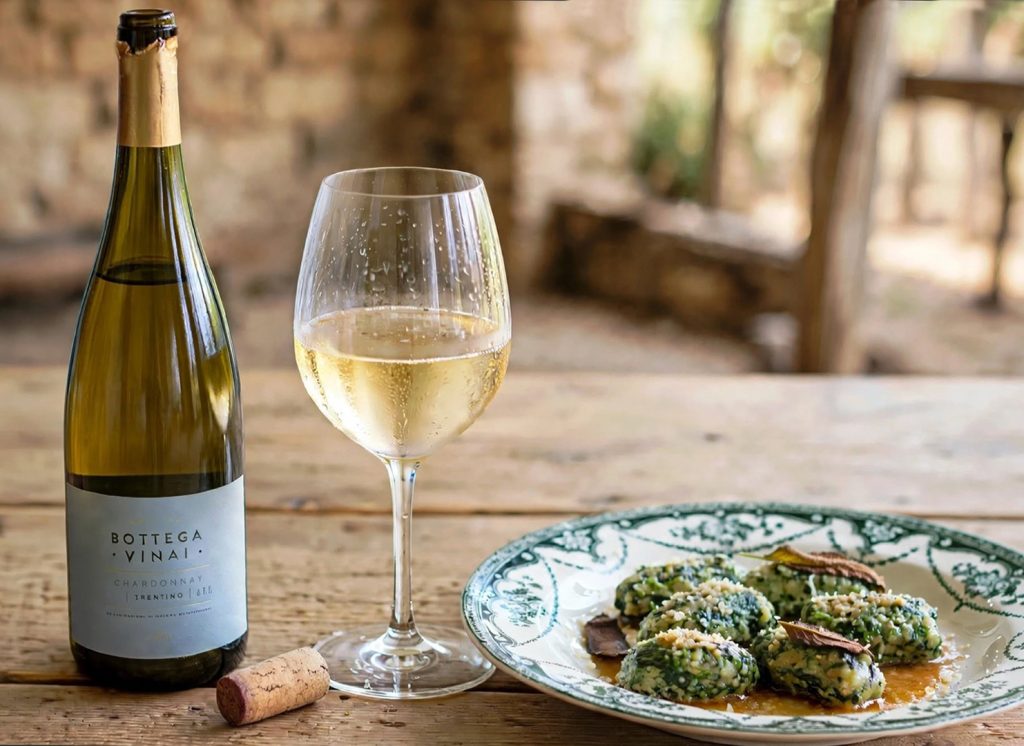
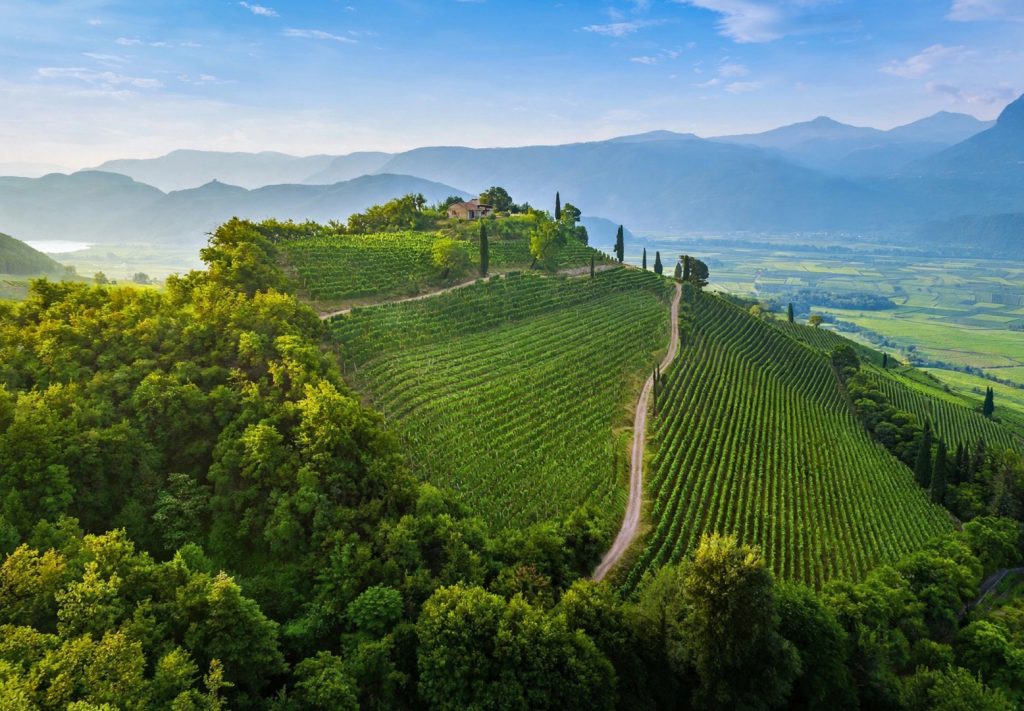
Trentino is almost always mentioned alongside Alto Adige (the upper reaches of the Adige River). From a wine perspective, the two parts of the region are quite different. Some claim the wines of Alto Adige have an alpine purity, while Trentino, in the region’s south, is more Italian in the way it goes about things, with its wines a little softer and less mineralic.
If you enjoy unravelling geopolitical conundrums over a glass of wine, you can also contemplate Ticino, the Italian-speaking part of Switzerland, where locals enjoy nothing more than sipping the local Merlots produced there. However, you can also just enjoy the wine without the associating deep-dive discussions, as well.
We sampled four wines from Bottega Vinai and found they tick several boxes: flavoursome wines; a catalyst for a lively geopolitical debate on one hand, and an excellent way to extend one’s wine knowledge and appreciation on the other. They all originate from the Trentino DOC (Denominazione di Origine Controllata; the Italian equivalent of the French Appellation d’Origine Contrôlée). There is another geography lesson in seeking out these wines, as they are mostly available in selected restaurants in Kuala Lumpur. Seek them out at restaurants like Bacio, Dolce Vita, Portofino, and one of our all-time favourites, Psychotic Operator in Taman Paramount.
Bottega Vinai Pinot Grigio
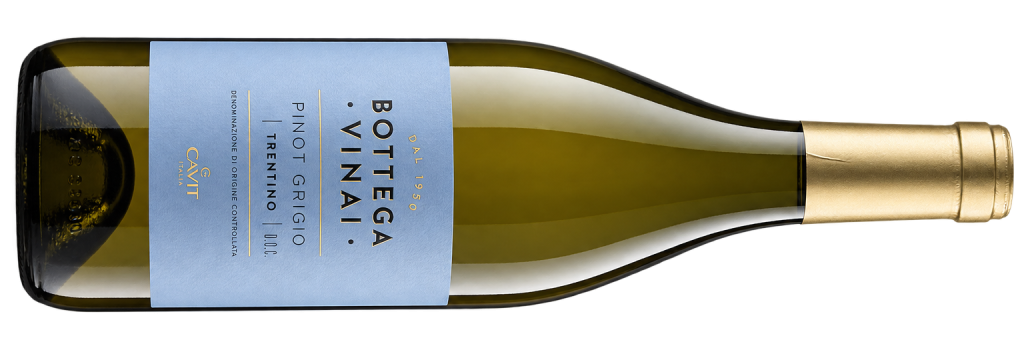
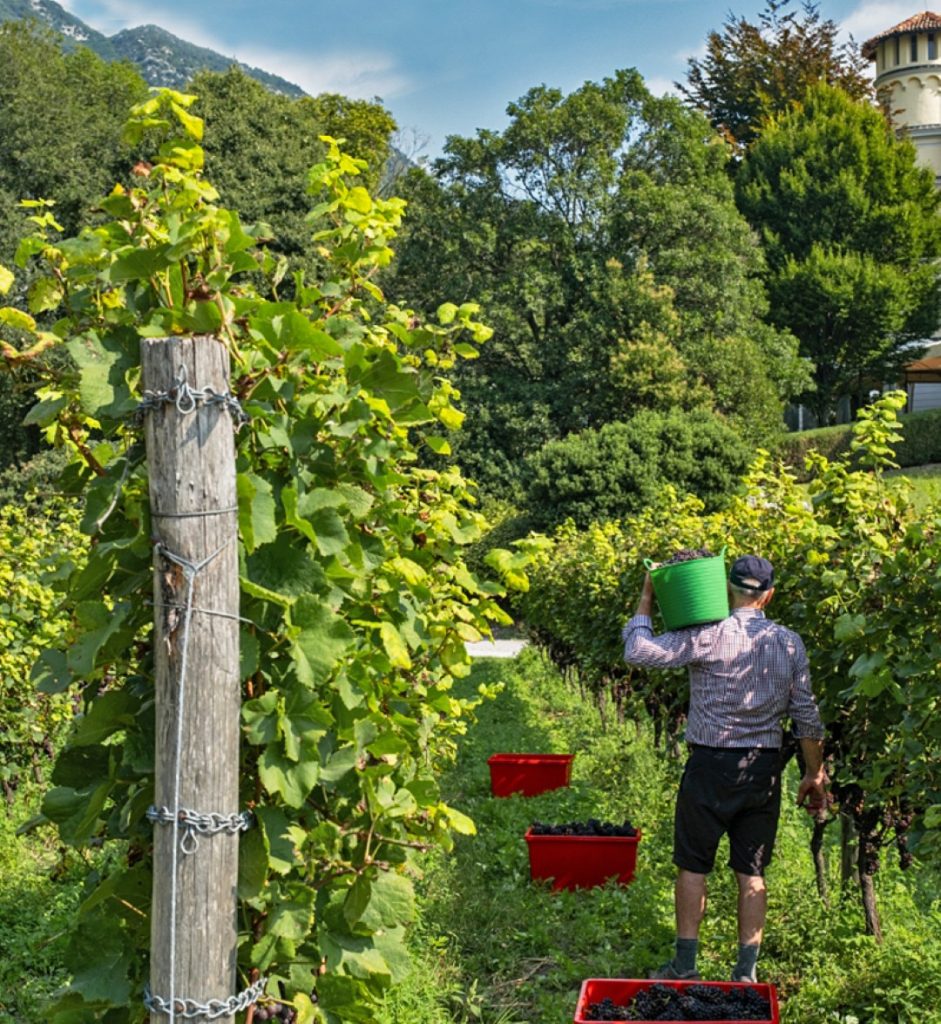
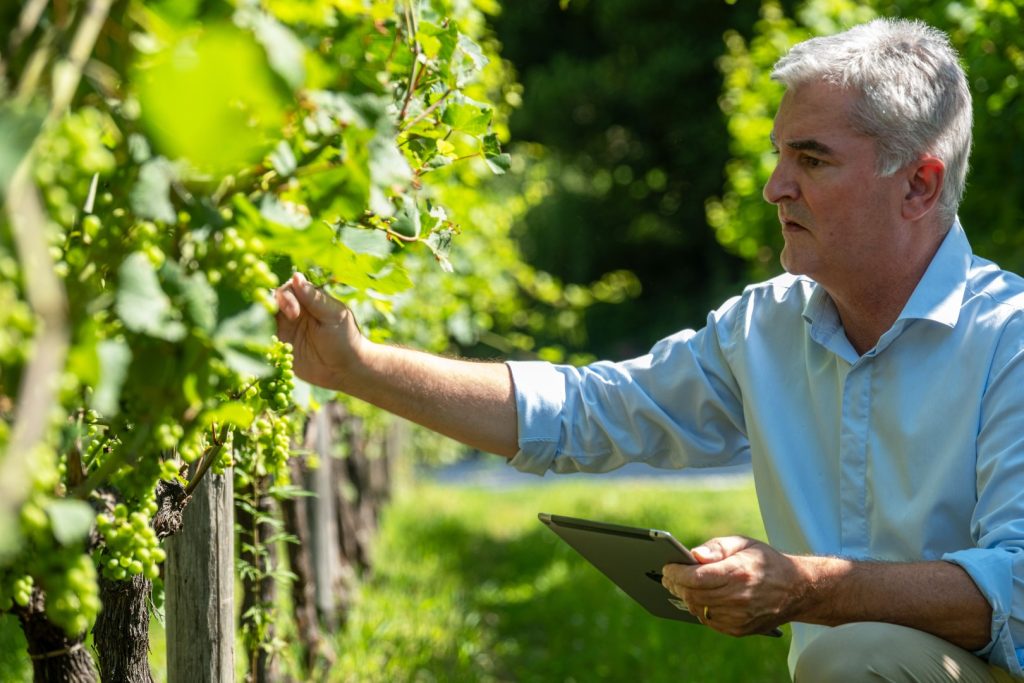
As any winemaker will tell you, great wines are nurtured in the vineyard. Pinot Grigio thrives in north-east Italy but shows best on the cooler slopes of Trentino. These Trentino vineyards include some of Italy’s finest grape-growing sites, and bunches are hand-selected by Bottega Vinai’s winemakers to produce wines of uncompromising quality and regional character. Hailing from the well-respected Cavit stable of wines, Bottega Vinai’s grapes are grown in prime pockets of high-altitude sites across Trentino, and only 2% of the fruit makes the cut for Bottega Vinai. This pale, straw-coloured wine has an intense floral nose and is fresh, dry, and flavourful on the palate. Pinot Grigio is ideal as a pre-dinner aperitivo or paired with veal, pasta, seafood, and pizza. Pinot Grigio also complements Asian cuisines such as Vietnamese, Chinese (dim sum, for example), and most lightly spiced chicken dishes.
Bottega Vinai Merlot
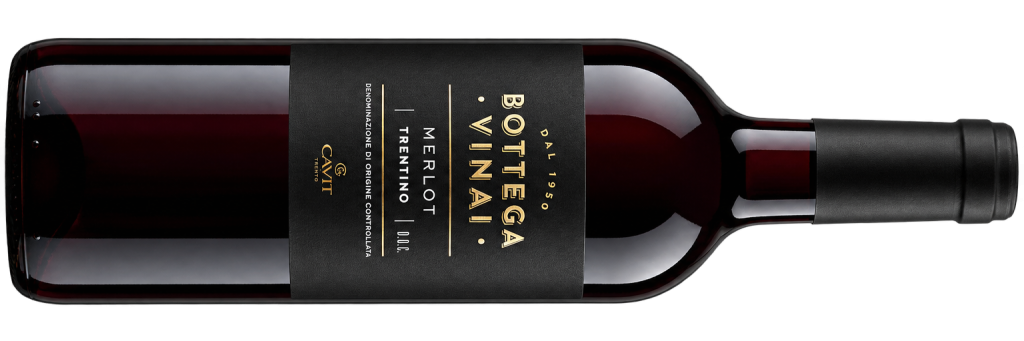
The fruit for this wine is sourced from the best exposed hills in the Vallagarina Valley south of Trento. The vineyards in the valley are located on alluvial fans formed by the accumulated sediment flowing from ancient mountain streams and feature well-structured, easy-draining limestone soils with good clay content. After crushing, the juice is fermented with the skins for approximately two weeks in stainless steel vats. The wine is then matured in oak barriques for 15 months. This ageing in oak produces wine with an intense cherry colour, a complex bouquet, and highly concentrated plum and raspberry flavours. These harmonize with the elegant vanillin notes from the oak-barrel ageing. It has a full-bodied, generous flavour with great harmony and a lingering aftertaste, supported by sweet tannins imparted during barrel ageing. Naturally, it pairs well with red meat such as juicy beef cheek or a fine cut of beef, appropriately grilled and served with premium truffled salt.
Bottega Vinai Sauvignon Blanc
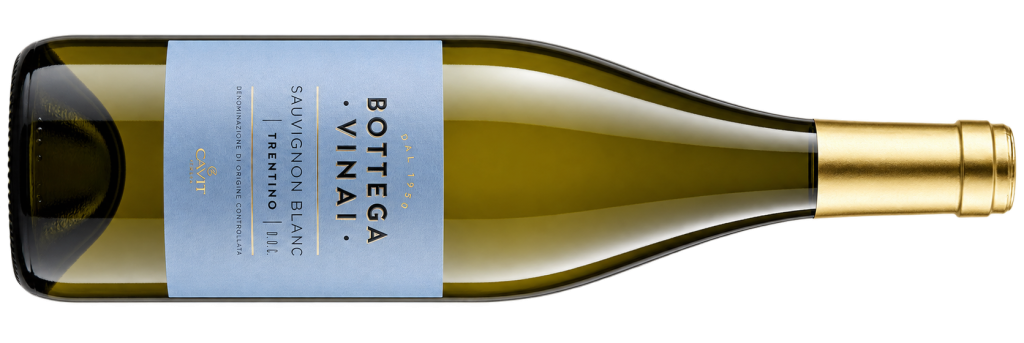
Grapes for this wine are sourced in the hills above the Valle dei Laghi to the north of Lake Garda, as well as the Valle dell’Adige. The former has a sub-Mediterranean climate of mild temperatures both in summer and winter, while the latter has a continental climate. The grapes from both are processed to produce an aromatic wine of pale straw-yellow colour and an intense, aromatic bouquet. As such, it too makes a fine aperitivo on its own, but like most Italian wines, this one has been made to be consumed with food. Unlike many Sauvignon Blancs from New World wine regions, this Italian style is more restrained, with citrus notes on the nose. It is a dry wine with refreshing acidity to ensure it pairs well with many cuisines. Seafood is a natural pairing, with dishes such as grilled octopus, sea salt, and a little squeezed fresh lemon.
Bottega Vinai Chardonnay
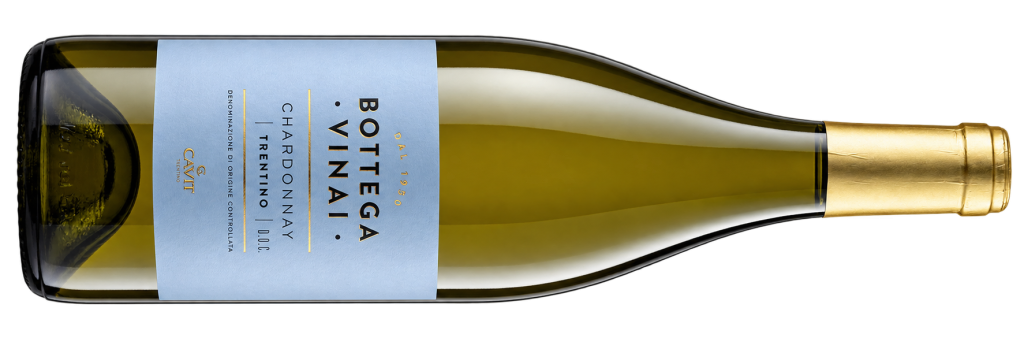
Chardonnay vines flourish in the hills of Santa Margherita near Ala in the Vallagarina and Valle dei Laghi Valleys to the north of Lake Garda. The grape juice and skins are chilled to low temperatures and remain in contact for about five hours to enable high-quality aromas to be extracted. Processing of the grapes then continues with soft pressing of the pulp and skins to extract the juice, which is then fermented, some in oak barriques and the rest in stainless steel (30% in French oak barriques and 70% in steel). After approximately six months in contact with the yeasts, the wine is bottled cold-sterile and left to mature in the bottle before it goes to market. It shows a straw-yellow colour with hints of green. The bouquet is persistent with notes of apple, apricot, and pineapple. The barrique ageing imparts a slight hint of vanilla and even pastry on the nose. The result is a full-bodied wine with a well-rounded palate. It is beautifully balanced with a rich, persistent aftertaste. Enjoy this Chardonnay with dumplings, fried seafood, and pasta dishes – particularly those with carbonara or alfredo sauce.