



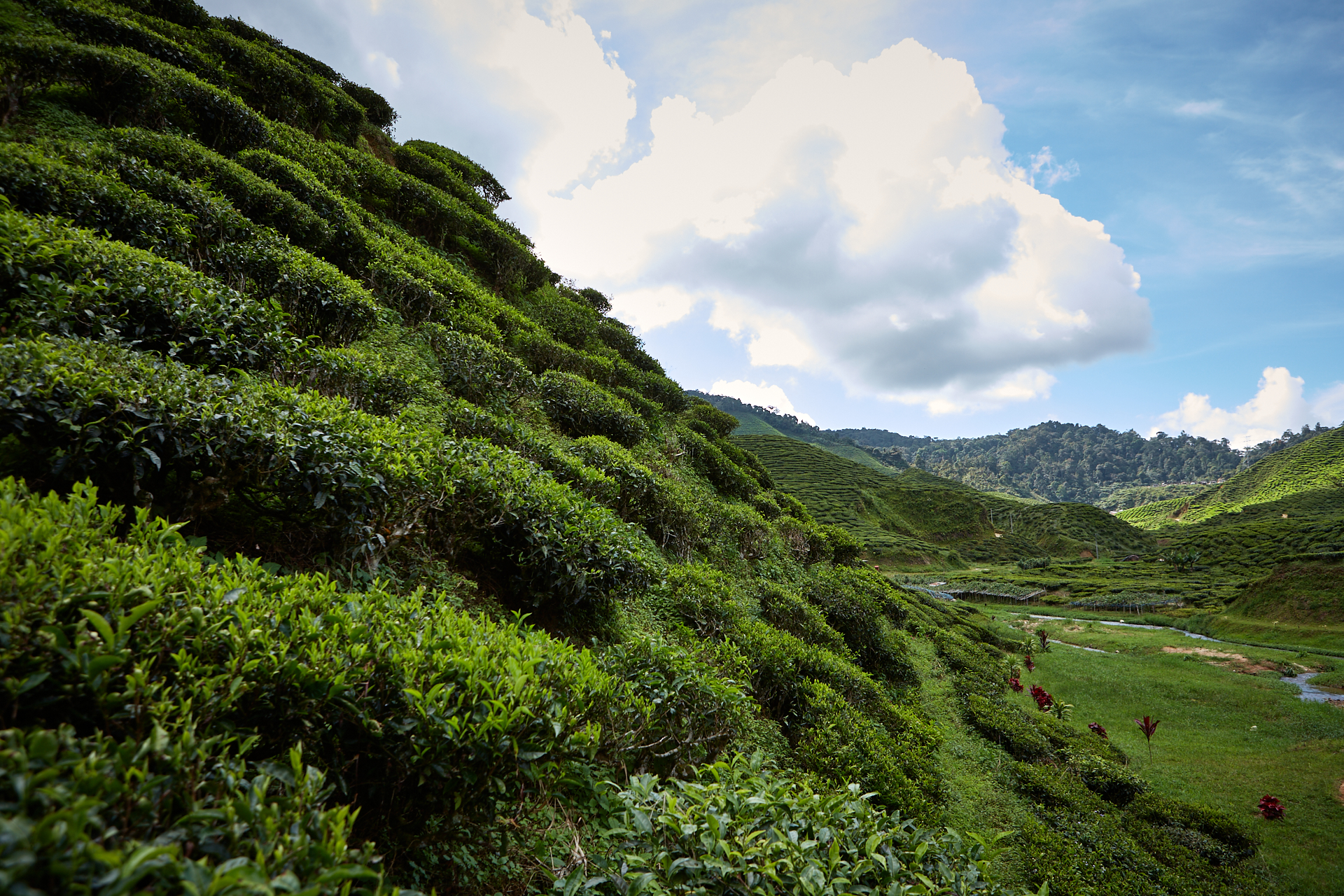
Rain continuously buckets down, as we make our way through the valleys of Cameron Highlands. After battling the traffic and passing the long row of nurseries halfway the mountain, suddenly the landscape changes. Left and right, majestic green jungle disappears into the fog, and visibility is reduced even further by the rain.
I begin to understand how easy it would be to get lost in Cameron Highlands. Like Jim Thompson, the American silk entrepreneur, who disappeared after leaving the Moonlight Cottage for a walk in March 1967. But that is a completely different story.
THE MAN BEHIND THE NAME
Further back in time, in 1885, Scottish surveyor William Cameron described what he encountered as “a fine plateau with gentle slopes, shut in by lofty mountains”. Cameron made his way through largely unmapped jungle with local helpers and elephants. There was no winding road, no tour buses and certainly no traffic jam crawling up the mountain.
Cameron was mapping the Titiwangsa Range for the colonial government. The landscape he recorded would eventually give its name to one of Malaysia’s best-known hill stations. He died in Singapore just a year later, never knowing quite what his expedition would set in motion.
Calling Cameron the man who “discovered” Cameron Highlands is misleading. Orang Asli communities had long lived in these highlands. And the place we now know as Cameron Highlands was not immediately developed after Cameron’s expedition. It took another four decades and more expeditions before Sir George Maxwell and others decided the area had potential as a hill station. Development began in the 1920s, with agriculture, recreation and residential areas all part of the plan. The road from KL through Tapah up into Cameron Highlands only became a proper route into the Highlands in the late 1920s, with construction completed in 1930.
Today, most people come for the cool mountain air, tea plantations, strawberries and the obligatory afternoon tea. But there is another Cameron Highlands, known by the people who farm its hillsides, grow its flowers and share stories about its valleys far better than any visitor ever will.
A DIFFERENT SIDE OF THE HIGHLANDS
Our guide is Khai, a local farmer who owns a small plot of land in Ringlet. He tells us that much of the farming is done manually. The terrain is simply too steep for heavy machinery in many places. Workers have to climb the slopes, tend the crops and harvest by hand.
Khai shares a map he has put together himself, tracing the road through the Highlands: Blue Valley, Kampung Raja, Kuala Terla, Tringkap, Kea Farm, Brinchang, Tanah Rata, Habu, Ringlet and Bertam Valley. It is a useful reminder that Cameron Highlands is not simply Tanah Rata and Brinchang, with a few tea plantations thrown in for the tourists. Our destination today is Bertam Valley, where Khai takes us to Jim’s Vegetables Farm.
MEET THE PEOPLE BEHIND THE PRODUCE
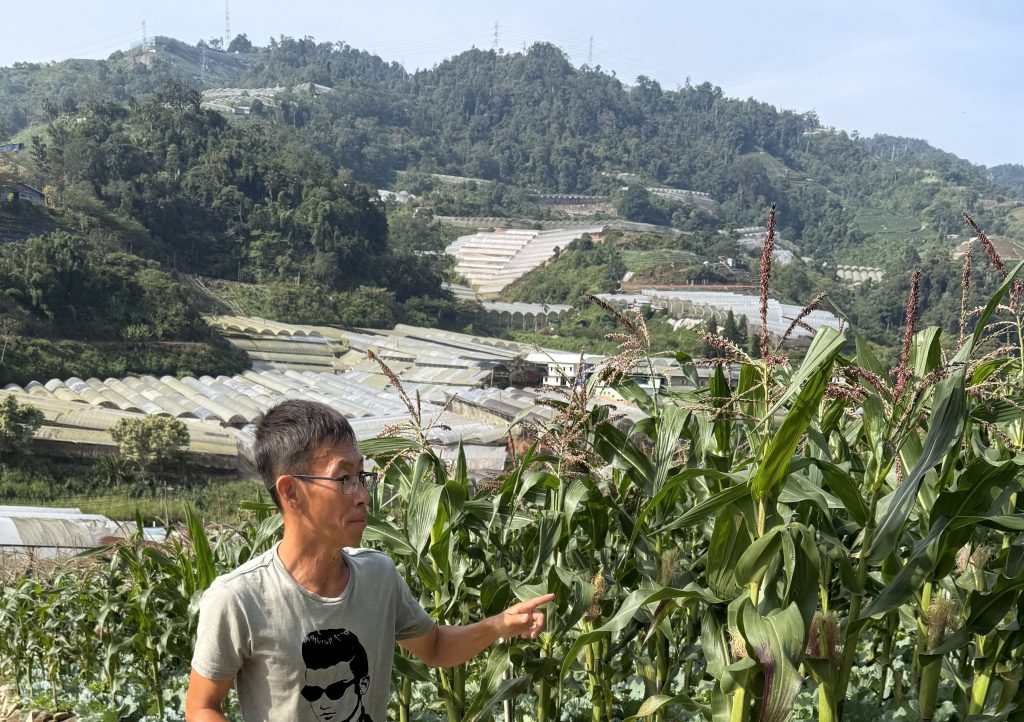
Farmer Jim was born in Penang but grew up in Cameron Highlands. His parents were farmers too, and he has now spent six years working the land himself. Walking through the organic farm with someone who works here every day – where seemingly everything you can grow under the sun is cultivated – changes the way you look at the landscape. What initially appears to be an endless sea of green turns out to be an intricate working environment, where weather, water, soil and the seasons control what happens next.
One of Jim’s specialities is purple corn. We’ve never tasted anything quite so sweet and delicious – especially after picking it ourselves. “This is my playground,” he tells us.
WHERE WATERCRESS THRIVES
Next up is a water cress farm and it’s one of the more unexpected crops you encounter in Cameron Highlands. Watercress is grown particularly around the wetter, lower-lying agricultural areas of Ringlet in shallow, flooded terraces.
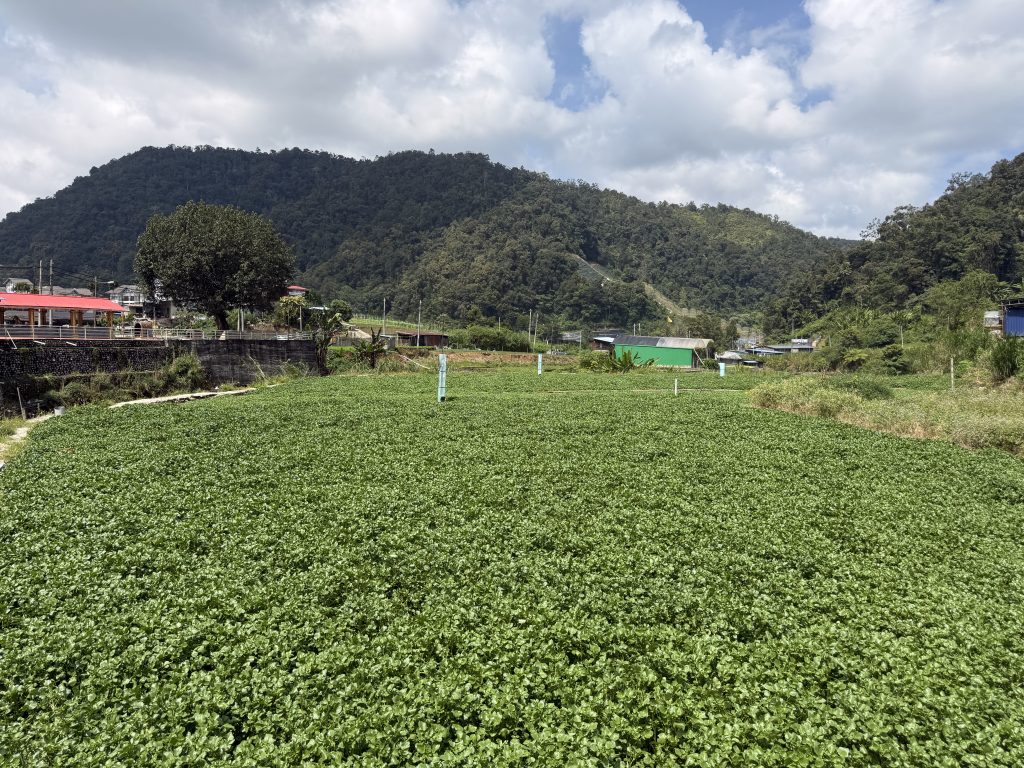
Cameron Highlands agriculture is considerably more diverse than the tourist brochures suggest. Tea and strawberries may get the glamour shots, but watercress, cabbage, tomatoes, lettuce and countless other vegetables are part of the everyday business of feeding Malaysia – and, increasingly, Singapore.
FLOWERS WITH A STORY
Then there are the chrysanthemums. At Chee Tek Agriculture, rows of colourful blooms grow under carefully controlled conditions. The flowers are treated with a lot of attention. Lights are kept on around the clock to influence growth, while adjustable frames around the beds help support the plants as they grow.
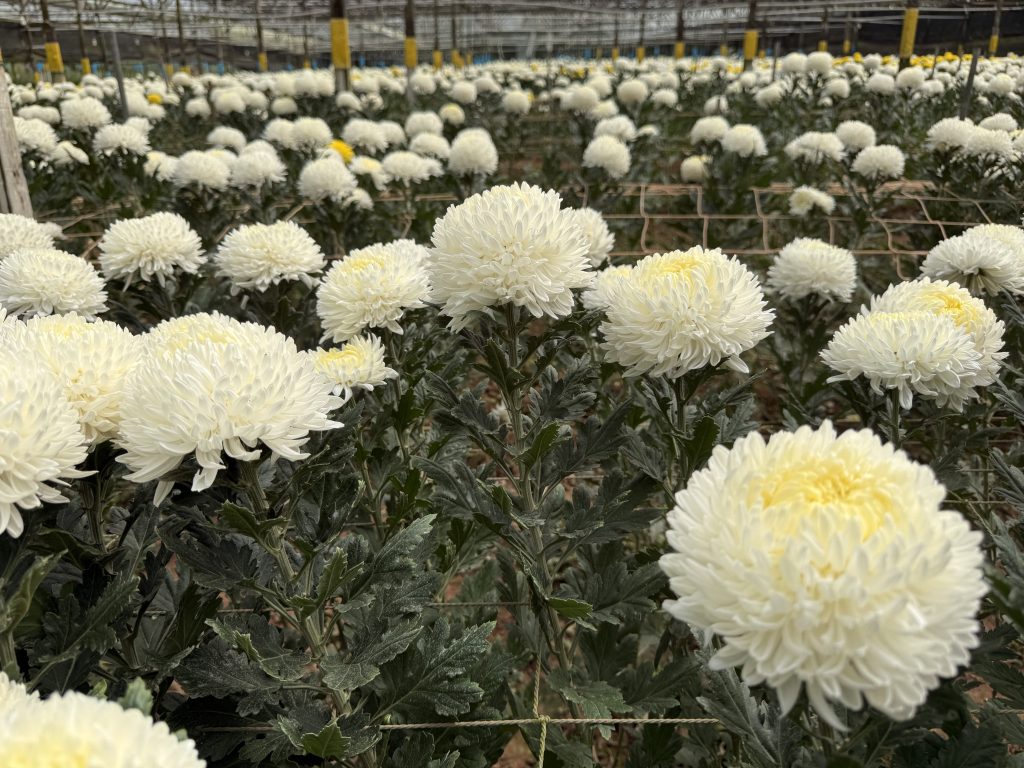
For some overseas clients, flowers are even given a little colour assistance. Their stems are placed in buckets of dyed water, allowing the colour to travel upwards into the bloom. And then there is a rather unexpected Dutch connection: some varieties originated in the Netherlands, with growers paying royalties on the flowers they cultivate.
MORE THAN A PRETTY VIEW
For the best views of Cameron Highlands famous green hills, travel to BOH Sungai Palas, offering a green tea-covered hills panorama. You can also travel further up north to Mossy Forest for more atmospheric lookouts – mist, ancient moss-covered trees and, when the clouds allow it, huge views across the mountains.
But perhaps the most interesting views are the ones you get simply from traveling the road. The patchwork of greenhouses, vegetable terraces, flower farms, jungle and villages tells a different story from the picture-perfect Cameron Highlands often seen in the brochures. This is a working landscape, created by people making a living from what the Highlands can grow.
Even the Ringlet Reservoir tells part of that story. Sediment carried downstream from development and agriculture has long been an environmental concern in the catchment. It resulted in giving this lake its mud-brown colour.
Cameron Highlands is easy to reduce to tea plantations, strawberries, scones and Tudor-style houses. But spend a day with the people who actually work the land and the place starts to look rather different. And perhaps that is the real Cameron Highlands. Not the one William Cameron put on the map, but the one people like Khai and Jim continue to shape every day.
Want to explore Cameron Highlands with farmer Ong Khai? Contact him directly on +60 19-457 4032. You can also enquire about tours through The Lakehouse.