




A new policy allowing eligible expatriate spouses to work from January 2027 could make Malaysia more attractive to international professionals and their families. But with higher employment pass salary thresholds and growing uncertainty over long-term residency, the country faces a balancing act as it competes for talent across Southeast Asia.
For all its attractions, it’s probably accurate to say that Malaysia has occasionally made settling here more complicated than it needs to be. Good food, excellent private healthcare, international schools, relatively affordable housing, and a generally comfortable lifestyle have long made the country an appealing destination for expatriates. Yet one persistent obstacle has caused some otherwise enthusiastic newcomers to reconsider their plans: the inability of a spouse to pursue a career.
It is a problem that Joshua Webley, a British expatriate who has lived and worked in Kuala Lumpur for more than three years, has encountered repeatedly through his work helping foreign families relocate. Some have abandoned carefully planned moves within just three months, despite having arranged accommodation, schools, and even the transportation of household belongings and pets.
“They can have every box ticked,” Webley recently told Channel NewsAsia (CNA). But once the initial excitement of relocating gives way to everyday life, the inability of one partner to find work can become a deal-breaker.
For professional couples accustomed to two incomes and two careers, asking one person to put their working life on hold indefinitely is a substantial sacrifice. It affects household finances, certainly, but also impacts a person’s professional identity, sense of independence, and future career prospects.
The government appears to have recognized that this is an issue worth addressing. Under measures announced by Prime Minister Anwar Ibrahim in the Budget 2027 speech on October 9, spouses of expatriates holding Category I Employment Passes will be permitted to work in Malaysia from January 1, 2027, subject to conditions. Crucially, eligible spouses are expected to be able to work while retaining their Dependant Pass, rather than having to surrender it and secure a separate employment pass through an employer.
Anwar said the change was intended to ensure Malaysia “remains an attractive destination for top talent without requiring their spouses to sacrifice their careers.”
It is a welcome development, and one that could remove a considerable administrative obstacle for internationally mobile families. However, it also comes at a time when Malaysia is tightening other aspects of its expatriate employment framework, not to mention some “soft policies” that may make expats feel less than welcome, so it’s unclear whether or not it will make a material difference.
A MORE WELCOMING POLICY, BUT A HIGHER BAR TO ENTRY
The new provision is part of a broader effort to reposition Malaysia as a higher-value, innovation-driven economy, attracting specialized expertise and investment rather than relying primarily on its traditional appeal as a relatively low-cost manufacturing and services hub.
That ambition has been accompanied by substantially higher salary requirements for foreign professionals that rattled the expat community when the change was announced. Revised Employment Pass thresholds took effect on June 1, 2026, with the minimum monthly salary for Category I rising from RM10,000 to RM20,000. Category II now requires between RM10,000 and RM19,999, while Category III covers RM5,000 to RM9,999, with a higher minimum of RM7,000 applying to manufacturing and manufacturing-related services.
The revised framework also introduces employment duration limits. Category I passes can be issued for up to 10 years, while Category II and III applications require succession plans designed to transfer expertise to Malaysian employees. Category III employment is limited to a maximum of five years.
The government’s position is understandable to some degree. International recruitment should address genuine skills gaps, encourage knowledge transfer, and contribute to the development of the local workforce. Employers should be able to demonstrate why a particular foreign specialist is needed. Nevertheless, the higher thresholds have caused serious concern among expatriates and businesses, particularly smaller companies that may need experienced foreign employees, but cannot necessarily meet the new salary requirements.
There is an apparent tension at play here. Malaysia says it wants to attract international talent, all while making the process of employing that talent more selective. Time and again, barriers are added, from requiring companies to provide three paid internships for every expat employed to doubling the salary thresholds for hiring foreign staff. Allowing spouses to work addresses one important part of the relocation equation, but it does not resolve wider questions about employment eligibility, visa duration, or the possibility of building a semi-permanent life here.
Economist Geoffrey Williams, director of Williams Business Consultancy, told CNA that the spouse provision was a relatively minor adjustment when viewed against the wider uncertainty surrounding long-term visas and residency. Those uncertainties, he argued, make Malaysia less attractive to people looking to establish careers and families over the longer term. The spouse policy may benefit a select few in the short-term scheme of things, but on the whole, will likely not make a major impact.
Arulkumar Singaraveloo, chief executive of the Malaysia HR Forum, similarly noted that permission to work is only the starting point. The policy’s effectiveness will depend on how straightforward the approval process proves to be, and whether eligible spouses can find suitable positions. Technology, engineering, finance, regional business operations, professional services, and international education are among the sectors where opportunities could emerge.
The Malaysian Employers’ Federation has welcomed the change, but is calling for clear implementation guidelines. Employers need to know whether an endorsement on an existing Dependant Pass will suffice, whether separate authorization is necessary, and whether permission will be tied to a particular employer or position.
Those details obviously matter, both to the employment-seeking expat and the company that may hire them. A well-intentioned policy can quickly lose its appeal if navigating the application process becomes another frustrating exercise in administrative endurance.

COMPETING WITH SINGAPORE AND THE REGION
Of course, it’s also important to point out that Malaysia is not competing for expatriate talent in isolation. Singapore remains the region’s established destination for international executives, while Thailand, Vietnam, and Indonesia are also working to attract foreign investment, entrepreneurs, and skilled professionals.
Singapore already permits spouses of holders of its prestigious Overseas Networks & Expertise Pass to work. However, the employment-based route to that pass requires a breathtaking monthly salary of at least S$30,000, placing it in a considerably higher income bracket than Malaysia’s Category I threshold.
That could potentially give Malaysia an opportunity, particularly among dual-career couples who want regional employment opportunities without Singapore’s higher cost of living. Kuala Lumpur offers international connectivity, established expat communities, good private medical facilities, and a lifestyle that remains competitive and appealing by regional standards. For families, those considerations can carry as much weight as the headline salary.
The government is also extending the appeal of its DE Rantau digital nomad program. Under the Budget 2027 announcement, existing Professional Visit Pass holders who have reached the current two-year limit will be allowed to remain in Malaysia and continue working remotely for an additional two years, subject to conditions. This could provide a useful longer-term pathway for eligible remote professionals who want to experience life here before considering other arrangements.
Webley believes Malaysia already has considerable appeal, but these measures could help tip the balance for families comparing several regional destinations. Alex Berghofen, managing partner at recruitment consultancy contagi, told CNA that one executive who had previously declined a Malaysian posting because of employment restrictions affecting their spouse was now reconsidering the move.
That is precisely the sort of decision the new policy hopes to influence.
There is, however, a larger point worth considering. Malaysia has spent decades cultivating an international reputation as a welcoming, multicultural country in which foreign professionals can build comfortable and rewarding lives. Malaysia’s appeal extends well beyond employment opportunities, and likewise, the contribution of expatriates is not limited to the salaries they earn. They bring experience, investment, professional networks, entrepreneurial activity, and families who become part of the wider community. They also pay income and other taxes, contribute to their local communities, and in some cases, even establish companies that hire locals.
Expats: A Small Community in a Nation of 34 Million
Malaysia is home to millions of non-citizens, but the expatriate community – including accompanying dependants – represents only a small fraction of the country’s overall population.
Put into perspective
Each bar represents a share of Malaysia’s total population. The expatriate figure is shown at its actual proportional scale.
About the figures: The 2026 population and non-citizen estimates are from the Department of Statistics Malaysia. The expatriate figure of 120,183 was given by the Home Minister in Parliament in November 2024, referring to the position as of October 31, 2024. In a subsequent answer, the minister clarified that the approximately 120,000 figure included expatriates’ dependants. The expatriate count is therefore an earlier snapshot, not a 2026 estimate.
It’s also worth pointing out that Malaysia’s expat population remains relatively small compared with the country’s overall population, meaning that foreign professionals and their families have a negligible impact on the country’s demographic mix. Official figures place the number of registered expatriates and their dependants in Malaysia at around 120,000 as of late 2024 – that’s considerably less than one-half of one percent of the population. (Other sources claim up to 150,000, which is still under half a single percent of the country’s population.)
As noted, working expats also pay taxes in Malaysia, so they contribute in that sense, while also contributing to their community. Their presence in the country, therefore, can bring economic benefits, specialist skills, investment, and international connections – all without fundamentally altering the character of Malaysian society. The challenge is to recognize and encourage those contributions while ensuring that local communities and workers continue to benefit.
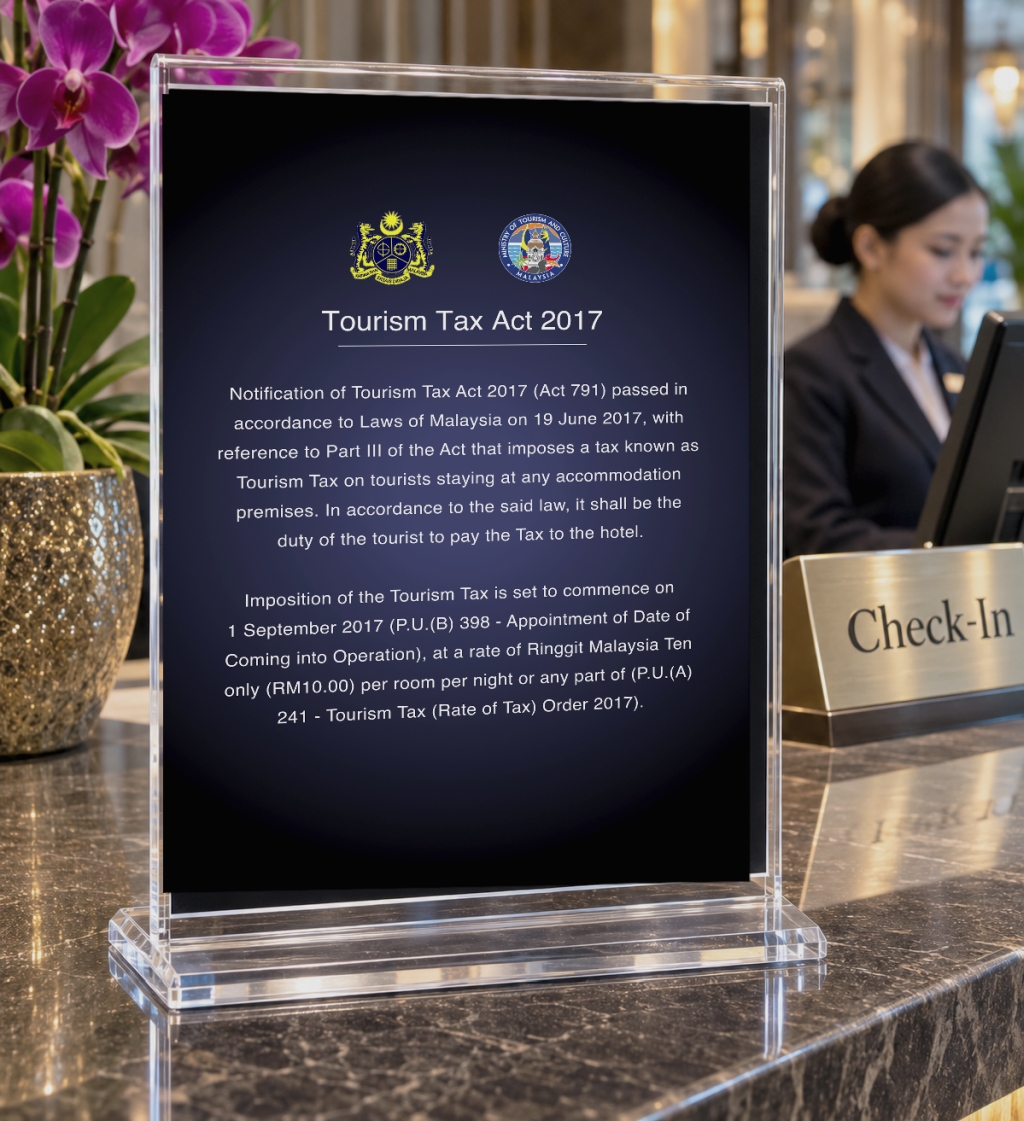
Protecting opportunities for Malaysians and ensuring that foreign recruitment serves the national interest are entirely reasonable objectives. But competitiveness also depends on consistency, predictability, and a genuine willingness to make the country accessible to people who want to contribute over the long term. So-called soft policies that either exclude or target expats can also serve to foster what feels like a less-than-welcoming environment – policies such as levying a tourism tax for resident expats, charging them more for attractions and services (two-tier pricing), or excluding them from subsidy schemes even though they pay considerable taxes to the country.
As Arulkumar observed, Malaysia must compete on the overall package: career opportunities, living costs, education, healthcare, connectivity, and – perhaps most importantly – creating and nurturing a welcoming environment for expats and their families.
The permission for eligible spouses to work is a positive small step. The extension of DE Rantau stays is another. Now the government needs to ensure that these measures are implemented efficiently and that other immigration policies do not inadvertently undermine their benefits. Malaysia is an appealing destination, a great place to live, and has much to offer international professionals. Making it easier for them to bring their families – and perhaps build a future here – should be part of the strategy, not an afterthought.
Sources: Channel NewsAsia, Immigration Department of Malaysia, Prime Minister’s Office, Malaysian Investment Development Authority, Free Malaysia Today.