



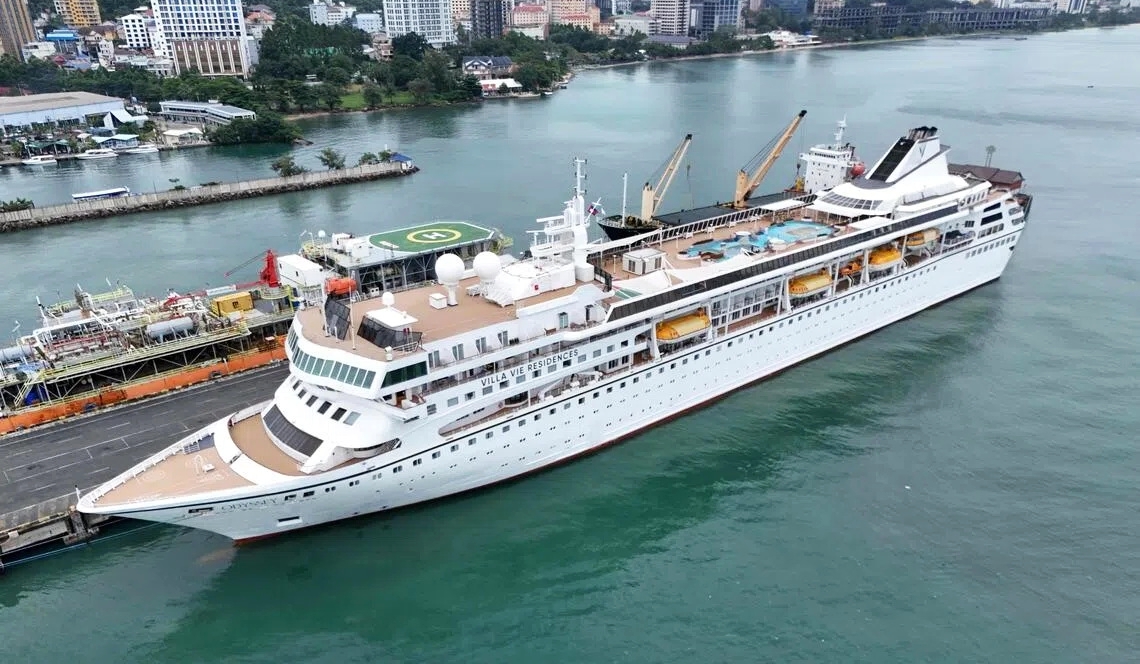
More than 200 residents of the Villa Vie Odyssey were abruptly put ashore in Sihanoukville after soaring fuel costs forced the operator to suspend its around-the-world voyage. The ship has since departed, but for some of its former passengers, an unexpected Southeast Asian adventure is just beginning.
On the one hand, there are worse places to find yourself unexpectedly and forcibly disembarked from a cruise ship than Southeast Asia. But on the other hand, that is surely little consolation to the more than 200 passengers who recently discovered that their floating homes were no longer going anywhere, but at least the circumstances of their abrupt return to dry land offered a few compensations.
The Villa Vie Odyssey, a residential cruise ship whose occupants had paid tens of thousands of dollars – in some cases several hundred thousand – for the privilege of living at sea, departed Cambodia on November 4 without a single passenger aboard. Its departure followed the sudden suspension of operations by Florida-based Villa Vie Residences, which cited a dramatic increase in fuel costs linked to the war involving Iran.
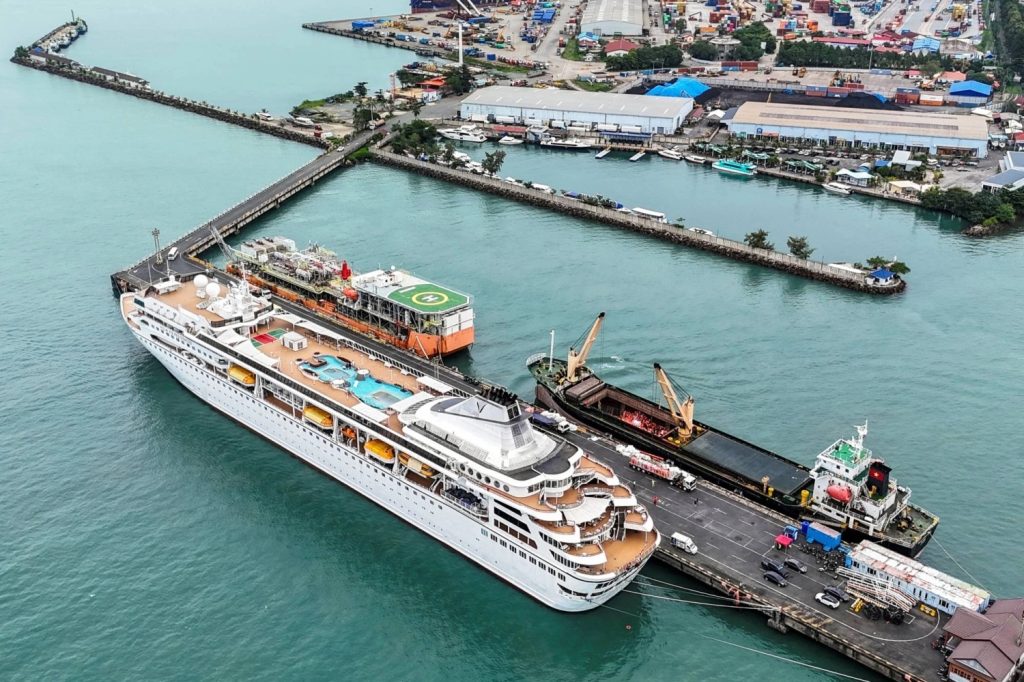
The vessel had arrived at the Cambodian port of Sihanoukville as part of its planned three-year world voyage. Instead, passengers were given just hours to pack their belongings and leave, bringing an abrupt end to what many had expected would be a long-term, perhaps even permanent, way of life.
By the time the ship sailed, around 100 former residents were still in Cambodia, according to local officials. Others had already departed for destinations elsewhere in the region, while some chose to remain and explore the country. The Odyssey left with only crew members aboard.
For the passengers, the most pressing concern was less about the next port of call than what had happened to the homes, possessions, and considerable investments they had left behind. Many had committed substantial sums to a lifestyle built around the promise of continuous global travel, with the ship serving as both residence and transport. To say this was an unpleasant and unexpected turn of events is a serious understatement.
“There are still many things on the ship that I wish I could take with me,” passenger Shirine Thomas, from Wilmington, North Carolina, told Reuters after collecting some of her remaining belongings.
The ship’s future remains uncertain. Reports had indicated that it was heading towards Singapore, with the vessel potentially destined for a period in lay-up while its financial situation is addressed. That is where the Odyssey is now. CBS News reported that the ship’s lender had assumed control, although the precise arrangements and any eventual sale or return to service remain unclear.
WHEN THE COST OF LIVING AT SEA BECOMES UNSUSTAINABLE
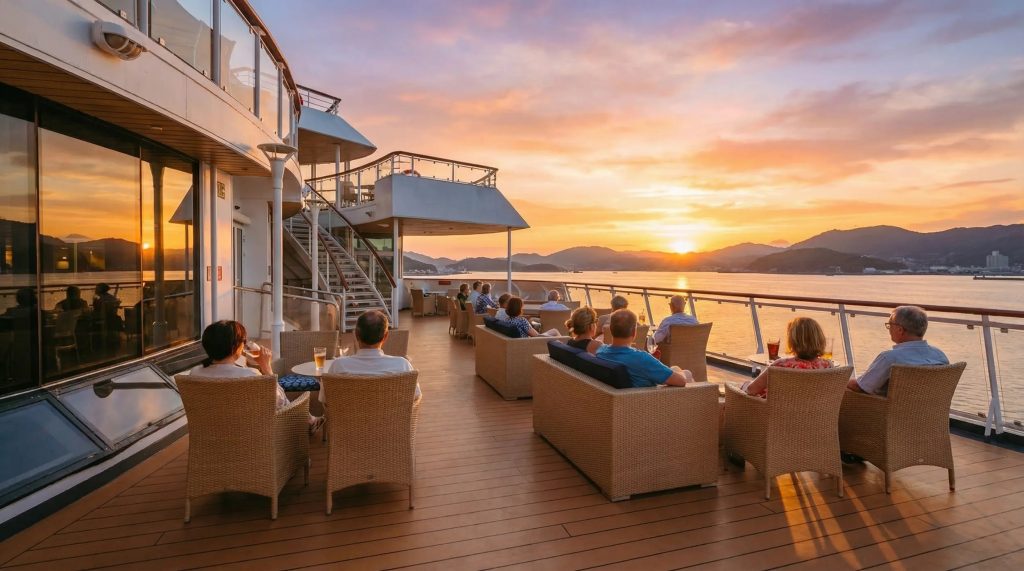
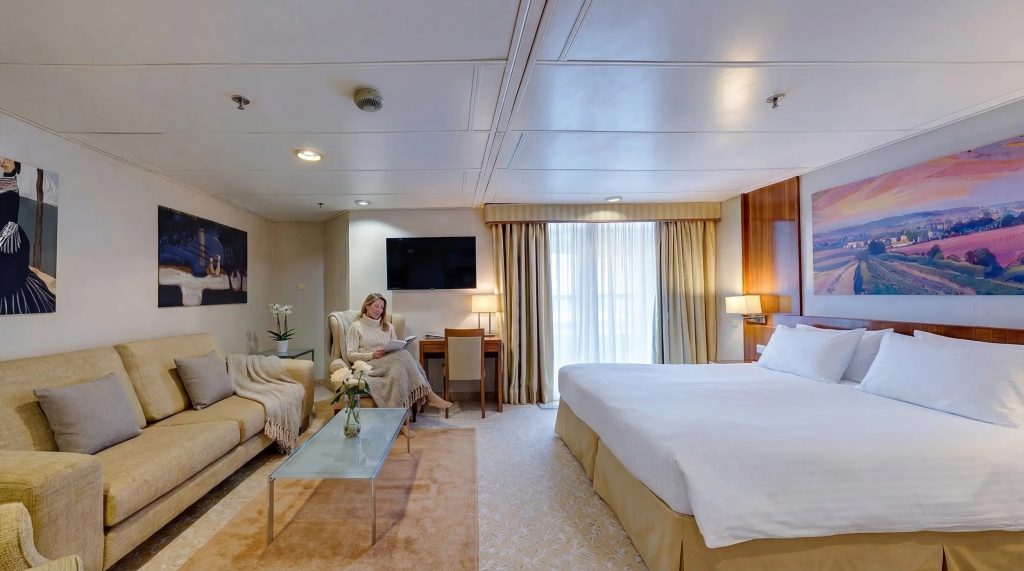
The Villa Vie Odyssey had already been sailing continuously for at least 755 days when the crisis unfolded. Its voyage began in Belfast in October 2024, following a refit, and the company marketed the vessel as a residential community at sea. Unlike conventional cruise passengers, residents could purchase, rent, or enter into longer-term arrangements for their cabins, allowing them to travel the world without repeatedly packing and unpacking.
The concept had obvious appeal, particularly among retirees and travelers seeking an alternative to conventional retirement. The ship could accommodate up to 650 passengers, although 203 residents were aboard when operations were suspended, alongside a crew of 156.
The economics, however, proved considerably less romantic. In an announcement on October 27, Villa Vie said that the monthly fuel expenses, calculated on an equivalent per-cabin basis, had risen from a historical average of approximately $1,800 to an estimated $6,000 to $8,000 in parts of Asia (figures are in US dollars). The company attributed the increase largely to disruption associated with the conflict involving Iran, which began in late February.
Villa Vie said it had already attempted to reduce consumption by slowing the itinerary and spending more time in port. Those measures were insufficient to offset the additional costs, while passing the entire increase on to residents was considered unrealistic. The company consequently suspended operations while pursuing restructuring and recapitalization options, cautioning that no outcome was assured.
For passengers who had invested heavily in their cabins, the sudden halt raised serious questions about their financial exposure and whether they would ever return to the ship. Some had reportedly paid more than US$300,000 for lifetime suites, while the company’s residential options included five-year arrangements and permanent cabin ownership.
On a more general basis, though, the saga also underscores the challenges and risks faced with such an unusual business model. A conventional cruise operator can adjust itineraries, cancel sailings, or increase fares – although none of those options is painless. However, a company selling the idea of a permanent home at sea has a completely different obligation to its customers. Its residents are not simply holidaymakers who can return home when a voyage is cancelled. Forcibly disembarking them, in some cases, is effectively an eviction for which they shoulder no blame.
A CAMBODIAN WELCOME… AND A NEW REGIONAL ITINERARY
While the circumstances were hardly ideal, reports and interviews suggest that Cambodia’s response appears to have been a positive part of an otherwise deeply upsetting experience. Local authorities and the Ministry of Tourism helped coordinate accommodation, transportation, tourist information, and offered other practical assistance for the displaced residents.
Around 200 passengers representing 15 nationalities were granted tourist visas by Cambodian immigration officials on October 29. The visas were valid for a period of three months and permitted stays of up to 30 days, presumably extendable, but that was not clarified. A tourism ministry coordination team also helped arrange accommodation and transport, while encouraging visitors to explore beyond Sihanoukville.

And there is plenty of Southeast Asia to explore. Sihanoukville, on Cambodia’s Gulf of Thailand coastline, is a gateway to the country’s southern beaches and islands, including Koh Rong. The riverside town of Kampot and coastal Kep offer a slower pace, while Siem Reap and the temples of Angkor provide one of the region’s most compelling cultural excursions. Phnom Penh, meanwhile, offers the bustle and history of a capital city.
Indeed, Cambodian officials said that around 98 former passengers were still spread across the country on November 4, including in Sihanoukville, Kampot, Kep, Siem Reap, and Phnom Penh. Some had already moved on to other countries, while others were making the most of an unexpected extension to their stay.
For those wishing to travel farther afield, the region offers plenty of alternatives, from Thailand and Vietnam to right here in Malaysia and neighbouring Singapore. The latter is also a likely destination for the Odyssey itself, with maritime tracking information and regional reports indicating that the vessel was heading there after leaving Cambodia. Its ultimate destination, however, had not been formally confirmed.
Retired Canadian teacher Mary Ann Demsar, 67, told Reuters that passengers had received little clarity from Villa Vie about whether the voyage might resume. She praised the assistance provided by Cambodian officials, but said communication from the company had been conspicuously lacking.
That uncertainty is, unfortunately, likely to linger. Villa Vie has said it is pursuing a restructuring process, but the ship’s departure does not mean its residential cruise operation will resume, nor does it resolve the financial questions facing its former residents.
The Odyssey’s troubles have deepened since it disembarked its residential passengers. According to court records obtained by CBS News, the vessel has been arrested in Singapore, where it is currently under the control of its lender following Villa Vie’s failure to keep up with payments. A Singapore law firm, Helmsman LLC, is listed as the arresting solicitor, although it remains unclear whom the firm represents. A source familiar with the matter told CBS that the claim is likely connected to a fuel supplier, with Villa Vie reportedly owing one supplier in the region approximately US$500,000. The precise circumstances of the arrest, and whether that particular supplier initiated the action, have not been established.
A ship arrest is a legal procedure through which a vessel can be detained in connection with a maritime claim, and it could further complicate any prospect of the Odyssey returning to service. CBS News also reported a series of difficulties during the ship’s final weeks at sea, including a scramble to secure fuel while it was in Singapore, efforts by crew members to obtain provisions after food shipments had stopped, and a temporary detention in Hong Kong. Taken together, the reports suggest that the problems aboard the Odyssey were developing well before the passengers were told to disembark in Cambodia.
For now, some of those who signed up to spend years travelling the world have found themselves doing so without the actual ship that was supposed to take them there. Meanwhile, the Odyssey is caught up in a potential nasty financial and legal dispute in Singapore, with its eventual fate uncertain. For those who were disembarked from the ship last week, it’s unquestionably an unwelcome change of plans, but with Cambodia as their temporary base and much of Southeast Asia within reach, it’s also safe to say they could have been dealt a considerably less appealing hand.
Sources: Reuters, Associated Press, CBS News, Cambodianess, Channel NewsAsia, Villa Vie Residences.