


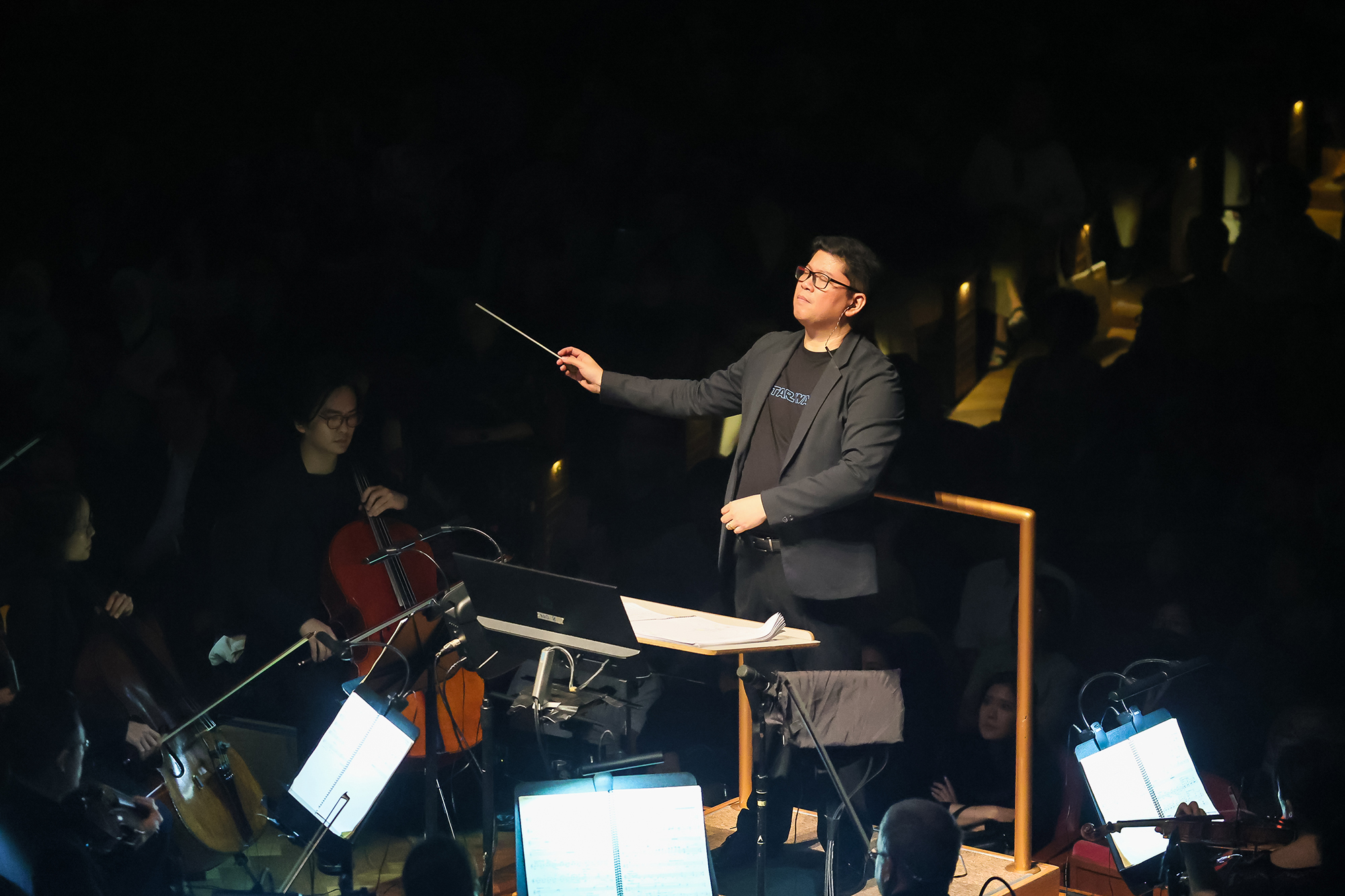
The only musician on stage who doesn’t make a sound is the conductor. Yet, with gestures of the hand, a change in expression or energy, Gerard Salonga can bring an entire orchestra to life.
For the Filipino-born musician, the job is ultimately about communication. But his own journey to the podium was anything but straightforward.
AN EXPAT WITH A MUSICAL HOME
Having spent seven years in Kuala Lumpur since his appointment as the Resident Conductor of the Malaysian Philharmonic Orchestra (MPO), Gerard has found more than a professional home here. Malaysia has become an important part of his life, offering a base from which he continues to work across the region while maintaining close ties with the Philippines.
“I love it here,” he says, reflecting on his life in Kuala Lumpur. During the pandemic, Malaysia was home to his family, too. Although his children eventually returned to Manila to reconnect with their friends and resume face-to-face schooling, the family has continued to make the distance work.
A CAREER THAT HAPPENED BY ACCIDENT
Music entered Gerard’s life early. Inspired by his older sister, the world-renowned vocalist Lea Salonga who played the piano, he began lessons at the age of five. Through her early work as a performer, he was also introduced to professional musicians, recording studios and orchestras.
It was the combination of instruments, and the way their individual sounds would come together to create something greater, that caught his attention and formed the foundation for his passion for music.
Gerard didn’t immediately pursue music though. At university in the Philippines, he initially studied English literature, with a keen interest in journalism and writing. It was through working as musical director for his university theatre group that something clicked. “I really felt like this is what I’m supposed to do,” he recalls.
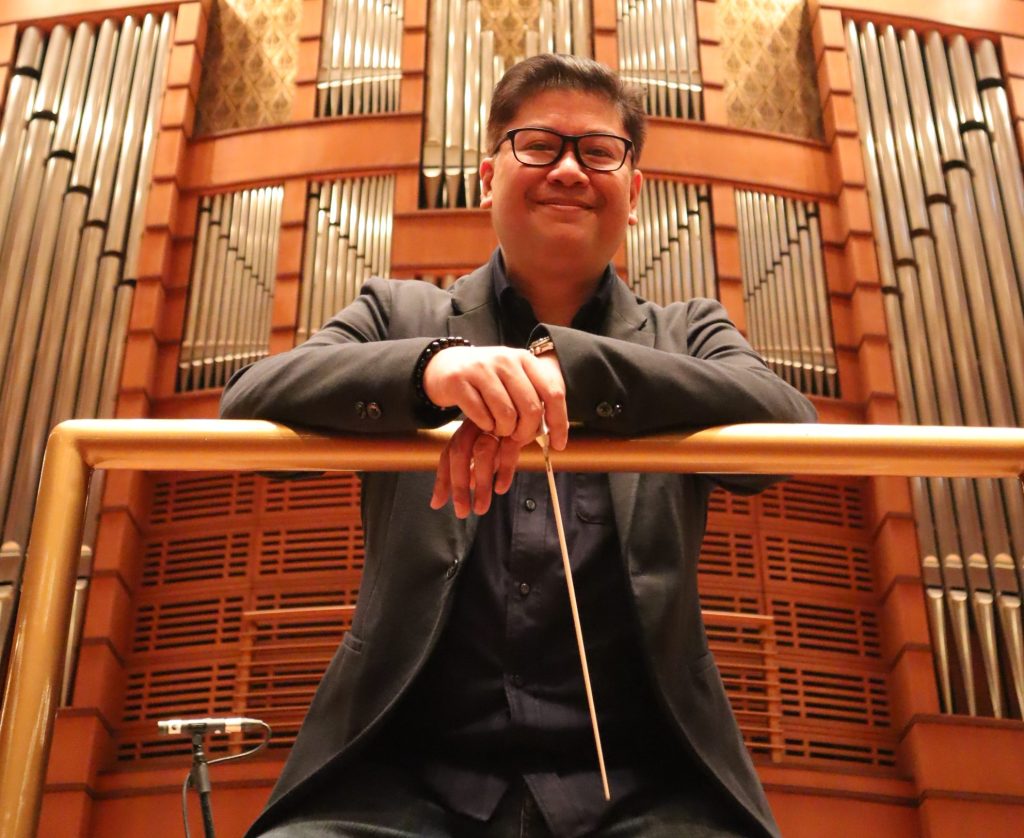
The decision to pursue music professionally did not come without doubts. Gerard admits to experiencing imposter syndrome, questioning whether he was good enough to make a career out of something he had always loved. A conversation with Filipino composer Ryan Cayabyab, who encouraged him to study music theory, proved pivotal. Gerard discovered that he excelled at the subject, and the sounds he had instinctively understood began to make sense in a whole new way. His talent and growing confidence would later earn wider recognition: in 2012, he was named one of The Outstanding Young Men (TOYM), an award honouring outstanding achievers under the age of 40 in the Philippines.
PURSUING A CAREER ABROAD
He went on to study at Berklee College of Music in Boston, initially interested in film scoring before discovering a particular love for arranging. After graduating, he worked in Los Angeles as a music copyist and orchestrator, preparing musical scores for recording sessions, including animated television productions at Warner Bros.
The experience was demanding, but invaluable. Working with musicians at the highest professional level gave him a deeper understanding of the craft and the standards required to succeed.
Yet the American dream wasn’t quite his dream. The industry could be unforgiving, and life abroad could be lonely. By the time he returned to the Philippines in 1999, he was keen to apply what he had learnt at home.
His path into conducting continued to evolve, eventually taking him to Hong Kong as Assistant Conductor of the Hong Kong Philharmonic Orchestra from 2016 to 2018. He first conducted the MPO in 2016, for Ratatouille In Concert, and was subsequently offered the Resident Conductor position, a role he took up in January 2019.
THE ART BEHIND THE BATON
We asked Gerard what it is he actually does up there on the conductor’s podium. “What a conductor does, is to communicate an idea,” he explains.
That idea begins with the composer. Before stepping onto the podium, a conductor spends hours studying the music, trying to understand what Mozart, Beethoven or Mahler intended to express. The challenge is to get beyond the notes on the page and discover the emotional message behind them.
The conductor then works with the orchestra to bring that vision to life. It requires not only musical knowledge but also the ability to listen, read people and build trust. Chemistry matters, too. Even experienced musicians need time to understand a new conductor, just as the conductor needs to learn the orchestra.
MAKING CLASSICAL MUSIC ACCESSIBLE
“There’s a very good reason why classical music is still powerful after 300 years,” he says. He believes that live performance has a particular value in an increasingly digital world. Listening to Beethoven through a screen is one thing; experiencing the collective energy of an orchestra in a concert hall is quite another.
At the MPO, Gerard embraces a broad repertoire, from symphonic works to film concerts. He has conducted performances featuring Raiders of the Lost Ark, The Godfather, the Harry Potter series and Star Wars, which shows that orchestral music need not be confined to traditional concert programmes.
Indeed, performances featuring diverse music is the MPO’s forte now: upcoming concerts this year include a dazzling concert themed A Chorale Spectacular on 5 December 2026. Gerard himself will helm Home Alone In Concert on 12 December 2026, a movie screening of the 1990 Christmas blockbuster with the MPO’s music accompaniment.

Gerard enjoys introducing audiences to the music before a performance, providing context and making people feel at ease in a concert hall. A little conversation can change that. “Once people feel comfortable”, he says, “they become more receptive and more willing to express their appreciation.”
For an orchestra serving a diverse Malaysian audience, that sense of welcome matters. Gerard believes the MPO has the potential to reach more Malaysians and better serve everyone who calls the country home.
PASSING THE BATON TO A NEW GENERATION
His commitment to making music accessible extends to the Malaysian Philharmonic Youth Orchestra (MPYO), where conducting young musicians requires a slightly different approach.
Technical ability alone isn’t enough. Young players must also learn to interpret music, imagine its characters and understand how to be part of a larger system. The results are tangible: former MPYO members have progressed to professional orchestras and further musical opportunities overseas.
That commitment took on an international dimension in June 2026, when Gerard served as Artistic Advisor and conductor for the ASEAN Youth Orchestra Festival at Dewan Filharmonik PETRONAS in Kuala Lumpur. The pilot project brought together 85 young musicians representing seven countries. The programme culminated in a performance of Mahler’s Symphony No. 1, alongside works including John Williams’s Olympic Fanfare and Rachmaninoff’s Rhapsody on a Theme of Paganini.
THE CONDUCTOR AS ENABLER
When we asked Gerard where he sees himself in ten years, his answer was refreshingly grounded: he hopes to continue supporting young musicians and his colleagues on stage.
He still has a soft spot for writing, and had his career taken a different path, he believes he might have become a professional writer. Writing an article, he explains, has a lot in common with composing music: both require structure, a sense of direction and a satisfying conclusion.
For now, however, the podium remains his place. Despite the authority a conductor seems to have, Gerard sees his role as more about serving than controlling.
It is a fitting philosophy for a musician whose work depends on bringing together different personalities, instruments and interpretations. Whether leading an established orchestra or nurturing the next generation of musicians, he believes the real art lies not in controlling the music, but in creating the space for it, and for the people behind it, to flourish.