

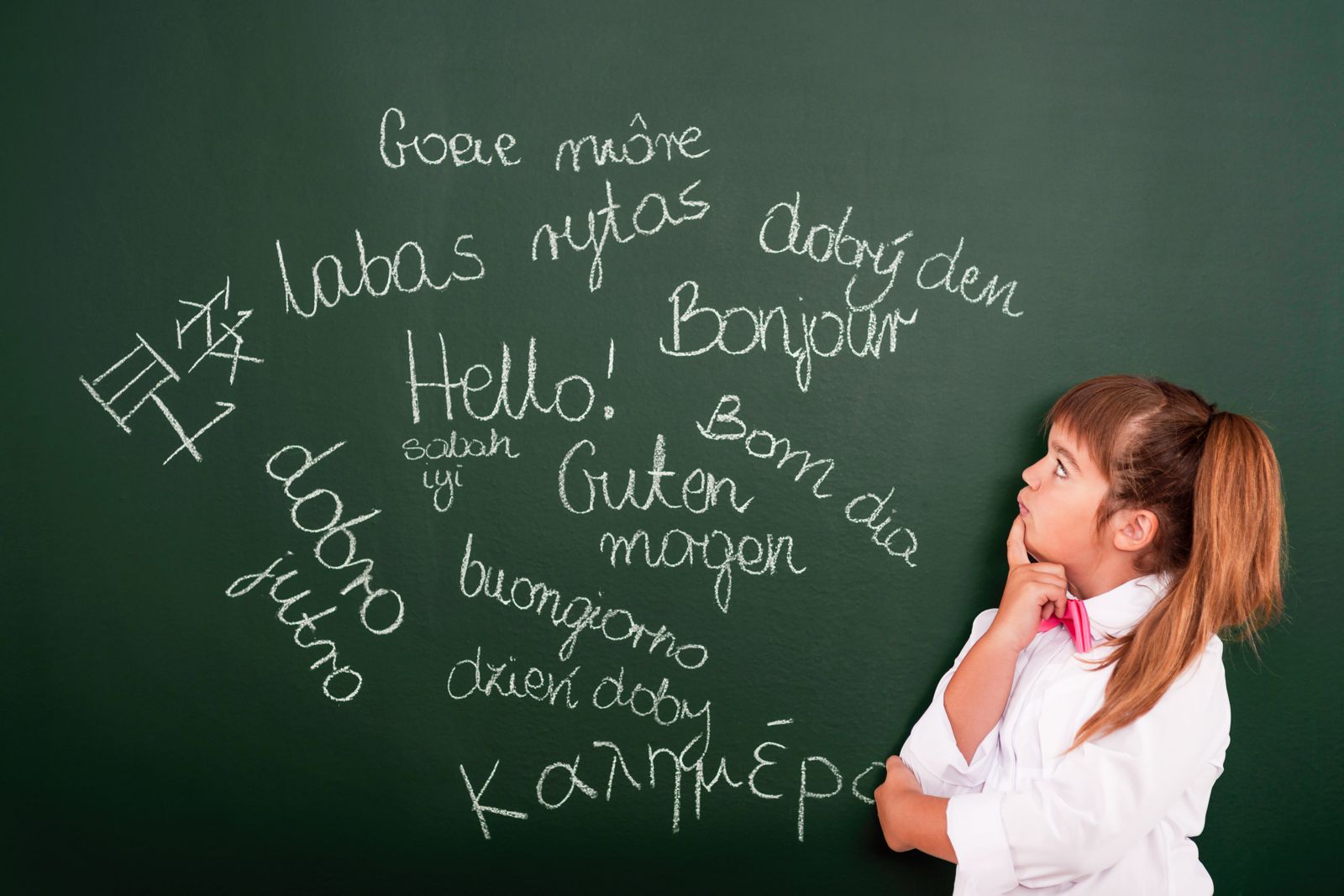
Multilingualism wasn’t something I thought much about until my own children came along. In our home, Dutch mixed happily with Australian English – that very specific, sun-soaked language of beaches and barbecues. My bilingual kids moved easily between the two languages, sometimes mid-sentence, depending on whether they were speaking to me, their dad, or each other.
But the real magic began when we moved to Malaysia. Once the kids began at an international school, their world expanded quickly: local friends, yes, but also classmates from every corner of the globe – over 50 nationalities in total. On any given school day, they came home with greetings in languages I didn’t even recognise at first. “Marḥaba!” one minute, “Apa kabar?!” the next, followed by a cheerful “Annyeong!” or “Ni hao!”
International schools are extraordinary like that. They don’t just teach subjects; they help shape little global citizens. Children who learn to move comfortably within an international community, each classmate bringing their own mix of culture, customs, and language, long before they fully understand what a privilege that is. And at the heart of it all lies multilingualism – not as an academic requirement, but as a living, breathing part of daily life.
WHAT IS MULTILINGUALISM ?
Multilingualism refers to the ability of people to use multiple languages (more than two) in everyday life. In academic terms, it’s not limited to native-like fluency in all languages involved. Rather, it recognises that language skills exist on a spectrum and are shaped by context, need, and social interaction. In real life, multilingualism is rarely neat or balanced. It’s messy, practical, and deeply personal – shaped by where you live, who you speak to and how often, and what you need to be understood.
Bilingualism, on the other hand, simply refers to the ability to use two languages. Traditionally, it implied a fairly high level of proficiency in both, but also in this case, academically that idea has softened. Today, bilingualism also recognises uneven skills – for example, speaking one language fluently and mainly reading or understanding the other.
And in practice – especially in places like Malaysia – the line blurs and multilingualism comes naturally. Many people grow up bilingual at home and become multilingual through school, work, and daily life. Language there isn’t a fixed skill set; it’s a toolkit.
EMBRACING LANGUAGE DIVERSITY IN INTERNATIONAL SCHOOLS
In an increasingly connected world, shaped by globalisation, travel, and cultural exchange, Malaysia’s international schools have become microcosms of global society. Step into any international school here and you’ll hear it immediately: a mix of students all with their own languages, accents, and stories, all sharing the same space.
These schools don’t just teach across borders; they live them. Students arrive from many linguistic backgrounds, bringing with them not only different languages but different ways of seeing the world. While English often serves as the common classroom language, proficiency levels can vary widely. This creates its own set of challenges – but also remarkable opportunities. The real question becomes not how to simplify this diversity, but how to support it, celebrate it, and use it to nurture multilingualism, stronger communication, and a deeper understanding of one another.
CULTIVATING A MULTILINGUAL ENVIRONMENT
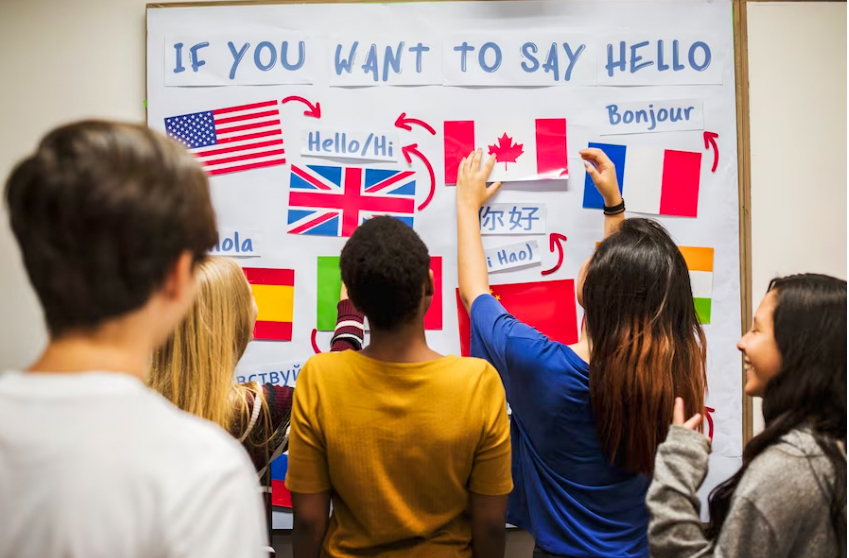
At the heart of multilingual education is something surprisingly simple: creating a school environment where languages are welcomed, heard, and valued. Many international schools in Malaysia have taken this to heart, actively embracing a more multilingual curriculum.
Many parents sometimes wonder whether maintaining a mother tongue is worth the effort when English dominates academic life. Good news: most international schools see mother-tongue retention as essential. Research consistently shows that children who maintain their first language benefit on multiple levels. They tend to develop a stronger sense of self and identity, perform better academically over the long term, and often find it easier to learn additional languages later on.
International schools are uniquely positioned to support this. When your child hears classmates speaking Japanese, Urdu, Spanish, French, Arabic, Dutch, Korean, or Malay in the hallways, languages stop being “subjects” and become a celebration of identity.
This matters more than we sometimes realise. When students keep developing their first language, they don’t just benefit academically; they stay connected to their cultural roots as well. In doing so, schools help ensure that language remains not just a tool for learning, but a living part of a child’s identity.
MULTILINGUAL CLASS ROOMS: A CHALLENGE OR AN OPPORTUNITY?
Global studies consistently show that children who grow up using more than one language benefit in ways that go well beyond communication alone. They tend to develop greater cognitive flexibility, allowing their brains to switch between tasks more efficiently, alongside stronger problem-solving skills and sharper listening abilities. Perhaps most importantly, multilingual children often show a deeper sensitivity to context and nuance – an awareness that meaning can shift depending on language, culture, and situation.
Multilingual children don’t just translate words – they learn to shift perspectives. In an international school environment, this skill develops naturally because every interaction invites curiosity: Why does my friend say it this way? What does that word mean in their culture?
WHEN LANGUAGES BECOME BRIDGES
Watching my children navigate this multilingual world has warmed my heart. Their school friends don’t treat language differences as barriers, they treat them as invitations. Invitations to learn, to connect, to share.
One afternoon, my youngest proudly showed me how to say “good morning” in four different languages – each one picked up from a different friend at school. It wasn’t rehearsed or part of a lesson plan; it was simply what happens when your playground is a miniature version of the world. Her friends even challenge each other to learn each other’s languages using apps like Duolingo. How great is that?
Multilingualism isn’t just a bonus; it’s a gift that we should cultivate with care, so children learn to respect cultural differences, think more openly, and embrace the diversity that defines global communities. International schools provide the perfect ecosystem for multilingualism to flourish – nurturing not only strong academic learners, but compassionate, culturally aware young people who move through the world with confidence and curiosity.
And really, what more could we hope for?