

The US Supreme Court has ruled that Donald Trump’s tariff policies are illegal, resulting in a change in America’s trade policy affecting Malaysian exports, but the relief may be temporary. Here is what expats and businesses should know.
A fresh twist in US trade policy has added another layer of uncertainty to global markets, and Malaysia is among the countries watching closely.
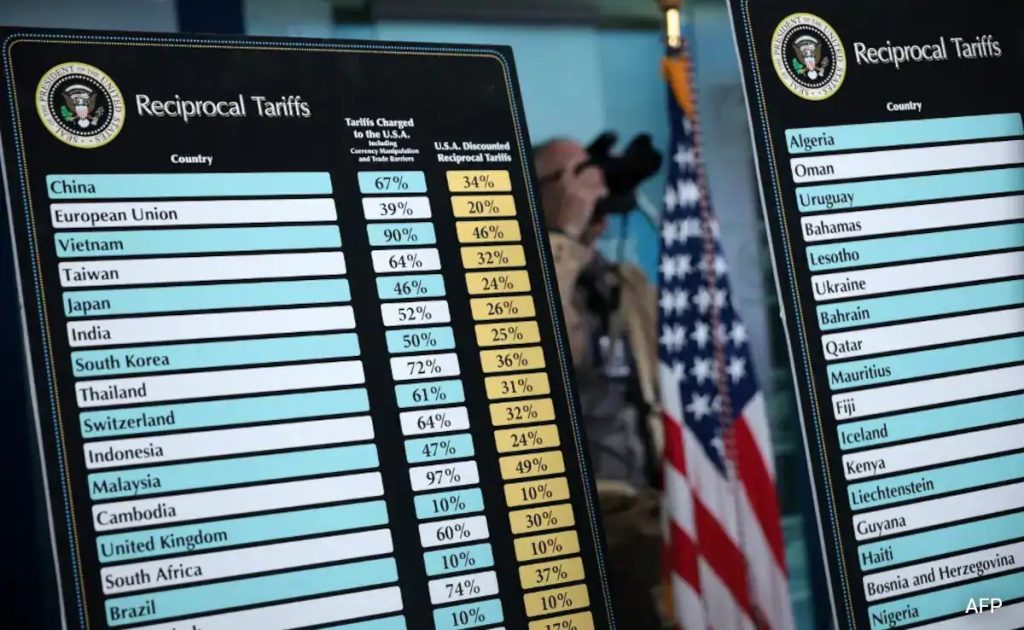
For now, the immediate headline is slightly better news for Malaysian exporters: goods sent from Malaysia to the United States may face a 15% import duty, instead of the 19% previously expected under earlier arrangements. That lower rate matches the broad “universal” tariff level now being applied by the US under President Donald Trump’s latest trade approach.
The sudden shift came after the US Supreme Court struck down a major part of Trump’s earlier tariff framework, specifically the wide-ranging reciprocal duties introduced under emergency powers legislation. In response, the Trump administration moved quickly to rely on another legal route, Section 122, which allows temporary tariffs but only for a limited period, up to 150 days unless Congress approves an extension.
Any big shifts are likely to attract additional challenges, but regardless, that time limit is important. It means the current situation may be temporary, and businesses are now dealing with a short window of relative clarity, followed by the possibility of further policy changes.
WHY THIS MATTERS IN MALAYSIA
For Malaysia, the short-term impact is mixed, but by no means catastrophic. Analysts say the reduction from 19% to 15% offers temporary relief and may help Malaysian products remain competitive in the US market. In simple terms, a lower tariff can make it easier for Malaysian exporters to retain orders, especially in sectors where pricing is tight.
At the same time, this is not a return to stable, predictable trade policy, which is ultimately the goal. The legal ruling may have limited the US president’s ability to impose broad tariffs instantly, but Washington still has other tools it can use, including sector-specific tariffs targeting industries such as semiconductors, steel, autos, and other strategic goods.
That is where Malaysia’s concern lies. The country’s electronics and semiconductor-linked sectors remain especially exposed, because these are exactly the kinds of industries the US may continue to scrutinise under separate trade provisions.
WHAT EXPATS SHOULD PAY ATTENTION TO
If you are an expat living and working in Malaysia, this is less about immediate lifestyle disruption and more about the wider business climate. The likely effect is “stability without a boost” – meaning no major sudden shock for now, but no strong positive lift either.
Malaysia’s long-term export and investment fundamentals remain intact. There is no immediate need for major renegotiation or abrupt policy changes. However, companies may delay certain decisions while they wait to see what happens after the 150-day window.
There is also a broader regional angle. One reason Malaysia has benefited in recent years is the “China+1” strategy, where manufacturers diversify production away from China. Some analysts note that if tariff gaps between China and other Asian exporters narrow, Malaysia’s short-term advantage could weaken slightly.
Still, others argue that this overlooks the bigger picture. Large manufacturers do not shift supply chains overnight simply because of one temporary tariff adjustment. Malaysia remains attractive in areas such as electrical and electronics manufacturing because of its skilled ecosystem, supplier networks, and established production base.
For now, Malaysia appears to have avoided a worse outcome, but uncertainty remains the real story. Expats running businesses, working in export-linked industries, or monitoring investment trends should expect more policy swings and headlines in the months ahead.
In other words: some relief, but not yet certainty.