


Rising fuel costs and energy uncertainty are forcing governments to rethink how people work. What began as a crisis response in Asia could accelerate a longer-term global movement toward shorter workweeks.
When the Covid-19 pandemic upended daily life in 2020, it triggered one of the most significant workplace transformations in modern history – indeed, perhaps the greatest change since the Industrial Revolution. Remote work, once a niche perk enjoyed by only a select few, became a necessity almost overnight. Naturally, many assumed it would fade as the pandemic eased. It did not. Instead, remote work – in one form or another – settled into the mainstream. Whether in its full form or merged with onsite work to produce a custom hybrid model for a given company, a new style of working was here to stay.
Now, an altogether different kind of disruption is testing another long-debated idea in the global corporate workspace: the four-day workweek.

DRIVEN BY CRISIS, NOT IDEOLOGY
As tensions linked to the conflict in Iran disrupt global oil flows, particularly through the Strait of Hormuz, governments are once again reaching for immediate, practical solutions. Among them is a familiar lever – reducing travel demand.
Countries including Sri Lanka, the Philippines, and Pakistan have already quickly turned to experimental four-day workweeks or extended work-from-home directives to conserve fuel. The logic is pretty straightforward: fewer commuting days mean lower fuel consumption, reduced congestion, and less strain on energy supplies.
In many cases, these measures are paired with other conservation efforts – staggered work hours, limits on non-essential travel, and even temperature controls in public buildings. The objective is not workplace reform for its own sake, but survival in a volatile energy environment.
Yet, as seen during the pandemic, temporary fixes can have lasting consequences.
FOUR DAYS: A GLOBAL EXPERIMENT IN PRODUCTIVITY
The current moment is significant because it is not confined to isolated pilot programmes. Instead, it is now unfolding across multiple countries, affecting millions of workers at once. Workplace experts note that this scale matters. When entire systems (especially in multiple markets) are forced to adapt simultaneously, the results are often more immediate – and become harder to ignore once the crisis passes.
William Self, a workforce strategist at Mercer, frames it as a reversal of expectations. Once employees demonstrate that productivity can be maintained over four days, the burden shifts to employers to justify a return to five.
This actually mirrors what happened with remote work during and after Covid. Organizations did not adopt it because they had long-term plans to do so or they thought it would be a worthwhile experiment. They adopted it because they had no choice. However, when the crisis faded, but the model proved workable, it stayed.
The same dynamic could apply here. A compressed workweek, even if introduced under pressure, allows companies to test efficiency, output, and employee wellbeing in real-world conditions.
Even before the current crisis, interest in shorter workweeks had been growing. Trials in countries such as the UK, Iceland, and New Zealand have shown that reducing working hours does not necessarily reduce output. (In fact, we wrote about just this very thing taking place in Iceland back in October of last year.) In many cases, productivity remained stable or even improved, while employee satisfaction rose and a shift towards a better work-life balance was seen.
The difference now is urgency.
Governments are no longer just observing or commissioning feasibility studies or encouraging voluntary trials. They are, in some cases, mandating urgent changes to manage national-level challenges, such as in Thailand, as that country’s officials watch with alarm as their limited energy resources dwindle in real time. That urgency unquestionably elevates the conversation from theory to policy – quickly.
At the same time, structural factors are aligning in tandem. Advances in automation and artificial intelligence are reshaping how work is done, while rising living costs are prompting workers to reassess work-life balance. The four-day week, once seen as aspirational, is increasingly viewed as practical.

LIMITS AND CONCERNS: AN UNAVOIDABLE REALITY CHECK
Despite the momentum, a rapid global shift is far from guaranteed.
Experts caution that the conditions driving these changes are uneven. In developed economies with robust public transport systems, the need to cut commuting may be less urgent. In contrast, countries with heavier reliance on private vehicles and greater exposure to fuel price volatility may find shorter workweeks more immediately useful.
Here in Malaysia, the outsized reliance on government-funded subsidies has translated, perhaps unfortunately, into no sense of needing to ever embrace the very conservation measures mandated by simple reality in other nations. On one hand, that’s good, and those of us in Malaysia should consider ourselves incredibly lucky. On the other hand, observers note that it’s a dangerous game of chicken to be playing. Should the ability of the government to pay for these subsidies ever falter – current fuel subsidies are costing Malaysia a whopping RM3.2 billion a month – the country’s population, coddled for decades by artificially cheap fuel, electricity, and at least a dozen other goods and services, is ill-prepared and even less equipped to deal with real austerity measures, should they ever need to be enacted.
There is also the question of permanence. If and when oil prices stabilize and supply chains recover, governments may roll back emergency measures. A four-day week introduced to save fuel may not automatically translate into a long-term policy.
However, even a temporary rollout can leave a lasting impression. Once workers experience a three-day weekend, returning to the traditional model may (unsurprisingly) prove quite difficult.
THE INEQUALITY QUESTION
One of the more complex aspects of the four-day workweek is who benefits. For office-based employees, particularly those in knowledge-driven roles, compressing work into four days is often very feasible, and indeed even desirable in many instances. Meetings can be streamlined, workflows optimized, and output maintained.
For others, the reality is different. Roles that depend on physical presence – logistics, retail, healthcare, hospitality – cannot as easily be condensed without consequences. A shorter week may mean longer shifts, increased fatigue, or reduced income. In some cases, businesses may ultimately need to hire additional staff, raising operational costs.
This creates the risk of a divided workforce, where flexibility is unevenly distributed. It also raises broader questions about fairness and sustainability. A hospital administrator, for example, may transition to a four-day schedule, while frontline medical staff continue working five or more days. Such disparities can create tension within organizations and across sectors.
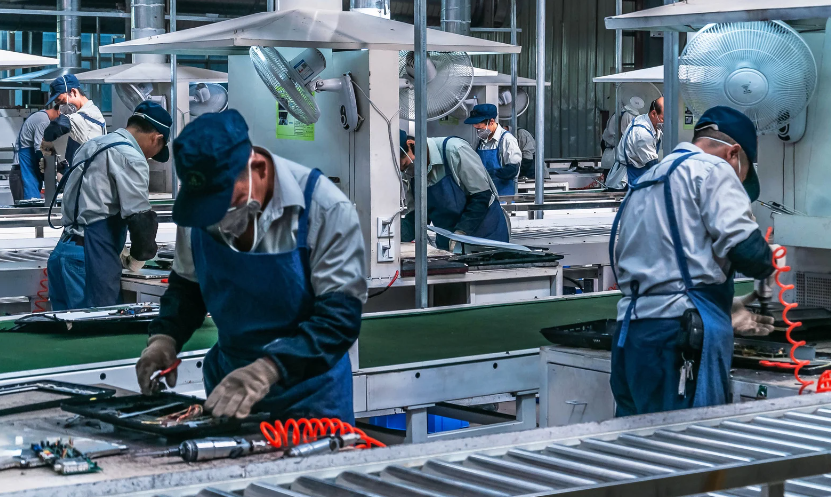
We see this even today with the hybrid work model. Though there are plenty of jobs which adapt well to a remote work approach, many do not. So even here in Malaysia, we see many workers back to their usual five- or six-day on-location schedule, while there are those who retained the Covid model, in whole or in part. These workers either work fully remotely, or have a hybrid model which sees them going to a physical job location perhaps only once or twice a week. Like the hospital example above, this disparity can even exist within the same company.
MALAYSIA AND THE REGIONAL CONTEXT
Like some regional counterparts, Malaysia is beginning to explore similar “out of the box” work ideas, too, though cautiously. Proposals for a four-day workweek or expanded work-from-home arrangements in the public sector have surfaced as part of broader efforts to manage rising fuel costs and economic pressure, along with mitigating worsening traffic jams in cities, which are draining enormous resources in time lost and fuel wasted.
The context here is complex, as you might imagine. Subsidized fuel, particularly RON95 petrol, continues to shield many consumers from the full impact of global price swings. However, the broader cost structure – from logistics to electricity generation – remains tied to global energy markets. Similarly, the fact that diesel is not subsidized (at least in Peninsular Malaysia, where prices recently hit a record high) will have a trickle-down effect on consumer prices, as companies begin to feel the impact from significantly higher transportation and logistics costs. Malaysians may be able to pay less at the pump for their RON95 gasoline, but if the price of nearly everything else increases because of the astronomical cost of diesel, it will be something of a pyrrhic victory indeed.
A reduction in commuting days could offer modest relief, particularly in urban centres such as Kuala Lumpur, where traffic congestion and fuel consumption are persistent concerns. Some large cities have already found some success with this, with things like car registration numbers determining days on which those vehicles can operate.
At the same time, Malaysia’s diverse economy means any shift would need to be carefully and deliberately calibrated. Manufacturing, services, and tourism sectors each face different operational realities.
WILL THIS HAPPEN?
The idea of a four-day workweek is no longer confined to think tanks or experimental trials. It is being tested in multiple workforces now around the world, in real time, under real pressure.
Whether it becomes a lasting feature of the global economy will depend on several factors – the duration of the current energy crisis, the outcomes of ongoing experiments, and the willingness of employers and governments to adapt. It’s also accurate to say the pace and evolution of technology to support the effort will also play a likely significant role.
What is clear is that the conversation has moved forward and it’s done so become of external forces. People have talked about a four-day workweek for a long time, either as a real measure of serious policy questioning, or just workers dreaming of a better balance between work time and personal time. But now things have changed. Much like hybrid work before it, the four-day week is no longer a fringe concept. It is a serious option, shaped not just by preference or hope, but by necessity.
And as history has shown, necessity is not just the “mother of invention” – it also has a way of accelerating change, whether we’re ready for it or not.

Sources: Fortune; Reuters; The Guardian; BBC News; International Energy Agency (IEA); Chartered Institute of Personnel and Development (CIPD); The Star; The Edge Malaysia; World Bank; Asian Development Bank (ADB)