



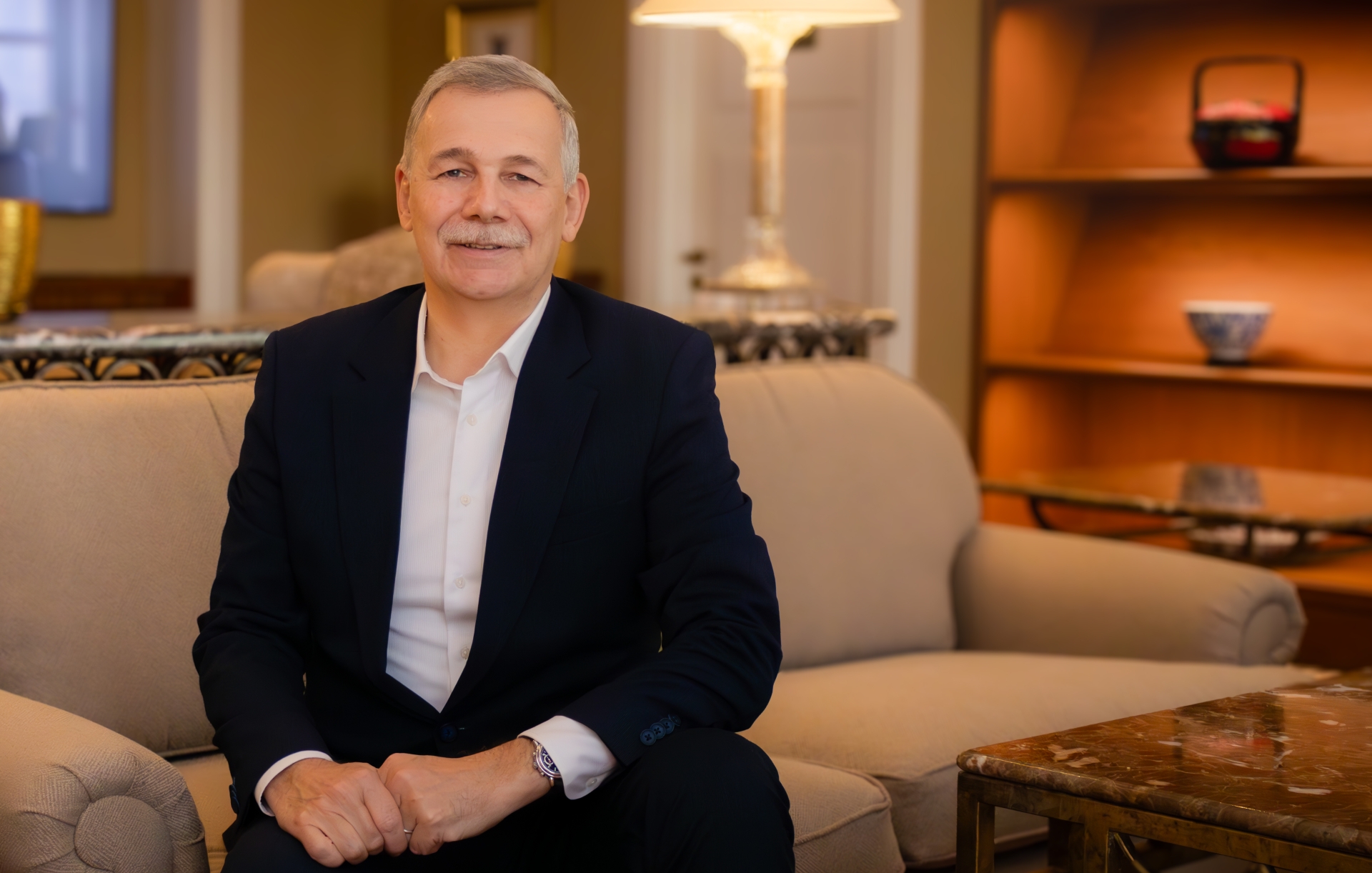
Swiss-born hotelier Richard Suter has spent more than four decades in hospitality, moving from professional kitchens to senior hotel leadership across Asia and beyond. Now General Manager of Dusit Princess Melaka, he reflects on his family’s restaurant, the lessons of working across cultures, his passion for antiques, and why a successful hotel should feel connected to the place it calls home.
Richard Suter’s career began long before he stepped into a professional kitchen. Growing up in Klingnau, a small medieval town in Switzerland founded in 1239, he spent time around his family’s restaurant, a business with a history stretching back centuries. It offered an early education in hospitality, although the lessons were less about formal service standards than about hard work, looking after people, and understanding the relationship between a business and its community.
After training and working as a chef, Suter entered the hotel industry and embarked on an international career that would take him to the Caribbean, Hong Kong, Thailand, Indonesia, Japan, and South Korea. Along the way, he moved from the kitchen into food and beverage, hotel operations, and ultimately general management, leading properties and multicultural teams through good times and some decidedly more difficult ones.
Today, he is General Manager of Dusit Princess Melaka, where the historic city’s character seems to strike a personal chord. Away from hotels, he collects and restores antiques, another interest rooted in an appreciation for history, craftsmanship, and the stories that objects carry with them. We caught up with Suter to talk about his journey, the realities of international hospitality, expat living in Malaysia, and what he hopes to build in Melaka. The interview has been edited for length and clarity.
You grew up around your family’s restaurant in Switzerland. How much did that experience influence the way you approach hospitality today?
Quite a lot, I think. In some ways, my hospitality journey began before I ever entered a professional kitchen. Our family restaurant in Klingnau had been welcoming people for centuries, although it had not always belonged to our family. Growing up around a place like that gives you an early understanding of what it means to look after a business and the people who depend on it.
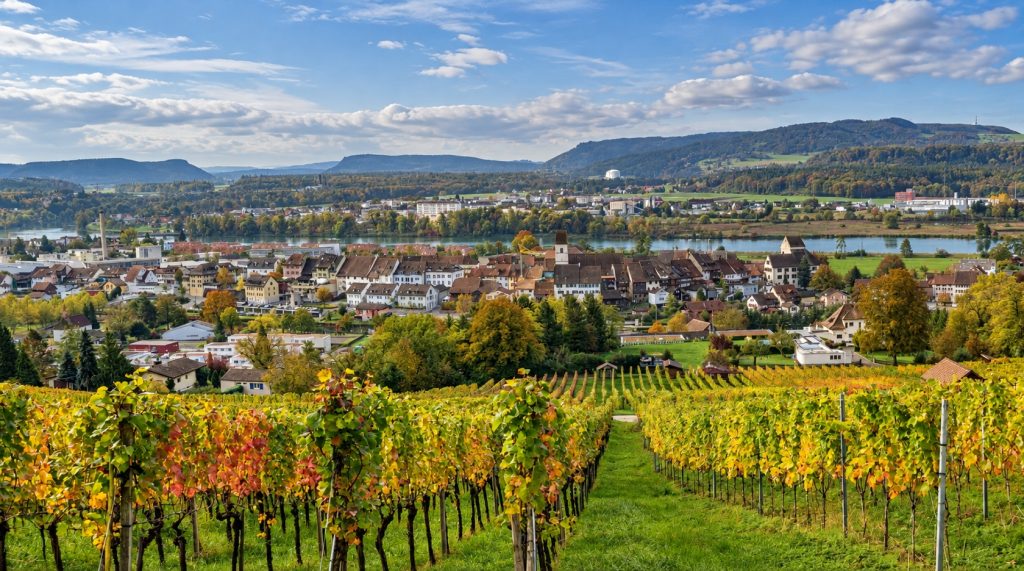
You learn quite quickly that you cannot take anything for granted. Good times do not last forever, so you have to work together, adapt, be creative, and find solutions when things become difficult. Your reputation is personal, too, because you are part of the community.
When I started working professionally in kitchens, I learned discipline, consistency, humility, and teamwork. But the foundations were already there. Those lessons have stayed with me throughout my career.
You began as a chef in 1982, entered the hotel industry in 1988, and went overseas the following year. Was becoming a General Manager always the ambition?
No, not at all. There was no master plan that said I would eventually run hotels. I enjoyed the culinary world, but I was curious about what happened beyond the kitchen. I wanted to understand the restaurant, the guest experience, the commercial side of the business, and eventually the hotel as a whole.
Moving abroad was a major step. You leave familiar surroundings, discover a different culture, and find yourself having to learn all over again. One opportunity led to another, and gradually I moved from the kitchen into food and beverage, then broader hotel operations, and eventually general management.
Opening hotels, leading large teams, and navigating difficult periods such as COVID have all been important parts of the journey. But when I look back, the things I remember most are usually connected to people rather than numbers or awards. Seeing colleagues develop, take on greater responsibility, and progress in their careers is particularly rewarding.
Your career has taken you through very different parts of the world. Which places have had the greatest influence on you?
Every destination has left something with me, so choosing just one would be quite difficult. Japan had a profound influence on my appreciation for precision, consistency, and attention to detail. Korea reinforced the importance of relationships and community, while Thailand and Indonesia showed me how naturally warmth, generosity, and graciousness can become part of hospitality.
The bigger lesson, though, is that there is no single definition of great hospitality. What makes someone feel genuinely welcome can be very different from one country to another. You might have excellent facilities and service procedures, but if you do not understand the people you are serving, you can still miss something important.
Working internationally teaches you to pay attention. You begin to understand that hospitality is not simply about applying a standard; it is about knowing how to make that standard meaningful to the people in front of you.
How has working across cultures changed the way you lead people?
I would say it has taught me to listen before I lead. You cannot arrive in another country carrying a leadership formula that worked somewhere else and expect everybody to adapt to you.
Different cultures communicate differently. People may approach hierarchy, recognition, criticism, and change in different ways, so you have to understand the environment before deciding how best to work with your team.
That does not mean compromising your values. Fairness, integrity, accountability, and respect should remain constant. What changes is how you communicate those principles and put them into practice.
You also learn not to make assumptions about individuals. Silence does not necessarily mean agreement, and confidence does not automatically mean competence. You have to take the time to understand people, what motivates them, and what they need in order to do their best work.
After so many years in hospitality, what principles do you find yourself returning to most often?
Take ownership, be fair, stay curious, listen, and never take success for granted. I also think it is important to give people the opportunity to surprise you!
Many of those ideas go back to the restaurant. In a family business, you do not think in strict departmental boundaries. If something needs doing, you find a way to get it done. You learn to adapt and be inventive because the business depends on it.
What advice would you give young people entering the hospitality industry today?
Be curious, resilient, humble, and genuinely interested in people. Technical skills can be taught, but it is much harder to teach somebody to care about understanding another person or to keep learning throughout their career.
I would encourage young professionals to get out of their comfort zones. Work somewhere unfamiliar, take an assignment that makes you a little nervous, or spend time learning about another culture. You will make mistakes along the way, of course, but take responsibility for them and learn from them.
When I started in 1982, I certainly did not have every step of my career mapped out. Sometimes an opportunity takes you somewhere you never expected to go, and that turns out to be the experience that changes you most. You have to remain open to those possibilities.
Let’s move away from work. Outside the hotel business, you have a strong interest in collecting and restoring antiques. Where did that come from?
I have always been fascinated by things that have a history and a story. Growing up in a medieval town like Klingnau probably had something to do with it. Old buildings and objects were part of everyday life, so you naturally become curious about the people who came before you, how things were made, and why certain pieces have survived. Travel and living in different countries have both strengthened that interest.
I would also add that personally, I am not especially attracted to perfection. Character is much more interesting to me.
Does that apply to people as well as antiques? [Laughs] Speaking of character and imperfection, though, what do you enjoy most about restoring something old or damaged?
I suppose it’s the possibility of bringing something back to life without taking away what makes it special. You see a piece that has been neglected or damaged, but you can still recognize what is underneath. There is real satisfaction in bringing out that character again.
For me, good restoration is not about making something old look brand-new. The marks and imperfections are often part of its appeal, and I would not want to erase them simply to make the object look more polished.
I enjoy discovering the story behind a piece as much as the restoration itself. Perhaps that is also why I like exploring old towns and local communities. There is usually something interesting to discover when you take the time to look beyond the surface.
It often comes back to a place, doesn’t it? So what about your current one? After working in so many destinations, what was it about Melaka that appealed to you?
Perhaps it connects with my upbringing more than I realized. Klingnau is a small medieval Swiss town where history is part of everyday life. I grew up around a restaurant with centuries of history, so old buildings, traditions, food, and businesses with stories behind them have always interested me.
Melaka has that same feeling in its own distinctive way. History is visible in the streets and architecture, but you also experience it through food, language, places of worship, and the different communities that make up the city.
What I find especially appealing is that Melaka does not feel like a museum. Its heritage is still alive, part of the way people live today. That authenticity is something many destinations try hard to recreate. As a hotelier, I do not see it as my job to compete with that character. I would much rather help our guests discover it.
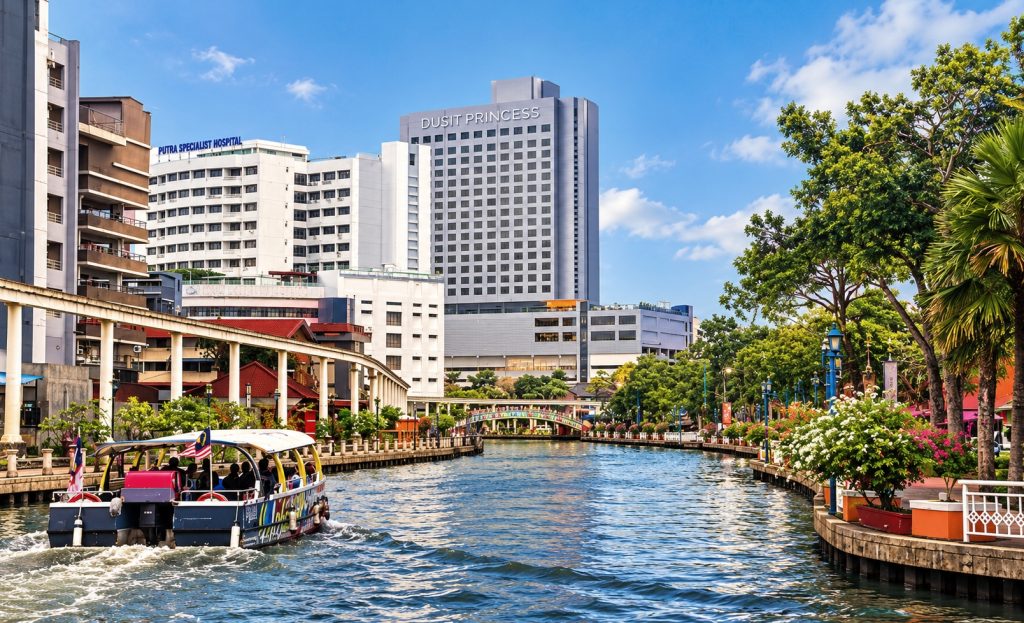
Thanks so much for your time. To wrap up, let’s give you a chance to provide a shameless plug for your hotel. What would you like guests to experience at Dusit Princess Melaka, and what kind of role do you hope the hotel will play in the city?
I would like the hotel to be warm, approachable, gracious, and connected to its surroundings. Dusit has its own tradition of gracious hospitality, but I also want the property to feel as though it belongs in Melaka. A hotel building provides the setting; it is the people who create the memories.
I think one of the most valuable things we can offer our guests is ease. People come to Melaka for different reasons, and I don’t believe we should presume to try to offer the same experience for everybody. Our job is to understand what each guest is looking for and then make it easier for them to enjoy it.
That means knowing the city and building genuine relationships with the local community. The better we understand Melaka and the people behind its attractions, food, and traditions, the better we can connect guests with experiences they might otherwise miss.
Naturally, we want to run a successful business, but lasting success has to mean more than revenue or occupancy. I want us to develop Malaysian hospitality talent, create opportunities for our colleagues, work with local businesses, and help visitors appreciate what makes Melaka special.
That all sounds great, and it seems that Melaka is good fit for both the Dusit brand and for you. It’s still a relatively new addition to the city, so you’ve got your work cut out for you, I’m sure.
I think so! Ultimately, I would like Dusit Princess Melaka to become a hotel that our colleagues, our guests, and the people of Melaka can genuinely feel proud of. If we can combine Dusit’s gracious hospitality with the city’s authenticity, while contributing positively to the community around us, then I think we will have created something worthwhile.
It comes back to what I learned growing up around our family restaurant: hospitality works best when the business, its people, its guests, and its community grow together.