



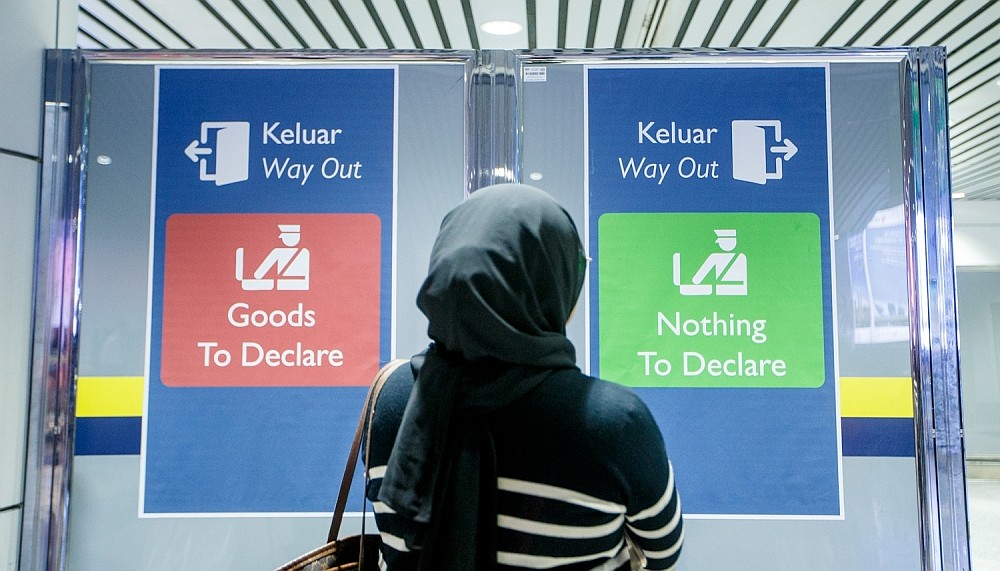
A revamped Green Lane system at Kuala Lumpur International Airport Terminal 1 aims to reduce queues, improve passenger flow, and bring Malaysia’s main gateway in line with international best practices ahead of Visit Malaysia Year 2026.
An improved Green Lane system was introduced at Kuala Lumpur International Airport (KLIA) Terminal 1 on January 26, marking a significant shift in how international arrivals are processed at Malaysia’s busiest airport. The initiative, launched on a one-month trial basis, is designed to reduce congestion at customs clearance while maintaining security oversight.
Transport Minister Anthony Loke said the system allows passengers with nothing to declare to exit the arrivals area more efficiently, addressing longstanding bottlenecks that have frustrated travellers during peak hours. The rollout is the result of months of coordination between Malaysia Airports Holdings Berhad (MAHB), the Malaysian Border Control and Protection Agency (MCBA), and the Royal Malaysian Customs Department.
Under the previous arrangement, all arriving international passengers were required to queue in a single lane and have their baggage scanned via X-ray, regardless of whether they were carrying prohibited or declarable items. This process often resulted in waiting times of 15 to 20 minutes and compounded congestion at baggage claim, as passengers queued once to collect luggage and again for customs inspection.
The new configuration introduces two Green Lanes for passengers who are not carrying prohibited items or goods requiring declaration, alongside a dedicated Red Lane for those who need to declare items or pay duties. The approach is intended to streamline passenger flow while allowing authorities to focus resources where they are most needed.
According to Loke, KLIA Terminal 1 currently handles between 80,000 and 90,000 passengers daily, with international travellers accounting for approximately 60 percent of that figure. “Through this concept, we hope to better manage growing passenger volumes and reduce unnecessary delays for the majority of travellers,” he said during a working visit to the airport.
Importantly, officials have stressed that the Green Lane system does not compromise national security. Customs and border officers continue to monitor passengers using risk assessment tools and have full discretion to divert individuals to the Red Lane if suspicious behaviour is observed or further inspection is warranted. Passenger data remains accessible to enforcement agencies throughout the process.
The reintroduction of the Green Lane also brings KLIA into closer alignment with procedures already in place at many major international airports across Asia, Europe, and North America. Globally, differentiated customs channels for “nothing to declare” passengers are a standard feature at high-traffic hubs, allowing authorities to balance efficiency with enforcement. In this context, the move represents less an innovation than a necessary modernization.
Loke noted that the trial period, which runs until February 26, will allow authorities to assess the system’s effectiveness before deciding on wider implementation. If successful, the Green Lane concept will be expanded to KLIA Terminal 2 and potentially rolled out at other international airports nationwide.
The timing is deliberate. Malaysia is preparing for increased visitor numbers ahead of Visit Malaysia Year 2026, and airport experience is widely regarded as a first and lasting impression for international travellers. Reducing friction at arrival points is seen as a practical step toward improving overall perceptions of efficiency and hospitality.
Deputy Transport Minister Datuk Hasbi Habibollah and Transport Ministry secretary-general Datuk Jana Santhiran Muniayan were also present at the launch, underscoring the government’s emphasis on inter-agency coordination in addressing operational challenges at key infrastructure points.
Early indications suggest the system has been operating smoothly since its introduction, though authorities have cautioned that further refinements may be made based on feedback and observed passenger behaviour during the trial phase.
While modest in appearance, the Green Lane’s return signals a broader shift toward passenger-centric airport management. For frequent travellers accustomed to similar systems elsewhere, the change will feel long overdue. For first-time visitors, it may quietly but meaningfully shape their first encounter with Malaysia.
If the trial delivers on its promise, the Green Lane system would likely become a permanent feature of KLIA’s arrival experience, positioning the airport more competitively within the region and reinforcing Malaysia’s readiness for the next phase of tourism growth.