


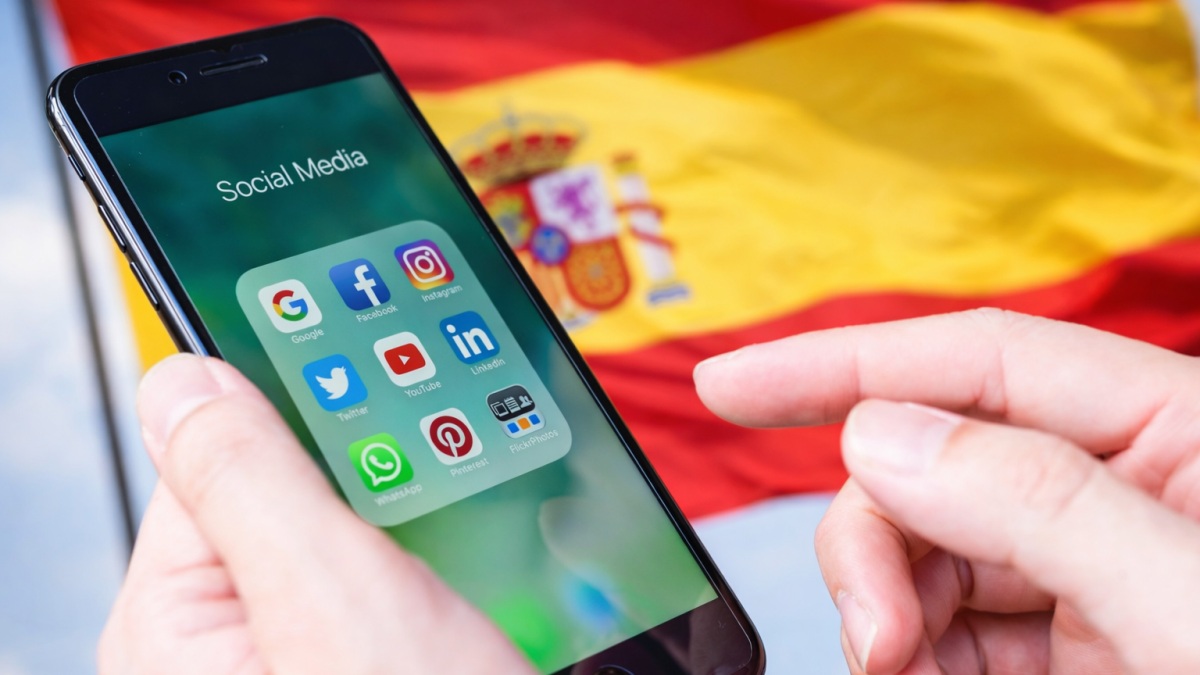
Spain’s proposal to bar under-16s from social media has reignited a global debate over child safety, platform accountability, and free expression, placing the country alongside Australia, parts of Europe, and even Malaysia in a growing movement to curb children’s exposure to online harms.
Spain has moved decisively into one of the most contentious policy debates of the digital age, announcing plans to ban children under the age of 16 from accessing social media platforms. The proposal, unveiled by Prime Minister Pedro Sánchez at an international summit in Dubai on February 3, is framed as a response to mounting concerns over children’s exposure to online pornography, violence, manipulation, and addictive design features.
Under the proposal, social media platforms would be required to implement what Sánchez described as “effective age verification systems,” rejecting self-declared age checkboxes in favour of mechanisms that create genuine barriers to access. The Spanish leader argued that children are being pushed into online environments that were never designed with their wellbeing in mind, warning that governments can no longer rely on voluntary safeguards or corporate assurances.
Alongside age restrictions, Sánchez has also signalled a tougher regulatory posture toward technology companies more broadly. Proposed legal reforms would introduce criminal liability for senior executives who fail to remove illegal or hateful content, marking a sharp escalation in the accountability expectations placed on global platforms operating within Spain.
The announcement triggered an immediate and highly personal response from Elon Musk, owner of X. In a series of posts, Musk insulted the Spanish prime minister and accused him of authoritarianism, extending his criticism to French authorities as well, following police raids on X’s Paris offices linked to investigations into alleged political interference and the spread of sexual deepfakes.
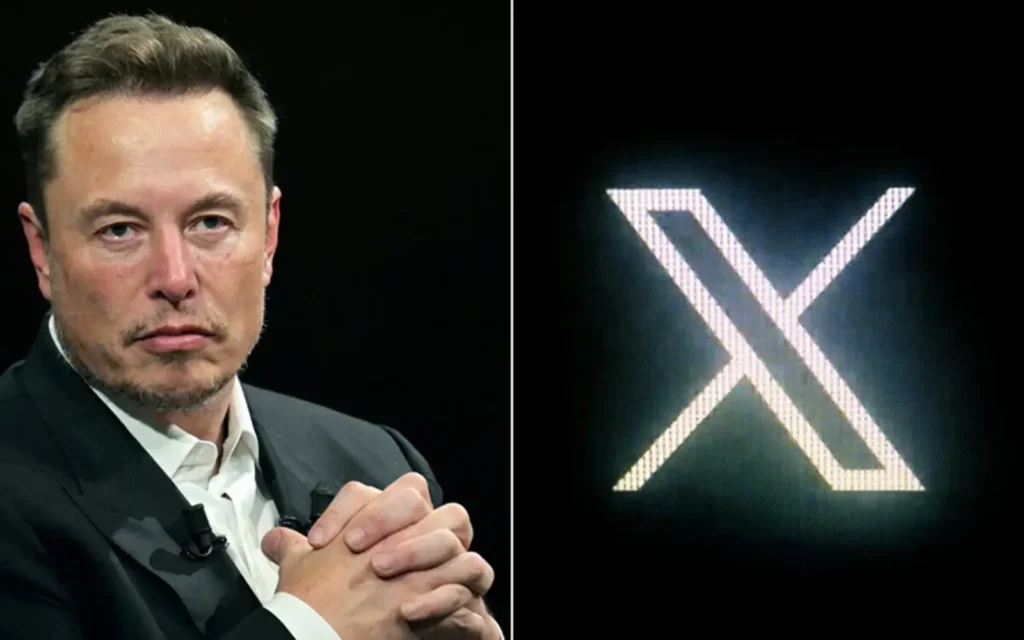
The exchange highlights the increasingly fraught relationship between national governments and major technology platforms, particularly those owned or influenced by high-profile figures. Musk’s online outbursts have become a recurring feature of regulatory clashes in multiple jurisdictions. In the United States, he is also facing renewed scrutiny following his repeated appearances in the recently released tranche of the child sex trafficking-centred Epstein files, a development that has added to broader questions around judgment, influence, and accountability among powerful tech leaders.
CHILD SAFETY AND POLITICAL REALITY
Spain’s proposed measures are not without obstacles. Sánchez leads a coalition government that lacks a clear parliamentary majority, and major legislative changes often face prolonged negotiations or dilution. While the government has indicated that a package of five measures could begin moving through approval processes as early as next week, passage is far from guaranteed.
Still, the announcement places Spain firmly within a growing international cohort seeking to draw firmer boundaries around children’s digital lives. Australia became the first country to enact a sweeping ban on young teenagers’ access to platforms such as Facebook, Instagram, and TikTok in December, setting a precedent that has emboldened policymakers elsewhere. France and Portugal have explored similar restrictions, while Denmark, Greece, and France are working with Spain to push for coordinated action at the European Union level.

Beyond Europe and Australia, the issue is gaining traction in Asia as well. Malaysia has publicly acknowledged growing concerns around children’s exposure to social media, online predators, and harmful content, and is now among the countries examining tighter controls, age thresholds, and stronger enforcement mechanisms. While policy approaches differ, the direction of travel is increasingly clear: governments are no longer content to leave child safety solely in the hands of platform operators.
At the heart of the debate lies a fundamental question about responsibility. For years, social media companies have positioned themselves as neutral conduits rather than publishers or guardians. That position is becoming harder to sustain as evidence accumulates around the mental health impacts of excessive screen time, algorithm-driven content loops, and unmoderated exposure to extreme material among young users.
Supporters of Spain’s proposal argue that meaningful age restrictions are long overdue, noting that existing safeguards are easily bypassed and poorly enforced. Critics, however, warn that bans risk driving young users toward less regulated corners of the internet, while raising concerns about privacy, surveillance, and even the feasibility of age verification at scale.
What distinguishes Spain’s approach, however, is its willingness to combine child protection measures with executive accountability, sending a signal that platform governance is no longer a purely technical issue but a matter of public responsibility. Whether that model proves workable remains to be seen, but it reflects a broader shift in how governments view the power and reach of global technology firms.
As debates continue and spread across continents, the Spanish proposal underscores a shared unease: that the very pace of digital change has outstripped the frameworks meant to protect the most vulnerable users. From Europe to Australia and even here in Malaysia, the question is no longer whether governments should intervene, but how far they are prepared to go, and how much resistance they are willing to face from some of the world’s most influential, wealthy, and well-connected corporate actors.