



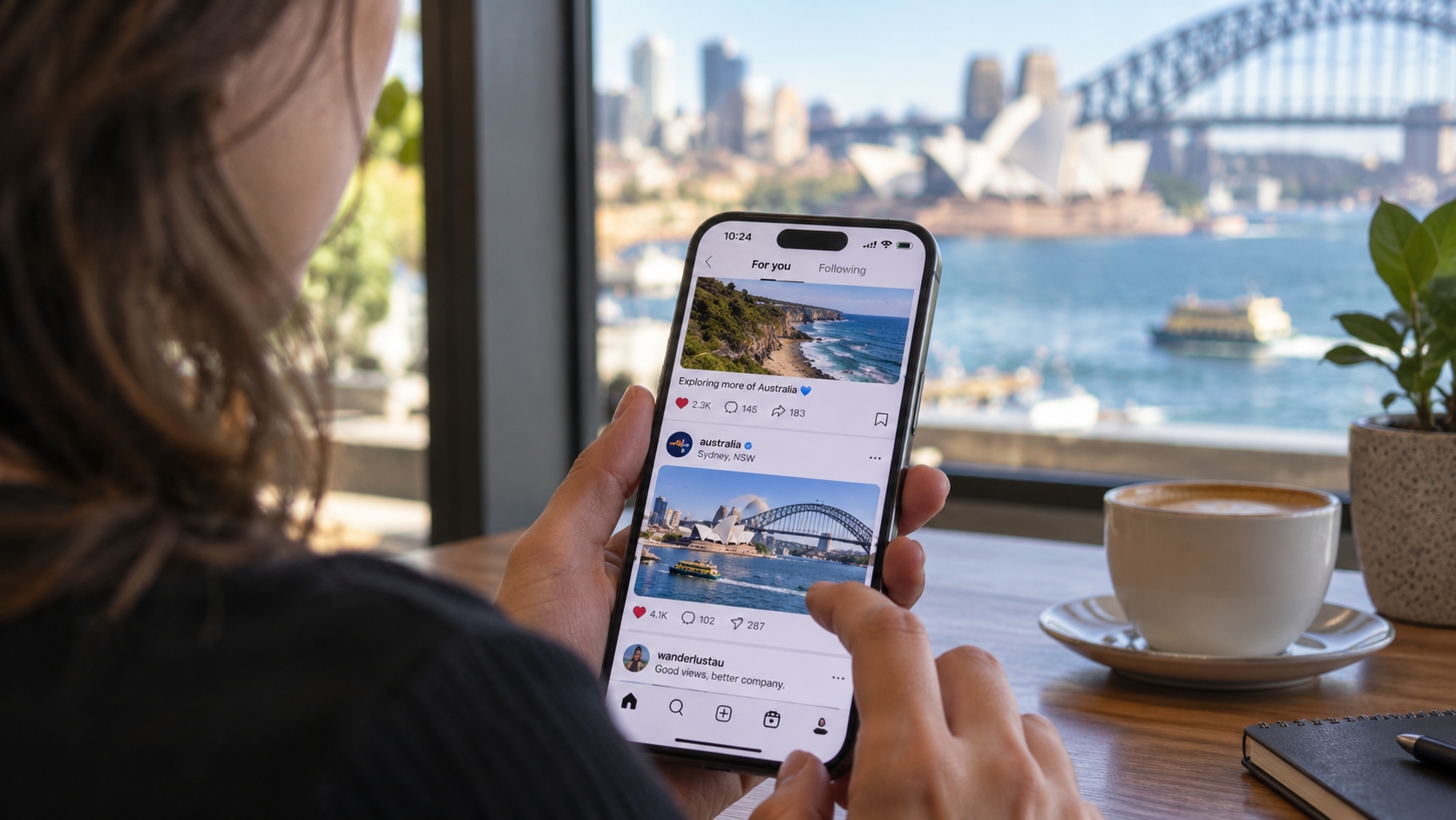
Australia is taking another unusually assertive approach to online safety, proposing a law that would let users over 16 choose between algorithmically curated feeds and content from accounts they actually follow.
When it comes to social media, Australia is once again showing the world that the Land Down Under is also “the land that gets out in front.” Following its world-first ban for under-16s using social media, the Aussies are now training their sights on the powerful algorithms that determine the content fed to you. Not to regulate big tech, but to give users a clear path to opt out.
And we have to admit, there is something seriously appealing about the idea of a button that simply says: No thanks, I’ll choose what I see. It’s such a basic premise, it’s a bit hard to believe that it’s not already in existence.
That is essentially what Australia’s federal government is proposing for social media users, with draft legislation unveiled this week that would require platforms to give Australians over 16 a genuine choice about whether algorithms determine what appears in their feeds.
Under the proposed “My Feed, My Way” system, platforms such as Instagram, Facebook, TikTok, YouTube and others would have to notify new and existing users and ask them to choose their preferred default feed. Users could opt in to the familiar algorithmically personalized experience, in which the platform recommends content based on what it thinks will keep them watching (read that again – not necessarily just what they think users will like, but what they think will keep them hooked on the platform), or opt out and see posts from the friends, creators, and groups they have deliberately chosen to follow.
The party to whom this control is given is a key part of the proposed law. Australia is not proposing to ban recommendation algorithms, nor is it telling adults what they can or cannot look at. It is simply proposing that users should have the ability to tell the platforms that they do not want algorithmically recommended material pushed into their feeds in the first place.
For millions of users who spend an hour or more doomscrolling on TikTok or Instagram, or even longer watching one video after another on YouTube, a choice like this could be an extremely helpful tool for cutting screen time. After all, the “feedback loop” phenomenon that’s baked in to the algorithmic system (see explainer below) is engineered at least in part to keep you glued to the platform.
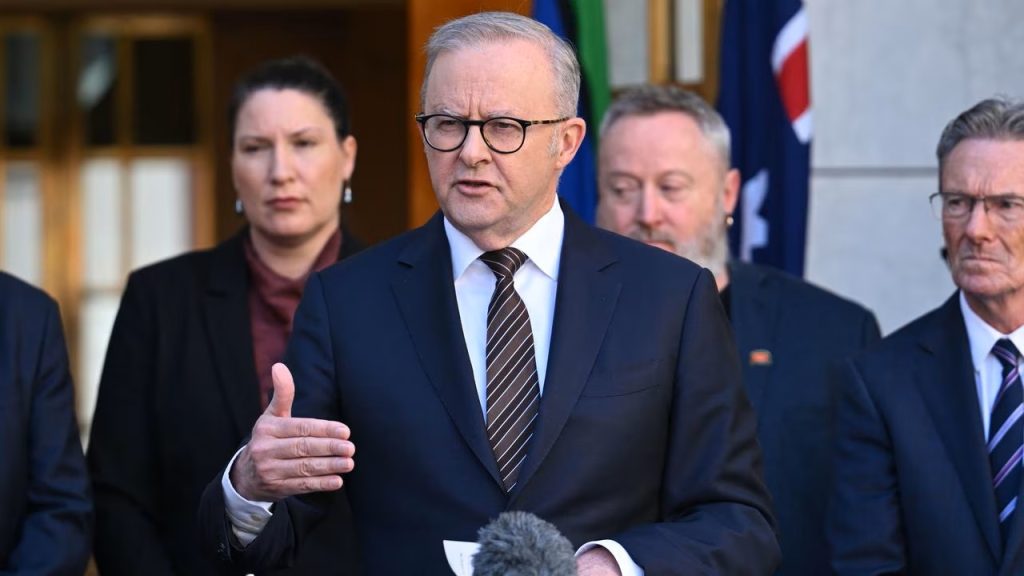
Prime Minister Anthony Albanese described the initiative as being about choice rather than government control. “It’s about giving people control,” Albanese said, adding that the policy was about “putting choice back into the hands of Australians online.”
Communications Minister Anika Wells was similarly emphatic that users would remain free to choose the algorithm if they wanted it. “The reality is that lots of people will want to choose the algorithm,” she said. “That’s their choice. We respect that choice.”
That may sound like a relatively modest intervention, but it represents a significant philosophical shift in the relationship between users and the giant platforms whose secretive, algorithmic recommendation systems have become extraordinarily influential in determining what people see.
AUSTRALIA IS AGAIN TRYING TO SET THE RULES
The algorithm proposal forms part of a much broader ‘Digital Duty of Care’ initiative, which would place greater responsibility on digital services to identify and reduce foreseeable harms rather than simply responding after something has gone wrong.
The draft legislation would cover more than social media. Online games, apps, messaging services, search engines and AI chatbots would also face new obligations, particularly when children are involved. For Australians under 18, the proposed rules address harms including bullying and abuse, pornography, content promoting eating disorders, misogynistic material, the glorification of crime, and other content capable of causing serious harm.
The proposal goes further for under-16s, requiring platforms to switch off personalized algorithms and features such as endless scrolling. That would operate as an additional safeguard alongside Australia’s existing world-first social media age restrictions.
And Australia really has been out in front on this issue. On December 10, 2025, its world-first social media age restrictions came into effect, requiring designated platforms to take reasonable steps to prevent Australians under 16 from holding accounts. The restrictions apply to major services including Facebook, Instagram, TikTok, YouTube, Snapchat, Reddit, X and others. Children themselves are not fined for getting around the restrictions, but platforms that fail to take reasonable steps can face court-imposed penalties of up to A$54.6 million (about RM160 million).
The latest proposal takes that experiment a step further by attempting to address something that has largely escaped regulation: the machinery deciding what people are shown once they are inside a platform.
The government says companies would have to document the measures they take to identify and address risks, and those measures would have to remain effective over time. Failure to comply with the Digital Duty of Care could attract doubled penalties of up to A$109.2 million (about RM320 million). The Australian eSafety Commissioner would be responsible for compliance and enforcement.
There is, unsurprisingly, already a political argument over where the line should be drawn. Critics have raised concerns about free speech and the amount of discretionary power that could be given to the communications minister, while the government insists the legislation is about regulating the systems and features that can create harm, rather than dictating what Australians are permitted to believe or read. It’s unclear what the opposition could be to simply giving users a choice, but in any event, those criticisms will probably be put to the test if the legislation reaches Parliament.
THE BIG QUESTION: WHO REALLY CONTROLS YOUR FEED?
The attraction of an algorithm-free option is fairly easy to understand. Most social media users know that the material appearing in their feeds is not simply a chronological stream of things posted by people they follow. Platforms analyze viewing habits, interactions and other signals and use them to predict what might keep an individual user engaged.
That can be convenient. It can also create a remarkably effective feedback loop in which increasingly sensational, provocative or emotionally charged material is served up because the system has learned that the user is more likely to stop scrolling for it.
Australian advocate Chanel Contos, whose Teach Us Consent organization has campaigned for algorithmic feeds to become opt-in, welcomed the government’s proposal. “Australia is world-leading on online safety,” she said, arguing that getting the reform right could allow the country to “set a global standard.”
There is still plenty of work to do before that happens. The legislation is currently a draft being released for targeted consultation, with the government intending to introduce legislation to Parliament later this year.
And the devil, as always, will be in the implementation. An opt-out button is only meaningful if it is genuinely easy to find, easy to activate, honored consistently, and does not simply lead to another form of recommendation system operating under a different name.
Still, Australia’s approach is worth watching. It has already demonstrated a willingness to experiment with rules that other governments have mostly only talked about. Whether the country’s under-16 social media restrictions prove successful currently remains a subject of debate, but Australia has now taken the next logical step and asked a difficult question of the platforms themselves: What if users should get to decide whether they’re in charge, or the algorithm?
That is a question millions of social media users elsewhere may soon be asking, too. The social media giants may not love it, but plenty of their users absolutely will.
Sources: Australian Government Department of Infrastructure; ABC News; HuffPost; Australian eSafety Commissioner; Bank Negara Malaysia.