


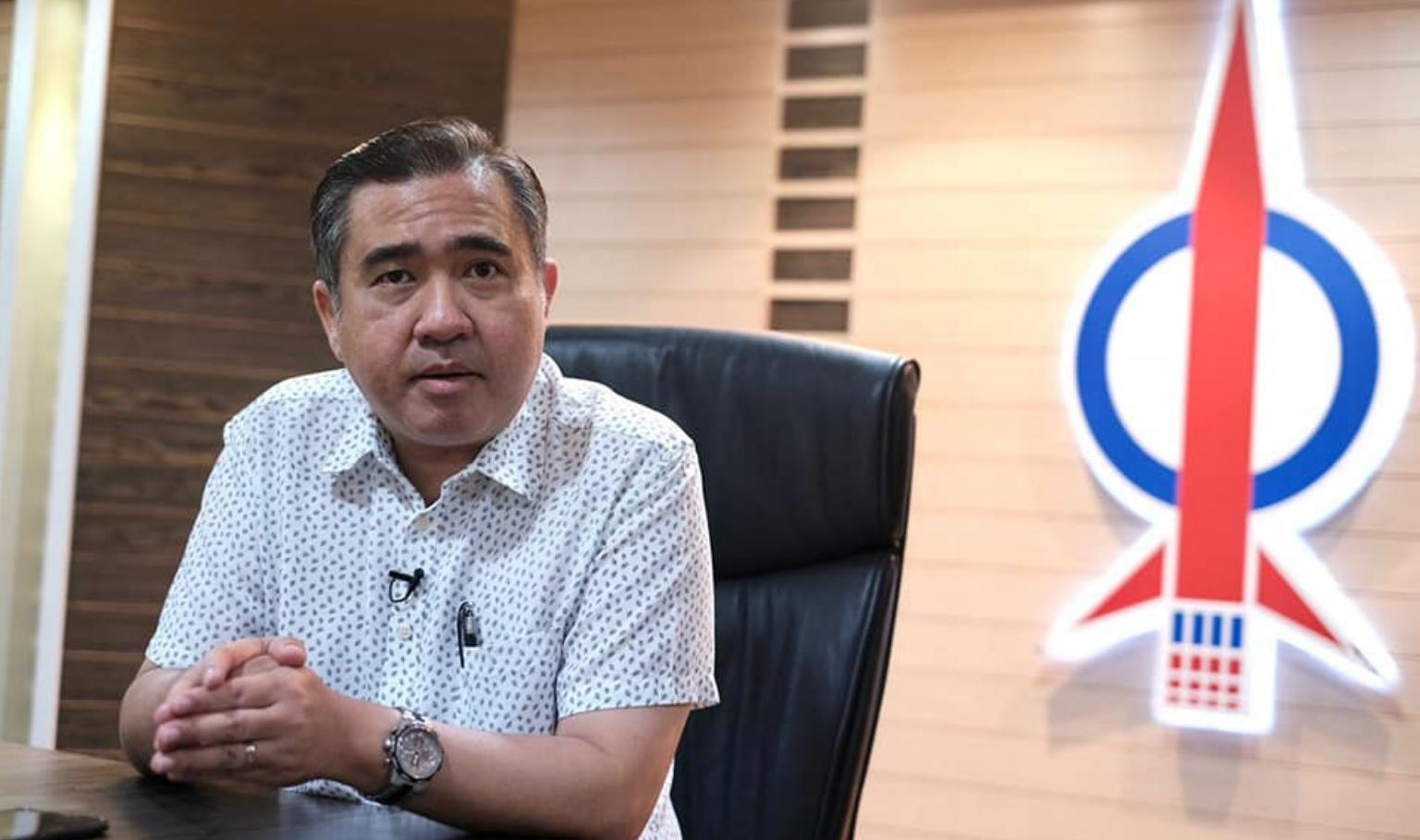
Transport Minister Anthony Loke has announced his impending resignation from the Cabinet after DAP rejected the decision allowing former prime minister Najib Razak to serve the remainder of his sentence under house arrest, exposing fresh tensions at the heart of Malaysia’s governing coalition.
Malaysia’s political landscape was jolted on Saturday when Transport Minister and Democratic Action Party (DAP) secretary-general Anthony Loke announced that he would resign from the Cabinet in protest over the decision to allow former prime minister Najib Razak to serve the remainder of his prison sentence under house arrest.
The announcement came less than 24 hours after the Federal Territories Pardons Board, chaired by Malaysia’s King, Sultan Ibrahim, granted Najib a conditional pardon that allows him to serve his sentence at home until August 23, 2028, subject to payment of a RM50 million fine.
Strictly speaking, Loke has offered his resignation rather than already left office. He said he would submit his resignation letter to Prime Minister Anwar Ibrahim on September 21. For now, that particular distinciton is worth noting because, as of Saturday evening, the process had not formally been completed, and in politics, things can often change gears at a moment’s notice.
That said, the political significance is considerable. Loke is one of the most senior figures in Anwar’s unity government, and DAP is the largest component of the Pakatan Harapan (PH) coalition. The party holds 40 seats in the 222-member Parliament, making its continued participation important to the government’s stability.
The decision followed an emergency three-hour meeting of DAP’s Central Executive Committee on Saturday. Loke said the party respected the King’s constitutional authority to grant pardons, but had concluded that the house-arrest decision was something DAP could not accept.
“I have offered to submit my resignation as Transport Minister to the Prime Minister,” Loke said after the meeting, while emphasizing that the move applied only to himself. Other DAP ministers and deputy ministers will remain in government.
That was actually a carefully and politically calibrated distinction. Loke said DAP did not want to withdraw from the government because doing so could contribute to political instability and potentially bring about the collapse of the administration. He also said the party was aware that political opponents were waiting for an opportunity to exploit divisions within the unity government.
THE DECISION THAT CHANGED THE POLITICAL EQUATION
The immediate trigger was Friday’s decision by the Pardons Board.
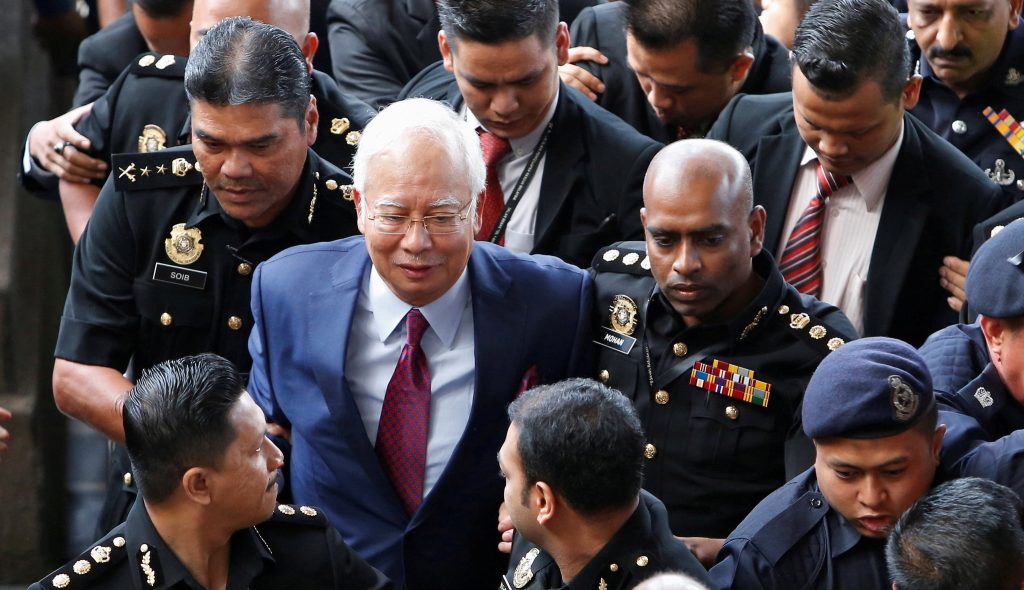
Najib, 73, has been serving a six-year sentence at Kajang Prison following his conviction over the transfer of RM42 million from SRC International, a former subsidiary of 1Malaysia Development Bhd (1MDB), into his personal accounts. He originally received a 12-year sentence and RM210 million fine in 2020, but the previous King’s Pardons Board halved the prison term and reduced the fine to RM50 million in January 2024.
The latest decision means that, provided Najib meets the conditions attached to the pardon, he can serve the balance of that sentence under house arrest rather than in prison. The government has said that a breach of the conditions would result in the pardon being revoked and Najib being required to return to prison.
Worth noting, this specific decision applies to the sentence arising from the SRC International case. It does not automatically resolve Najib’s separate legal battle over a second 1MDB-related conviction.
In December 2025, the High Court convicted Najib on 25 charges involving abuse of power and money laundering linked to RM2.2 billion in funds and sentenced him to another 15 years in prison, together with a RM11.38 billion fine. He has appealed that conviction. Legal experts told CNA that if the conviction and sentence are ultimately upheld, the house-arrest arrangement announced this week would not automatically extend to that separate sentence.
There is also an important legal wrinkle surrounding the practical implementation of the latest decision.
Malaysia has no established system specifically governing house arrest in the manner now envisaged for Najib. The Home Minister, Saifuddin Nasution Ismail, said Saturday that the Prisons Department had not yet received the official letter detailing the Pardons Board’s decision and would need to examine it before determining how it should be implemented under existing law.
That makes the coming days potentially significant beyond the political drama. Legal experts have already described the decision as placing Malaysia in relatively uncharted territory, particularly over how detention at a private residence would be supervised and what restrictions would apply.
For Najib and his supporters, meanwhile, the decision represents a major change in his circumstances. Najib has consistently denied wrongdoing and has argued that he was made a scapegoat for the sprawling 1MDB scandal. His continued political influence within UMNO, despite his imprisonment, has also made his legal fate inseparable from the politics of the current government.
A VERY DELICATE BALANCING ACT FOR ANWAR
For Prime Minister Anwar Ibrahim, the development presents a particularly awkward political balancing act – not the first that Anwar has faced.
His PH coalition came to power after the 2018 election on a platform that included institutional reform and greater accountability, while Anwar has repeatedly emphasized his government’s commitment to fighting corruption. Yet the unity government also depends on cooperation with Barisan Nasional, whose principal component is UMNO, the party that Najib once led.
Anwar said Friday that the King had acted within his constitutional powers and urged Malaysians to accept the decision, while insisting that the government’s commitment to combating corruption remained unchanged. Communications Minister Fahmi Fadzil similarly said the government had taken note of the King’s exercise of his powers under Article 42 of the Federal Constitution and that ongoing corruption cases would continue to be dealt with according to law.
The political difficulty is that DAP’s position is now starkly different.
Loke said the party had consistently opposed what it regards as excessive leniency toward Najib because of the significance of the 1MDB scandal and its wider implications for the rule of law. His resignation therefore allows DAP to register a very public protest without taking the much more consequential step of withdrawing from the government altogether.
That compromise may prove important. Loke himself said the Transport Ministry would continue functioning normally and that existing projects and policies would proceed. He is also expected to remain DAP secretary-general, meaning his departure from Cabinet does not amount to his withdrawal from frontline politics.
For now, then, this is certainly not the collapse of Anwar’s government. It is something more politically subtle: one of its most prominent ministers is prepared to leave the Cabinet precisely because his party believes the government must continue.
That political balancing act may become increasingly important as Malaysia heads toward its next general election, constitutionally due by early 2028. The latest crisis has brought together several unresolved questions – the limits and mechanics of royal clemency, the future of Najib’s remaining legal cases, DAP’s position within the unity government, UMNO’s continuing influence, and Anwar’s ability to maintain a precarious coalition whose component parties have very different views of Najib and his legacy.
For the moment, Loke’s resignation is best understood – particularly by outsiders – as a highly symbolic political rupture rather than an immediate governmental breakdown. But the fact that the rupture has occurred at all, following a decision concerning one of the most infamous and massively consequential corruption cases in Malaysia’s history, underlines once again just how difficult the country’s political balancing act has become.
Sources: Reuters, Associated Press, Channel NewsAsia, The Straits Times, Bernama, The Star, South China Morning Post.