



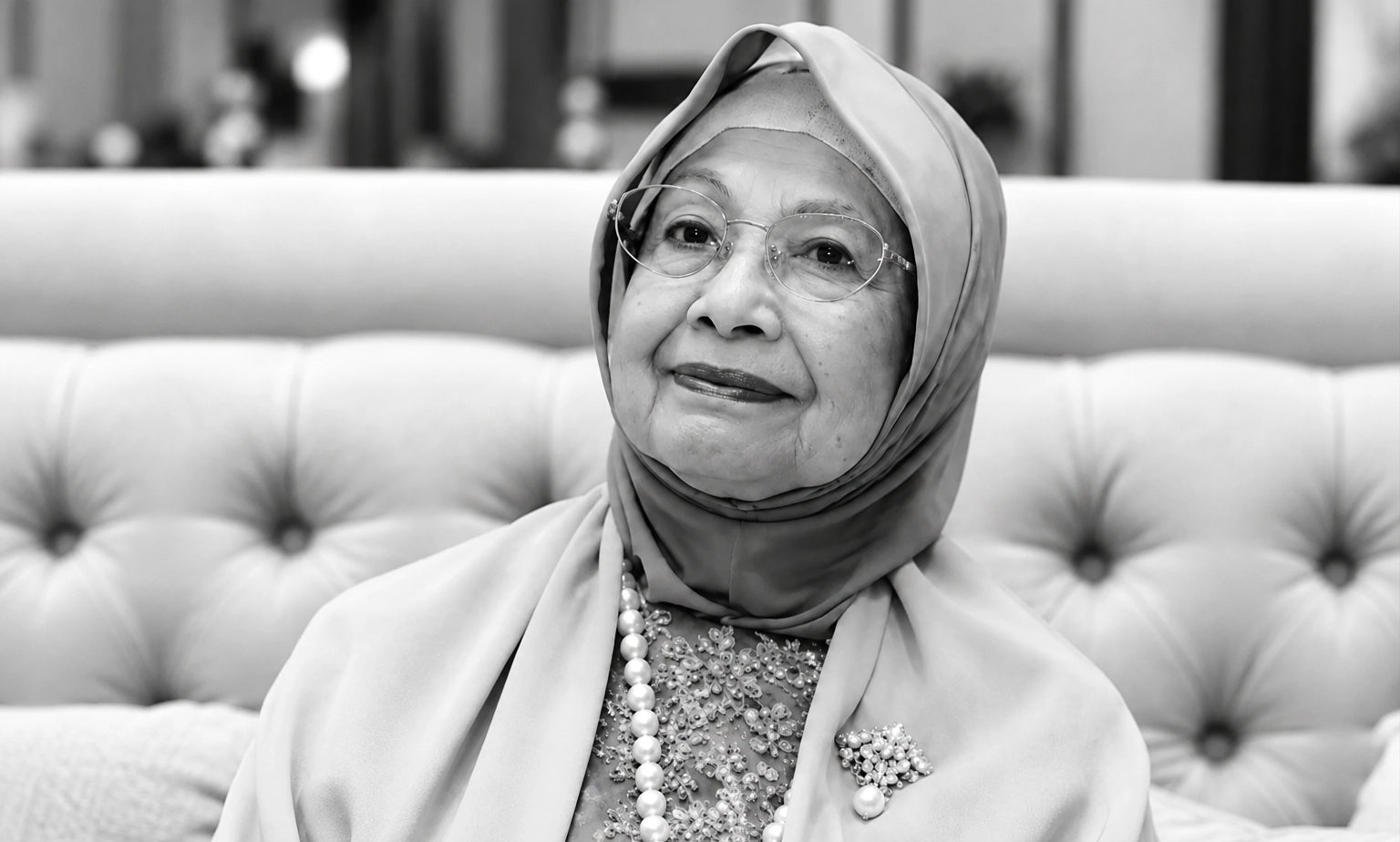
Tun Dr Siti Hasmah Mohamad Ali, one of Malaysia’s pioneering women doctors and a prominent national figure for more than seven decades, has died at the age of 100. The government has accorded her a State Funeral Ceremony, with her remains to be laid to rest at the Heroes’ Mausoleum in Putrajaya.
Tun Dr Siti Hasmah, wife of former prime minister Tun Dr Mahathir Mohamad, died at 9.20am on September 28 at the National Heart Institute (IJN) in Kuala Lumpur. Her death was confirmed by her son, Tan Sri Mokhzani Mahathir. She had celebrated her 100th birthday on July 12.
Prime Minister Datuk Seri Anwar Ibrahim announced that the government would accord her a state funeral and directed the Chief Secretary to the Government and Chief of Defence Forces to assist with the arrangements. Anwar praised her service to the country and extended condolences to her husband, Tun Dr Mahathir, and their family. Tributes and remembrances have poured in from all corners of Malaysia since the announcement of her passing was made.
Dr Siti Hasmah was born in Klang, Selangor, on July 12, 1926, and was among the first Malay women to pursue medicine at the King Edward VII College of Medicine in Singapore. She graduated in 1955 and joined the government medical service, beginning a career that would focus particularly on rural healthcare, maternal and child health, immunization, family planning, and public health.
Her career included several significant firsts. In 1965, she became the first woman appointed as a medical officer in the Maternal and Child Health Department, while in 1974 she became the first woman appointed State Maternal and Child Health Officer in Kedah. Her work in rural communities helped expand access to healthcare and public-health programmes at a time when Malaysia was still developing much of its healthcare infrastructure.
She retired from government service in 1979 and subsequently served as a part-time lecturer in social medicine at Universiti Malaya. Beyond medicine, she became closely involved in women’s health, literacy, drug-abuse prevention, and community welfare, including through organizations such as BAKTI and the Malaysian Girl Guides Association. Her public-service work earned her numerous national and international honours.
She married Mahathir in 1956, and the couple had seven children. She served as the wife of the prime minister during Mahathir’s two terms in office, from 1981 to 2003 and again from 2018 to 2020, while maintaining a public identity and career of her own.
STATE FUNERAL ARRANGEMENTS
Her remains will be taken to Masjid As-Syarif in Taman Sungai Besi Indah, Seri Kembangan, at 1.30pm on September 28, where members of the public will be able to pay their final respects. Funeral prayers will be held after Asar, before the cortege proceeds to the Heroes’ Mausoleum (Makam Pahlawan) in Precinct 20, Putrajaya, for burial at approximately 4.30pm, in accordance with Islamic traditions and requirements.
Official dress guidance calls for Muslim men attending the ceremony to wear a black baju Melayu with a plain black samping and black songkok. Non-Muslim men are asked to wear a dark lounge suit. Muslim women should wear a dark-coloured baju kurung or long kebaya with a white shawl or headscarf, while non-Muslim women are advised to wear modest dark-coloured clothing with a white shawl.
Dr Siti Hasmah’s passing has prompted tributes from across Malaysia, including Their Majesties the Yang di-Pertuan Agong Sultan Ibrahim and Raja Permaisuri Agong Raja Zarith Sofiah. Mahathir, in his first public acknowledgement of her death, shared a photograph of his wife accompanied by the Islamic verse, “Innalillahi wa inna ilaihi raji’un.”
Sources: The Star, Bernama, RTM, Malay Mail, The Vibes, Perdana Leadership Foundation.