

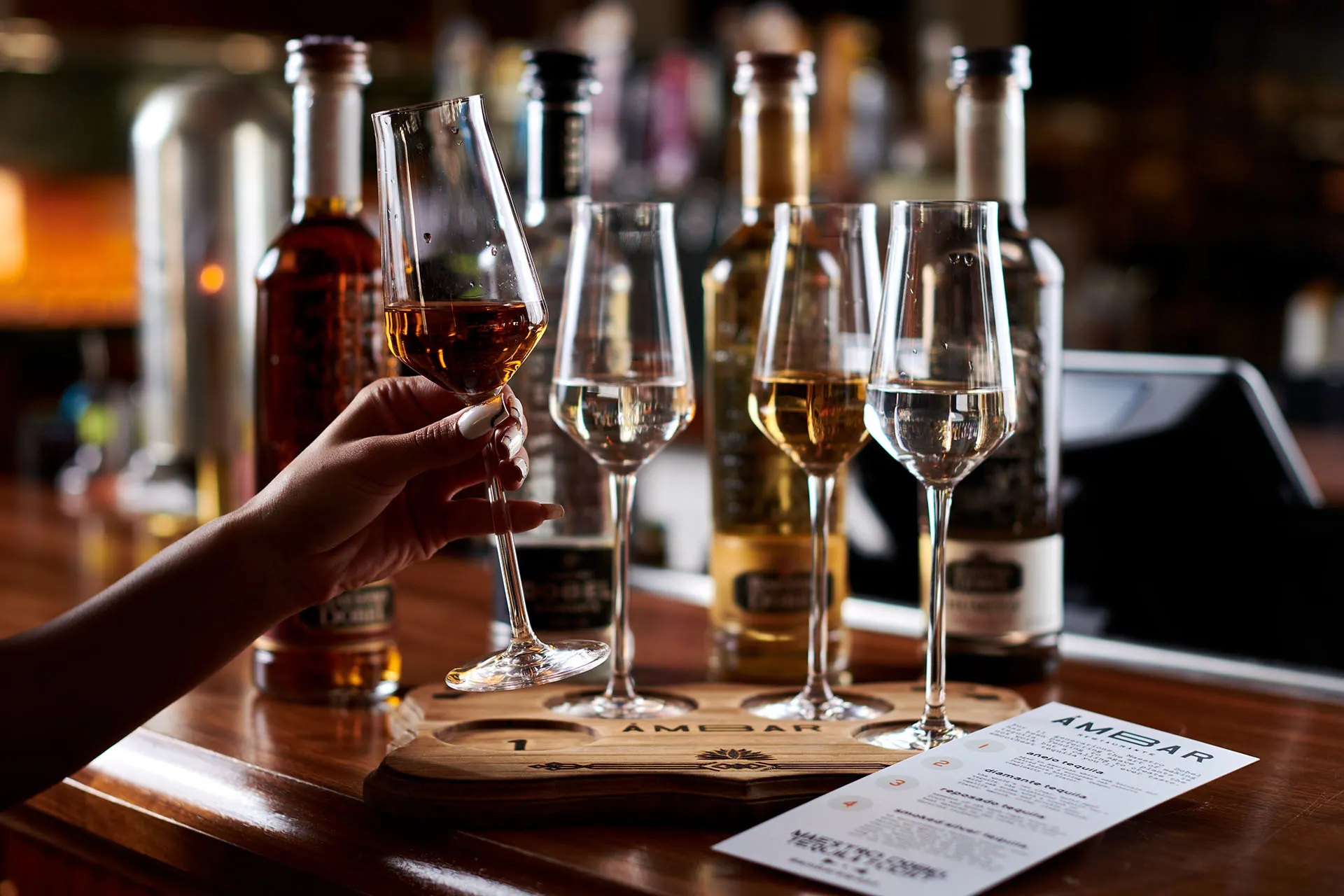
From whisky to tequila and gin, experts say the humble wine glass may unlock more aroma, flavour, and enjoyment than traditional spirit glassware.
For generations, the world of spirits has come with its own unwritten rules about glassware. Whisky belongs in a squat rocks glass, tequila arrives in a narrow caballito, and serious tasters favour a small tulip-shaped nosing glass. But across the spirits industry, many professionals are quietly nudging drinkers toward a different option entirely – the humble wine glass. A recent article in Forbes pointed out the often-unexplored benefits of using a wine glass as your spirit’s best friend.
It might seem unconventional at first glance, but the reasoning is straightforward. Much of what we perceive as flavour actually comes from aroma, and the shape of the glass plays a major role in how those aromas reach the nose.
“Professionals recommend the wine glass for spirits because the shape enhances the aroma and flavour perception of a spirit, a benefit that traditional rocks or shot glasses cannot provide,” explains Dr Rachel Barrie, master blender of The Glendronach, a well-regarded Scotch distillery.
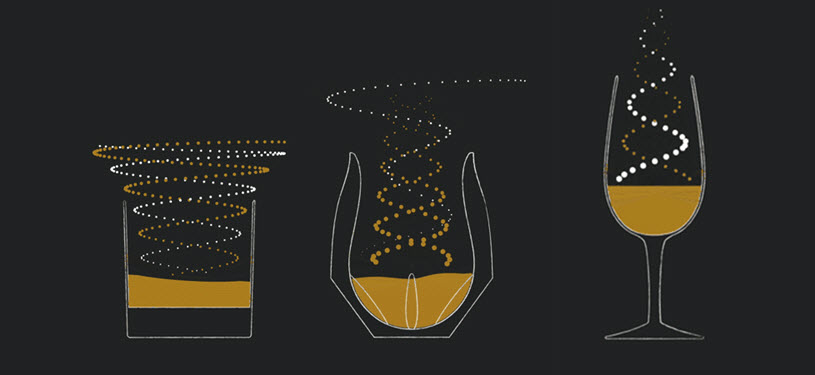
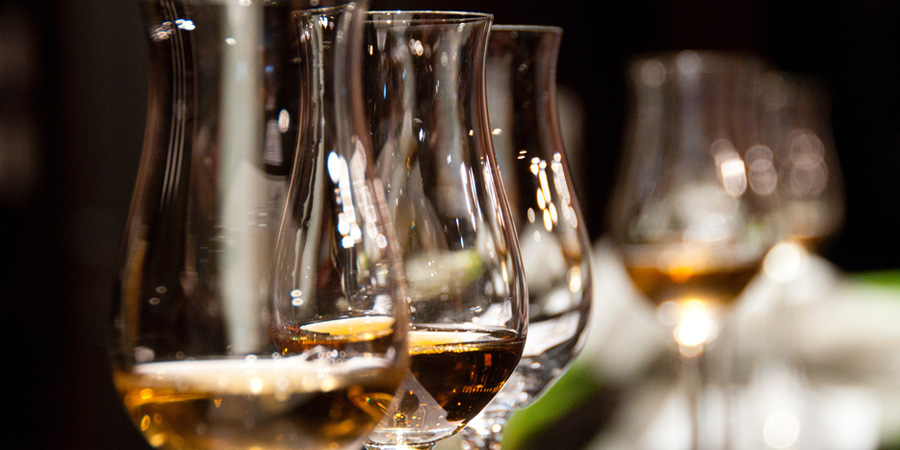
According to Barrie, most wine glasses feature a wide bowl that tapers gently toward the rim. That shape encourages aromas to gather and concentrate near the opening, allowing drinkers to detect subtle notes that might otherwise be lost.
“Rocks or shot glasses, in contrast, are short with a wide mouth and disperse aromas very quickly, delivering alcohol strength without the complexity,” she says.
In other words, the spirit may still taste strong – but the finer details often vanish.
ORGANOLEPTICS: GETTING A LITTLE SCIENCE-Y
Organoleptics refers to the evaluation of a product using the human senses – primarily smell, taste, sight, and sometimes touch. In the context of food and drink, it describes how aromas, flavours, texture, and visual cues combine to create the overall sensory experience.
For spirits, organoleptic evaluation focuses heavily on aroma and flavour, since a large portion of what we perceive as taste actually comes from smell. This is where glassware becomes important.
Different glass shapes influence how volatile aromatic compounds are released and directed toward the nose. A glass with a wide bowl and a slightly tapered rim – such as a wine glass or tulip-shaped tasting glass – concentrates aromas and channels them upward, allowing the drinker to detect subtle notes like fruit, spice, botanicals, or oak. By contrast, wide-mouthed glasses such as rocks glasses tend to disperse aromas quickly, which can emphasize alcohol strength while muting complexity.
In short, glass selection affects the organoleptic profile of a spirit by shaping how its aromas develop and how those aromas reach the drinker’s senses.
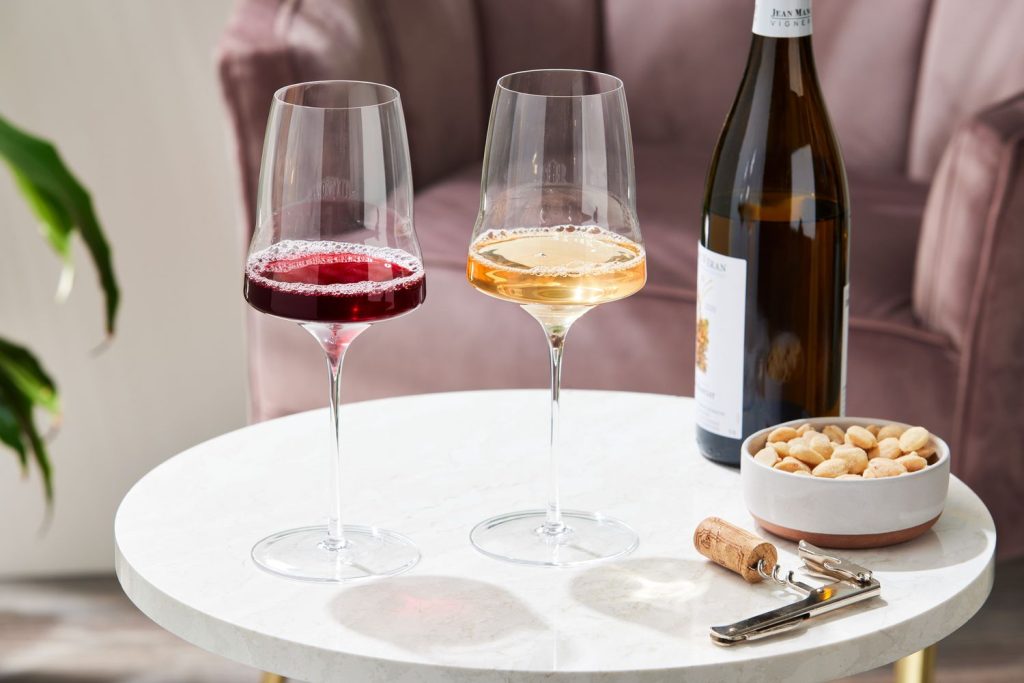
AROMA IS WHERE THE FLAVOUR REALLY LIVES
Inside a distillery, aroma is the primary tool for evaluating a spirit, and many distillers already rely on similar glass shapes during production and blending. Ciaran “Rowdy” Rooney, head distiller at Glendalough Distillery in Ireland, says the design of a wine glass naturally highlights the details that make a spirit distinctive.
“Because wine glasses are designed to capture aroma, and aroma is where most of a spirit’s flavour lives,” Rooney says. “At Glendalough, whether we’re working with wild-foraged botanicals for our gin or carefully chosen oak for our whiskeys, those details are subtle and aromatic.”
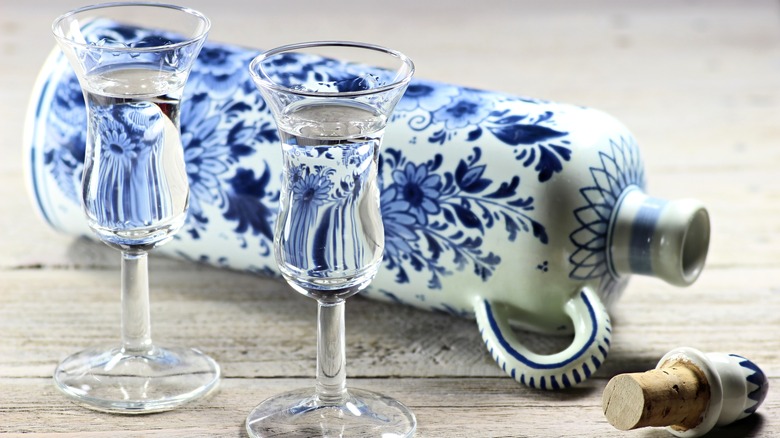
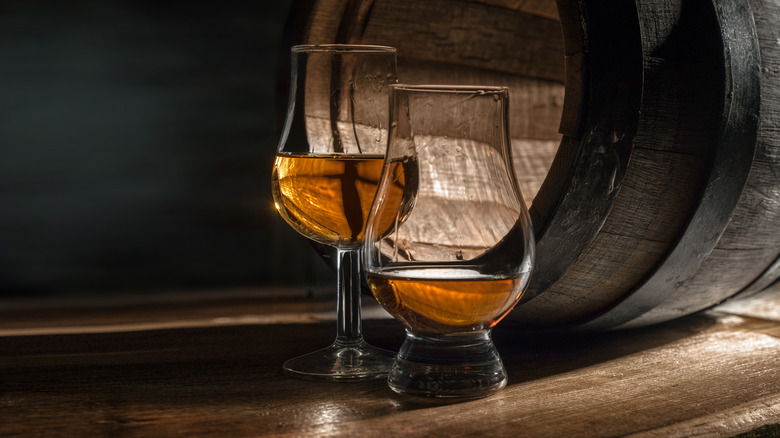
The bowl shape allows aromas to open up and breathe, while the narrower rim gently funnels them toward the nose. Tulip glasses have long been used for spirits such as gin and genever, and these small-volume glasses actually mimic some of the properties of standard wine glasses.
“With something like our Wild Rose Gin, that means you’ll pick up fresh rose petals and wild botanicals more clearly,” Rooney explains. “With whiskey, you start to notice layers – grain, spice, oak, fruit – that might otherwise get lost.”
THE TEQUILA TEST
Tequila professionals have long recognized the influence of glassware on flavour perception, particularly because agave spirits are naturally aromatic. José Valdez, general director and maestro tequilero at Partida Tequila, often demonstrates this through a simple tasting exercise.
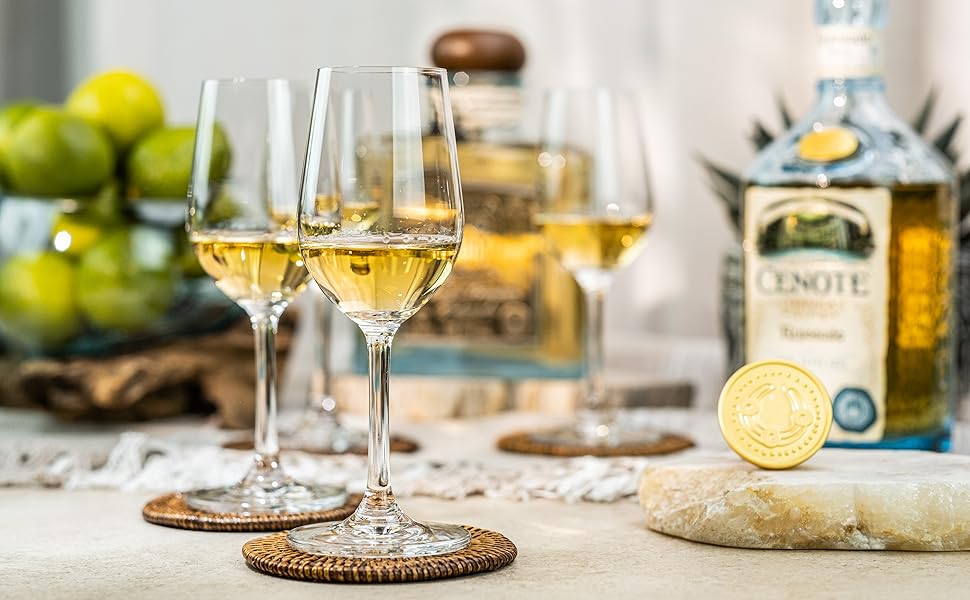
“I always invite people who haven’t yet experienced a proper crystal tequila tasting glass to do a simple experiment,” he says. “Pour the same tequila into different containers – a crystal tequila glass, a traditional caballito shot glass, an old-fashioned glass, a cognac snifter, and even a wine glass. Then evaluate the tequila visually, aromatically, and on the palate.”
After decades of hosting these comparisons, Valdez says the results rarely surprise experienced tasters. “In more than two decades in the tequila industry,” he muses, “I have witnessed this experiment countless times, and the conclusion is always the same – the container matters.”
The difference is especially noticeable with premium tequilas which are crafted to be sipped rather than tossed back as a quick shot.
WHY HIGH-PROOF SPIRITS BENEFIT
Another advantage of the wine glass becomes apparent with stronger spirits. High-proof whiskies, rums, and agave spirits can sometimes deliver an initial alcohol burn that overwhelms subtler flavours. A well-shaped glass can help balance that experience.
“You still sense the strength, but it’s more balanced and less sharp,” Rooney notes.
The larger bowl also allows the spirit to interact with oxygen, which gradually releases aromatic compounds.
“The larger bowl of a wine glass allows more liquid to interact with air, increasing oxygen exposure and releasing aromatics that might otherwise remain trapped in the liquid,” Barrie explains. This is why a whisky poured neat often tastes different after a bit of time spent in the glass.
“The larger surface area allows the spirit to interact with oxygen, so flavours evolve over time,” Rooney says. “It’s why a whisky can taste different five or ten minutes after pouring.”
In other words, the drink is quietly changing while you sip it.
CHOOSING THE RIGHT WINE GLASS AND FAVOURING ENJOYMENT OVER RULES
The good news is that no specialized equipment is required. A standard household wine glass will often do the job beautifully. Rooney suggests something modest rather than oversized.
“A medium-sized white wine glass is perfect – something with a bowl and a gently tapered rim. Avoid very large red wine glasses, which can spread aromas too much.”
That means many people already have the ideal glass sitting in their kitchen cupboard. Of course, this does not mean the traditional rocks glass should disappear from the bar cart. Ice-heavy pours, cocktails, and casual drinks still suit the sturdy tumbler perfectly.
The point is simply that the glass can shape the experience more than many people realise.
For all the technical talk about aroma, oxygen, and glass shapes, spirits experts ultimately emphasize a simple principle – enjoyment matters more than strict rules. Tequila, whisky, gin, and rum have all developed strong traditions around how they “should” be consumed, but those conventions are often based on habit rather than sensory science.
“The biggest misconception people have about how spirits should be drunk is that there is a single ‘correct’ or ‘pure’ way to drink them,” Barrie says.
“For Scotch whisky, a common misconception is that it must either be drunk out of a rocks glass, or a small nosing glass used by blenders in the twentieth century. In reality, the best way to enjoy a whisky is whatever way gives you the most pleasure.”
Rooney agrees, noting, “Spirits aren’t about rules – they’re about enjoyment,” he says. “Neat, with water, in a cocktail, from a tumbler or a wine glass – it’s all valid.”
His advice is refreshingly simple: “The only mistake is thinking you’re doing it wrong. If you’re enjoying it, you are doing it right.”
Sources: VinePair, Forbes, distiller interviews.