



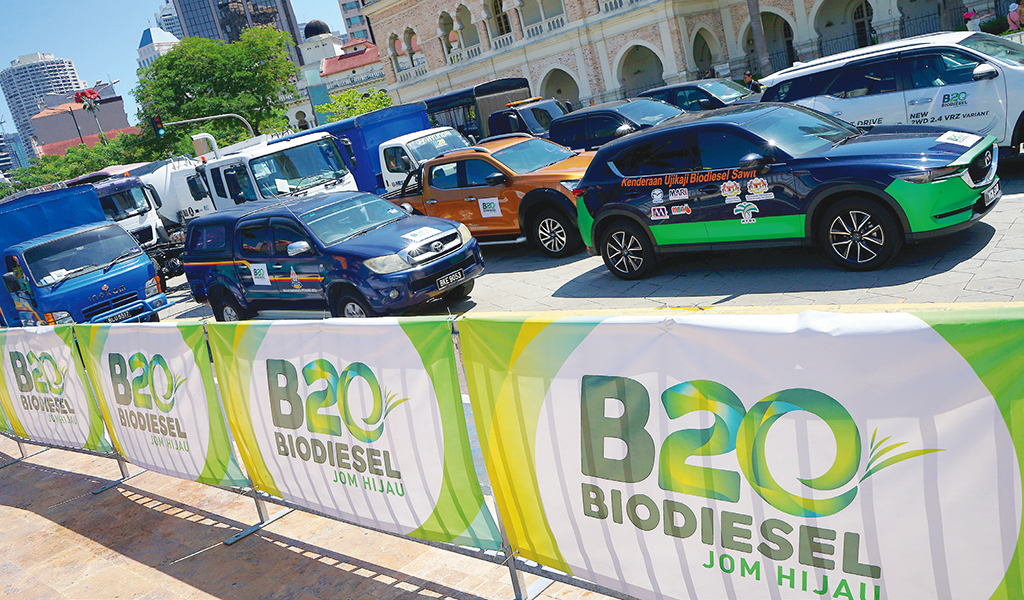
With fuel subsidies running into billions each month, Malaysia is accelerating its biodiesel ambitions, leveraging its palm oil strength to reduce costs, imports, and emissions.
Malaysia is stepping up its use of biodiesel as it grapples with rising energy costs and seeks to reduce its dependence on imported fuel. Backed by its position as one of the world’s largest palm oil producers, the country is positioning biofuels as a key part of its longer-term energy strategy.
The urgency is clear. The government is spending more than RM7 billion each month on fuel subsidies, a figure that has come under increasing scrutiny as global energy markets remain volatile. Against this backdrop, biodiesel has emerged as an increasingly viable alternative, particularly as price dynamics shift in its favour.
Produced from biomass such as palm oil, biodiesel is now estimated to cost around RM4.50 per litre, compared to roughly RM6.20 per litre for conventional diesel. That gap, driven in part by supply disruptions linked to geopolitical tensions, has sharpened the economic case for a broader transition.
At present, Malaysia mandates a B10 blend – 10% biodiesel and 90% petroleum diesel – for most diesel vehicles. Plans are underway to move to B15, with longer-term targets of B20 and even B30 by the end of the decade. However, while the policy direction is clear, the path forward is not without its complications.
INFRASTRUCTURE AND SCALE CHALLENGES
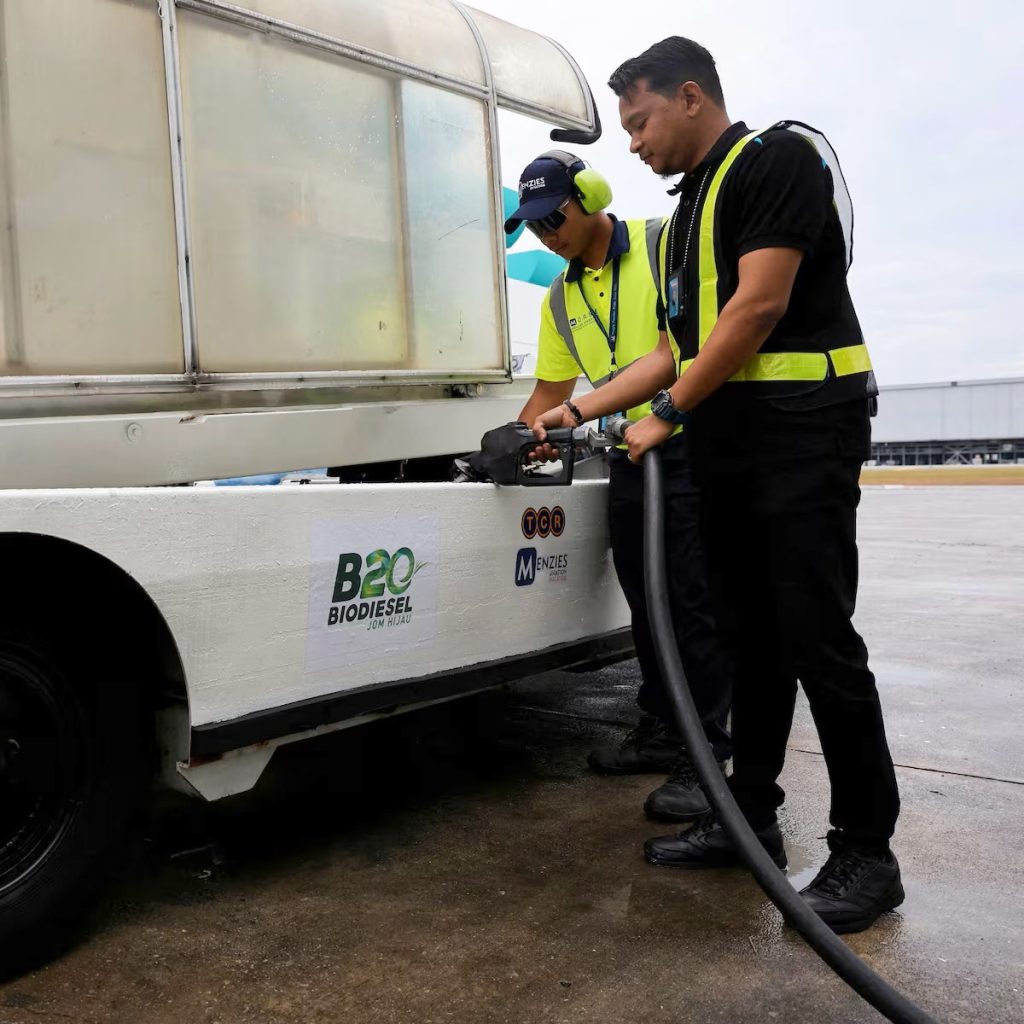
A major hurdle lies in infrastructure. Malaysia currently operates 34 biodiesel blending depots, most of which were designed with B10 capacity in mind. Upgrading these facilities to handle higher blends will require both time and significant investment.
According to officials from the Ministry of Plantation and Commodities, upgrading the necessary infrastructure could take one to two years and cost in the region of RM600 million. This includes modifications to storage tanks, blending systems, and distribution networks to ensure consistency and reliability across the supply chain.
“The first thing we need to do is to upgrade all those infrastructures,” said a ministry representative, noting that the process is far from immediate and involves considerable capital expenditure.
Despite these constraints, industry players maintain that supply is not an issue. The Malaysian Biodiesel Association estimates that producers have sufficient capacity to meet increased demand. Current production capacity stands at around 2.4 million tonnes annually, with roughly 1.3 million tonnes produced last year. Of that, about 1 million tonnes were used domestically under the national biodiesel programme.
This leaves room for an additional 400,000 tonnes to support a move to B15, according to the association. With approximately one million diesel vehicle owners in Malaysia – including commercial vehicles, buses, and SUVs – the scale of the transition is substantial, but not beyond reach.
Cost advantages are also expected to drive adoption. Industry figures argue that the price differential alone provides a strong incentive for businesses and fleet operators to embrace higher biodiesel blends, particularly in sectors where fuel costs represent a significant portion of operating expenses.
REGIONAL COMPARISONS AND FUTURE POTENTIAL
While Malaysia is moving forward, it still lags behind some of its regional peers. Indonesia, for example, has already implemented a B50 biodiesel blend, reflecting a considerably more aggressive approach to energy diversification.
The difference, analysts say, lies in relative energy dependency. Malaysia imports a smaller share of its crude oil compared to Indonesia – about 15.6% versus 35.2%, according to the International Energy Agency. This has reduced the urgency for rapid policy shifts, even as external pressures mount.
Still, many in the industry believe Malaysia is failing to take advantage of its natural advantage. Of the roughly 20 million tonnes of palm oil produced annually, only about 1.3 million tonnes – or 6.5% – is currently used for biodiesel. That leaves significant room for expansion.
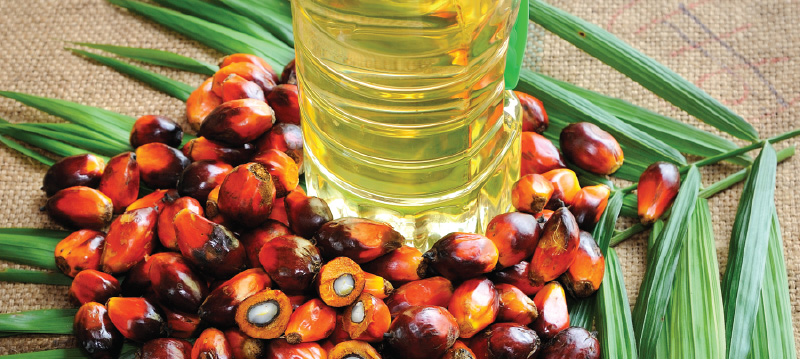
“We have so much potential to increase the usage of palm oil for the benefit of the whole country,” said a representative from the biodiesel association, urging policymakers to accelerate the transition and maintain momentum once higher blends are introduced.
There is also a broader environmental dimension to consider. Biodiesel can reduce greenhouse gas emissions by up to 80% compared to conventional diesel, making it a key component of Malaysia’s commitment to achieving net-zero emissions by 2050. In that sense, the push towards higher blends is not only about economics and energy security, but also climate policy.
However, not all stakeholders are fully convinced. Some motorists have expressed concerns about the long-term impact of higher biodiesel blends on engine performance, particularly in older vehicles. While modern engines are generally compatible with blends up to B20 or higher, perception and confidence remain factors that policymakers will need to address.
Clear communication and gradual implementation are likely to be critical, points that Malaysia has admittedly struggled with in the past when rolling out widespread new policies. Ensuring that vehicle owners, fleet operators, and industry players understand both the benefits and the limitations of biodiesel will help smooth the transition.
SOURCES: Channel News Asia (CNA); International Energy Agency; Malaysian Biodiesel Association