



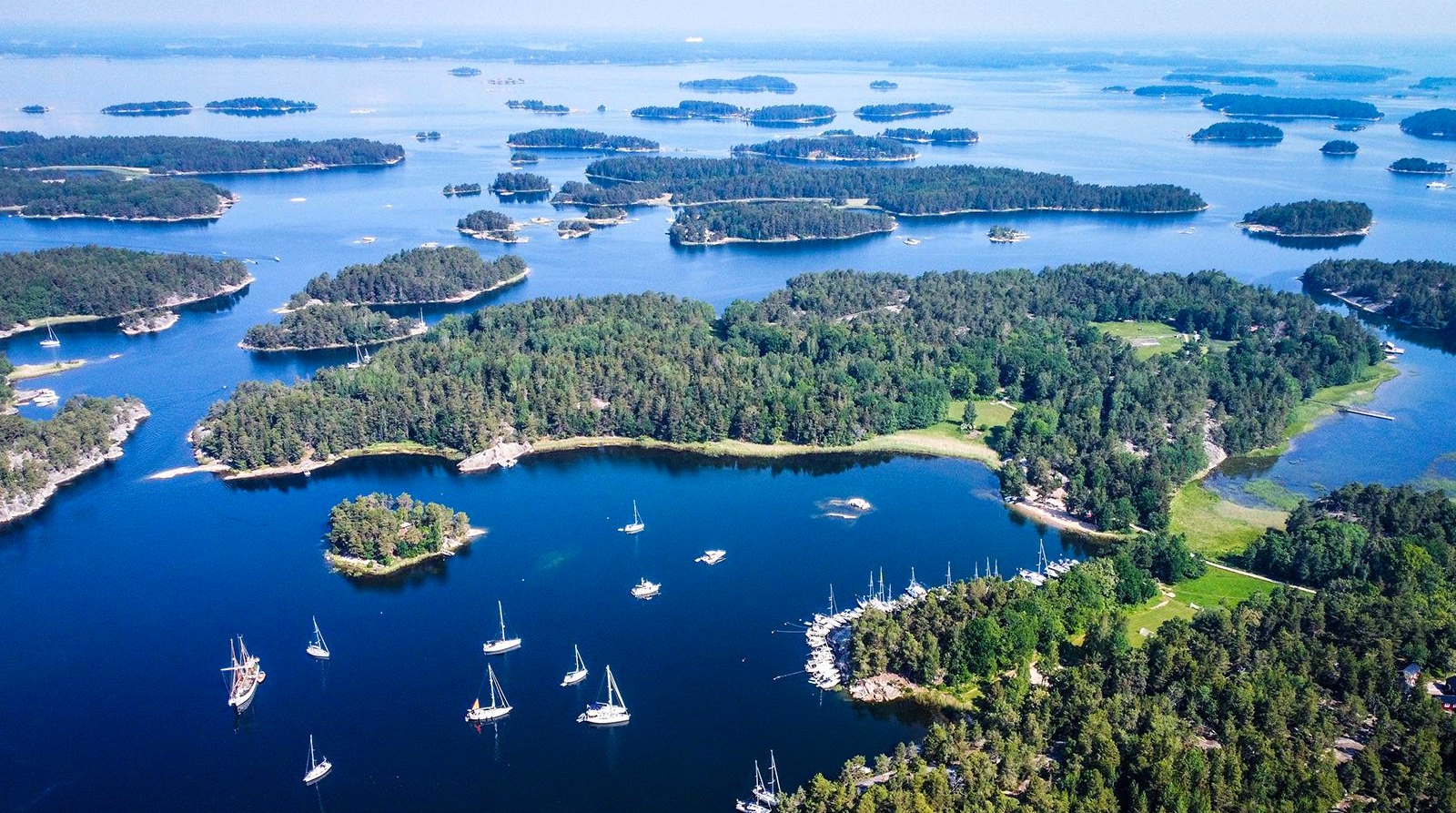
Northern Europe dominates the global tally of islands, but Southeast Asia makes a strong showing, led by Indonesia’s vast archipelago and the Philippines’ thousands of tropical islands. Malaysia, Vietnam, and Thailand also feature in the ranking.
Indonesia and the Philippines are among the first countries that come to mind when thinking of great island destinations. Their tropical coastlines, scattered archipelagos, and extraordinary marine environments are central to their identities. Yet neither comes anywhere close to the top of a global ranking of countries by reported island numbers.
It may surprise you to learn that that distinction belongs to Northern Europe, where Sweden, Norway, and Finland collectively account for just under three-quarters of the islands recorded in the dataset. Even so, Southeast Asia has a substantial presence, with Indonesia leading the region by a considerable margin.
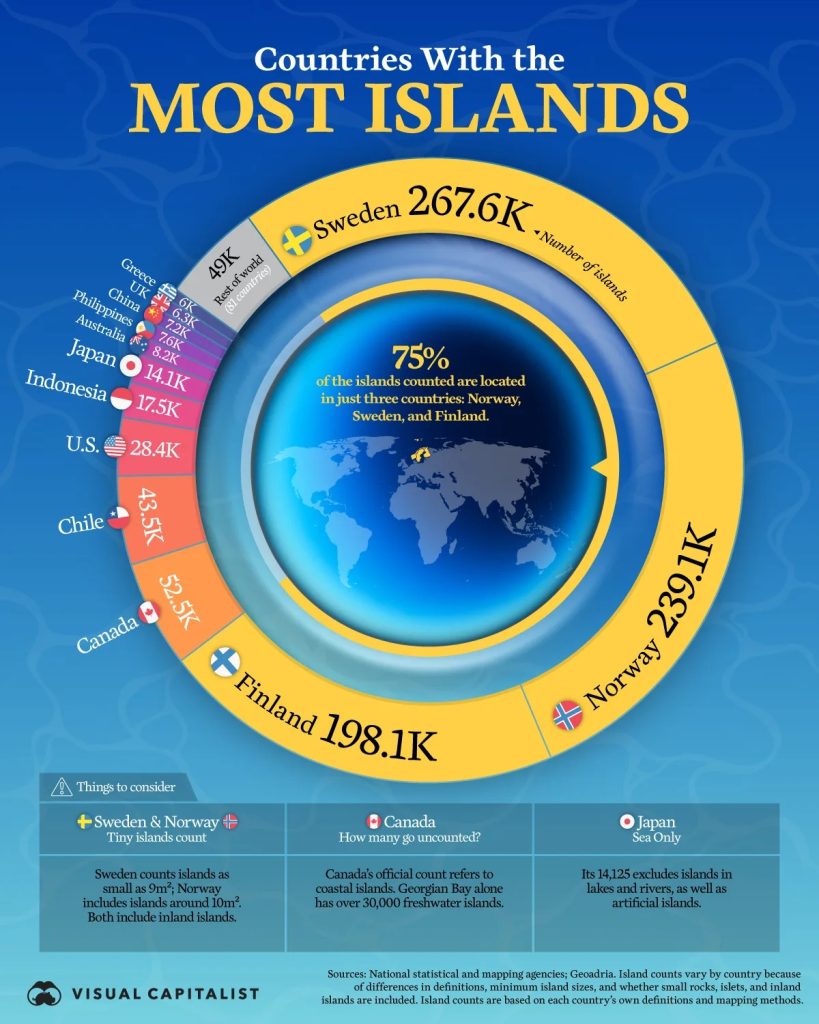
The ranking, compiled by Visual Capitalist using figures from national statistical and mapping agencies and brought together in Wikipedia’s List of Countries by Number of Islands, covers 945,247 islands across countries and territories. The figures are not based on a standardized global census, however, and national definitions vary considerably.
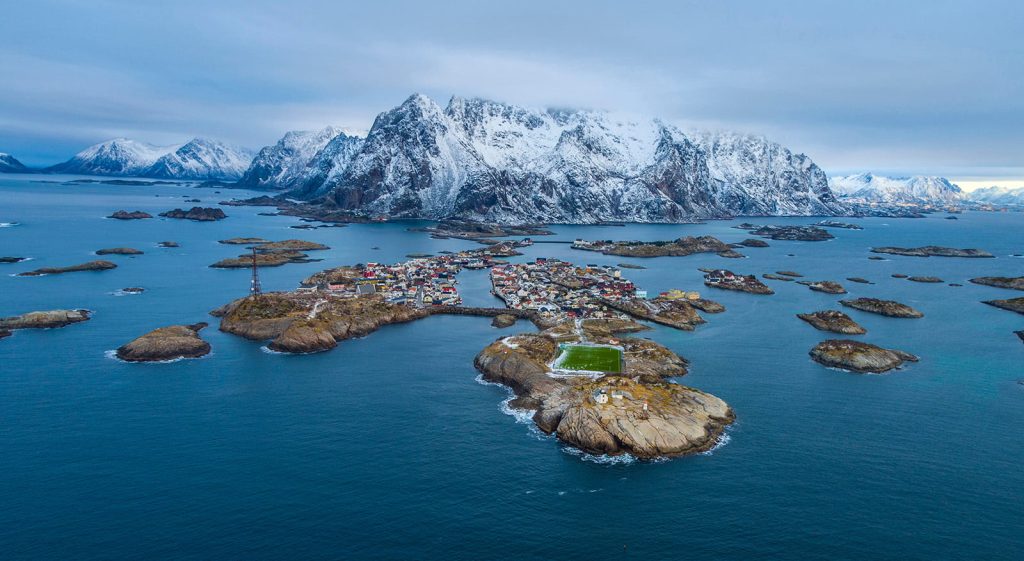
NORTHERN EUROPE DOMINATES THE GLOBAL COUNT
Sweden tops the ranking with 267,570 islands, representing 28.31% of the total. Norway follows with 239,057 (25.29%), while Finland places third with 198,146 (20.96%).
Together, the three Nordic countries account for 704,773 islands, or 74.6% of the entire dataset.
Those extraordinary numbers owe much to the region’s geological history. During the last Ice Age, glaciers carved and reshaped the landscape, leaving behind intricate coastlines, shallow waters, rocky outcrops, and extensive lake systems. As the ice retreated, many thousands of small islands and islets remained.
Sweden’s Stockholm Archipelago alone contains roughly 30,000 islands, islets, and skerries, stretching eastward into the Baltic Sea. Finland’s Archipelago Sea is another remarkable concentration of islands, while Norway’s rugged coastline is punctuated by countless rocky formations and narrow channels.
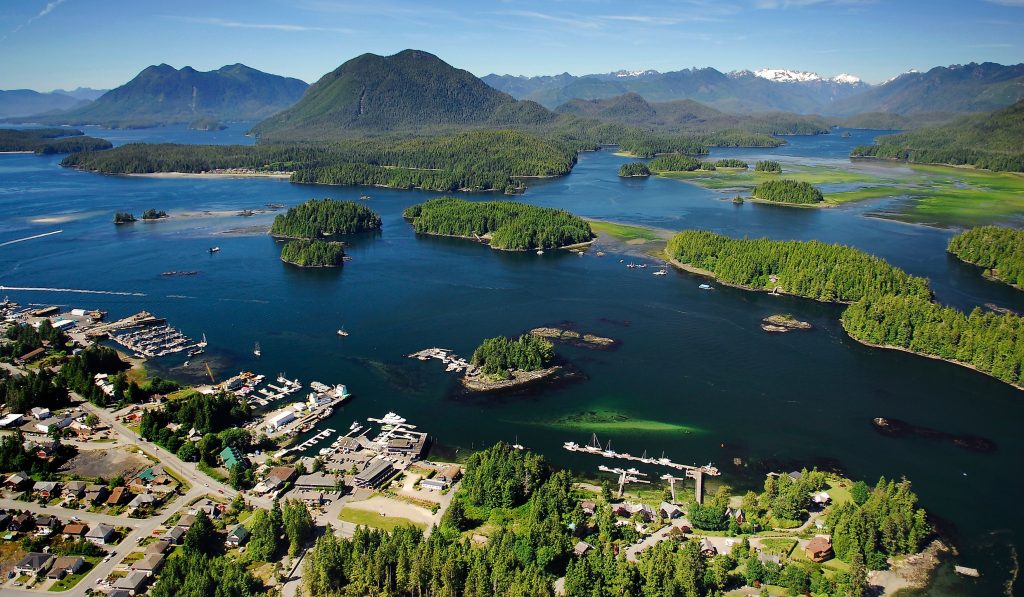
Canada is the highest-ranked country outside Northern Europe, placing fourth with 52,455 islands, followed by Chile with 43,471 and the United States with 28,449. Interestingly, Canada’s figure refers only to coastal islands and does not include its extensive freshwater island geography, including the more than 30,000 islands found in Georgian Bay alone.
Which Countries Have the Most Islands?
Northern Europe leads the worldwide ranking, but Southeast Asia contributes several major archipelagos – with Indonesia well ahead of its regional neighbors.
Global Top 15
Southeast Asian countries are highlighted in green.
| Rank | Country | Islands | Relative count |
|---|---|---|---|
| 1 | 🇸🇪 Sweden | 267,570 | |
| 2 | 🇳🇴 Norway | 239,057 | |
| 3 | 🇫🇮 Finland | 198,146 | |
| 4 | 🇨🇦 Canada | 52,455 | |
| 5 | 🇨🇱 Chile | 43,471 | |
| 6 | 🇺🇸 United States | 28,449 | |
| 7 | 🇮🇩 Indonesia Southeast Asia | 17,508 | |
| 8 | 🇯🇵 Japan | 14,125 | |
| 9 | 🇦🇺 Australia | 8,222 | |
| 10 | 🇵🇭 Philippines Southeast Asia | 7,641 | |
| 11 | 🇨🇳 China | 7,226 | |
| 12 | 🇬🇧 United Kingdom | 6,346 | |
| 13 | 🇬🇷 Greece | 6,000 | |
| 14 | 🇨🇺 Cuba | 4,195 | |
| 15 | 🇱🇦 Laos River islands | 4,000 |
Southeast Asia: Regional Rankings
Global positions and reported totals for countries included in the supplied dataset.
SOUTHEAST ASIA’S ARCHIPELAGIC HEAVYWEIGHTS
Indonesia is the region’s undisputed leader, ranking seventh globally with 17,508 islands, which is an impressive number, no doubt, but accounts for only 1.85% of the worldwide total in this compilation.
The figure reflects Indonesia’s extraordinary geography, spanning the Indian and Pacific oceans across an immense chain of islands. Its five principal islands – Sumatra, Java, Kalimantan, Sulawesi, and New Guinea’s western portion – are accompanied by thousands of smaller islands and island groups, including the Riau Islands, the Moluccas, Raja Ampat, and Nusa Tenggara.
There is an important qualification to the figure. Indonesia’s official geospatial agency reported 17,380 named islands with established coordinates in 2024, illustrating how counts can change as mapping, verification, and naming exercises progress. The 17,508 figure, however, remains the one used in the Visual Capitalist ranking.
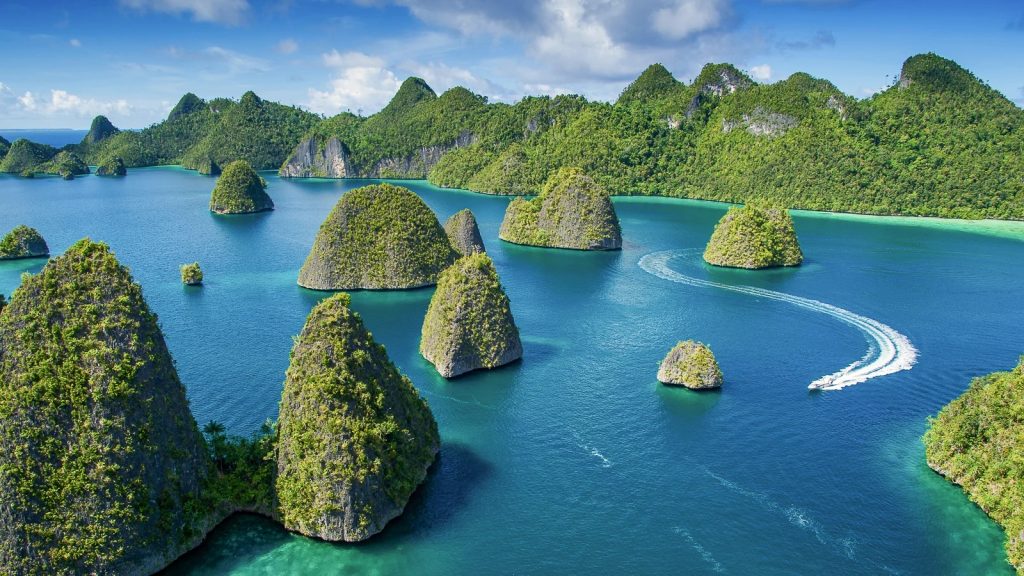
The Philippines follows in 10th place, with 7,641 islands, accounting for 0.81% of the total. The archipelago stretches across the western Pacific and is traditionally divided into three major island groups: Luzon, the Visayas, and Mindanao. Its many smaller islands are home to a remarkable variety of landscapes, from volcanic peaks and forested interiors to coral reefs, limestone formations, and sheltered lagoons.
The Philippines’ island geography is central to its culture, economy, and tourism industry. While only a fraction of its islands are inhabited, the country’s extensive coastline and marine environments support fishing communities, shipping routes, and some of the world’s best-known diving and beach destinations.
Japan, with 14,125 islands, sits between Indonesia and the Philippines in the overall ranking, although its count follows a different set of criteria. Australia, meanwhile, records 8,222.
MALAYSIA AND ITS NEIGHBORS ALSO FEATURE
Malaysia ranks 33rd globally, with 878 islands. Its island geography is spread across both Peninsular Malaysia and Malaysian Borneo, encompassing well-known destinations such as Langkawi, Pangkor, Tioman, Redang, and the islands of Sabah, including Sipadan and the islands of the Tunku Abdul Razak and Tun Sankaran Marine Parks.
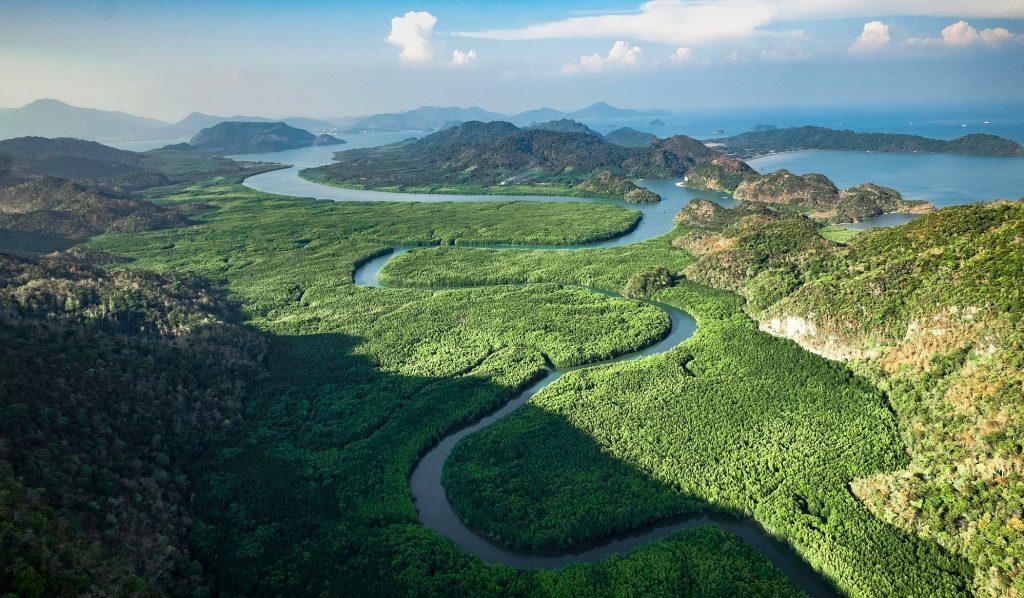
Vietnam appears 18th in the ranking with 3,000 islands, while Thailand places 22nd with 1,430. Both countries have long coastlines and numerous offshore islands that are important to their tourism industries. Vietnam’s Ha Long Bay, with its striking limestone formations, and Thailand’s Andaman Sea destinations, including Phuket, Koh Lanta, and the Phi Phi Islands, are among the region’s most recognizable island landscapes.
Further down the list, Cambodia records 71 islands, while Singapore has 64 and Brunei 33. These smaller totals are a reminder that island geography is not determined solely by a country’s size or coastline. The number of features counted, and the criteria used to define them, can make a substantial difference.
One particularly unusual entry is Laos, which appears in 15th place with 4,000 islands despite being landlocked. The figure refers to the celebrated Si Phan Don region in the south of the country, where the Mekong River fans out into a maze of channels, sandbars, and islands near the Cambodian border. Its name translates as “4,000 islands,” although it is not a conventional oceanic archipelago, and the number is not a literal count of 4,000 individually surveyed islands.
WHY THE NUMBERS NEED CONTEXT
The ranking is fascinating, but it should not be read as a definitive measure of which country has the most island territory. Different national authorities apply different minimum sizes and criteria, and some include islands in lakes and rivers while others count only coastal landmasses.
Sweden, for example, recognizes islands as small as nine square meters, while Norway’s mapping criteria include landforms of approximately 10 square meters or larger. Both countries include inland islands. Japan’s count, by contrast, is based on naturally formed landmasses with a circumference of at least 100 meters, excluding artificial islands and those found in lakes and rivers.
Croatia provides another illustration of the complications involved. Its total of 1,246 includes 79 islands, 525 islets, and 642 rocks or rocks awash. In other words, what one country classifies as an island may be counted differently elsewhere.
THE IMPORTANCE OF ISLANDS
Beyond the numbers, islands have an importance that extends well beyond tourism. Their isolation often allows distinctive ecosystems and species to develop, making them especially valuable for biodiversity and conservation. A 2024 study published in Nature found that 21% of the world’s vascular plant species are endemic to islands.
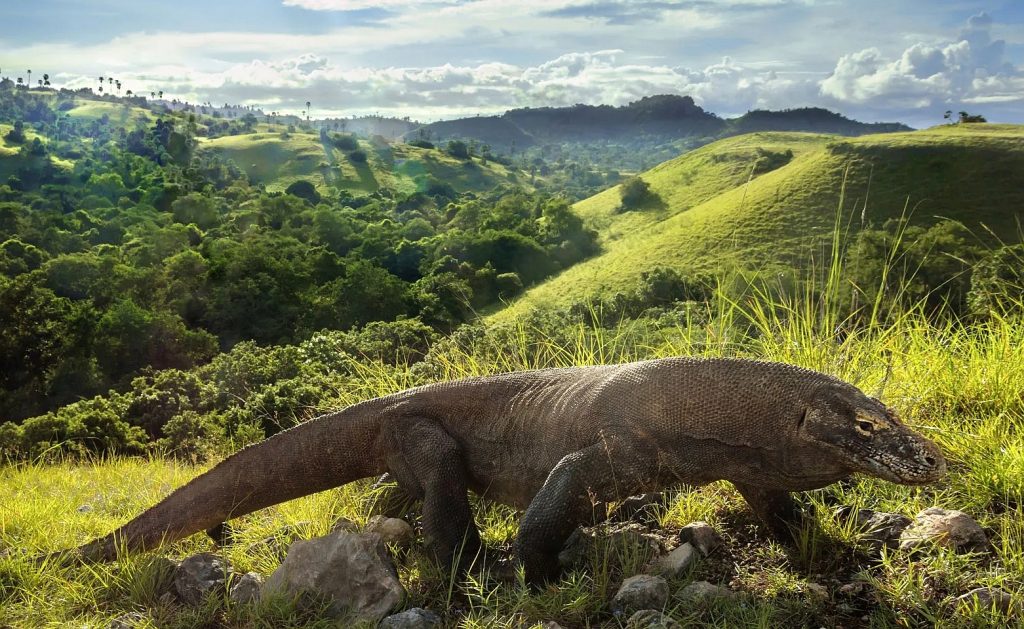
The pattern is especially striking in Southeast Asia, where long periods of geographical isolation have produced species found nowhere else on Earth. Sulawesi, for example, is home to the distinctive maleo bird, the babirusa (often called the deer-pig), and several species of tarsier, while the Komodo dragon is native to a small group of Indonesian islands, including Komodo, Rinca, and parts of Flores. Borneo and Sumatra have their own distinctive wildlife, including orangutan species found only on those islands. Such examples illustrate how island ecosystems become living laboratories of evolution – and why habitat loss can put species with very limited natural ranges at particular risk.
Islands also provide essential habitats for seabirds, marine life, and migratory species, while supporting communities whose livelihoods and cultural traditions are closely connected to the sea. More than 600 million people live on islands worldwide.
For Southeast Asia, this importance of islands is especially significant. Indonesia and the Philippines may dominate the region’s island count, but the smaller archipelagos and coastal islands scattered across Malaysia, Thailand, Vietnam, and neighboring countries are equally important to the region’s ecological diversity, cultural heritage, and appeal as a travel destination.
Sources: Visual Capitalist, Wikipedia, Indonesia’s Geospatial Information Agency, Visit Southeast Asia, Visit Philippines, and Nature.