

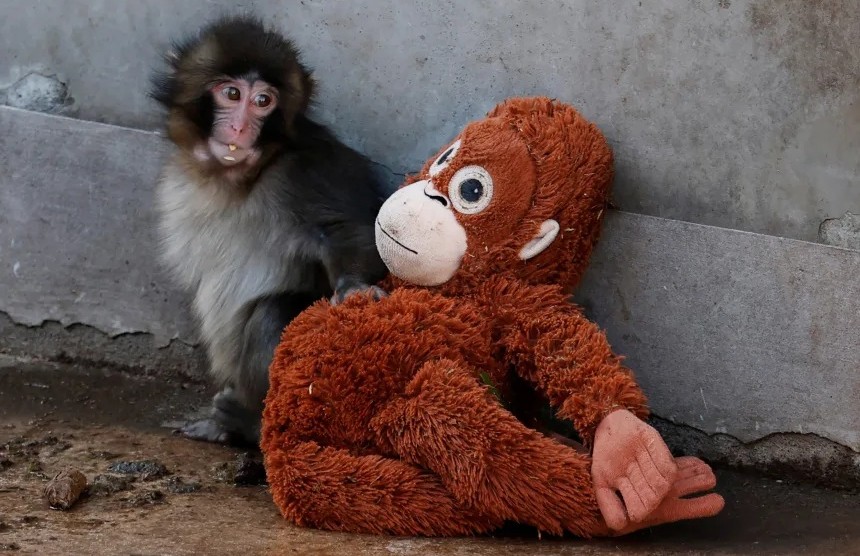
A hand-raised macaque in Japan has sparked a global rush for IKEA’s orangutan plush — with Malaysian stores channelling part of proceeds towards local orangutan conservation efforts.
A seven-month-old macaque in Japan has become an unlikely global sensation — and a Swedish furniture giant is riding the wave.
Punch, a young monkey at Ichikawa City Zoo near Tokyo, was abandoned shortly after birth last July and hand-raised by zookeepers. To provide comfort and help the young monkey deal with what observers see as bullying by other monkeys, staff placed an orangutan stuffed toy in his enclosure. The result has captured hearts worldwide.
Videos of Punch clutching, grooming, and dragging the plush companion around Monkey Mountain (one such video can be seen below) have spread rapidly across social media. The toy — part of IKEA’s Djungelskog collection — has since sold out in multiple countries, with fans affectionately nicknaming it “Ora-Mama.”
The plush toy quickly disappeared from shelves in the US after the videos went viral. At one point, only five of IKEA’s 54 US stores still showed limited stock online. In Japan, just one of 12 outlets listed availability. UK stores reported similarly tight inventory, while resale listings appeared online at marked-up prices.
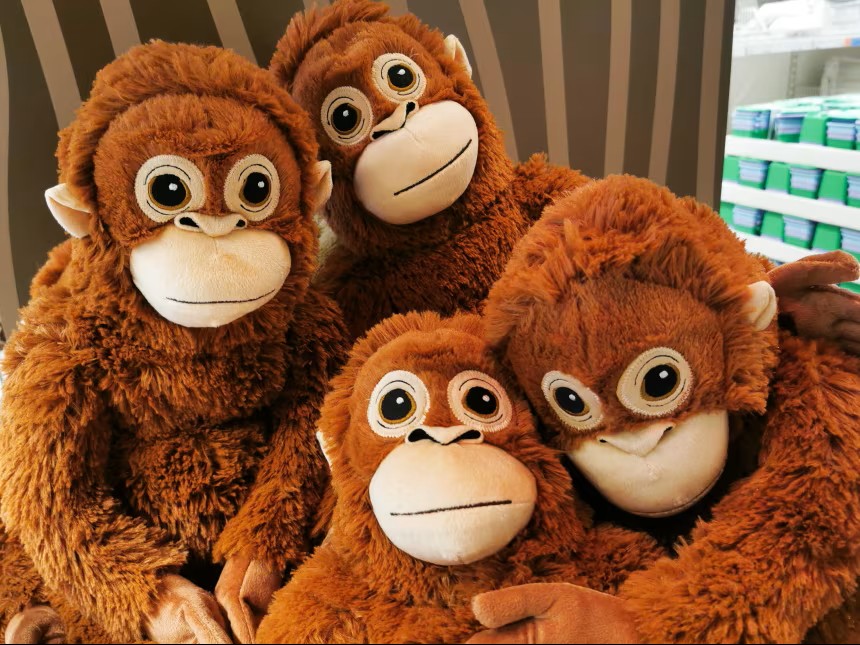
“We are making sure that the toy is back in stock as soon as possible,” Javier Quiñones, global commercial manager for IKEA’s Ingka Group, said in a statement to The Washington Post. “The toy has long been one of our most sought-after across markets, and the story from Japan is now giving it a little extra love.”
A SMALL ZOO, A BIG SPOTLIGHT
The surge of attention has not been limited to retail. Ichikawa City Zoo has reported a sharp rise in visitors, with queues forming daily at the macaque enclosure. The zoo has capped front-row viewing to around 10 minutes and banned selfie sticks to reduce stress on Punch and the troop.
Nearly 9,600 visitors entered the zoo over a recent weekend, while February attendance reportedly reached about 47,000 — more than double the figure from the same month last year.
Encouragingly, more recent footage shows Punch gradually integrating with other macaques. He has been seen playing, being groomed, and spending longer stretches away from his plush companion — a sign of growing independence.
IKEA has leaned into the marketing potential of the moment, sharing an image of the orangutan toy on social media with the caption: “Sometimes, family is who we find along the way.”
A MALAYSIAN CONSERVATION ANGLE
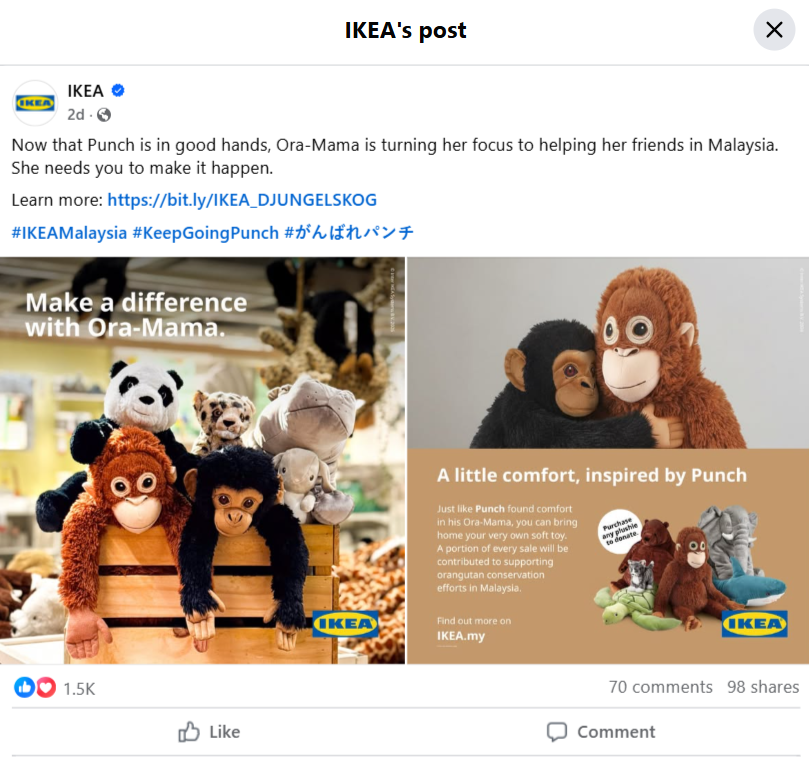
In Malaysia, the viral moment has brought added meaning. IKEA Malaysia earlier this week announced that a portion of proceeds from sales of the orangutan plush, which is surprisingly shown online at just RM9 (as opposed to US$19.99 in the States) will be channelled towards supporting orangutan conservation efforts locally. While details of beneficiary organizations were not specified in the initial announcement, Malaysia is home to the critically endangered Bornean orangutan, whose populations have been threatened by habitat loss and fragmentation.
Sabah and Sarawak host key conservation initiatives, including rehabilitation centres such as Sepilok Orangutan Rehabilitation Centre and Semenggoh Wildlife Centre, both of which work to rescue, rehabilitate, and where possible, reintroduce orangutans into protected forest reserves.
For Malaysian shoppers, then, purchasing the plush toy is not just about joining a viral trend. It also contributes — in a small but tangible way — to protecting one of the region’s most iconic species.
The broader irony is not lost: a baby macaque in Japan has inadvertently drawn global attention to orangutans, an entirely different primate species thousands of kilometres away.
Whether the shelves are restocked quickly remains to be seen. But for now, Punch’s story has done more than boost toy sales. It has highlighted animal welfare, conservation, and the simple power of companionship — plush or otherwise.