



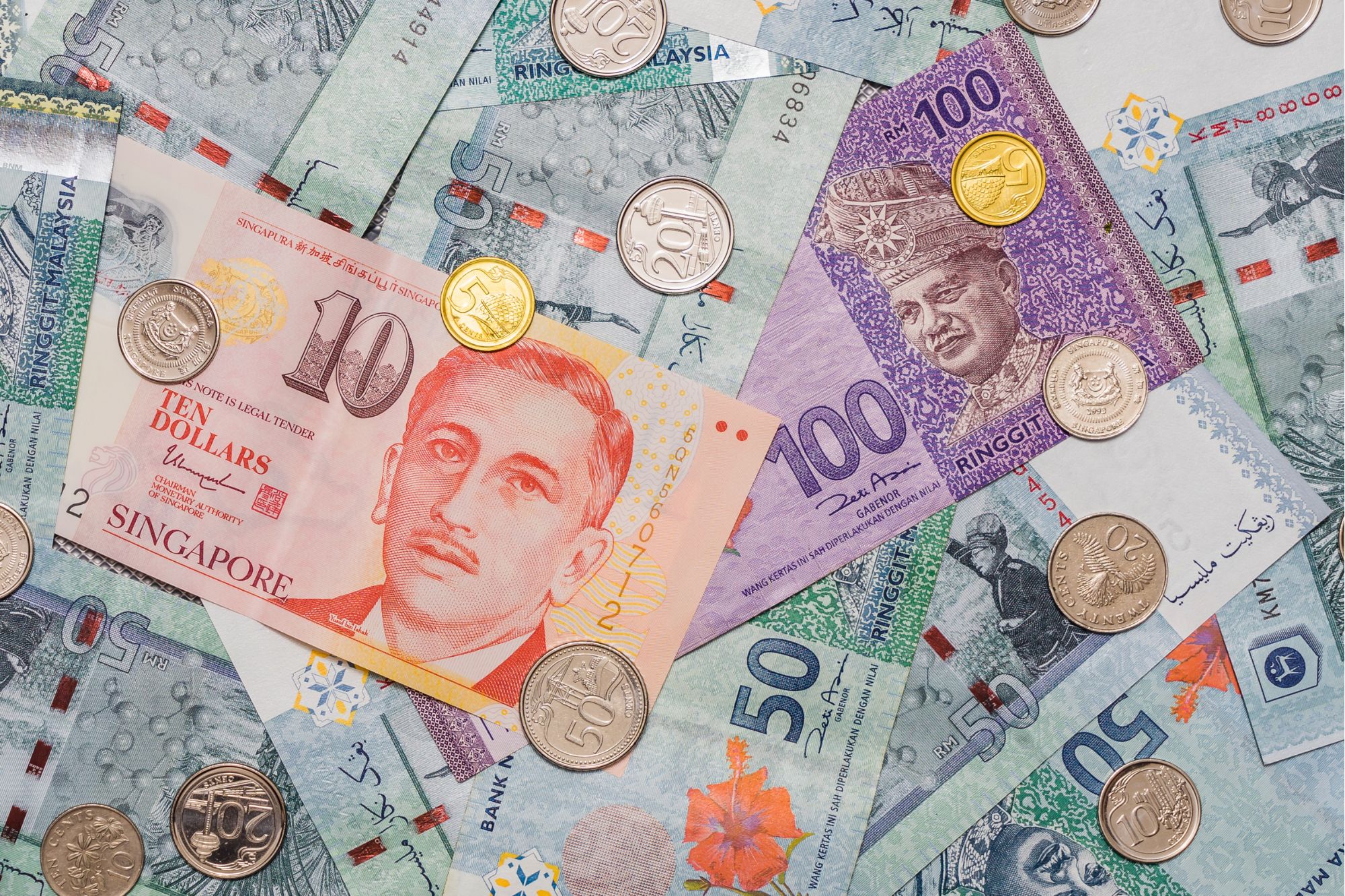
As the Malaysian ringgit strengthens against the Singapore dollar, analysts say the shift reflects global currency dynamics more than local economic divergence – and cross-border spending appears largely unchanged.
Recent currency movements have narrowed the long-standing exchange rate advantage Singaporeans enjoy when spending in Malaysia, but the change has so far done little to dampen cross-border activity.
According to reporting by Channel NewsAsia (CNA), the Malaysian ringgit has strengthened noticeably against the Singapore dollar over the past year. In late 2023, one Singapore dollar bought roughly RM3.45, briefly reaching around RM3.55 at its peak. More recently, the rate has settled closer to RM3.10, with some analysts suggesting it could approach RM3.00 in the months ahead.
For Singaporeans who frequently travel to Johor Bahru or other Malaysian destinations, the shift represents a gradual tightening of purchasing power. However, the overall impact on day-to-day spending appears modest.
One Singapore-based financial adviser cited by CNA estimated that the stronger ringgit has increased her monthly expenses in Johor Bahru by about S$200, covering rent, car payments, and daily living costs. Even so, she noted that the Singapore dollar remains relatively strong overall, meaning cross-border living arrangements and frequent visits still offer financial advantages.
More broadly, available data suggests Singaporeans have not significantly reduced spending in Malaysia despite the currency adjustment.
SPENDING PATTERNS REMAIN RESILIENT
Data from cross-border payment platforms indicates that transactions involving Malaysian ringgit have continued to grow.
Multi-currency wallet provider Revolut reported that conversions from Singapore dollars to ringgit rose steadily through 2025, with January 2026 recording a nearly 42 percent increase compared with the same month a year earlier.
“Our data does not show evidence so far of Singapore consumers materially pulling back on ringgit-related spending following the currency’s appreciation,” a Revolut spokesperson said in comments cited by CNA. “Cross-border activity has remained resilient, with users continuing to convert funds for travel and purchases in Malaysia.”
Similar patterns have been observed by other fintech platforms serving Singapore-based travellers. YouTrip chief operating officer Kelvin Lam said both transaction volumes and average transaction amounts have increased compared with previous years.
Lam told CNA that many users appear particularly attentive to exchange rate movements, with around RM3.30 per Singapore dollar emerging as a psychological threshold.
“The data shows that the stronger ringgit hasn’t stopped Singaporeans from heading across the Causeway,” Lam said. “It has simply made them strategic.”
Some travellers are also converting currency earlier than they might otherwise do, even when exchange rates are less favourable, in order to avoid the risk of further ringgit appreciation.
“In a classic display of ‘fear of missing out’, users are locking in current rates – even if they seem lousy – because they fear even lousier rates by the time they actually travel,” Lam told CNA.
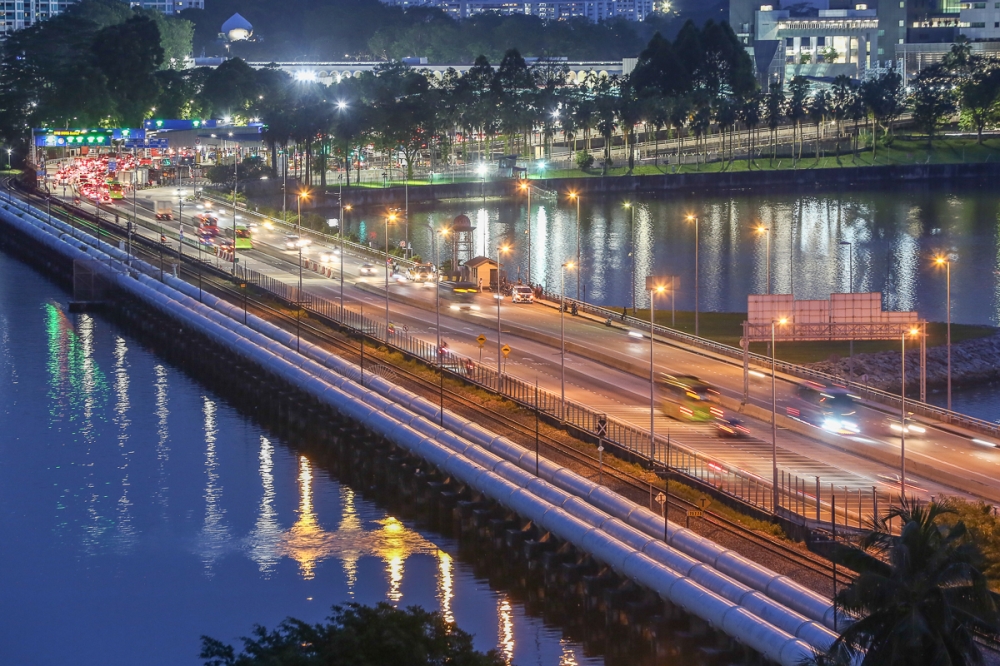
The continued spending reflects the broader appeal of Malaysia as a convenient and relatively affordable destination for Singapore residents. Johor Bahru, in particular, remains a popular location for short visits focused on dining, shopping, and entertainment.
WHAT IS DRIVING THE RINGGIT’S RECENT STRENGTH
Currency analysts say the ringgit’s movement against the Singapore dollar is shaped largely by global financial factors rather than dramatic shifts in the economic balance between the two countries.
Philip Wee, senior currency economist at DBS, noted that the exchange rate between the Malaysian ringgit and Singapore dollar is influenced heavily by global interest rate expectations, particularly in the United States.
“MYR-SGD is driven more by the US interest rate outlook, rather than divergent Singapore versus Malaysia fundamentals,” he said in comments cited by CNA.
Following the pandemic, the US dollar and Singapore dollar initially moved in broadly similar directions. From 2021 onward, however, global markets began adjusting to a cycle of US interest rate increases, which affected currency relationships across the region.
During periods of volatility, the Singapore dollar has tended to act as a relatively stable regional currency. Wee noted that its stability has reinforced its reputation as a financial safe haven within Southeast Asia.
The Malaysian ringgit, by contrast, tends to respond more strongly to shifts in global investor sentiment. Christopher Wong, a foreign exchange and rates strategist at OCBC, said the currency is particularly sensitive to movements in the US dollar and the Chinese yuan.
The ringgit also had greater room to recover after a period of relative undervaluation, he added.
Domestic factors within Malaysia have also contributed to the currency’s recovery. Saktiandi Supaat, head of FX research at Maybank, pointed to strong local demand, investment linked to artificial intelligence development, positive economic indicators, and improving fiscal prospects.
However, analysts caution that currencies like the ringgit can move quickly in both directions if global conditions change.
“If global conditions turn more cautious, then MYR’s higher beta profile could just as quickly work in the opposite direction,” Wong said.
OUTLOOK FOR THE EXCHANGE RATE
Looking ahead, some forecasts suggest the ringgit could strengthen further in the near term.
Maybank expects the Malaysian currency to reach around 3.80 against the US dollar by mid-2026 before easing slightly to the RM3.90 to RM3.95 range later in the year, according to Saktiandi.
Based on those projections, he estimates the Singapore dollar could trade around RM3.00 to RM3.05 by mid-year before ending 2026 closer to RM3.16.
“There is some possibility that SGD-MYR could move towards 3.00 if MYR strengthens more than we expected towards 3.80 and below against the USD,” he said.
OCBC’s Wong said such levels are plausible but would likely require a combination of factors, including a weaker US dollar, sustained strength in the Chinese yuan, or continued capital inflows into Malaysia.
For regular cross-border travellers, however, the difference between RM3.10 and RM3.00 may be more psychological than transformative. While the stronger ringgit slightly reduces the exchange advantage Singaporeans have long enjoyed in Malaysia, the gap remains substantial enough that spending patterns appear largely unchanged.
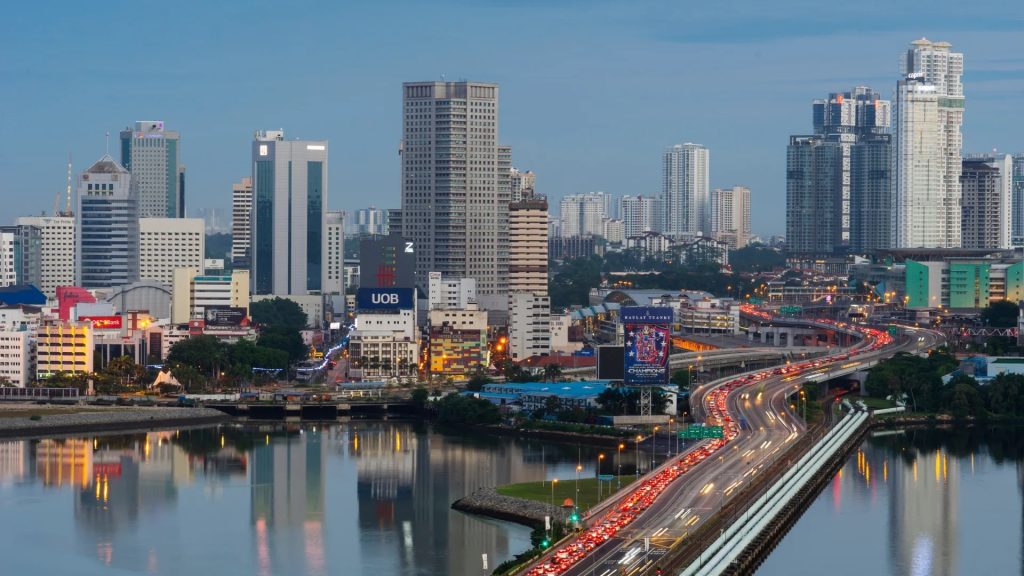
With travel between Singapore and Malaysia continuing to recover and regional connectivity improving, the Causeway’s economic relationship remains as active as ever – even if the arithmetic is becoming a little less favourable for Singapore visitors.
Sources: Channel NewsAsia (CNA), The Edge, Malay Mail