



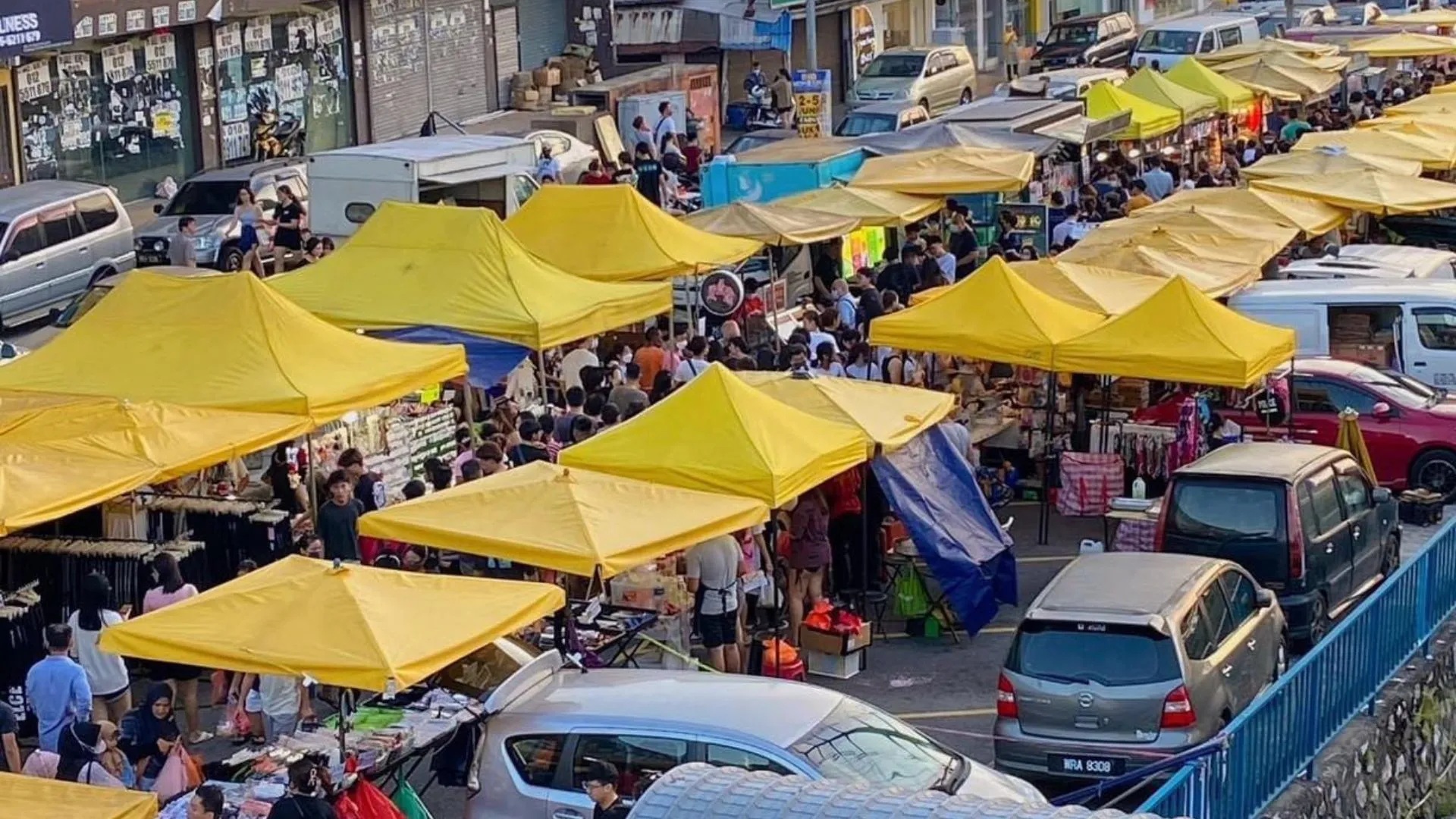
A midweek ritual in Kuala Lumpur, Connaught Night Market delivers an ever-changing spread of street food, atmosphere, and unapologetic local flavour – best experienced one bite at a time.
This post contributed by Archie Rutter
Connaught Night Market (pasar malam) feels like the sort of place Anthony Bourdain would’ve quietly approved of. Stretching for two kilometres along a main road near Cheras, it only comes alive after 7pm on Wednesdays. Hundreds of stalls sit shoulder to shoulder in one long row, with very few foreign tourists. You’ll find everything here, from clothes and Chinese New Year decorations to hamsters (don’t worry, not for eating), and of course, the real reason anyone comes: food.
FOLLOWING THE SMOKE AND THE CROWD
Markets hum. They pull you out of your head and drop you into the moment, where everyone seems briefly happier and real life is put on hold. Connaught has everything a proper market should: noise and an endless run of food. You’ll walk the full two kilometres, not because you want to, but because you can’t decide what to eat.
Then there are the smells. Slow-cooked broths, char-grilled meat, steaming dumplings, fresh fruit and vegetables, and the unmistakable punch of durian. Of course, it’s not all pleasant. Somewhere in the background of the mix is the sour stench of sewage. Unavoidable. Off-putting. Essential. Without it, are you really at a market?
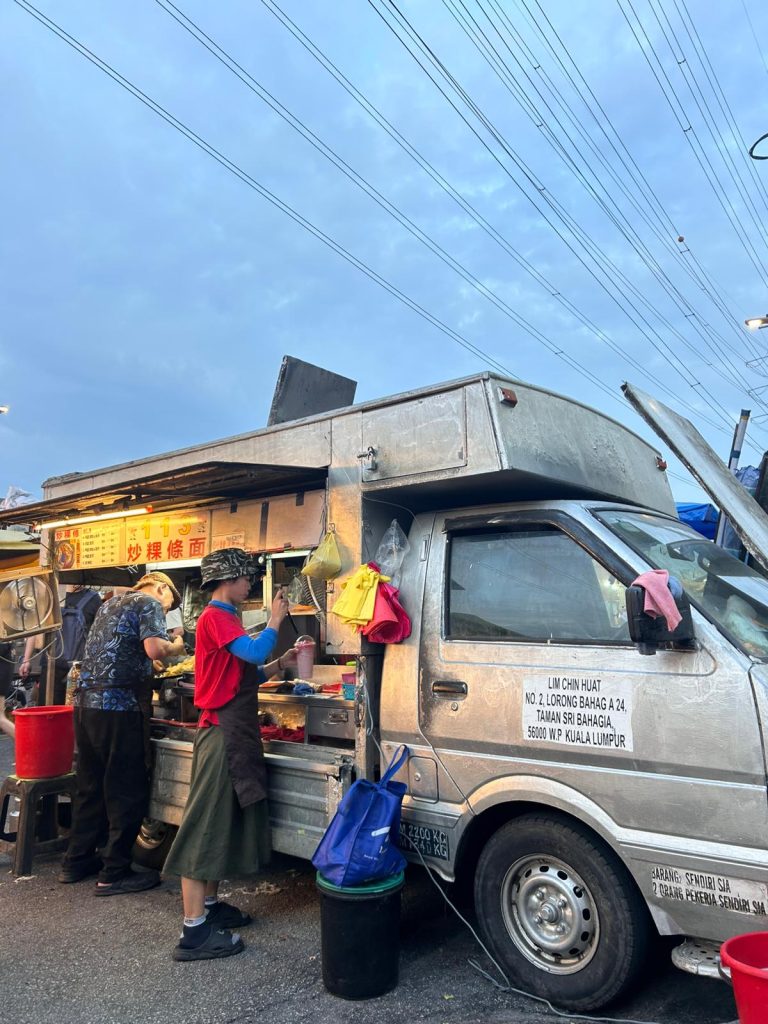
Most stalls here hide under identical yellow tents, but a few reveal Connaught’s past. Small metallic vans, battered and bruised, looking like they’ve survived a minor war. Loud signage, organized chaos, giving brutalism on wheels. These are the stalls that feel real.
The crowd thickens the deeper you walk. Not darker, just heavier. It moves like traffic at a broken junction. Vendors shout and smile at the same time, thrusting food so close to your face you can almost taste it. Overwhelming? Yes. But there’s nowhere to step aside. No exits, no quiet corners. So you do the only thing that makes sense: you eat.
“I eat what locals eat. They rely on the repeat business of their neighbours. Poisoning neighbours is not a good business model.”
I adhere to this quote from Anthony Bourdain, the late American chef and author. Why? Because there is truth behind it.
– Archie Rutter
OF NOODLES AND DUMPLINGS
I stop at a stall for Cantonese soy-sauce fried noodles. An older man stands over a massive wok, endlessly tossing and flipping. He speaks to no one except the wok itself. It is obvious: this man had mastered his craft long ago. Tucked just behind the main strip, you can sit down and escape the crowd for a moment.
The noodles are served on plastic plates, each covered with a thin sheet of plastic, so no washing is required. Genius, if you care about efficiency. Environmentalists, however, would be screaming, “Save the turtles!” The food arrives faster than I can sit down. Concerning? Maybe. But I trust the old man.
Slippery noodles, crunchy bean sprouts, and a proper hit of spice. Nothing fancy, or anything that will blow your mind, but it was pure comfort.
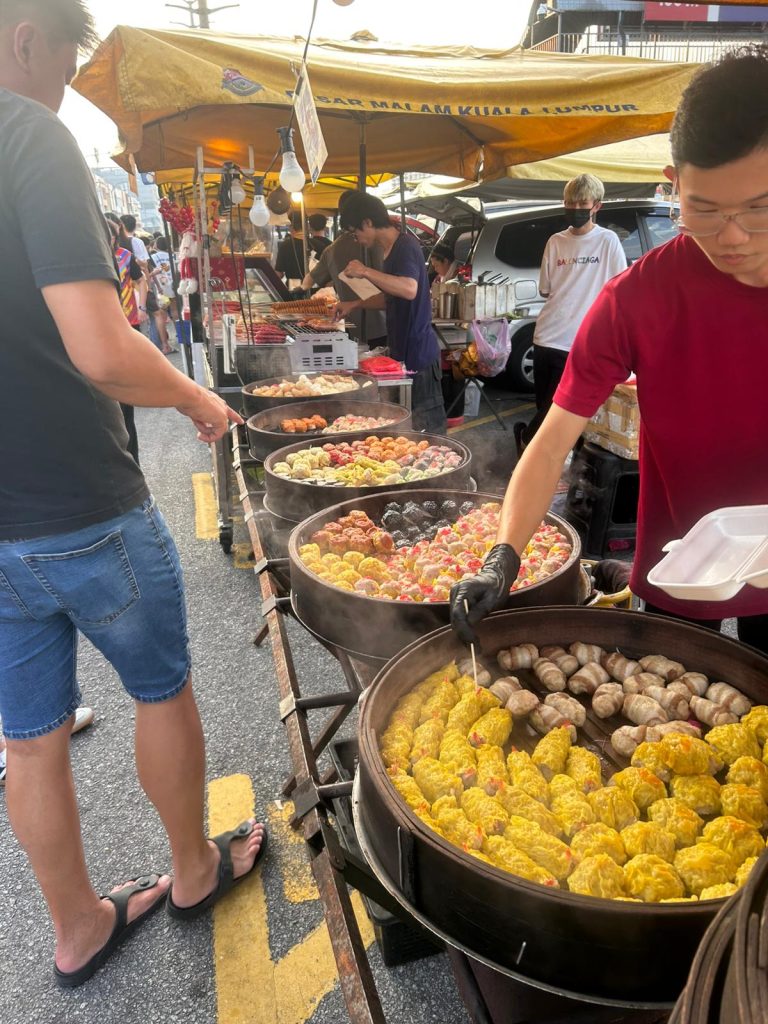
Dumplings are everywhere here, which makes them a good test. If a market knows what it’s doing, the dumplings will tell you. I judge every set against my personal benchmark: a small Chinese-run spot in Battambang, Cambodia, where about 30 dumplings only cost the equivalent about about RM11. A little secret of mine. So, how did Connaught Market fare? There are plenty of dumpling vendors, so it’s impossible to know if I hit the absolute best. Luckily, I had my Chinese friend along, someone who can spot a good dumpling from a mile away. Let’s just say… it didn’t quite reach Battambang-level perfection.
That said, credit where it’s due: the technique was solid. Steamed in bamboo baskets, then finished in a pan for a nice crunch. Flavour just needed more punch and a touch of freshness. For a market, I’d still call it above average.
STRONG FLAVOURS AHEAD
The meat skewers sizzle over the charcoal. They’re a bit pricier for a market, but worth it. Charred yakitori-style and glazed with tare, they perfectly balance sweet and savoury.
There’s a small controversy, though. I recently learned that most of the “beef” in Malaysian markets comes from buffalo. A bit of a shock, sure, but it’s cheaper and, when cooked right, tastes surprisingly similar. Basically, you have no idea what you’re eating. Is it weird? Yes. Is it good? Absolutely. No need to be scared off, these skewers are seriously tasty. Who knows, you might just discover a new love for buffalo!
So, what does Connaught offer for the more adventurous eater? Stinky tofu. Cannot get crazier than that. It is a must-try. Does it taste how it smells? Yes. I’d describe it as blue cheese soaked in a light beef stock and buried underground. Unsettling, but worth a try.
Then there are curry crab lava buns: creamy curry, bits of crab, Thai-leaning flavours, all wrapped in a soft, bao-like dough with a hint of sweetness. And that’s just scratching the surface. There are always new things turning up, and others quietly disappearing.
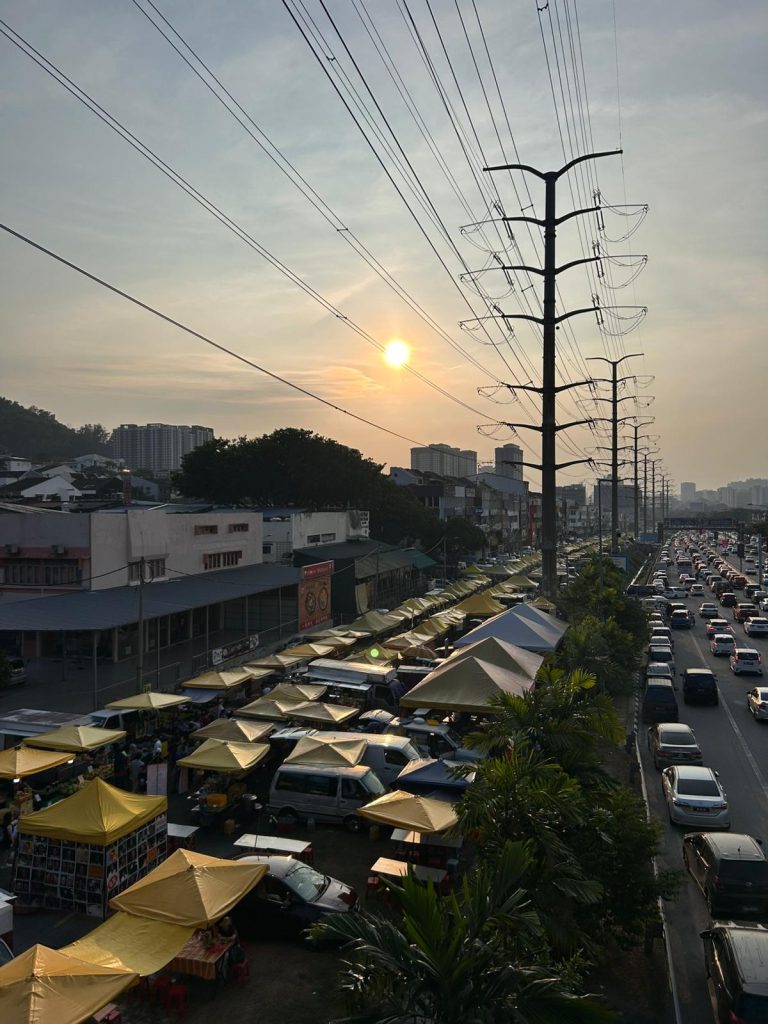
You might be wondering why I haven’t mentioned specific stalls or even named where I ate. That’s because nothing here stays still. Vendors come and go, shifting week to week. A dumpling stall you love one night might vanish the next, leaving you second-guessing whether you’re even in the right place. That’s the point. Don’t get attached to one spot – it might never come back. That constant change is what makes this market worth returning to. It never gets boring. As Anthony Bourdain said, “Street food, I believe, is the salvation of the human race.” So just go. Try it. What’s the worst that can happen from eating like a local