



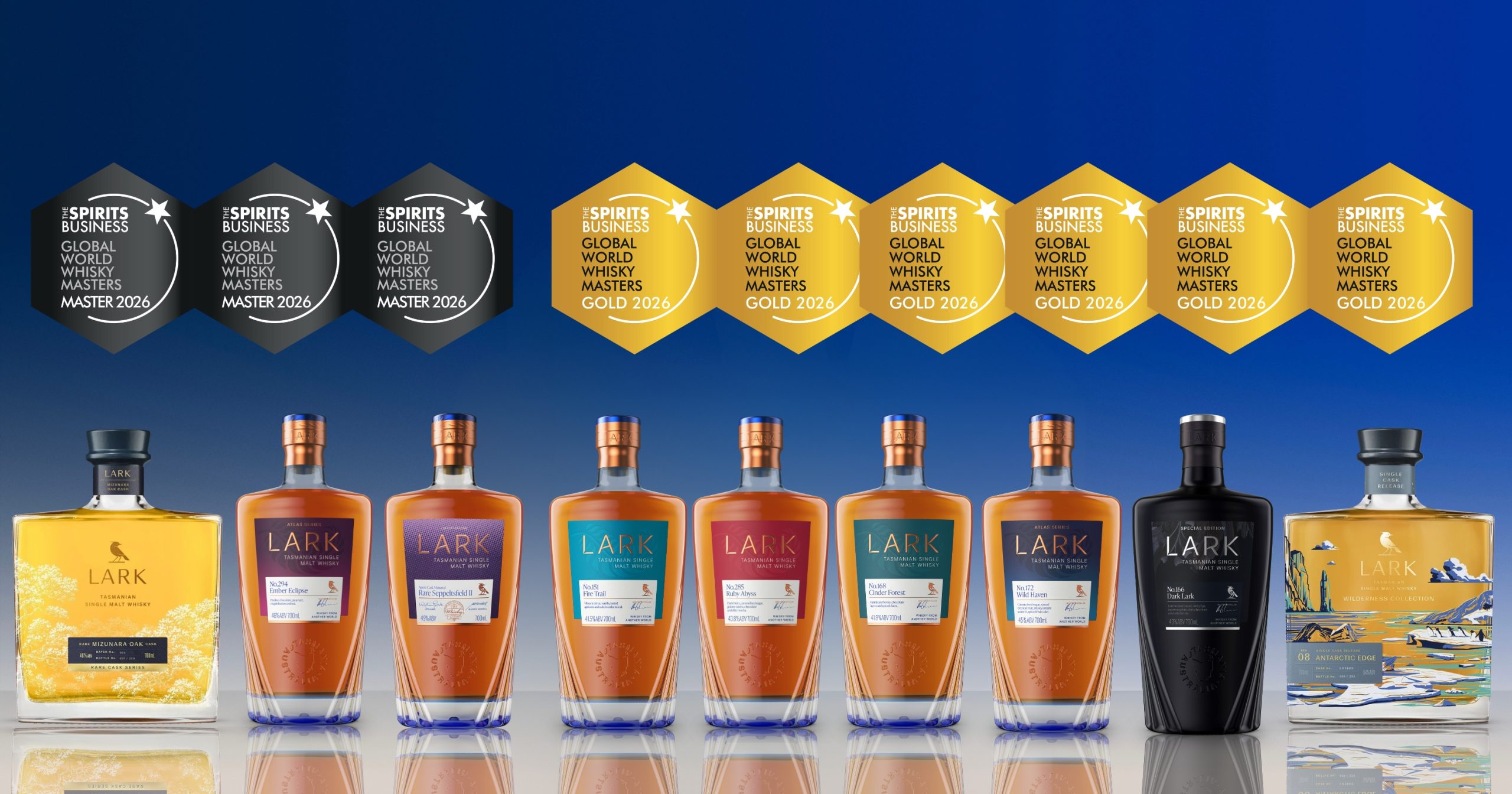
Tasmania’s pioneering Lark Distilling Co. has followed its Malaysian launch with a remarkable run of international accolades, including 13 medals across two major 2026 spirits competitions.
When Lark Tasmanian Single Malt Whisky arrived in Malaysia back at the beginning of this year, there was a sense that the distillery was bringing something genuinely different to a market already plenty acquainted with Scotch, Japanese whisky, American bourbon, and an increasingly diverse collection of New World expressions.
We were on hand for the January launch at Sol @ The Met, where Lark founder Bill Lark and Master Distiller Chris Thomson introduced the new luxury single malt portfolio. The story then was one of place: Tasmania’s wild climate, exceptionally clean water and air, locally grown barley, native peat, and a willingness to do things differently from the traditional whisky-producing nations. We were impressed then, but clearly, the best was yet to come.
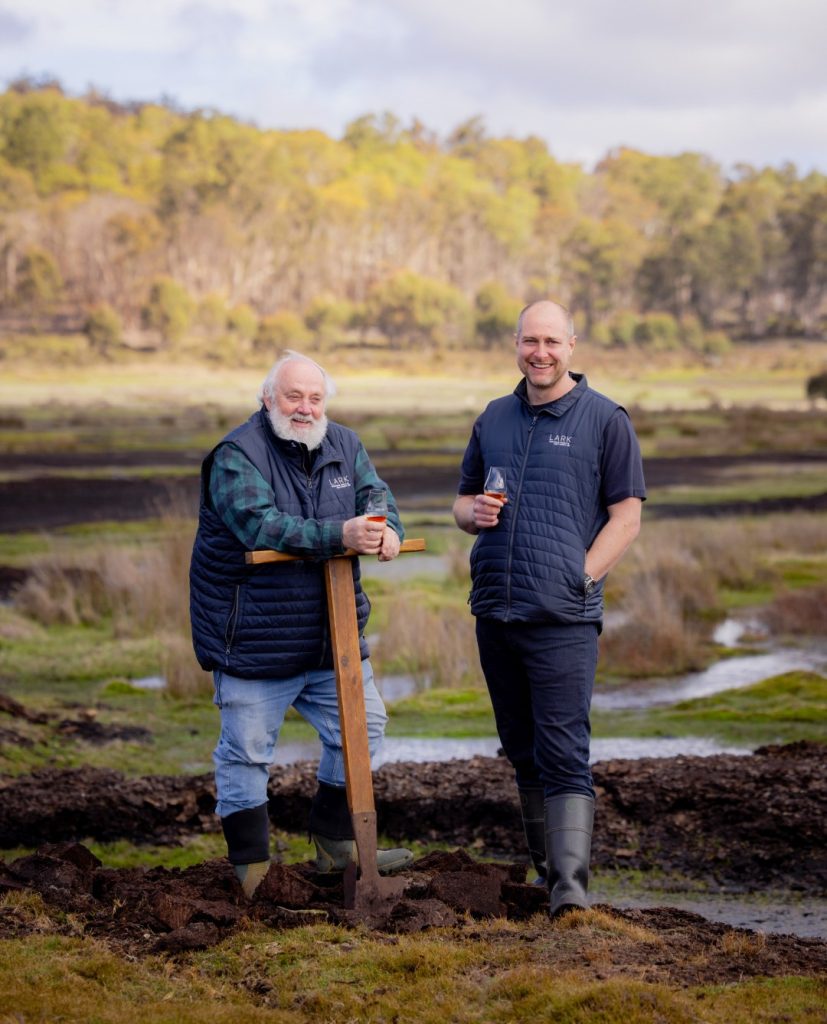
Several months later, Lark has rather more than just a good story to tell. The distillery has picked up a remarkable 13 medals across two major 2026 competitions, including three Master medals and six Gold medals at the World Whisky Masters, followed by four Gold medals at the Australian International Spirits Awards (AISA).
In other words, Tasmania’s relative newcomer which we tasted in January has been having a rather spectacular year.
A NEW WORLD WHISKY MAKING ITS MARK
The World Whisky Masters results, announced in August, are particularly impressive because every Lark whisky entered in the competition received recognition. Three were awarded the coveted Master medal, with a further six taking Gold. The competition is conducted by The Spirits Business and judged blind by a panel of leading spirits specialists, with Master winners progressing for consideration for the overall World Whisky Taste Master title.
Among the three Masters was No.294 Ember Eclipse Single Malt, a travel-exclusive expression available through Global Travel Retail at major Australian international airports and Singapore Changi Airport. Mizunara Oak Rare Cask and Rare Seppeltsfield II, a Whisky Club Edition, also earned Master medals.
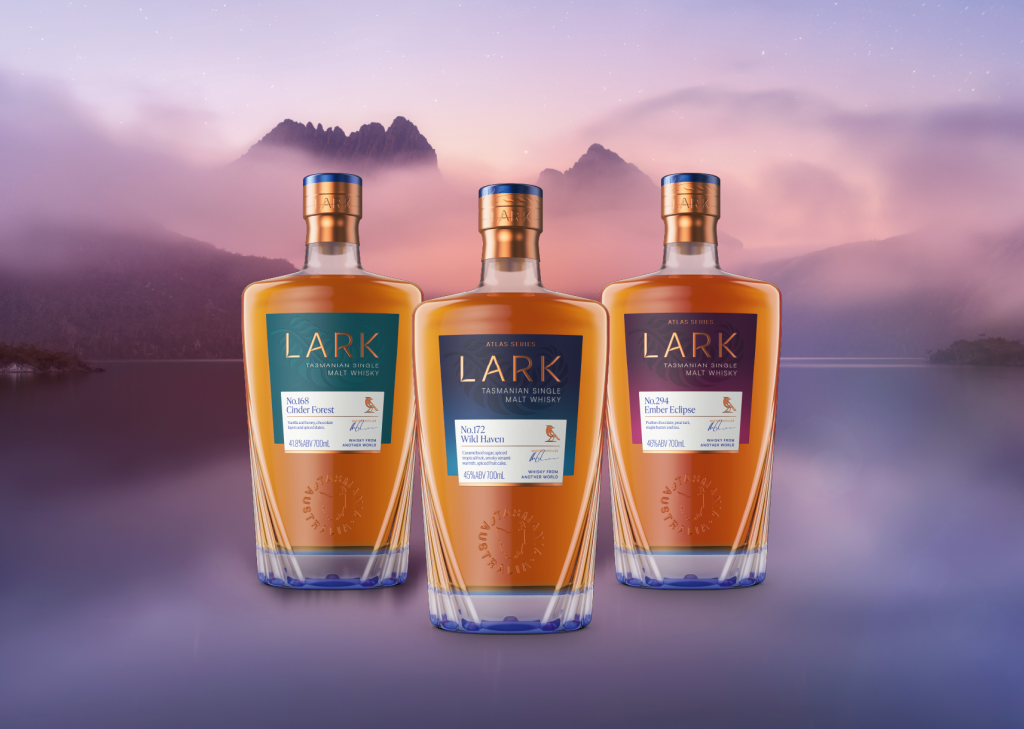
The six Gold medal winners were No.151 Fire Trail, No.168 Cinder Forest, No.161 Dark Lark, No.172 Wild Haven, No.285 Ruby Abyss, and Wilderness Collection: SEA, Chapter 08.
That is an unusually broad sweep of recognition, and we would say that it’s arguably more interesting than a single trophy for one flagship bottle. It suggests to us that Lark’s house style is working across a fairly wide range of cask treatments and expressions.
CEO and Managing Director Stuart Gregor certainly sees it that way, noting that every whisky entered came home with a medal and describing the result as evidence of a team “obsessive about quality across the whole range.”
Then came the Australian International Spirits Awards.
The AISA results added another four Gold medals to Lark’s tally. Mizunara Oak Rare Cask (Batch 4), No.294 Ember Eclipse, and No.285 Ruby Abyss were recognized for taste, while No.183 Devil’s Storm received Gold for design.
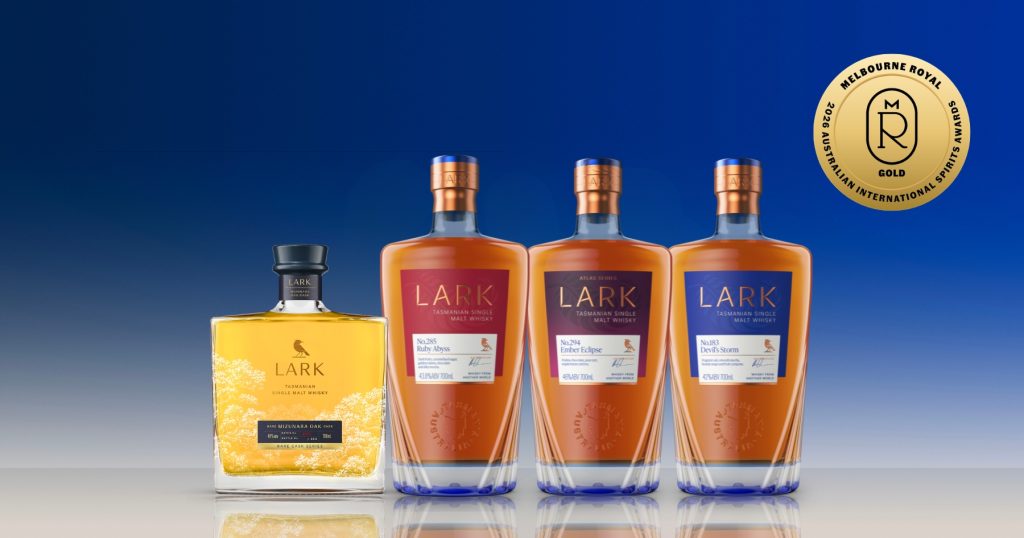
There is something particularly satisfying about that result. The AISA is Australian home turf, and, as Thomson pointed out, the competition is judged by people with an intimate understanding of Australian spirits. Entries are judged blind, with assessments covering commercial excellence, technical quality, and authenticity of style.
The fact that the medals span both taste and design is also fitting for Lark’s new portfolio. When we saw the collection in January, the redesigned 700ml bottles immediately stood apart, with their clean, contemporary presentation and skylark motif reflecting the distillery’s emphasis on freedom, landscape, and Tasmania itself.
But of course attractive packaging only gets a whisky so far. Ultimately, what matters – to us, and to any judge in a whisky competition – is what is in the glass.
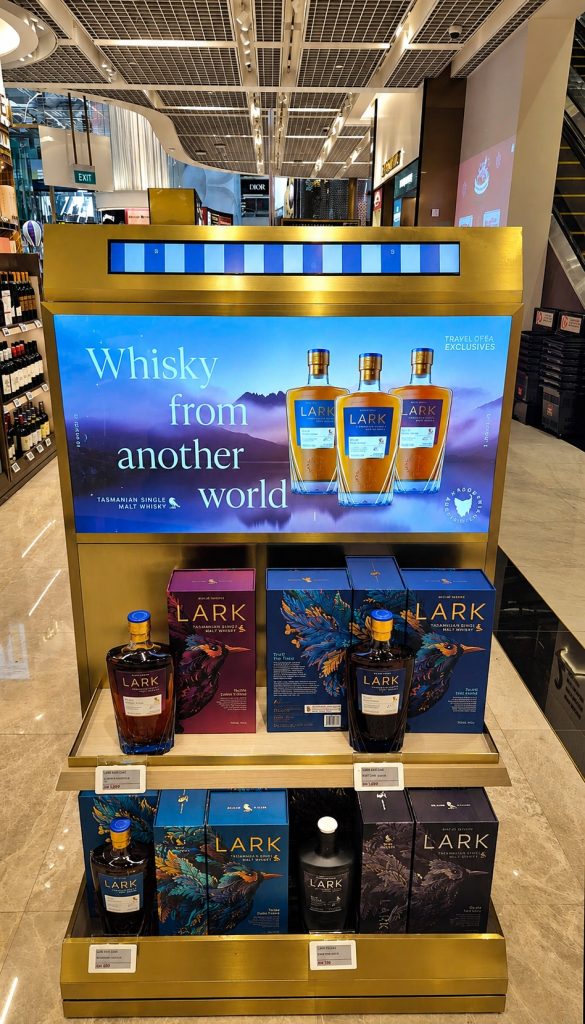
TASMANIA JUST TASTES DIFFERENT – HERE’S WHY
Lark’s story begins with an unlikely piece of Australian whisky history. Founded by Bill and Lyn Lark in 1992, the distillery helped ignite the modern Tasmanian whisky movement after challenging a distilling ban that had effectively stood for around 150 years. Today, Lark describes itself as Australia’s No.1 luxury single malt whisky brand and a leader in the global New World whisky category.
What makes the whisky particularly compelling is that Tasmania is more than a convenient origin story. You can read our original coverage of the brand that we published back in January HERE, but here’s a recap, as well:
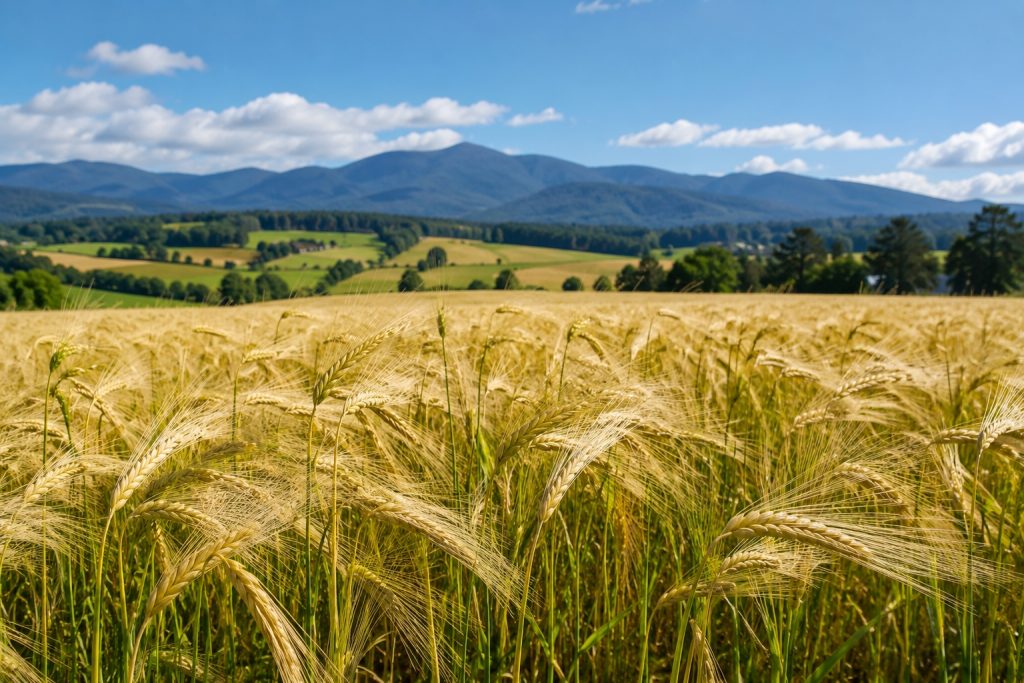
The island of Tasmania sits to the south of mainland Australia, exposed to the Southern Ocean and subject to pronounced changes in temperature and weather. Lark embraces those conditions, producing a rich, characterful spirit using Tasmanian barley, long fermentation, locally sourced peat, and water that is itself smoked with applewood.
The distillery also makes extensive use of fortified-wine casks, including Port and Sherry barrels from Seppeltsfield in South Australia. That helps explain the rich, rounded character we noted at the Malaysian launch – a style with considerable depth, but one that still retains a sense of freshness and vibrancy.
It is a particularly interesting proposition for whisky drinkers who have spent years exploring Scotch and Japanese single malts. Lark does not attempt to imitate either. Its character is firmly its own.
That is also where the recent awards become all the more meaningful. New World whisky has spent years moving from mere curiosity to credible alternative to sincerely impressive whisky, and Lark is increasingly positioning itself among the producers capable of competing on the world stage rather than simply participating on it.
The accolades have been coming from other directions, too. Lark reports three Double Gold and two Gold medals at the 2025 World Spirits Competition in San Francisco, while Thomson was named Master Distiller/Blender of the Year at the 2026 World Whiskies Awards. The new signature collection also won World’s Best Design and Best Range Design at those awards.
That makes the Malaysian launch look increasingly prescient. At the time, we agreed with the description of Lark as a whisky from “another world” – an appropriate phrase for a spirit made on an island off the southern edge of the Australian continent, using ingredients and techniques that give it a flavour profile that’s difficult to reproduce elsewhere.
Now, with 13 more medals on the shelf, there is just that much more evidence behind the claim.
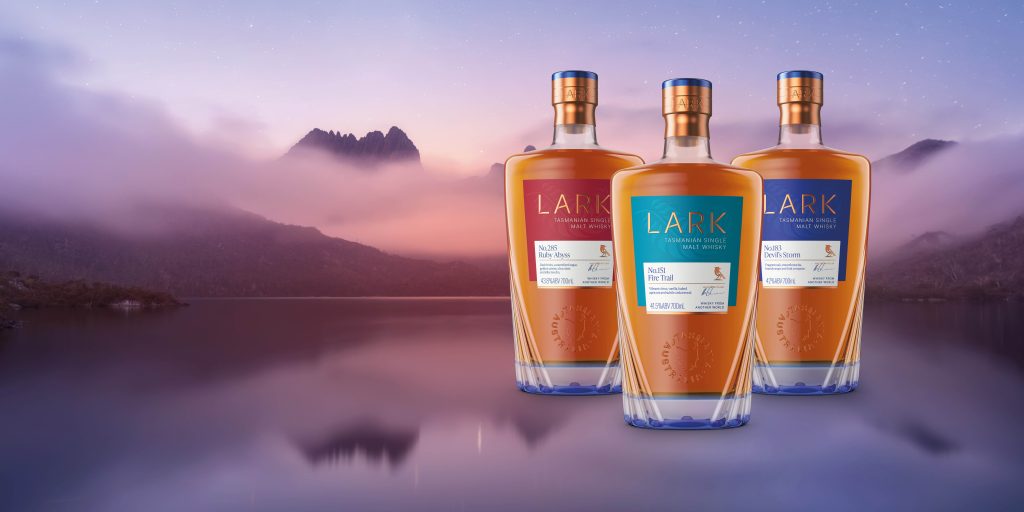
For Malaysian whisky enthusiasts (like us), that is the really exciting part. Lark is no longer simply an intriguing bottle from an unfamiliar whisky-producing region. It is becoming a serious contender in its own right, with international judges repeatedly finding something worth rewarding in the glass. And having tasted the range ourselves, we can understand why. And while each expression in the core range has something to say, we perhaps found the most favour in the top-tier Ruby Abyss. Matured entirely in first-fill vintage Port and Sherry casks, including century-old reserves, this indulgent whisky offers dark fruits, caramelized brown sugar, notes of mocha, and a refined thread of peat smoke. We loved it.
Tasmania may still be located far, far away from the traditional whisky capitals of Scotland, Ireland, Kentucky, or Japan. But Lark is making an increasingly persuasive case that distance from those places may be precisely the point.