


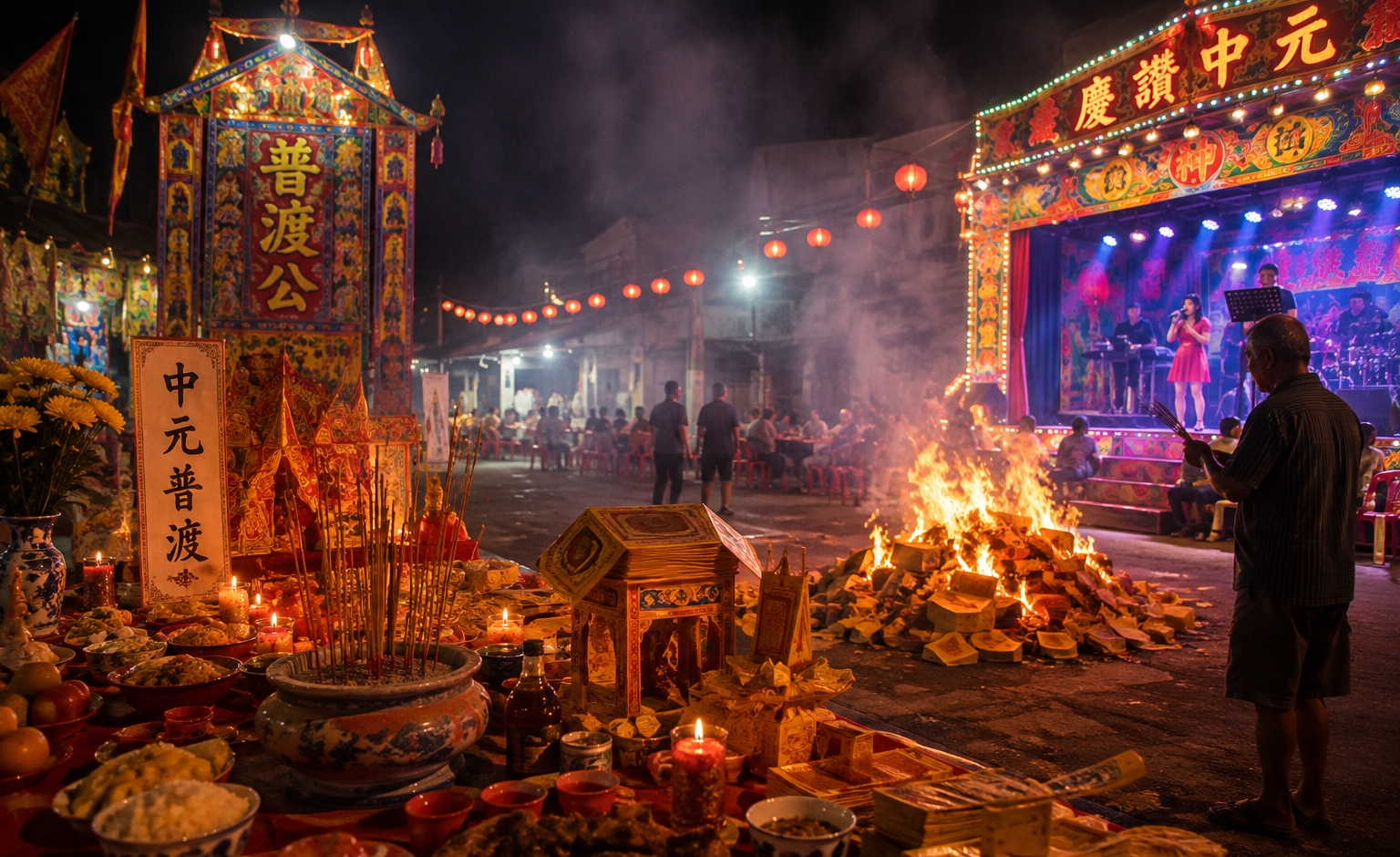
From roadside feasts and burning joss paper to colorful getai performances, the Hungry Ghost Festival is one of Malaysia’s most intriguing cultural traditions – and August 27 marks its peak in 2026.
When I first moved to Malaysia, way back in 2008, I arrived in the middle of a totally unfamiliar cultural season. I had gotten settled in my apartment and had been a new resident in Damansara Perdana for just a couple of weeks. One night, I looked out from my balcony and there were several Chinese people down in the street, standing casually around a burning pile of debris. Three of the ladies in the mix were somberly burning papers, too. Lots of papers… and burning it all right in the road! I was obviously puzzled (and a little annoyed), and later on that evening, I went for a walk and decided to check it out more closely.
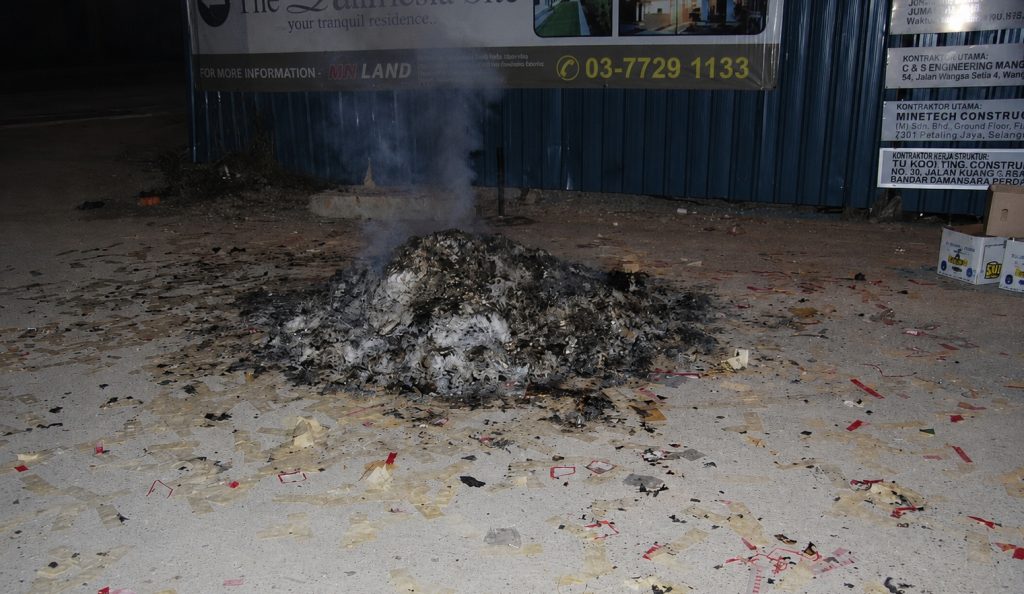
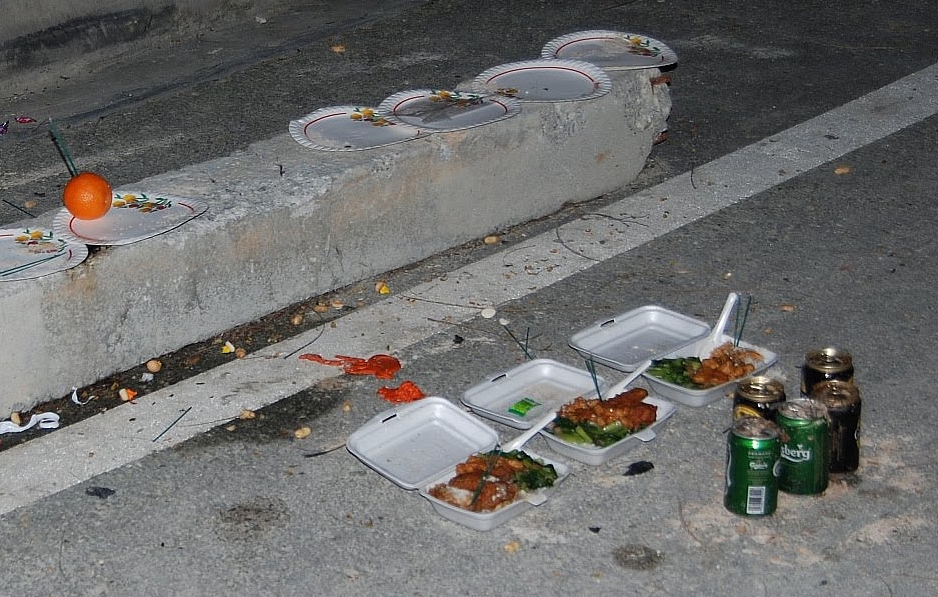
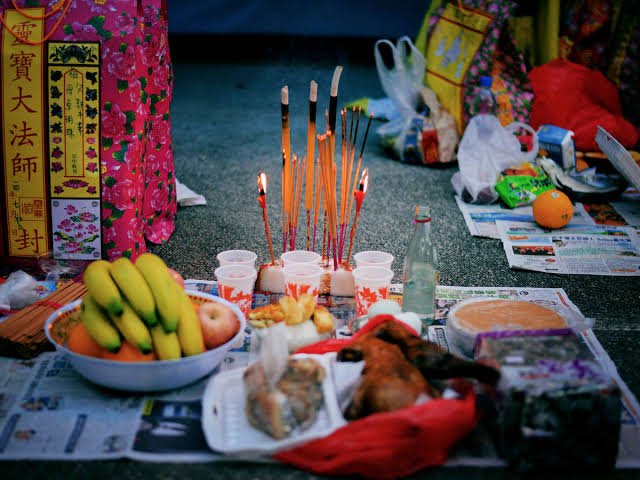
The people had dispersed, but all their rubbish remained – still-full cans of beer, open containers of food neatly laid out (each with little sticks of incense stuck in the food and the spoons all arranged with the same orientation, which freaked me right out, probably for some Blair Witch Project sort of reason), a few little Chinese flags planted in the grass nearby, along with some larger burning sticks with which I had no familiarity, and, of course, that still-smoldering heap of papers and boxes and such. Naturally, I was quietly outraged. Who did these people think they were? Why was I paying for security at this condo when this kind of vandalism and littering was cheerfully going on right outside the gate? I vowed to march to the management office the next day and air my grievances.
Well, very fortunately, cooler heads prevailed, and I actually did a little digging with the help of my tragic 700 kbps dial-up Streamyx Internet service (long-time residents will remember those days). Turns out I had just experienced my first Hungry Ghost Festival! No visits were paid to the office, no complaints were lodged, and I actually relished the opportunity to learn about this fascinating cultural practice in my then-new adopted home.
Truth be told, when I first found out what it was for, the idea of setting out takeaway containers of food and cans of beers for the dead to enjoy all just seemed… I don’t know, a bit creepy, I suppose. But the more I learned, the more I understood, and I soon found the deeper meaning of the Hungry Ghost Festival to really be quite beautiful. (But somehow, that photo above, snapped in the deep dark of the night, still unnerves me to this day.)
A MONTH FOR THE UNSEEN
Known variously as the Hungry Ghost Festival, Zhongyuan Jie, Yu Lan or Phor Thor, the observance takes place during the seventh month of the Chinese lunar calendar. In 2026, that month runs from August 13 through September 10, with the festival reaching its peak on Thursday, August 27, the 15th day of the lunar month.
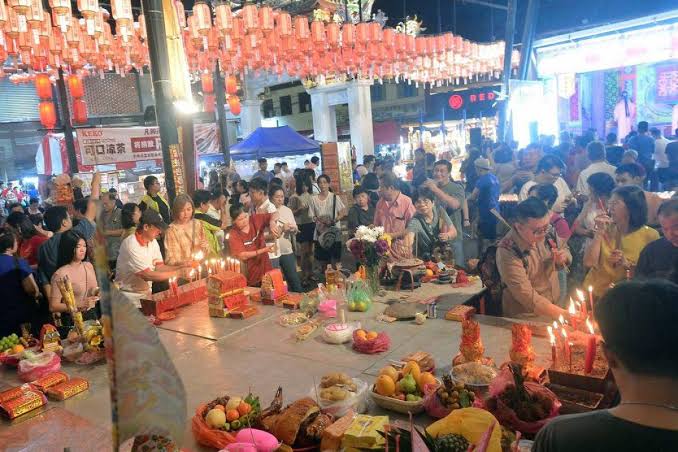
At its heart of Ghost Month is a rather moving belief, namely that the living should remember and care for the dead, including those who have no descendants to make offerings on their behalf.
According to traditional belief, the gates of the underworld open at the beginning of the seventh month, allowing spirits and ancestors to return to the earthly realm. Food, drink, incense, prayers, and other offerings are provided to ensure that these wandering souls are fed, honoured, and respected. And those burning sticks? Those were joss sticks. These sticks, still handmade in some communities, are an important part of Hungry Ghost Festival rituals, serving as a symbolic means of communicating prayers, respect, and offerings to deities, ancestors, and wandering spirits. During roadside offerings, incense is often placed alongside food and drinks, with the smoke traditionally understood as carrying the devotee’s prayers and inviting the spirits to partake of the offerings.
The tradition as a whole has several layers. Its Buddhist roots are associated with the Ullambana Sutra and the story of Maudgalyayana, one of the Buddha’s disciples, who discovers that his deceased mother has fallen into the realm of hungry ghosts. He is instructed to make offerings to the Buddhist monastic community, thereby generating merit that can help relieve her suffering. The festival subsequently absorbed Taoist and Chinese folk traditions, including the idea of the Earth Official granting pardon and overseeing the spirits of the dead.
That mixture is part of what makes the Malaysian version so interesting. Throughout the country, particularly in areas with established Chinese communities, you will see temporary altars, roadside offerings, incense, joss paper, and sometimes remarkably elaborate paper representations of houses, cars, clothing, money, and other worldly necessities. And when several people or families join forces, “the bigger the better” becomes an understatement.
And then there is getai – lively outdoor entertainment featuring singers, bands, comedy, and increasingly elaborate stage productions. The first row is traditionally left empty, because apparently even those in the afterlife appreciate good seats!
Naturally, there is plenty of superstition attached to the month, too: avoiding swimming, late-night wandering, major celebrations, moving house, and disturbing offerings are among the better-known taboos. Whether one genuinely believes these superstitions or not is almost beside the point. The rituals are a lovely, living expression of respect for ancestors, generosity toward those who have been forgotten, and the continuing importance of community.
And that is perhaps why the festival remains so relevant in modern Malaysia. It is easy to dismiss the smoke, offerings, strange paper objects, and booming getai stages as quaint remnants of another era. Look a little closer, though, and there is a remarkably human message underneath it all: remember where you came from, look after those who came before you, and make sure nobody – living or otherwise – goes hungry.