



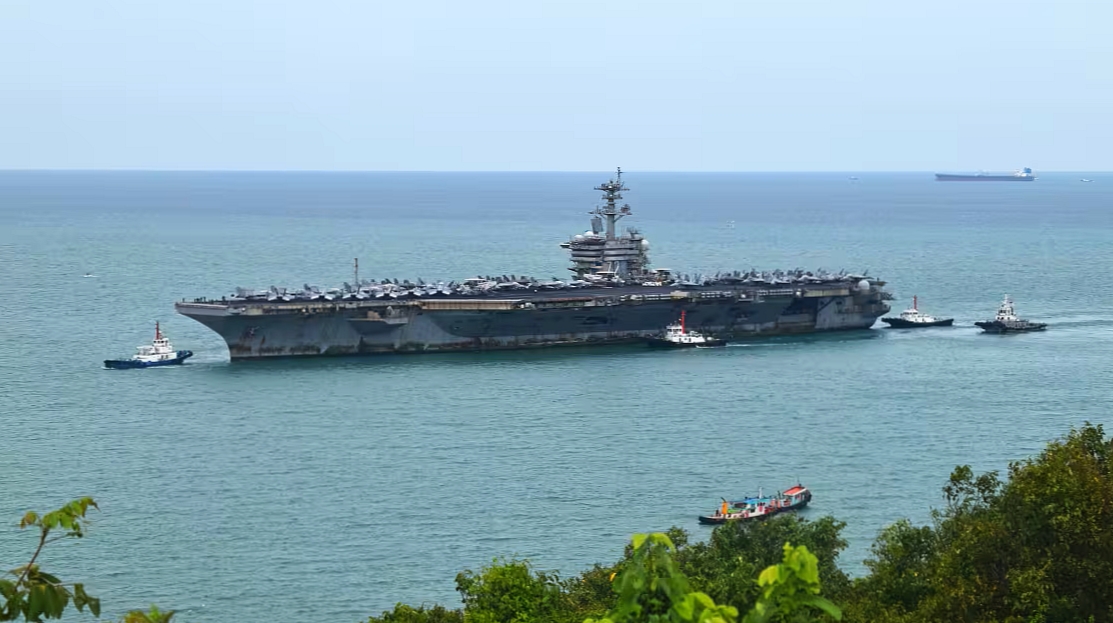
The U.S. aircraft carrier has brought around 5,000 sailors and Marines to Thailand for a rare break after a record-setting deployment that included combat operations in the Middle East.
After more than nine months at sea, the USS Abraham Lincoln has finally pulled into port. The U.S. Navy aircraft carrier arrived at Laem Chabang in Thailand, near the seaside holiday city of Pattaya, on September 2, marking the first full port visit of its current deployment and giving approximately 5,000 sailors and Marines a chance to step on dry land for the first time in many months.
The Nimitz-class, nuclear-powered carrier has been deployed since November 2025, spending much of that time in the Middle East as part of U.S. military operations connected to the war with Iran. The deployment has been unusually demanding, with the Lincoln spending 286 days at sea. Navy officials described the Thailand visit as an opportunity for the crew to “rest and recharge.”
The carrier’s arrival also offered a striking visual reminder of the length of the deployment. Photographs showed areas of worn paint and exposed, rusted metal on the 1,092-foot vessel. Asked about the ship’s appearance, commanding officer Capt. Dan Keeler said it was normal for a long deployment and declined to comment further.
A LONG-AWAITED BREAK
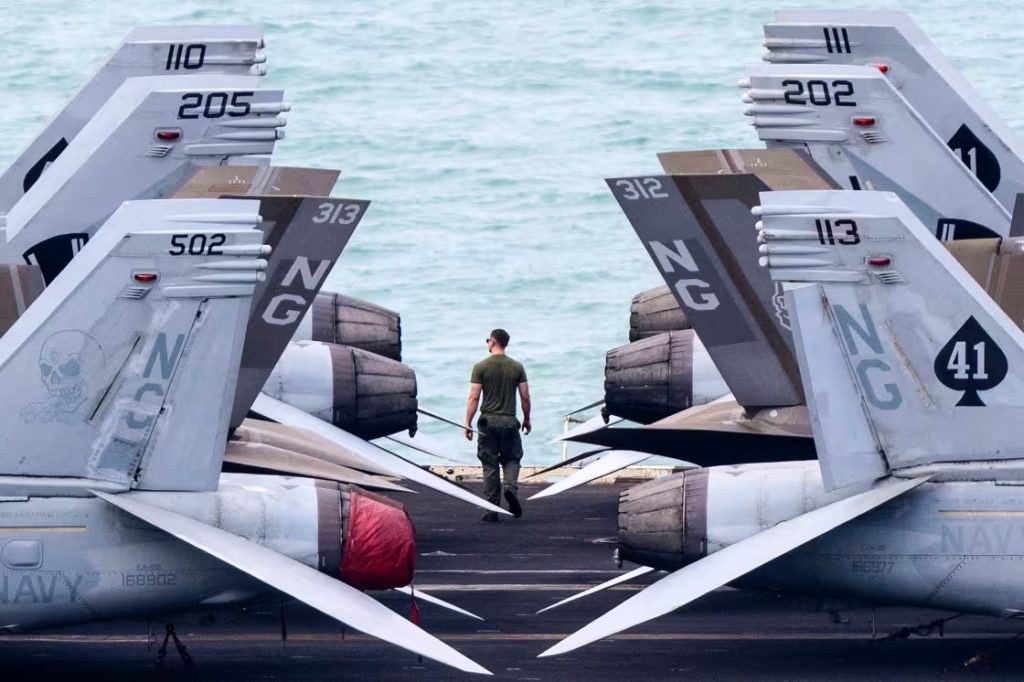
The Abraham Lincoln Carrier Strike Group arrived alongside two other U.S. Navy vessels. The Arleigh Burke-class guided-missile destroyer USS Frank E. Petersen Jr. docked at nearby Sriracha, while the Ticonderoga-class guided-missile cruiser USS Robert Smalls arrived at Map Ta Phut in neighboring Rayong province.
The ships’ crews are scheduled to spend several days in Thailand before continuing their journey home. While the Navy describes the stop as rest and recuperation, the visit also carries diplomatic significance. Thailand is the United States’ treaty ally in mainland Southeast Asia, and Rear Adm. Robert E. Loughran, commander of Carrier Strike Group 3, said the port call underscores the longstanding U.S.-Thai partnership.
For many of the sailors and Marines, however, the immediate attraction is considerably less strategic: a few days on dry land.
Around 5,000 personnel are expected to make their way to Pattaya, the resort city roughly 20 kilometers from Laem Chabang. Service members began disembarking in civilian clothes shortly after the ship arrived, with buses and pickup trucks waiting to transport them into the city. Some carried backpacks, while at least one sailor arrived with golf clubs.
The Navy has allocated several liberty days for the crew, with personnel rotating through shore leave and duty aboard the ship.
Pattaya has a long association with U.S. military visits, dating back to the Vietnam War, and local businesses are hoping the latest arrival will provide a much-needed boost. The city has experienced softer tourism amid disruptions associated with the Middle East conflict and higher fuel costs, and Pattaya Mayor Poramet Ngampichet estimates that the visiting personnel could generate around 100 million baht, or approximately US$3 million, for the local economy.

PATTAYA PREPARES FOR 5,000 VISITORS
The prospect of thousands of American military personnel arriving at once has prompted a substantial security and hospitality operation. Thai authorities have increased police patrols and checks, while businesses have put up welcome banners and prepared special offers for the visitors. Authorities have also urged businesses not to engage in price-gouging.
Pattaya’s more notorious nightlife has also received particular attention. Although prostitution remains illegal in Thailand, the city’s sex industry has long been part of its identity, and police have carried out enforcement operations ahead of the sailors’ arrival. The city has simultaneously been working to promote a broader image built around beaches, family attractions, golf, restaurants, and other tourism experiences.
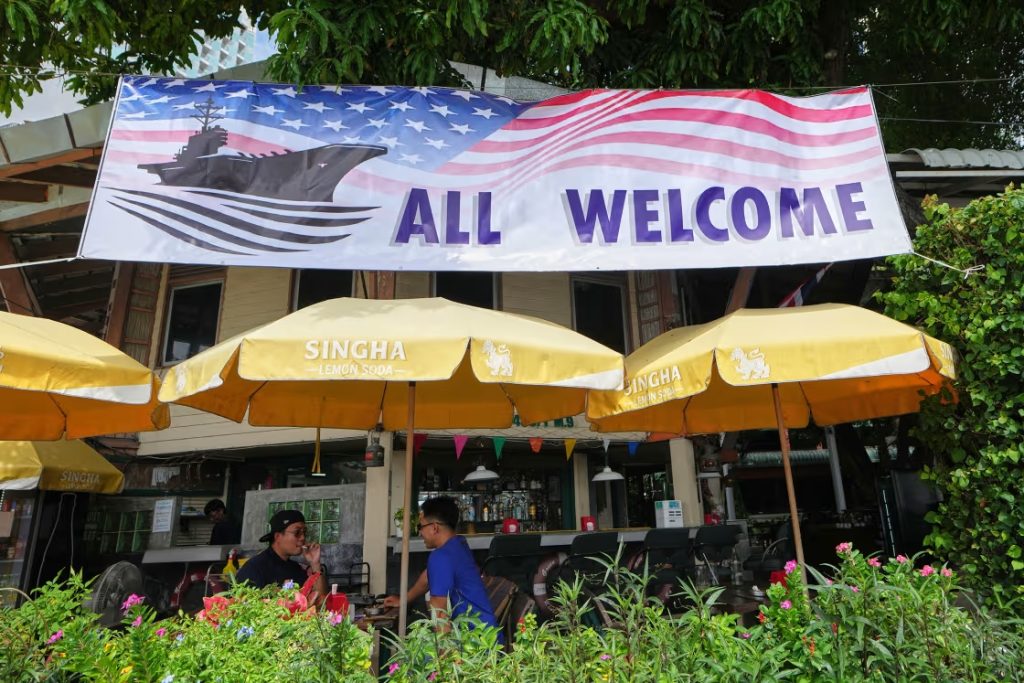
Thai authorities have also imposed some restrictions on activities for the visiting personnel, including warnings around drugs and certain higher-risk recreational activities.
For the crew of the Lincoln, the Thailand stop comes after an exceptionally long and consequential deployment. The carrier originally departed San Diego in November 2025 and was subsequently redirected from its planned Western Pacific mission to the Middle East as the conflict with Iran escalated. The deployment included U.S. combat operations and naval activities in the region.
The extended deployment has also generated concerns in the United States about conditions aboard the ship, including reports involving food supplies, sanitation, fatigue, and the mental health of sailors. The Navy has faced questions over the strain placed on personnel during the prolonged mission, and the reports have raised more concerns about the competence and qualifications of controversial Trump-appointed U.S. Secretary of Defense Pete Hegseth.
For now, though, the mood in Thailand is considerably lighter. After months of operating thousands of miles from home, the Lincoln’s crew has a few days to eat in a restaurant, play a round of golf, see the sights, and enjoy a bed that does not move beneath them.
Then the long trip back to San Diego begins.
Sources: U.S. Navy, Reuters, Associated Press, U.S. Naval Institute, The Washington Post, Los Angeles Times.