

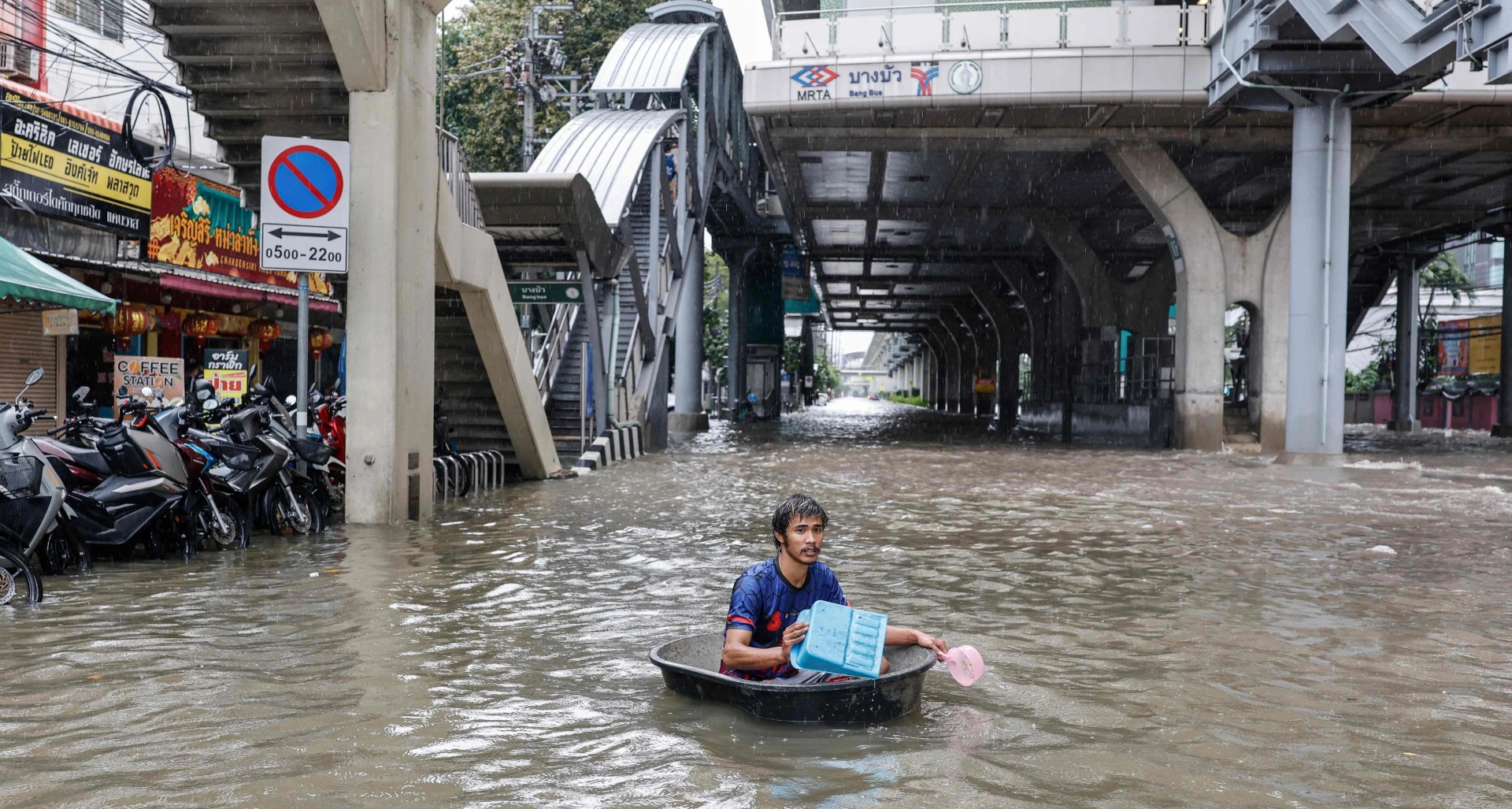
Nearly 300mm of rain in 48 hours has flooded roads, filled Bangkok’s canals, disrupted travel, and prompted authorities to declare a city-wide disaster as more rain remains possible.
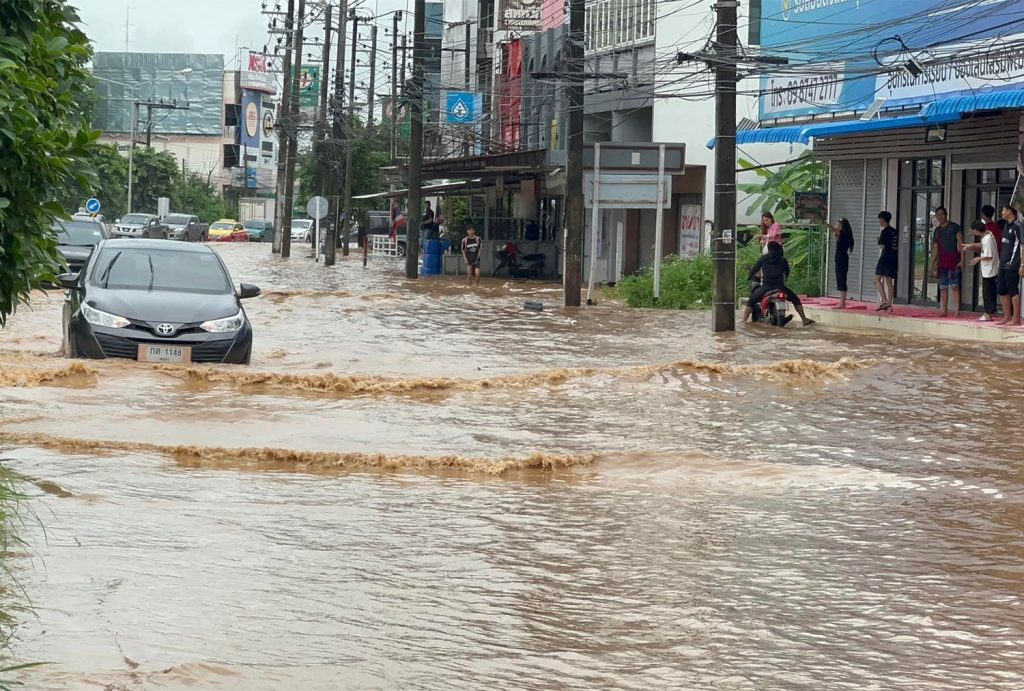
Bangkok has declared a flood disaster across all 50 districts after almost 48 hours of exceptionally heavy rain left canals overflowing, major roads submerged, homes and businesses inundated, and residents wading through waist-deep water in some parts of the Thai capital.
Bangkok Governor Chadchart Sittipunt signed the expanded disaster declaration on Saturday, September 26, extending an earlier designation covering three districts to the entire city. The move gives the Bangkok Metropolitan Administration (BMA), other government agencies, and local administrations greater powers to coordinate emergency assistance and respond more quickly to affected areas.
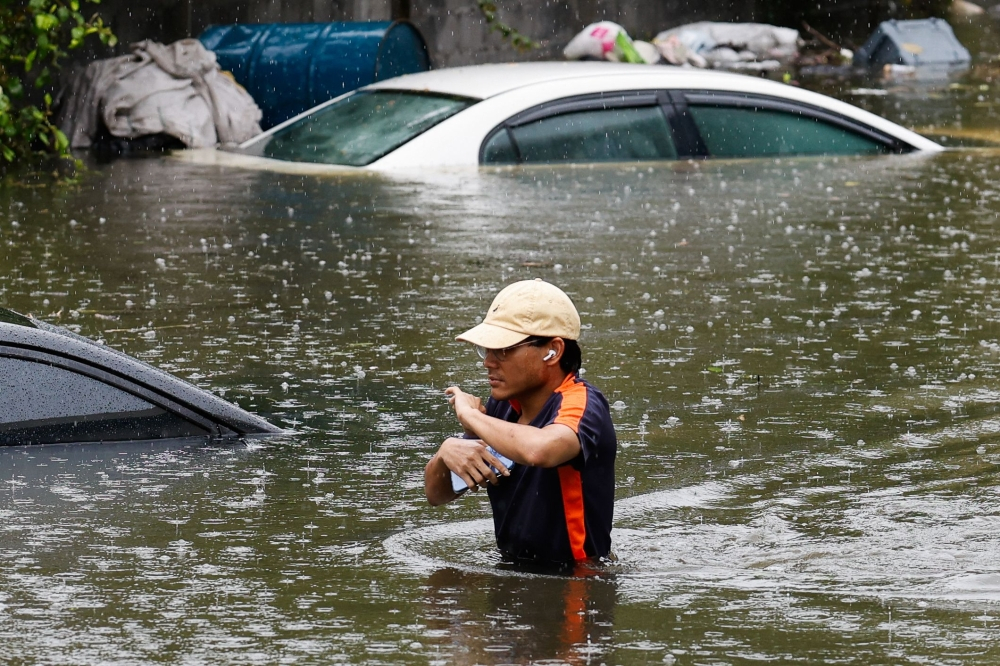
The flooding follows almost continuous rain since Thursday afternoon, with close to 300mm recorded across Bangkok over roughly 48 hours. The eastern part of the capital has been particularly badly affected, although flooding and serious traffic disruption have been reported across numerous neighbourhoods.
Chadchart urged residents to remain at home where possible and advised people living alongside canals to move vehicles and possessions to higher ground. Around 980 people were staying in temporary shelters by Saturday, while 36 bedridden residents had been transferred to hospitals, according to the BMA.
“The water keeps coming in. It’s hard to go out now. It’s like at my waist level now,” Somkid Pheuk-ngam, a 67-year-old vendor living near a canal north of central Bangkok, told AFP.
“I cannot go anywhere. I have been closing my shop for two days now,” she said, adding that although flooding is a familiar problem in the area, she believed this episode was worse than the catastrophic floods of 2011.
Even making such a comparison is alarming. The 2011 floods affected much of Thailand, killing more than 500 people and damaging hundreds of thousands of homes, although despite any local perceptions, the current situation is not regarded as a repeat of that nationwide disaster. Chadchart has sought to reassure residents, saying there is “no need to panic” and that the current situation had begun to stabilize by Saturday afternoon.
RAIN, RISING CANALS, AND A CITY UNDER PRESSURE
The immediate problem is water with nowhere left to go. Bangkok was built on low-lying land and has an extensive network of canals, or khlongs, that play a crucial role in draining the city. After nearly two days of heavy rain, however, many of those canals reached critical levels, limiting the ability of the drainage system to move additional water away from streets and residential areas.
“Our problem is that the canals are full,” Chadchart said during an afternoon update. The city has been operating its pumping stations at full capacity, with combined pumping capacity reported at around 1,200 cubic metres per second.
“If the rain stops, it is expected that it will take 2-3 days to drain the floodwater,” the governor said.
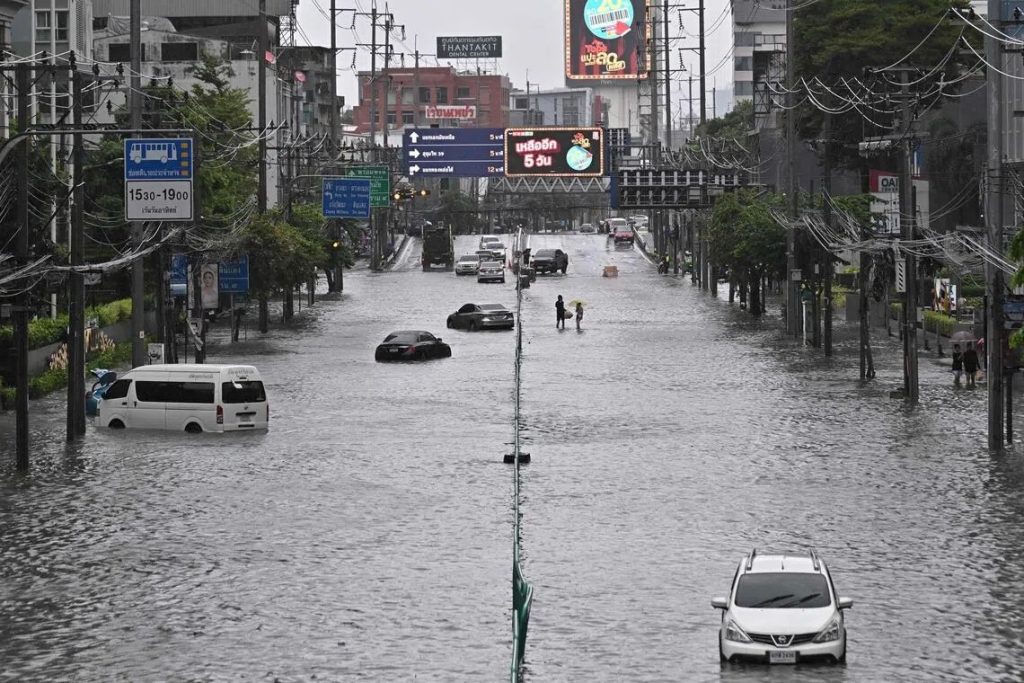
The weather system responsible for the deluge has also made the immediate outlook uncertain. Thailand’s Meteorological Department said an active low-pressure system over the lower Central Plains, including Bangkok and surrounding provinces, was expected to move across the region, while the southwest monsoon over the Andaman Sea, the South, and the Gulf of Thailand was strengthening. Heavy to very heavy rain was forecast across several parts of Thailand through September 27.
September is normally Bangkok’s wettest month, but this year has been considerably wetter than average. BMA figures show the capital received 487mm of rain between September 1 and 25, compared with an average of about 269mm for the same period between 1991 and 2020.
The problem is therefore not simply the amount of water already on the ground, but whether more rain arrives before the city’s drainage network has had time to catch up.
Authorities have been working to keep roads and drainage channels functioning, while the army has been involved in establishing shelters and field kitchens. Schools have also been made available as temporary accommodation, and residents in vulnerable areas have been urged to prepare for possible evacuation.
The government has also been monitoring water levels further upstream. The Royal Irrigation Department increased discharge from the Chao Phraya Dam in Chai Nat province from 1,850 to 1,950 cubic metres per second, prompting warnings for people living in low-lying areas along the Chao Phraya and Noi rivers to monitor conditions closely.
Flooding has meanwhile been reported in around 20 provinces across Thailand, including areas in the Central, Eastern, Northeastern, and Northern regions.
The disruption has also extended into residents’ daily lives. Supermarkets in some parts of Bangkok have seen crowds of residents stocking up on drinking water, instant noodles, canned food, and other essentials, while local residents have been filling sandbags and moving belongings to higher ground.
WHAT IT MEANS FOR TRAVELLERS
For visitors, the biggest immediate concern is getting around Bangkok rather than the availability of flights themselves.
Suvarnabhumi Airport was operating normally on Saturday, although the Civil Aviation Authority of Thailand (CAAT) advised passengers travelling to both Suvarnabhumi and Don Mueang airports to allow considerably more time for their journeys because flooding and poor weather were affecting roads and could contribute to delays. The Tourism Authority of Thailand has similarly advised travellers to build an additional two to three hours into airport transfers.
Several airlines have also introduced temporary flexibility for passengers affected by the flooding and resulting transport disruption. AirAsia, Nok Air, Thai Lion Air, and Thai Vietjet have announced options including flight changes and travel credits for affected passengers travelling between September 26 and 28.
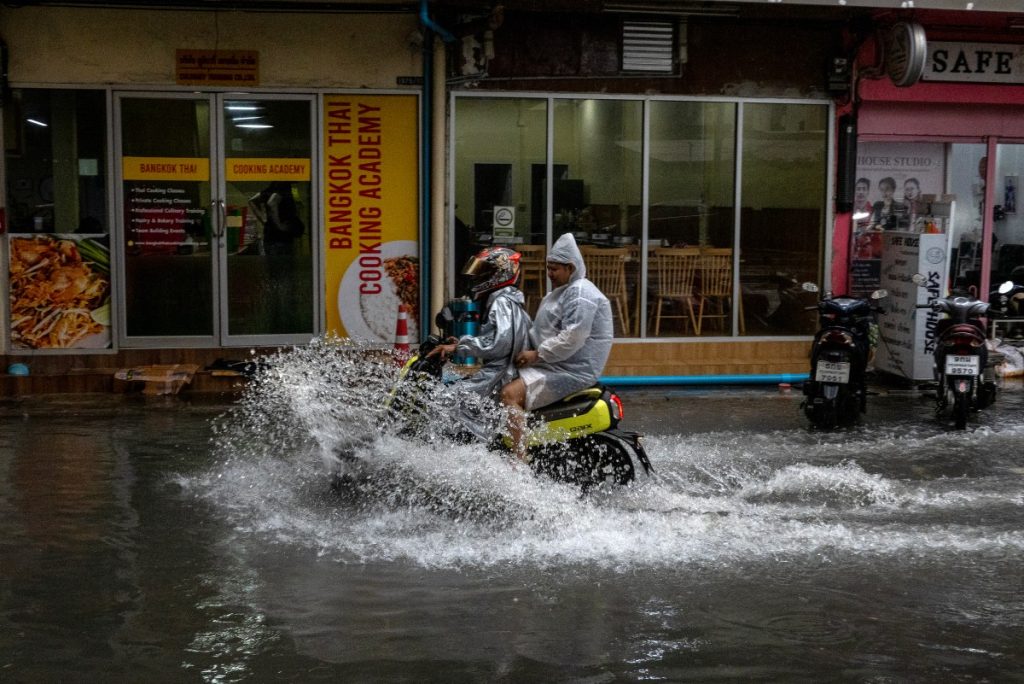
For tourists already in Bangkok, the advice is relatively straightforward: avoid unnecessary travel, check road conditions before setting out, and allow substantially more time for any essential journey. Some roads have become impassable to smaller vehicles, while traffic congestion has compounded the problems caused by standing water.
The city’s major tourist areas have not all been affected equally, and the situation can change rapidly from one neighbourhood to another. The greatest risks remain in low-lying areas and around the canals, particularly in eastern Bangkok.
For now, the critical question is whether the rain will finally ease. Chadchart said the situation had stabilized by Saturday afternoon and that, provided no significant additional rainfall arrives, the floodwaters should begin to recede over the following two to three days.
That remains a significant “if,” however. Thailand’s weather authorities were still forecasting heavy and very heavy rain in Bangkok and much of the country through Sunday, September 27.
Bangkok has always lived with water. Its historic canals, riverside communities, low-lying geography, and famously intense rainy season are all part of the city’s character. What makes this episode particularly disruptive is the sheer volume of rain arriving in such a short period, leaving the drainage system struggling to keep pace.
Sources: Reuters, CNA, AFP, Bangkok Post, Thailand Meteorological Department, Bangkok Metropolitan Administration, Civil Aviation Authority of Thailand.