


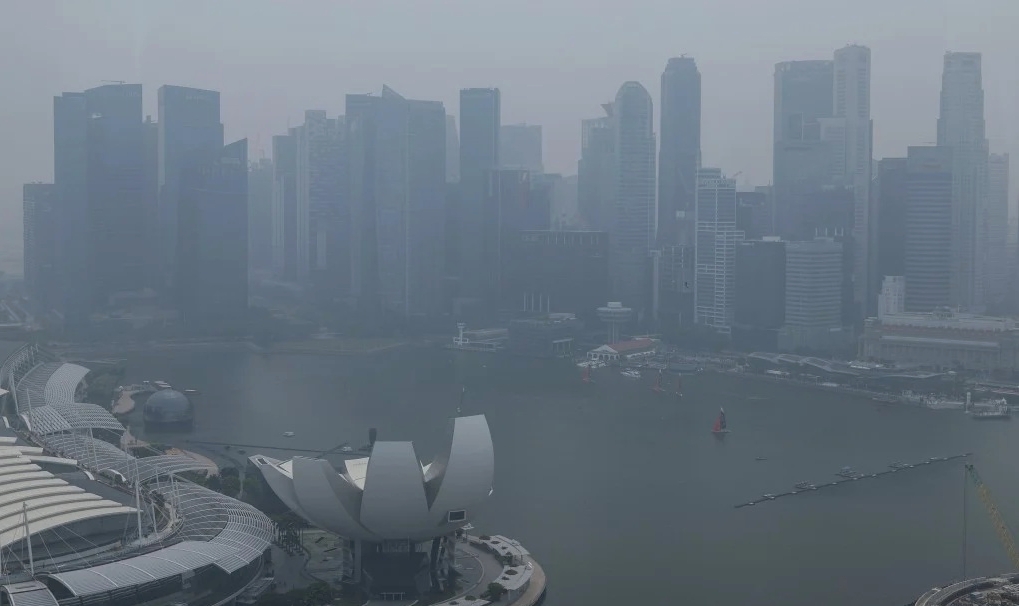
Wildfires in Indonesia are choking communities across the region, with air quality deteriorating in Singapore, Johor, and southern Peninsular Malaysia. While haze is often described as an annual occurrence, severe episodes are far less routine, and this year’s fires are among the most serious in more than a decade.
Southeast Asia is once again confronting the consequences of Indonesia’s forest and peatland fires, but the worsening haze should not be dismissed as simply another seasonal nuisance. Pollution levels have surged in Singapore, parts of southern Peninsular Malaysia are also experiencing deteriorating air quality, and authorities in Timor-Leste have suspended in-person schooling as smoke spreads across the region.
Singapore recorded its highest pollution reading of the year on Wednesday, with a one-hour concentration of fine particulate matter, known as PM2.5, reaching 284 micrograms per cubic metre in the western part of the island. The reading entered the National Environment Agency’s “very high” band for the first time during the current haze episode.
The figures are alarming because PM2.5 particles are small enough to penetrate deep into the lungs, and some can enter the bloodstream. Exposure can aggravate asthma and other respiratory conditions, contribute to cardiovascular problems, and pose particular risks to children, older people, and those with existing health conditions.
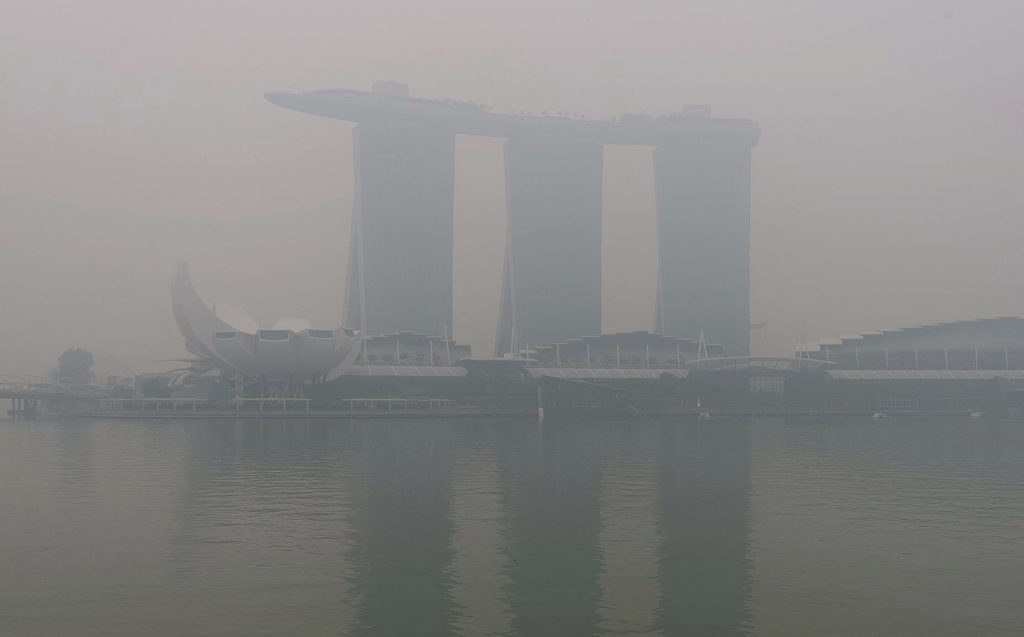
To put the Singapore reading into perspective, 284 micrograms per cubic metre is an extremely high concentration. It is not a measure of the Air Quality Index (AQI) itself, but a measurement of the mass of fine particles suspended in the air. AQI systems convert pollutant concentrations into a scale intended to communicate health risks more easily, and their numbers vary according to the country’s methodology and averaging period.
Singapore’s one-hour reading also should not be directly compared with the 24-hour PM2.5 averages used in many international health guidelines. Nevertheless, a concentration this high signals a serious pollution episode, particularly if elevated levels persist.
In October 2015, when Indonesian fires blanketed the region in smoke, Singapore’s PM2.5 concentration reached a national record of 471 micrograms per cubic metre in the west. The latest reading remains well below that peak, but it is a stark reminder of how quickly conditions can deteriorate when widespread fires coincide with dry weather and unfavourable winds.
A CRISIS THAT EXTENDS BEYOND SINGAPORE
The impact is not confined to Singapore. Johor and other parts of southern Peninsular Malaysia have also been experiencing pronounced haze, underlining the regional nature of the problem. Local readings can vary considerably according to wind direction, weather, nearby fires, and the location of monitoring stations, so conditions in one town may be very different from those in another. Haze conditions can also change notably during a period of just a few hours, too.
For residents, the practical concern is not whether a particular reading makes the headlines, but whether the air is safe to breathe. People should check current readings from Malaysia’s Department of Environment and its Air Pollutant Index (API) system, as well as local health advisories. Malaysia’s API and Singapore’s AQI-related reporting are not interchangeable, and a PM2.5 concentration should not be assigned a single universal index value without knowing the relevant calculation method and averaging period.
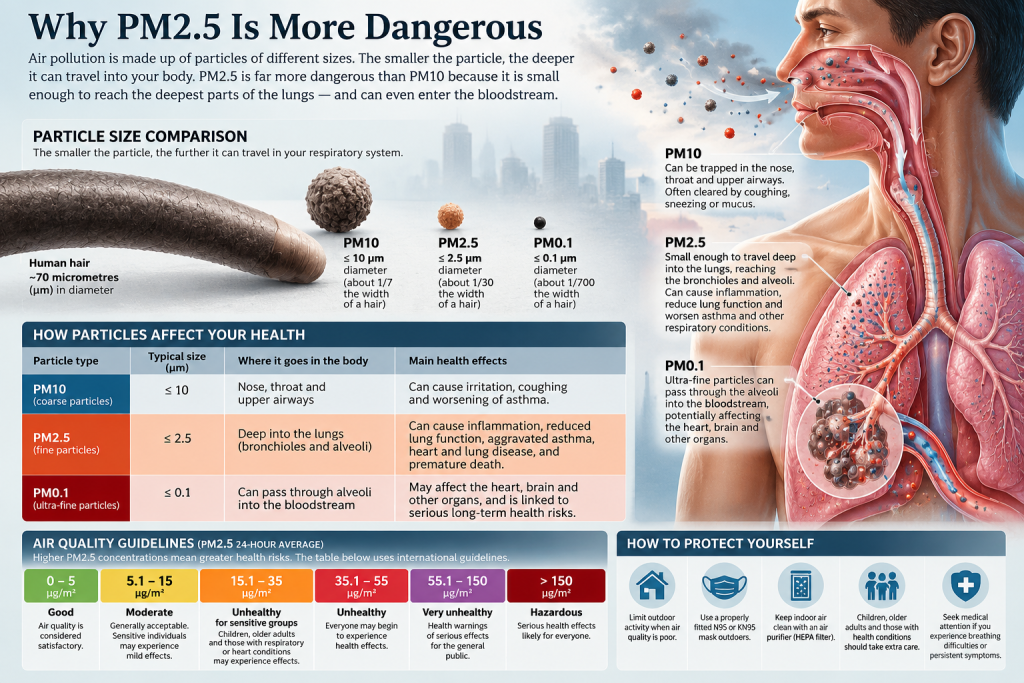
When pollution is elevated, reducing strenuous outdoor activity is sensible, especially for people with asthma, heart or lung disease, and other vulnerabilities. Properly fitted particulate respirators can reduce exposure to fine particles, while ordinary cloth masks offer limited protection. Keeping windows closed when outdoor pollution is worse, using an appropriate air purifier indoors, and following official guidance can also help. Anyone experiencing significant breathing difficulty or chest pain should seek medical attention.
The situation is equally serious in Timor-Leste, where the government announced a three-day suspension of face-to-face learning beginning Thursday because of pollutant particles from wildfires in neighbouring regions or countries. Although the statement did not name Indonesia, the country shares the island of Timor with Indonesia’s East Nusa Tenggara province, where hotspots have been reported.
Indonesia itself is facing what officials describe as its most intense wildfire season in 11 years. Dry conditions associated with El Niño have helped fires spread, while burning peatlands have proved particularly difficult to extinguish. Peat fires can smoulder below the surface, releasing smoke for extended periods and sometimes reigniting even after flames appear to have been suppressed.
NOT EVERY YEAR IS A HAZE YEAR
People across Malaysia and Singapore often say that the haze happens every year. In a loose sense, smoke and seasonal air-quality problems recur, but the claim obscures an important distinction: severe, widespread haze is not an inevitable annual event. Its intensity varies significantly from year to year, depending on rainfall, drought, land-clearing practices, fire prevention, and the effectiveness of enforcement.
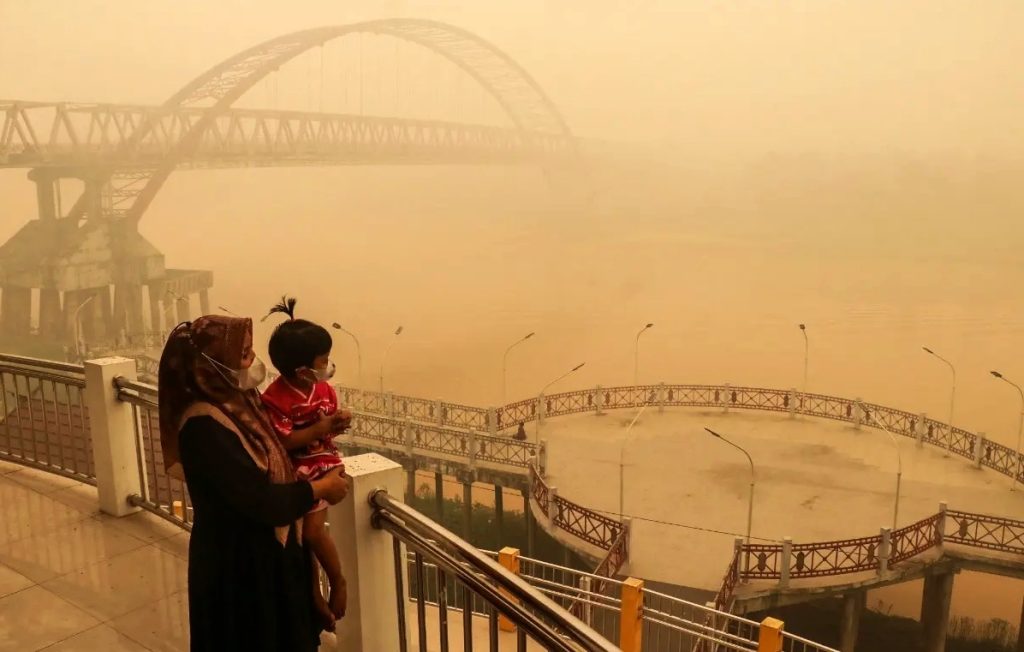
This year’s haze conditions, though not history-making (thankfully), are nevertheless among the worst in a long time, and for communities in Indonesian Borneo, the consequences are far more immediate than a hazy skyline or an unpleasant smell outdoors. In parts of Kalimantan, where fires have burned across forests and peatlands, residents face prolonged exposure to smoke, disrupted daily life, and significant threats to their health and livelihoods. For people living closest to the fires, it can feel like hell on Earth.
Jakarta says it is increasing its response. Honi Havana, an official with Indonesia’s Coordinating Ministry for Political and Security Affairs, said at a Wednesday briefing that more than 69,000 firefighting personnel had been deployed, up from around 44,000 in mid-September. Authorities are also testing chemical methods intended to improve firefighting effectiveness.
But the scale of the challenge remains considerable. Disaster mitigation agency spokesperson Berton Panjaitan acknowledged the difficulty of dealing with peat fires, saying sustained rainfall was ultimately necessary to resolve the problem.
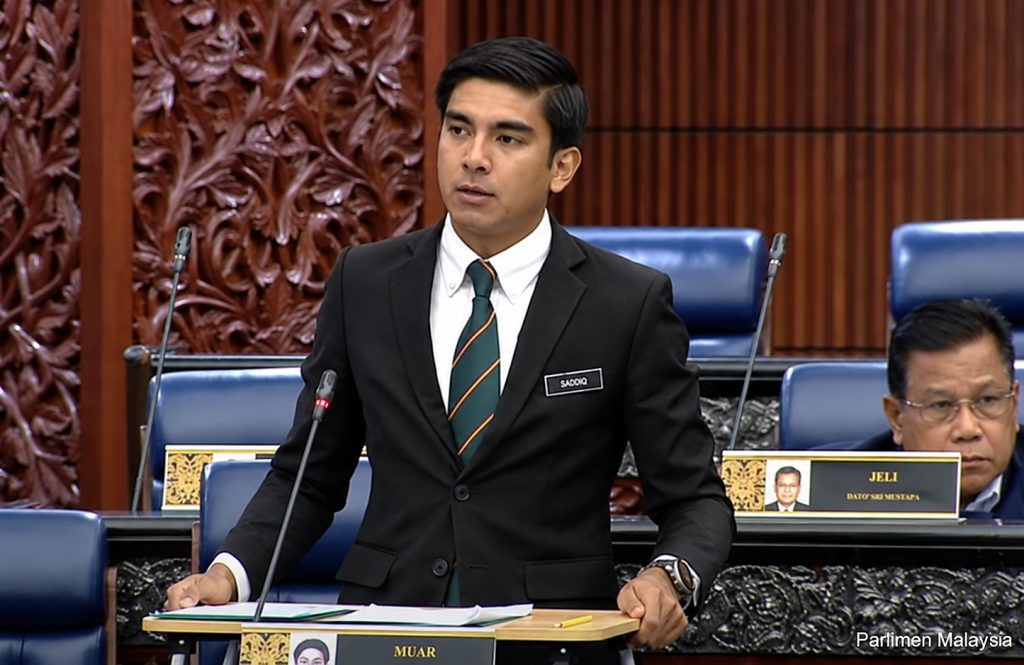
The political pressure is growing, too. As Southeast Asian foreign ministers prepare to discuss transboundary haze at an upcoming ASEAN meeting, Malaysian MP Syed Saddiq Syed Abdul Rahman has called for affected countries to lodge a formal diplomatic protest against Indonesia. Speaking in Parliament on Tuesday, he made the case even more strongly.
“We must send a strong diplomatic note that Malaysia objects, and that not only Malaysia objects, it must be agreed upon by other ASEAN countries that are similarly affected, such as Singapore. We must send a very clear diplomatic protest,” Saddiq told Parliament.
“You need to treat them like an outcast in the region,” he said, adding that Malaysian and Singaporean banks should cut off financing to companies linked to land burning.
It must always be kept in mind that haze is not merely a bilateral dispute or an unavoidable feature of the region’s climate. Smoke crosses borders, while the costs are borne by people who may have little control over the fires producing it. Stronger prevention, accountability for illegal burning, protection of peatlands, and sustained regional cooperation are essential if Southeast Asia is to stop repeating the same crisis whenever the weather turns dry.
Sources: Reuters, Singapore National Environment Agency, Channel NewsAsia, and the ASEAN Specialised Meteorological Centre.