

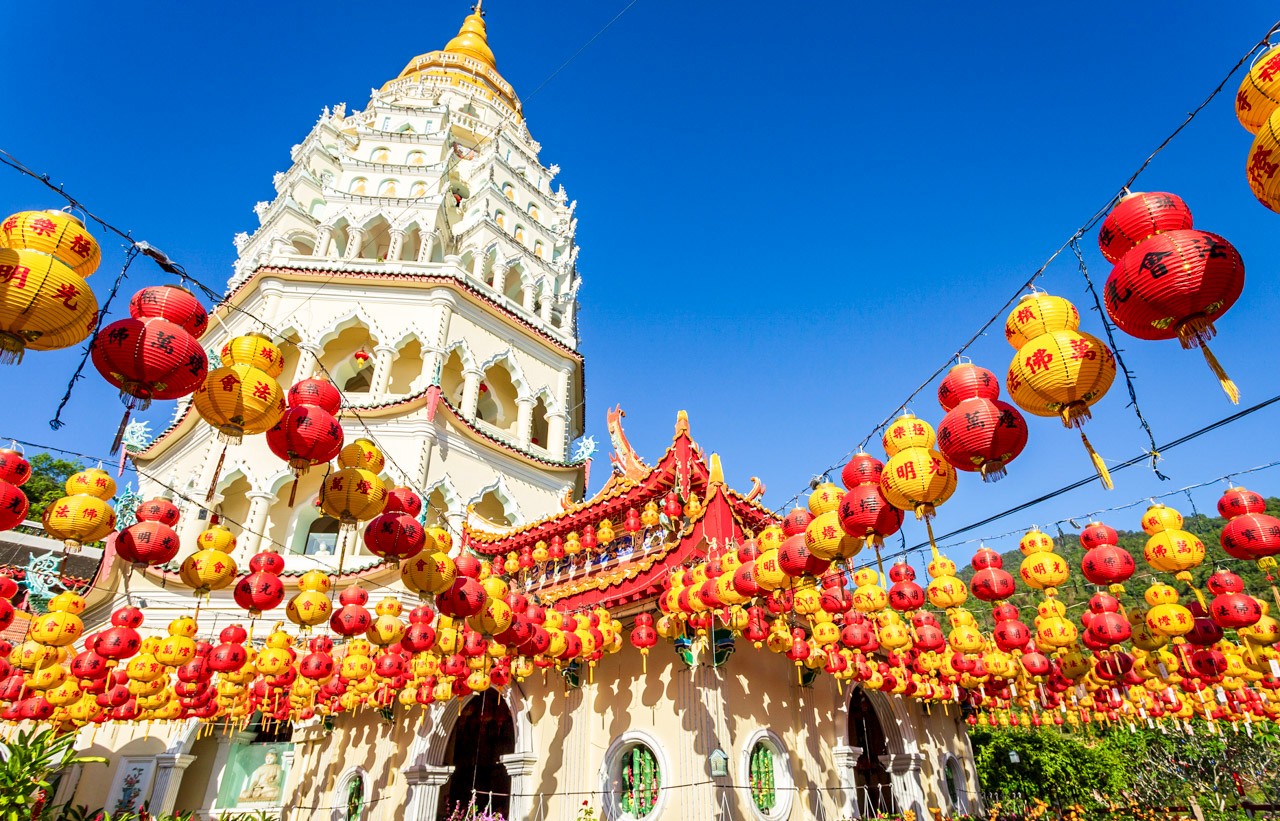
From the tossing of prosperity salads and sticky nian gao to whole steamed fish and beloved kuihs, Penang’s Chinese New Year table is a vibrant celebration of culture, community, and culinary heritage.
Embracing Chinese New Year is a highlight of its own in Penang. Streets and nooks gleam with lanterns, and striking red cheongsams, uplifting lion dances, and rows of auspicious fortune plants all vie for attention. Aesthetically and culturally, many aspects impress right away, but no festival is deemed complete without food. From authentic snacks to course dinners and every colourful bite in between, eat like a Penang-lang during the Lunar New Year.
TOSS A BRIGHT SALAD TO YOUR HEART’S CONTENT
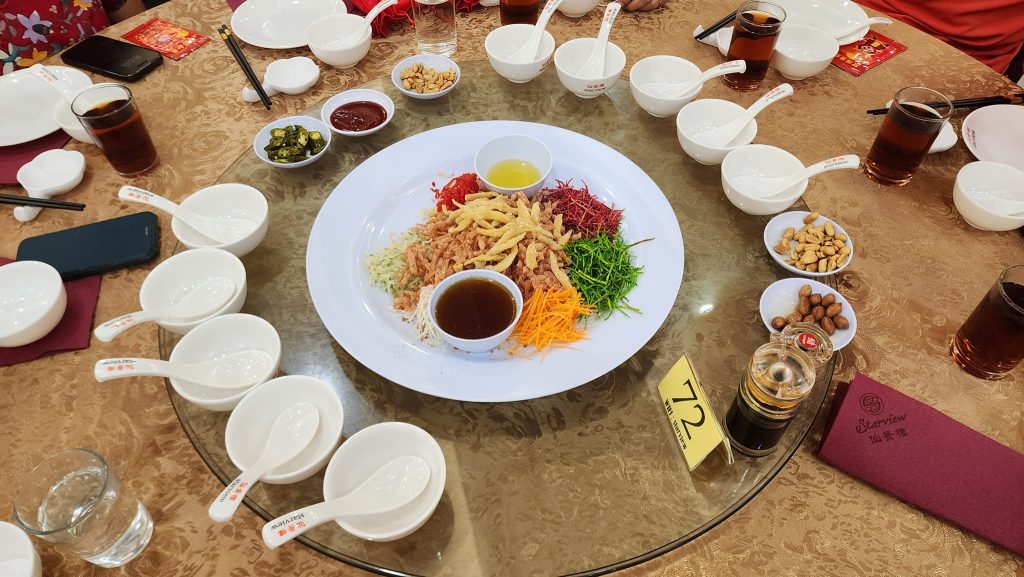
Penang’s authenticity lies in its ability to bond various traditions under one roof. You’ll find slight differences in Hokkien, Cantonese, and Peranakan dishes for the New Year. Nevertheless, the first thing that comes to mind for every Chinese family is yee sang, a popular prosperity salad tossed by a group of people. Despite being translated as “raw fish,” it’s actually a vivid salad featuring shredded carrot and radish, smoked salmon, pickled vegetables, sesame seeds, jellyfish, and plum sauce. Families and friends sit around the table for lo hei, a merry tossing moment while shouting auspicious phrases to lure prosperity and good fortune.
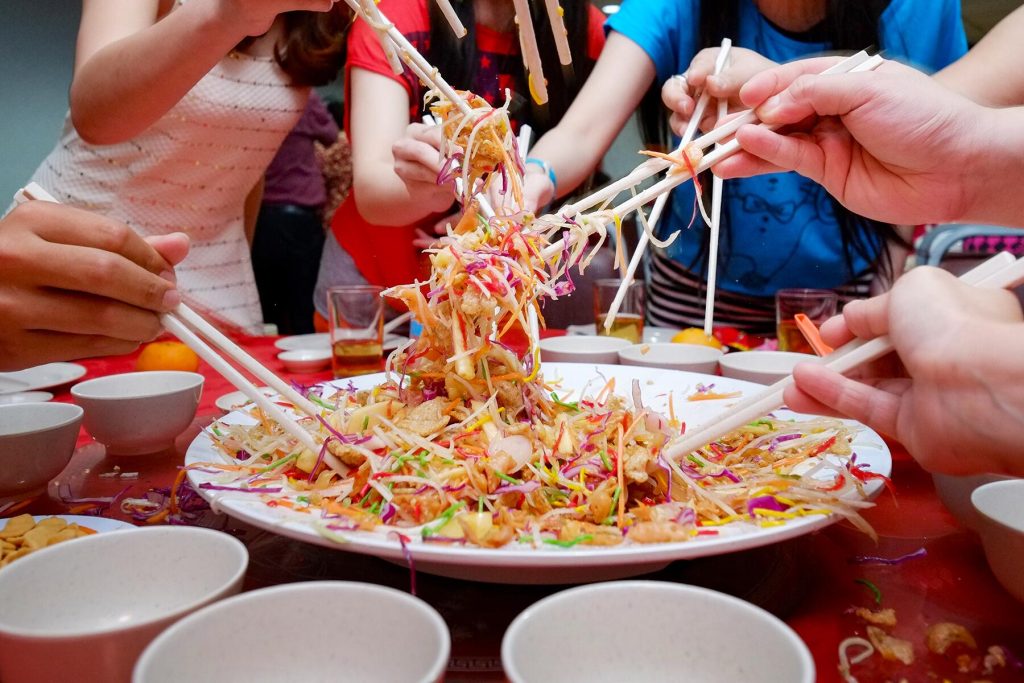
Legend has it that yee sang originated in Guangdong, China, and it didn’t quite look like the one we are used to today. In China, traditionally, the dish was not tossed into the air before being eaten; instead, the raw fish was the star, with vegetables and peanuts playing supporting roles. The Malaysian version is believed to be derived from Loke Ching Fatt, a Cantonese immigrant in Malaya in the 1940s. He was operating a catering service and, following the Japanese occupation, sought to attract more customers by mixing Cantonese, Teochew, and Hokkien influences in one salad platter. This modern version was not originally meant to be tossed. It is said that hungry diners couldn’t wait to be served step by step and began mixing yee sang on their own. In high spirits, they started tossing it with prosperous sayings.
Among the local perennial favourites is Starview Restaurant in Jalan Dato Keramat, George Town, where yee sang is dubbed an upscale Chinese New Year course dinner highlight. Tek Sen Restaurant, in Lebuh Carnarvon, George Town, one of the oldest running Chinese restaurants in George Town, is where families unite over yee sang before savouring assam stingray, plum chicken, and stir-fried pork belly.
GLUTINOUS GOODNESS THAT TAMED A BEAST
Nian gao comes from two Chinese characters – the former meaning “year” and the latter meaning “high.” It reflects the customary belief that consuming this traditional cake during the Spring Festival promises a better year ahead. Made from glutinous rice flour, brown sugar, and water, it has a dense, chewy texture. Its origins date to a story of a mythical beast named Nian, which would devour crops and livestock on the eve of the New Year. Over time, elders learned that it feared loud noises and the colour red, paving the way for firecrackers and red decorations. As part of this tradition, nian gao was served as an offering to appease the beast.
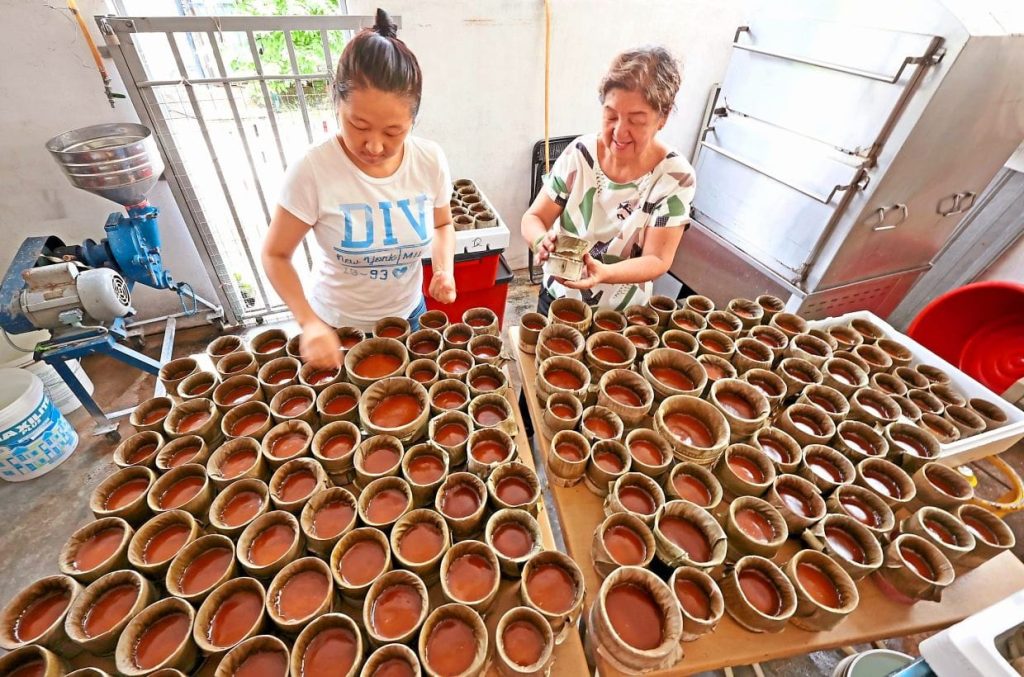
While the Chinese are familiar with its original name, Malaysians endearingly call it kuih bakul. This steamed sticky cake is good on its own as a dessert, but many Penangites prefer to cut it into smaller pieces, sandwich them with yam slices, then batter and deep-fry them to a golden brown. It’s a known delicacy in Penang and is further elevated during Chinese New Year. Nian gao is typically found in authentic Chinese restaurants and makeshift carts across Weld Quay. Loved for its irresistible gooey texture, this beloved cake is said to bring family members closer – and in Penang, it has fostered the same sense of togetherness among other races.
A WHOLE FISH AS THE CENTREPIECE
Whole steamed fish is a culinary staple for Chinese New Year. Sizzling over a clear broth with head and tail intact, Cantonese tradition considers a whole fish a symbol of a good beginning and ending for the year. For optimal satisfaction, the fish needs to be as fresh as possible, and cooking must be immaculately timed, or, as the Cantonese say, “just cooked.”
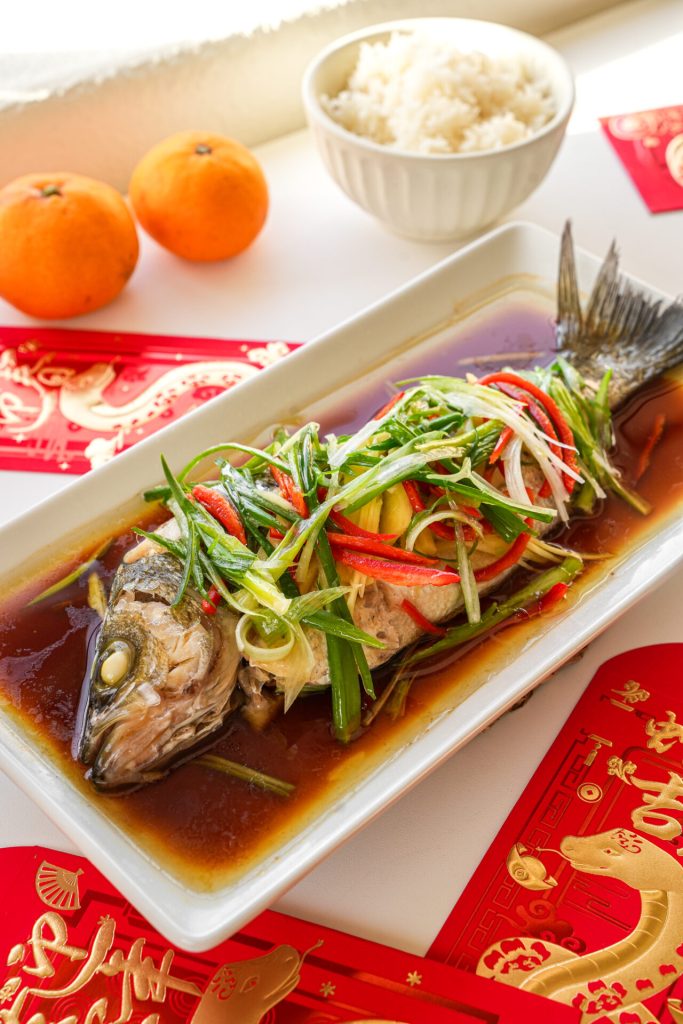
In Penang, common choices include barramundi, red snapper, grouper, and pomfret, steamed with julienned ginger and soy sauce, then finished with fresh scallions. On the dining table, some families point the head of the steamed fish toward the elders as a symbol of respect. Moreover, many avoid flipping the fish while eating, considering it bad luck – similar to capsizing a boat among seafaring communities. Instead, they remove the meat from the top half before carefully lifting the bone to access the lower portion. This custom remains strong in coastal areas such as Batu Maung and Teluk Bahang.
With a name like Daily Fish Restaurant in Jalan Logan, George Town, their steamed fish is destined to be good. Before digging into their Teochew-style steamed fish, check out the claypot tofu and salted egg prawns. For something casual on the wallet and ambience, Teoh’s Chinese Seafood at P. Ramlee Road is a top spot for seafood dishes and home-style “chu char” (stir-fry). From pork ribs to belacan chicken, stir-fried crabs, and shark fin soup, there is something on the menu to satisfy every palate.
THE DARLING KUIHS LOVED BY ALL MALAYSIANS
From the moment one lays eyes on ang ku kueh, it is clear this dish is tailored for Chinese New Year. These dainty steamed pastries are shaped like tortoise shells to symbolize longevity and protection, while their red colour attracts good luck. The outer shell is made from glutinous rice flour and mashed mung beans and is traditionally filled with ground peanuts, grated coconut, or mung bean paste. They are placed on banana leaves, arranged in even numbers, and facing the same direction.
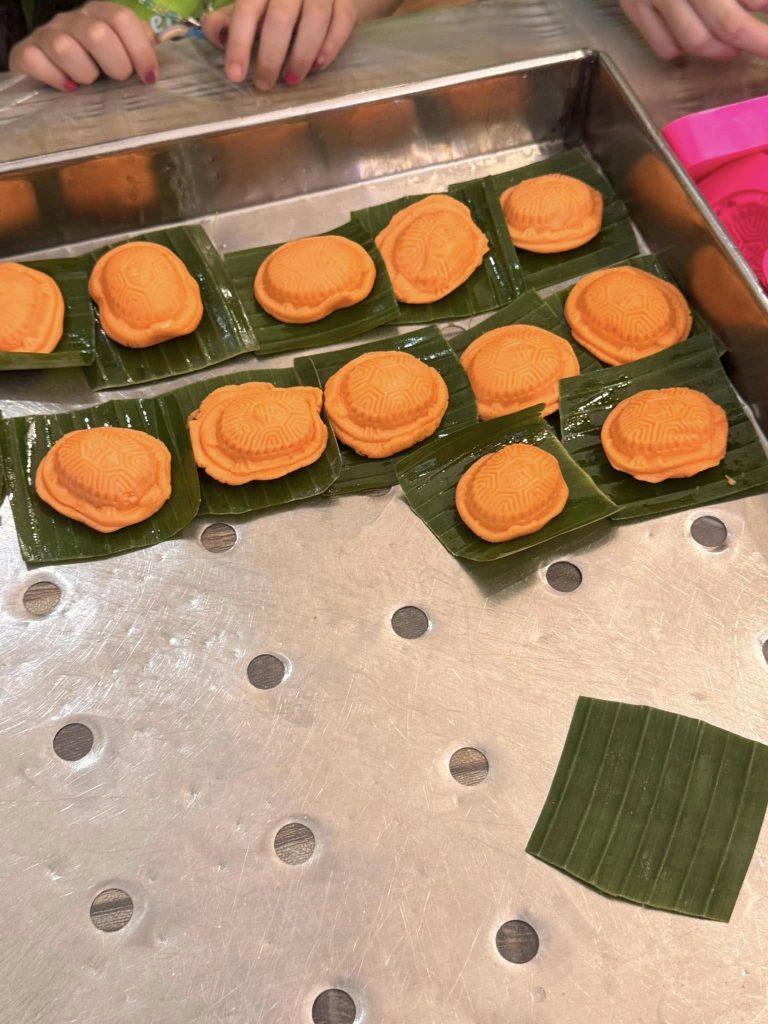
Believed to have originated in Fujian, China, ang ku kueh was introduced by early immigrants to Malaya. This snack holds great significance in Chinese religious and cultural customs, and demand increases during the Lunar New Year. It is commonly spotted at food markets across Penang, particularly Batu Lanchang Market and Cecil Street Market. To glimpse the making of Nyonya kuihs, head to Moh Teng Pheow Nyonya Koay in George Town, which has been producing traditional pastries since 1933.
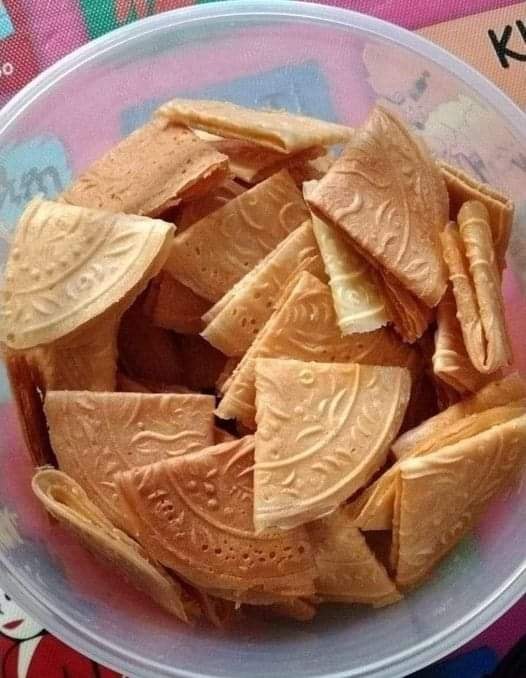
Kuih kapit is another festive favourite. Families sit together, pouring batter made of egg, coconut milk, sugar, and flour into special moulds, folding them elegantly into quarters while still warm. Often called “love letters,” these crispy snacks resemble rolled-up handwritten notes from days gone by.
Chinese New Year in Penang is more than a celebration; it is a tapestry of Chinese cultures and traditions and a reflection of how food unites Malaysians. From preparation to tasting, every aspect has a story to cherish, and – perhaps unsurprisingly – Penang remains one of the best places to experience it.