



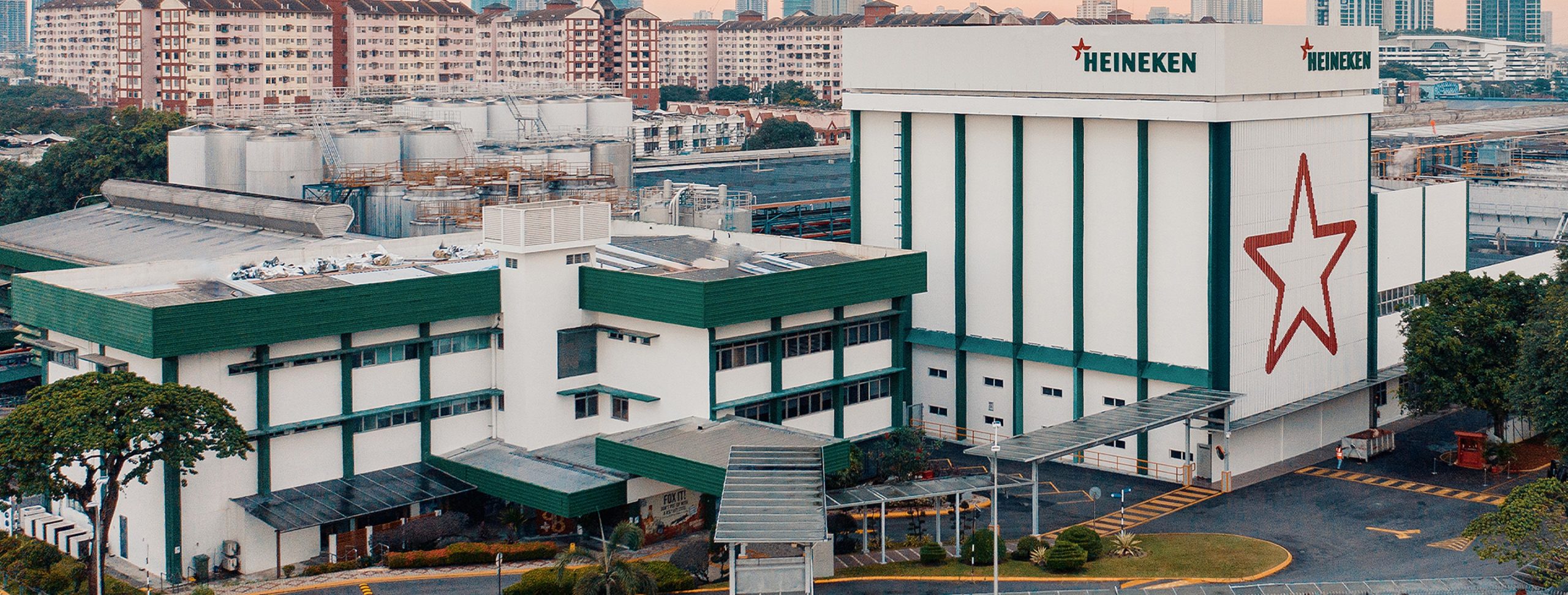
Heineken’s decision to scale down brewing in Singapore and move production to Malaysia and Vietnam could unlock new export growth, improved efficiency, and a stronger regional role for its Malaysian operations.
Heineken is reshaping its regional production footprint, with Malaysia set to play a more prominent role. The Dutch brewer is gradually scaling down large-scale brewing operations in Singapore, shifting production to facilities in Malaysia and Vietnam as part of a broader supply chain realignment.
The transition will take place in phases, with the full impact expected by the third quarter of 2027. While Singapore will remain an important hub — retaining its status as the global home of Tiger Beer and the company’s Asia-Pacific regional headquarters — its role will evolve. The current Tuas brewery site is expected to be redeveloped into a logistics and innovation centre, including a pilot brewery for new product development.
For Heineken Malaysia, the move opens the door to a new growth avenue. At present, export sales contribute less than 1% of total revenue, reflecting a business that has traditionally been focused on the domestic market. That is now set to change, as Malaysia and Vietnam take on a greater share of production for Singapore and selected Asia-Pacific export markets.
STRATEGIC REALIGNMENT
The shift reflects a broader strategic pivot by Heineken towards a more efficient, regionally integrated production model. By consolidating brewing operations in selected locations, the company aims to optimize capacity, improve economies of scale, and streamline logistics.
Malaysia’s geographical proximity to Singapore gives it a natural advantage in this reshuffle. Analysts note that shorter transport distances and established supply links position the country well to absorb a meaningful portion of Singapore-bound production. Vietnam, with its strong manufacturing base, will complement this role.
The reallocation of production also allows Heineken to better utilize existing brewery capacity. For Malaysia, this could translate into higher plant utilization rates, which in turn may improve operating efficiency and margins over time.
GROWTH POTENTIAL AND MARKET IMPACT
Analysts have broadly welcomed the development, pointing to its potential to diversify Heineken Malaysia’s revenue base and reduce reliance on domestic sales. The Malaysian market, while stable, is subject to regulatory pressures, making export expansion an attractive strategic hedge.
Based on internal assumptions, TA Securities estimates that Malaysia could supply around 60% of Singapore-bound exports. This could translate into an additional RM344.7 million in revenue in the financial year ending December 31, 2027, rising to RM360.4 million in 2028.
The earnings impact is expected to build gradually. Net profit contributions are projected at around 1.5% in 2027, increasing to 6.2% in 2028 as the transition gains momentum. While these figures are not transformative in the short term, they point to a steady and sustainable uplift over time.
The Singapore beer market itself remains sizeable, with estimates suggesting it could reach approximately RM2 billion by 2028. This provides a solid demand base for exports, particularly for established international brands.
Beyond revenue growth, there are also product-specific opportunities. Malaysia may become a key production base for certain brands, including Guinness, which is not brewed in Vietnam. This could further strengthen the country’s position within Heineken’s regional network.
LOOKING AHEAD
Despite the positive outlook, some uncertainties remain. The exact allocation of production between Malaysia and Vietnam has yet to be finalized, and analysts have kept their earnings forecasts unchanged for now, citing limited visibility.
Still, the direction of travel is clear. As Singapore transitions towards a logistics and innovation hub, Malaysia’s role as a production and export base is set to expand. The benefits will not be immediate, but they are likely to become more pronounced from the second half of 2027 onwards.
For Heineken Malaysia, this marks a shift from a largely domestic player to one with growing regional relevance. It also aligns with a broader trend among multinational companies seeking to optimize supply chains and position production closer to key markets.