



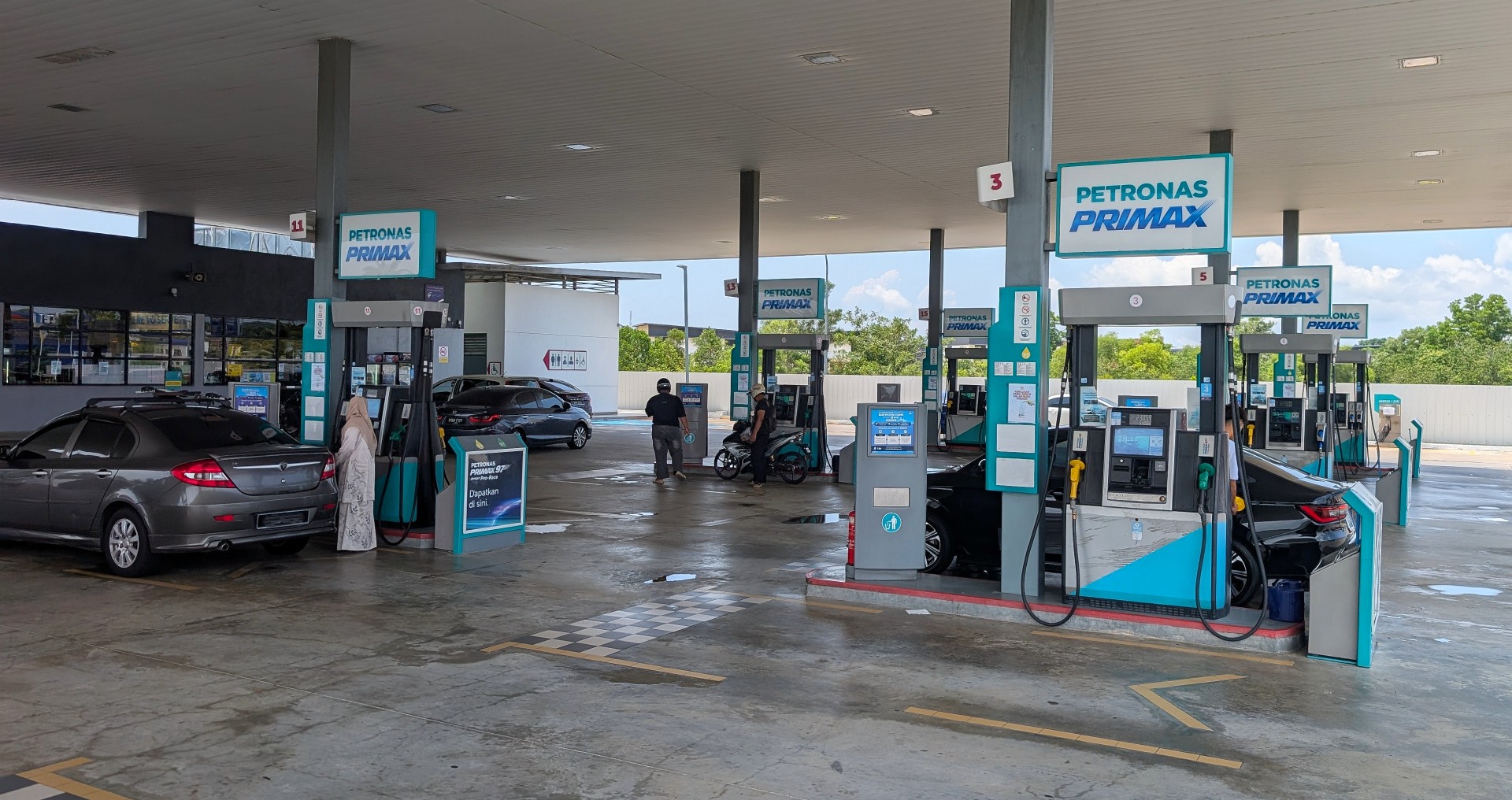
Government subsidy costs soar amid global oil disruption, even as Malaysia records its first weekly fuel price drop since the Iran conflict began.
Remember just a week or so ago when Malaysia’s bill for fuel subsidies was expected to jump to some RM4 billion per month? Turns out even that massive spike was little more than wishful thinking.
Malaysia’s fuel subsidy bill has surged even more than predicted in recent weeks, with the government expecting to spend approximately RM7 billion in April alone – a dramatic increase driven by the ongoing war involving Iran and its impact on global energy markets.
According to the Ministry of Finance, this figure represents roughly a tenfold jump from pre-conflict levels, when monthly subsidy costs stood at around RM700 million. The spike underscores the growing fiscal pressure facing Putrajaya as it works to shield citizens from rising fuel prices.
The total includes an additional RM75 million allocated to support three diesel assistance programmes, aimed at cushioning the impact on key sectors such as agriculture and logistics.
“Cost pressures can be translated to consumer prices if not controlled early,” Economy Minister Akmal Nasrullah Mohd Nasir said in a televised address. “We need to understand that this crisis is different from a normal shock because its effects can come in stages and last until next year.”
The conflict has disrupted global energy flows, particularly through the Strait of Hormuz, a critical shipping route for oil and gas. With supply uncertainty pushing prices upward, governments across Asia have been forced to respond quickly to stabilise domestic markets.
In Malaysia, fuel subsidies remain a central policy tool. The price of RON95 petrol – the most widely used fuel in the country – continues to be capped at RM1.99 per litre under the targeted subsidy framework, placing it among the lowest retail prices globally. While this offers immediate relief to eligible consumers, it comes at a significant cost to public finances.
Diesel, by contrast, has seen a more market-driven trajectory since broad subsidies were removed in 2024. Prices had climbed to a record RM6.72 per litre in Peninsular Malaysia prior to the latest adjustment, reflecting both global trends and domestic policy changes.
PUMP PRICES DROP FOR THE FIRST TIME IN WEEKS
However, in a notable development, fuel prices for the week of April 16 to April 22 recorded their first meaningful decline since the conflict began, with a particularly sharp adjustment in diesel on the Peninsula. Euro 5 B10 and B20 diesel dropped by 75 sen to RM5.97 per litre, down from RM6.72 the previous week, while the higher-grade Euro 5 B7 blend – which carries a 20 sen premium – now stands at RM6.17 per litre. (In East Malaysia, diesel is heavily subsidized, so pump prices remain unchanged at RM2.15 per litre for Sabah, Sarawak, and Labuan.)
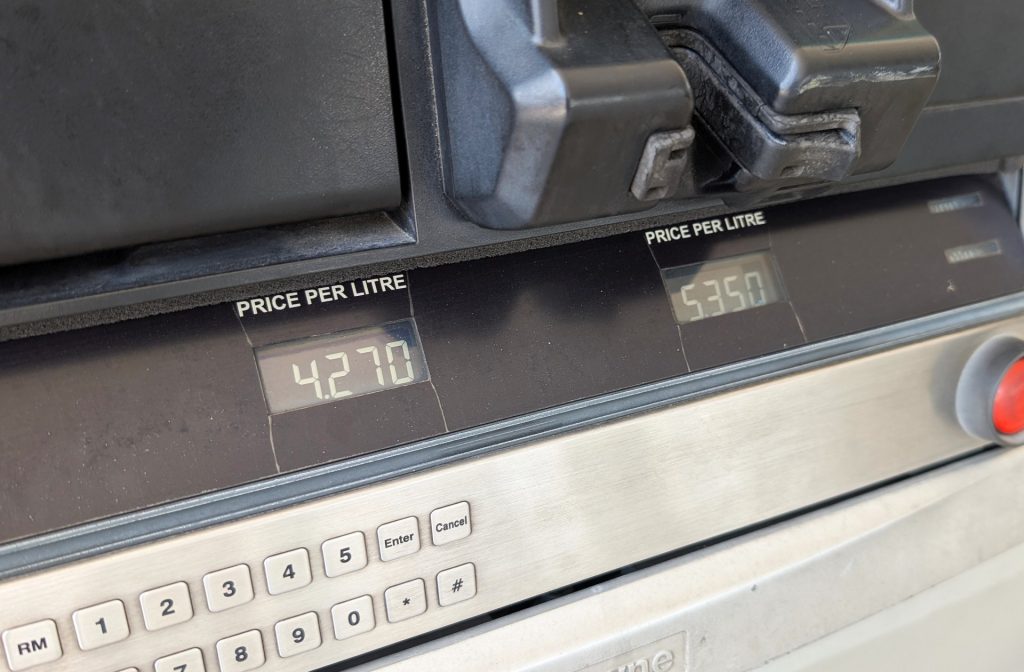
For petrol, meanwhile, subsidized RON95 under the Budi Madani scheme remains capped at RM1.99 per litre, with a temporary monthly limit of 200 litres for eligible motorists, down from 300 litres. Meanwhile, unsubsidized RON95 has fallen by 25 sen to RM4.02 per litre, and RON97 has similarly declined to RM5.10 per litre.
To mitigate the impact of diesel costs, the government has expanded targeted support measures. Subsidies for farmers have been increased, and monthly allocations under existing assistance programmes have been adjusted to reflect current conditions. These steps are intended to prevent cost increases from cascading through the supply chain and affecting food prices.
PLANNING FOR THE FUTURE
At the same time, policymakers are looking at longer-term strategies to reduce reliance on fossil fuels. One such measure is the planned increase in Malaysia’s biodiesel blend. The government intends to move from the current B10 blend to B15, beginning with an interim shift to B12.
According to Akmal, this transition will be implemented using existing infrastructure and without incurring additional costs, offering a relatively low-impact way to diversify the country’s energy mix.
The broader challenge, however, lies in balancing fiscal sustainability with the need to maintain affordable fuel prices. Subsidies have long been a politically sensitive issue in Malaysia, given their direct impact on household expenses and cost of living.
With subsidy spending now running at significantly elevated levels, questions are likely to arise about how long such support can be maintained, particularly if global energy prices remain high.
For now, the government appears committed to maintaining stability, even at considerable expense. The slight easing in fuel prices provides a welcome, if limited, reprieve, but the overall outlook remains uncertain.
SOURCES: Ministry of Finance Malaysia; Bloomberg; The Straits Times; public statements by Economy Ministry