


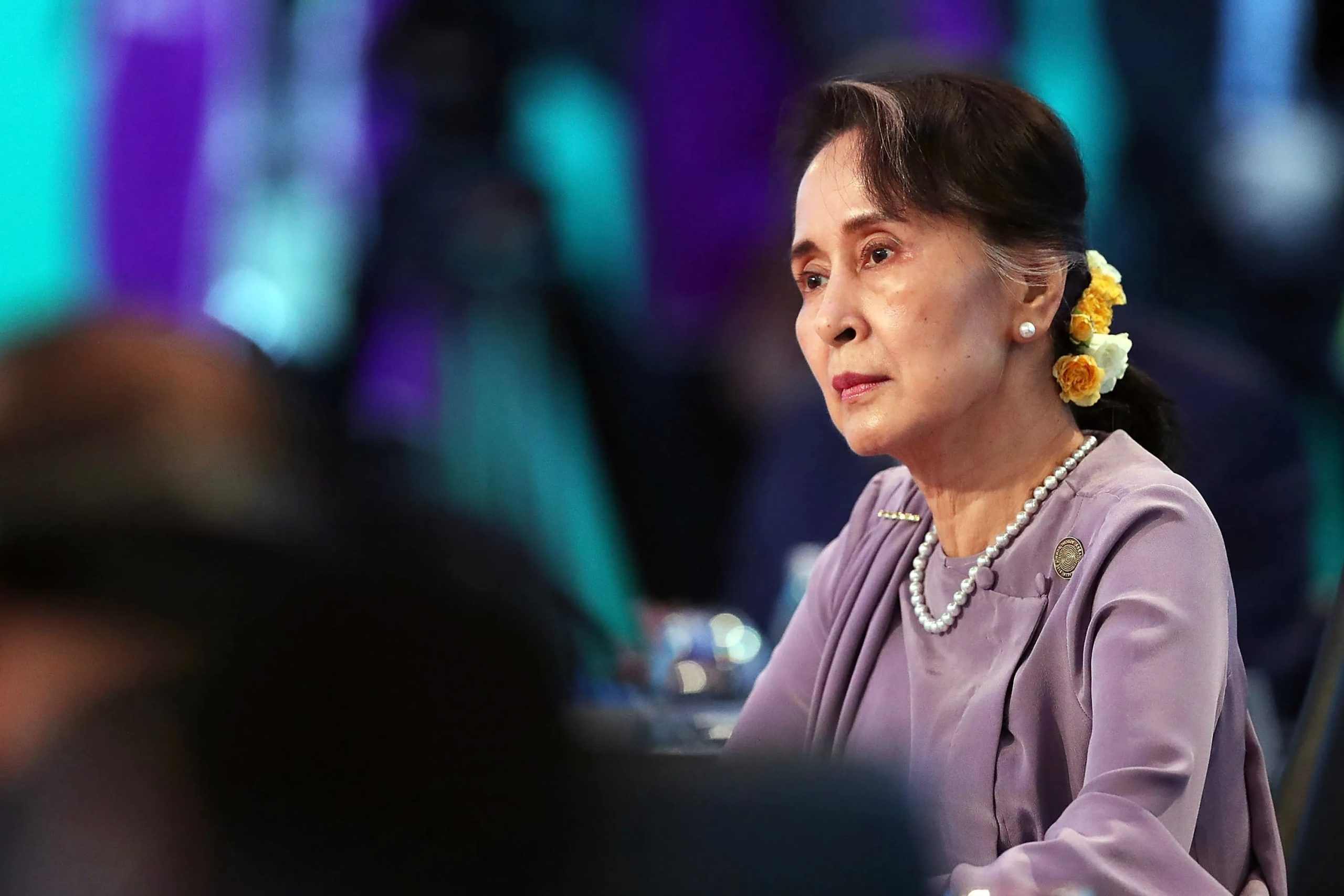
After years in detention following Myanmar’s 2021 coup, former leader Aung San Suu Kyi is reportedly being moved to house arrest, though questions over her condition and whereabouts remain unresolved.
Myanmar’s detained former leader Aung San Suu Kyi is to be transferred to house arrest, according to state media reports, marking a notable development more than five years after the military ousted her civilian government.
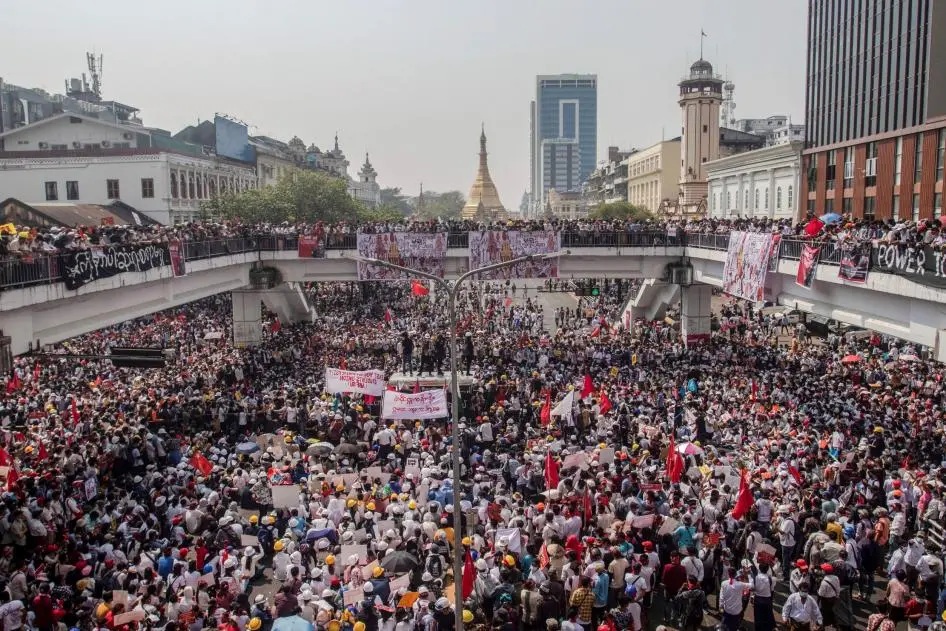
Now 80, Suu Kyi has been held by the ruling junta since the February 2021 coup, an event that triggered a protracted and violent conflict across much of the country. Since her detention, little verified information has emerged about her condition or whereabouts, fuelling ongoing concern among supporters and the international community.
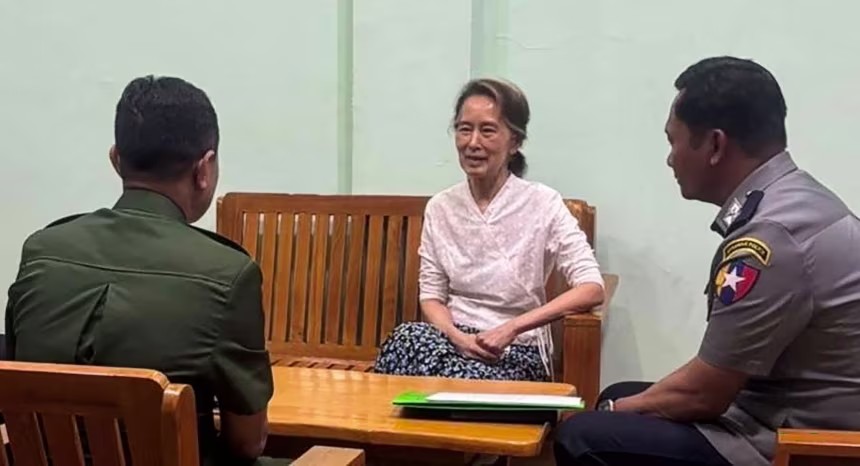
State broadcaster MRTV reported that “the remaining portion of Daw Aung San Suu Kyi’s sentence has been commuted to be served at a designated residence,” using an honorific commonly applied to senior figures in Myanmar. The announcement was accompanied by a photograph showing Suu Kyi seated on a wooden bench, flanked by two uniformed personnel – the first public image of her released in several years.
At the United Nations in New York, spokesperson Stéphane Dujarric welcomed the development, describing it as a potentially constructive step.
“We’ve just seen the reports,” he said. “I can tell you that we appreciate the commutation of Aung San Suu Kyi to a so-called house arrest in a designated residence. It is a meaningful step towards conditions conducive to credible political process.”
Dujarric added that any lasting resolution to Myanmar’s crisis “must be based on immediate cessation of violence and a genuine commitment to inclusive dialogue.”
UNCERTAINTY REMAINS DESPITE THE SHIFT
Despite the announcement, uncertainty continues to surround Suu Kyi’s situation. Her son, Kim Aris, said the latest development does little to clarify her condition or even confirm whether she is alive.
“I still do not know where my mother is. I do not know how she is. I remain deeply concerned about whether she is still alive,” he said. “If she is alive, I ask for proof of life.”
Aris has previously stated that he has had no direct contact with his mother for years, receiving only limited secondhand updates about her health, including concerns related to her heart, bones, and gums.
Members of her legal team have also indicated that they were not formally notified of the change in her status.
“It is good to hear that the house arrest has been confirmed but we haven’t received any direct notification,” one lawyer said. “We only found out about it from the news announcement.”
Suu Kyi’s current circumstances follow a series of court proceedings widely criticized by her allies and international observers. After multiple trials, she was handed a cumulative sentence of 33 years on charges that included corruption, election fraud, and violations of state secrecy laws.
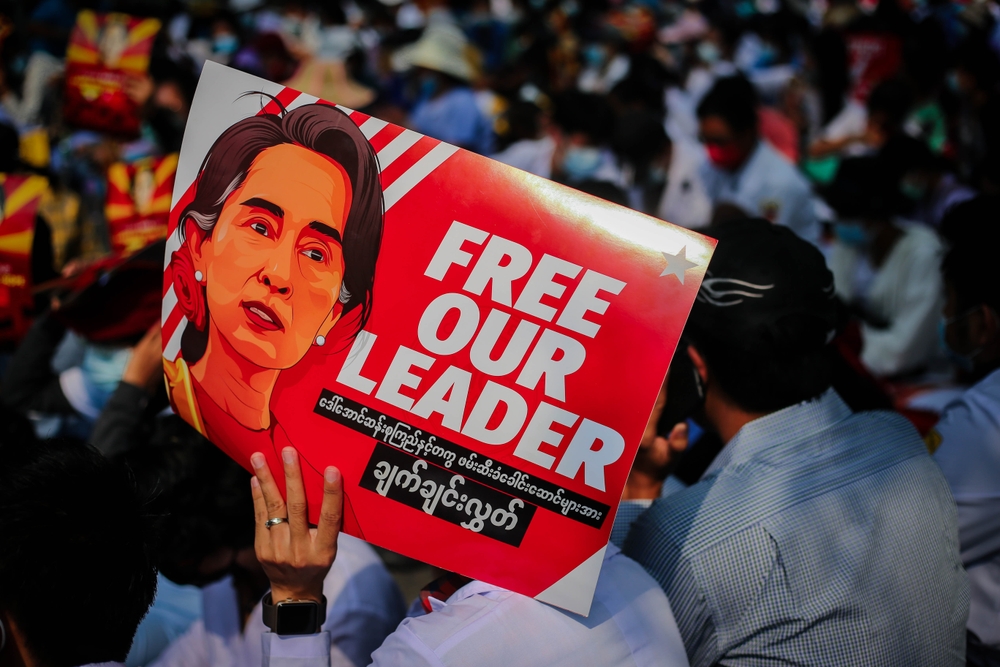
Supporters have consistently argued that the charges were politically motivated, intended to remove her from public life following the coup.
That sentence was later reduced to 27 years and has since been further trimmed through a series of amnesties. A Myanmar New Year pardon on April 17 reduced her term by one-sixth and saw the release of her ally and former president, Win Myint. A further reduction announced this week forms part of a broader amnesty affecting prisoners across the country.
A DIFFICULT LIFE AND A DIMINISHED LEGACY
Suu Kyi, the daughter of independence hero General Aung San, is no stranger to detention. She spent approximately 15 years under house arrest during an earlier period of military rule, largely confined to her family home on Yangon’s Inya Lake. During that time, she became an enduring symbol of democratic resistance, often addressing supporters gathered outside her residence.
Suu Kyi’s legacy, once defined almost entirely by her role as a pro-democracy icon, has become far more complicated in recent years. During her time in government, she faced sustained international criticism over her response to the plight of the Rohingya, a Muslim minority group in Myanmar’s Rakhine State. As reports of mass displacement, violence, and human rights abuses emerged, many expected the Nobel Peace Prize laureate to take a firm stand. Instead, her administration largely defended the military’s actions, framing the situation as a matter of national security and internal stability.
That stance, branded a “moral failure” by many observers, drew sharp rebuke from global institutions and human rights organizations, including Amnesty International and Human Rights Watch, and significantly altered how she was perceived on the world stage. Several countries withdrew awards that had been conferred and even stripped Suu Kyi of honorary citizenship. While she continues to command loyalty among many within Myanmar, her international reputation has been notably diminished, leaving behind a legacy that is no longer straightforward, but instead marked by both admiration and deep controversy and disappointment.
POLITICAL PRESSURE AND REGIONAL DYNAMICS
Myanmar’s current military leader, Min Aung Hlaing, has faced sustained international pressure to release political detainees, including Suu Kyi, particularly as he seeks to rebuild ties with regional partners.
The country has been largely sidelined by ASEAN since the coup, with its leadership excluded from high-level summits. Efforts to reengage have included diplomatic outreach to neighbouring countries, including Thailand.
Last week, Min Aung Hlaing told Thailand’s foreign minister that Suu Kyi was being “well looked after” and that his administration was considering unspecified “good things,” though details were not provided.
While the reported move to house arrest may signal a shift in approach, it comes against the backdrop of a continuing civil conflict that has displaced millions and left large parts of Myanmar unstable.
SOURCES: Reuters; CNN Asia; Human Rights Watch