



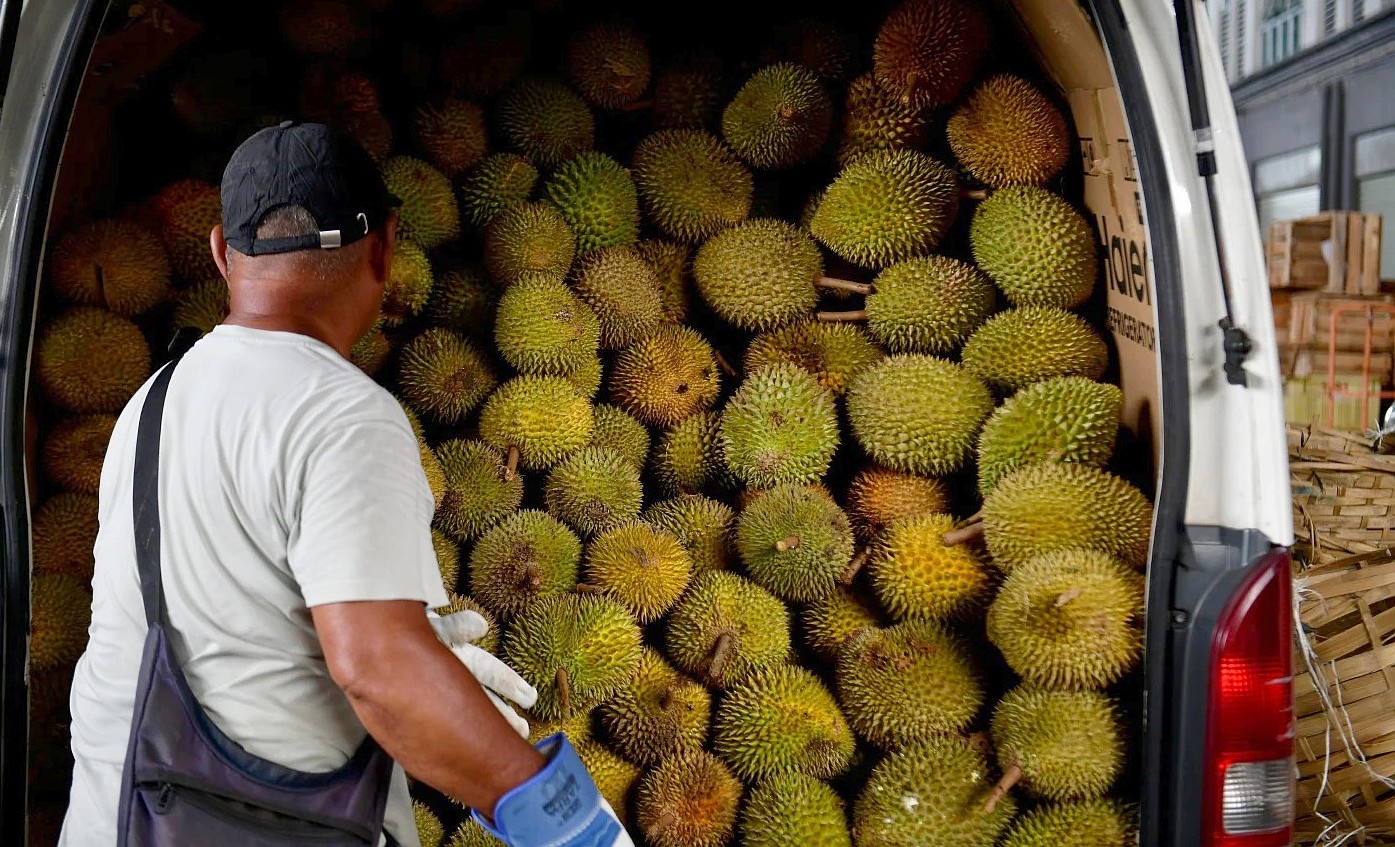
Malaysia’s beloved king of fruits is suddenly more affordable than anyone could have imagined, with some durians selling for as little as 50 sen each as an unprecedented supply glut sends prices plunging across the country.
For many, durian is strictly a “love it or hate it” binary. But for those in the “love it” camp, the biggest barrier to non-stop durian delight is a simple one: the fruit can be shockingly expensive, particularly for the most coveted types, called cultivars (with, perhaps, an emphasis on the ‘cult’ part). For years, durian lovers have lamented the soaring cost of their favourite fruit. Indeed, those aforementioned premium varieties routinely commanded eye-watering prices, and even ordinary kampung durians often carried a surprisingly hefty price tag during peak demand periods.
Well, this year, however, the situation has flipped dramatically, and durian fans may have more reasons to smile as they slurp up their favourite fruit these days.
Across Malaysia, durian prices have collapsed to levels rarely, if ever, seen before. In some locations, regular durians are reportedly being sold for as little as RM0.50 per fruit, while popular varieties such as Musang King, D101, and Red Prawn have also seen extraordinary price reductions. Recent reports indicate that Musang King has fallen to around RM6 per kilogram in certain areas, with D101 and Red Prawn durians selling for as little as RM2 per fruit.
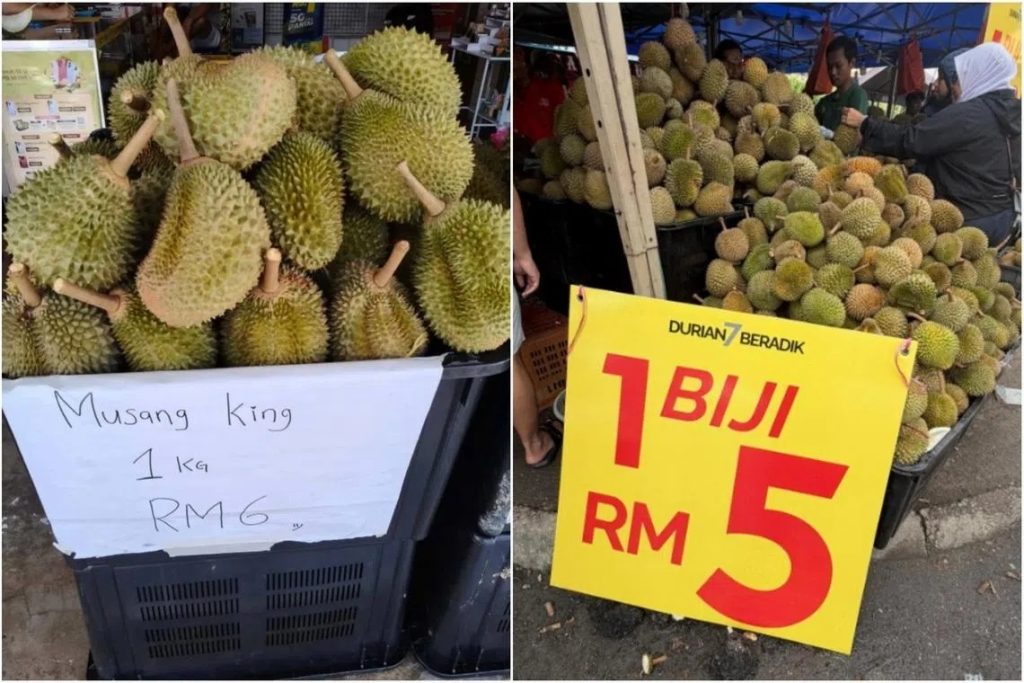
For consumers, it is nothing short of a durian dream.
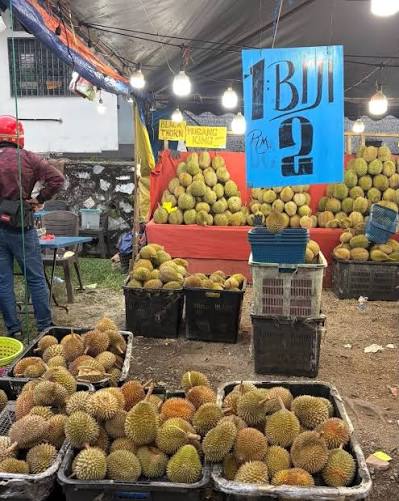
Social media has been flooded with photos and videos of shoppers carrying home bags, boxes, and even gunny sacks filled with durians purchased at bargain prices. Some vendors have introduced promotions that would have been almost unthinkable just a few years ago, allowing customers to fill large sacks with fruit for a flat rate of RM100.
The dramatic price plunge is largely the result of a perfect storm of market conditions.
TOO MUCH OF A GOOD THING
Malaysia has significantly expanded its durian cultivation in recent years, driven in large part by booming demand from export markets and growing international recognition of the country’s premium varieties. New plantations have matured, and existing orchards have increased production substantially.
At the same time, favourable weather conditions in several durian-producing states, including Pahang, Perak, Johor, and Penang, resulted in particularly strong flowering and fruiting cycles. The outcome has been a bumper harvest arriving simultaneously across multiple regions.
The problem, therefore, is simple supply-and-demand economics: there are suddenly far more durians than the market can comfortably absorb.
Export challenges have also played a role. Industry observers note that tighter restrictions and softer demand in certain overseas markets have left more fruit available domestically, further contributing to market saturation.
Unfortunately for growers and traders, durians are highly perishable. Unlike some agricultural products that can be stored for extended periods, ripe durians have a relatively short shelf life. Every day a durian remains unsold represents a growing financial risk.
Many sellers have therefore concluded that selling cheaply is preferable to not selling at all.
Some orchard operators have even bypassed traditional distribution channels and middlemen entirely, choosing instead to sell directly to consumers from their orchards or roadside stalls. Farmers have noted that although sales volumes remain healthy, sharply lower prices are putting considerable pressure on margins and making it increasingly difficult to cover operating costs.
A DOUBLE-EDGED DURIAN SWORD
For many growers, the current situation is deeply concerning.
The cultivation of premium durian varieties is neither simple nor inexpensive. Orchard management involves significant expenditure on fertilizers, pest management, irrigation, labour, and maintenance. The costs continue year-round regardless of whether or not market prices are favourable.
Some producers have warned that persistently depressed prices could threaten the long-term sustainability of smaller operations. Others fear that the rapid expansion of premium varieties may have inadvertently eroded their exclusivity and contributed to today’s oversupply. Some critics have pointed to a “bandwagon” mentality of greed that has now backfired and could cause harm to the broader durian industry.
Consumers, however, are understandably delighted.
Durian enthusiasts who once rationed their purchases or reserved premium varieties for special occasions are suddenly enjoying access to fruits that had previously seemed prohibitively expensive. Many are treating the current season as a rare opportunity to indulge. Indeed, several media reports have described the present market as perhaps the best time in many years to enjoy Malaysia’s famous king of fruits at a genuinely affordable price.
How long these remarkably low prices will last remains uncertain.
Durian markets have historically been cyclical, with supply and prices fluctuating according to harvest conditions, export demand, and consumer spending patterns. Once the current glut subsides and production returns to more typical levels, prices are widely expected to recover.
Until then, however, Malaysia’s durian lovers are experiencing something few ever expected to see: premium durians selling at everyday prices and ordinary durians available for mere pocket change.
For consumers – at least those who fall into the “love it” camp – it may well be one of the sweetest moments in durian history. And for those who may still be on the fence, perhaps the super low prices might just tempt them to give the notoriously challenging fruit another try!
Sources: The Straits Times; Sin Chew Daily; AsiaOne; New Straits Times; The Star; industry reports and market updates on Malaysia’s 2026 durian harvest.