



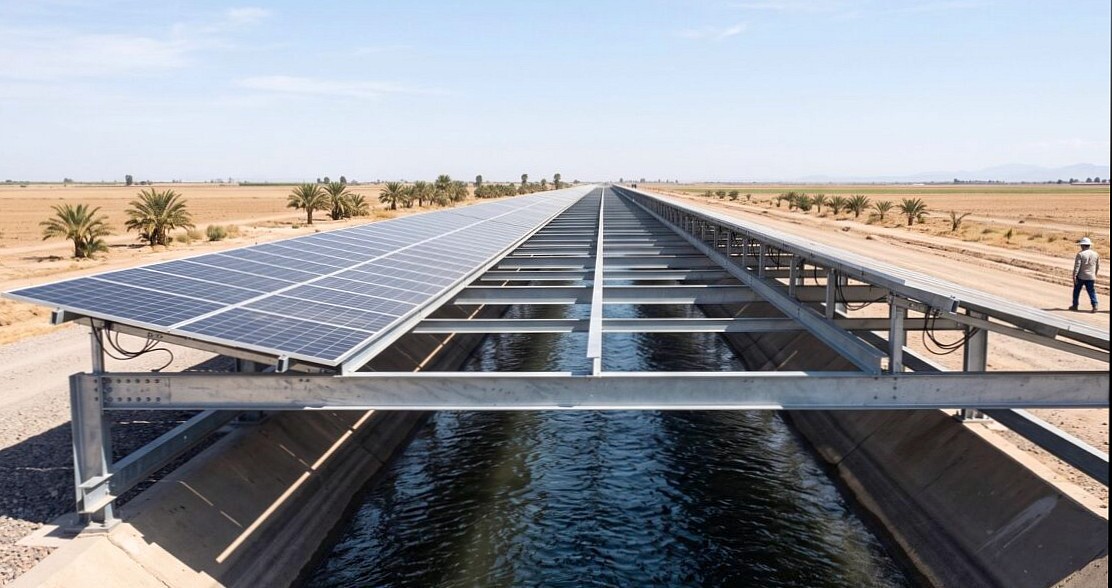
What if the same piece of infrastructure could generate clean electricity, conserve precious water, and protect valuable farmland all at once? In India, one pioneering canal-top solar project shows that sometimes the smartest renewable energy solutions are hiding in plain sight.
When people picture a solar farm, they usually imagine thousands of gleaming panels stretching across open countryside.
It’s an impressive sight, but it comes with a compromise. Every hectare devoted to solar is land that can no longer grow crops, support grazing, or serve another purpose. In countries where both energy demand and populations are growing rapidly, that trade-off is becoming increasingly difficult to justify.
India faced exactly that dilemma.
Rather than asking where to find more land, engineers in the western state of Gujarat asked a different question: what if the land wasn’t needed at all?
Their answer was as simple as it was ingenious. Instead of building solar farms beside irrigation canals, why not build them over the canals?
The result has become one of the world’s most innovative examples of a genuine “win-win” solution – one that produces renewable energy while simultaneously conserving one of the country’s most precious resources: water.
A SOLUTION THAT SOLVES MORE THAN ONE PROBLEM
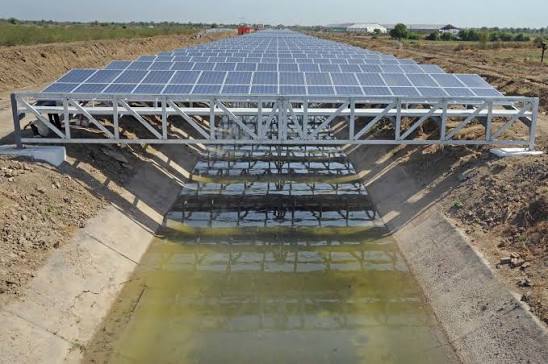
Gujarat’s pioneering canal-top solar project began in 2012 near Chandrasan village, where a 750-meter section of the Narmada canal was fitted with a steel framework supporting enough photovoltaic panels to generate one megawatt of electricity. At the time, it was among the first projects of its kind anywhere in the world.
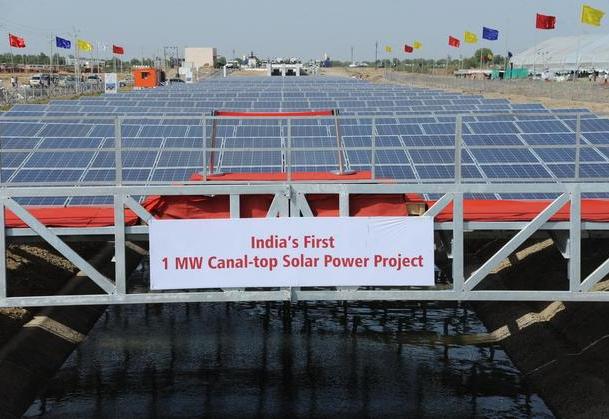
At first glance, it seems like an unusual place to install a solar array. Look a little closer, however, and the logic becomes obvious.
Traditional solar farms require vast tracts of flat land. In an agricultural powerhouse like India, every acre converted into a solar installation is one less acre producing food. Canal-top solar eliminates that conflict entirely by using infrastructure that already exists.
No farms are displaced. No forests are cleared. No expensive land acquisitions are required. Instead, the panels simply occupy previously unused space above waterways that were already carrying irrigation water across the countryside. And that’s only the first benefit.
In addition to the smart use of space, the shade cast by the solar panels also significantly reduces evaporation, helping conserve millions of litres of water each year in one of India’s hottest and driest regions. At the same time, the flowing water beneath the panels helps cool the solar modules, allowing them to operate slightly more efficiently than conventional ground-mounted installations. Early studies suggested output improvements of around 2.5%, with some operational estimates placing the gain even higher under certain conditions.
It’s difficult to think of a better illustration of the often-overused phrase “win-win.”
The same structure produces clean electricity, saves water, preserves farmland, and even gives the solar panels a modest performance boost.
BIG AMBITIONS, REAL-WORLD CHALLENGES
The success of the pilot project quickly sparked bigger ambitions.
Gujarat’s extensive canal network stretches for roughly 19,000 kilometres, prompting planners to consider what might happen if even a fraction of that infrastructure could be put to work generating renewable energy.
Official estimates suggested that covering just 10% of the state’s canals could create around 2,200 megawatts of installed solar capacity while avoiding the need to dedicate approximately 11,000 acres of land to conventional solar farms. Water savings were projected at roughly 20 billion litres annually through reduced evaporation.
Those are compelling numbers by any measure. Yet, more than a decade later, canal-top solar remains a niche technology rather than the new standard.
The reason is surprisingly (and depressingly) straightforward: cost.
Building above flowing water is notably more complicated than driving support posts into open ground. Every aspect of construction, maintenance, inspection, and cleaning becomes more expensive. Engineers must design steel structures capable of spanning canals safely while allowing maintenance crews continued access to the water below.
In other words, the environmental equation is exceptionally attractive, but the financial equation is rather less forgiving.
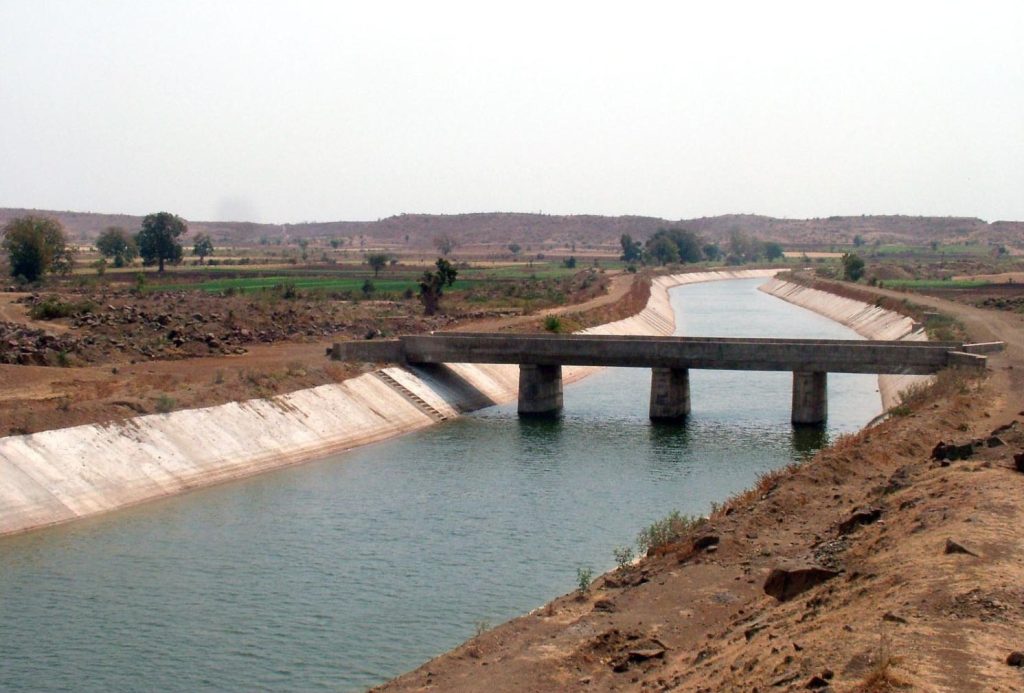
That doesn’t mean the concept has stalled. Instead, it has evolved more selectively, with governments and developers identifying locations where water conservation, land scarcity, and renewable energy needs intersect strongly enough to justify the higher upfront investment. Researchers continue to view canal-top solar as an important tool for countries facing increasing pressure on both land and water resources.
As climate change intensifies droughts in many parts of the world and demand for renewable energy continues to surge, the idea may become increasingly relevant beyond India.
Sometimes innovation isn’t about inventing something entirely new. Sometimes it’s simply about looking at familiar infrastructure differently.
A canal already carries water. A solar panel already produces electricity. Put the two together, and suddenly one piece of public infrastructure is doing two jobs exceptionally well.
That’s not just clever engineering. It’s the kind of practical, common-sense thinking that sustainable development needs more of.
Sources: Centre for Science and Environment, State of Renewable Energy in India; Springer Nature, The Current State and Potential of Canal Top Solar Power Plants in India; The Indian Express; The New Indian Express; The Pulse.