

For years, Gen Z has been portrayed as the cohort turning its back on alcohol. But fresh global data suggests that story may have been more myth than reality. While younger adults are certainly drinking differently, they’re not necessarily drinking less.
For the better part of a decade, one of the most persistent narratives surrounding Generation Z has been that they simply weren’t interested in alcohol.
The reasons seemed convincing enough. They were more health conscious, more mindful of mental wellness, more financially timid, and less inclined toward the heavy-drinking culture that characterized many Millennials and Gen Xers during their own 20s. Add the meteoric rise of alcohol-free spirits, sober-curious lifestyles, Dry January, and wellness influencers, and it became easy to conclude that Gen Z was destined to become the first truly “low alcohol” generation.
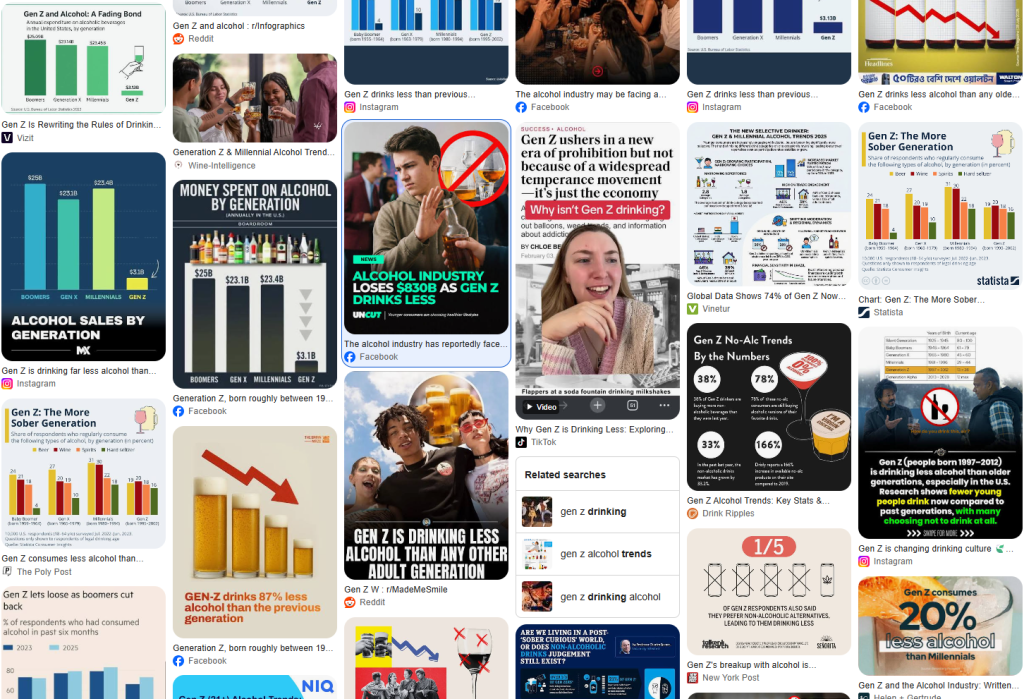
It made for compelling headlines. And it doubtlessly sent bar owners and alcoholic beverage brand owners into a tailspin as they imagined an entire generation of consumers lost forever. But for all the hand-wringing, it appears that it may not have been entirely true.
Or as one news report began, “Well, well, well, it turns out Gen Z isn’t so special after all.”
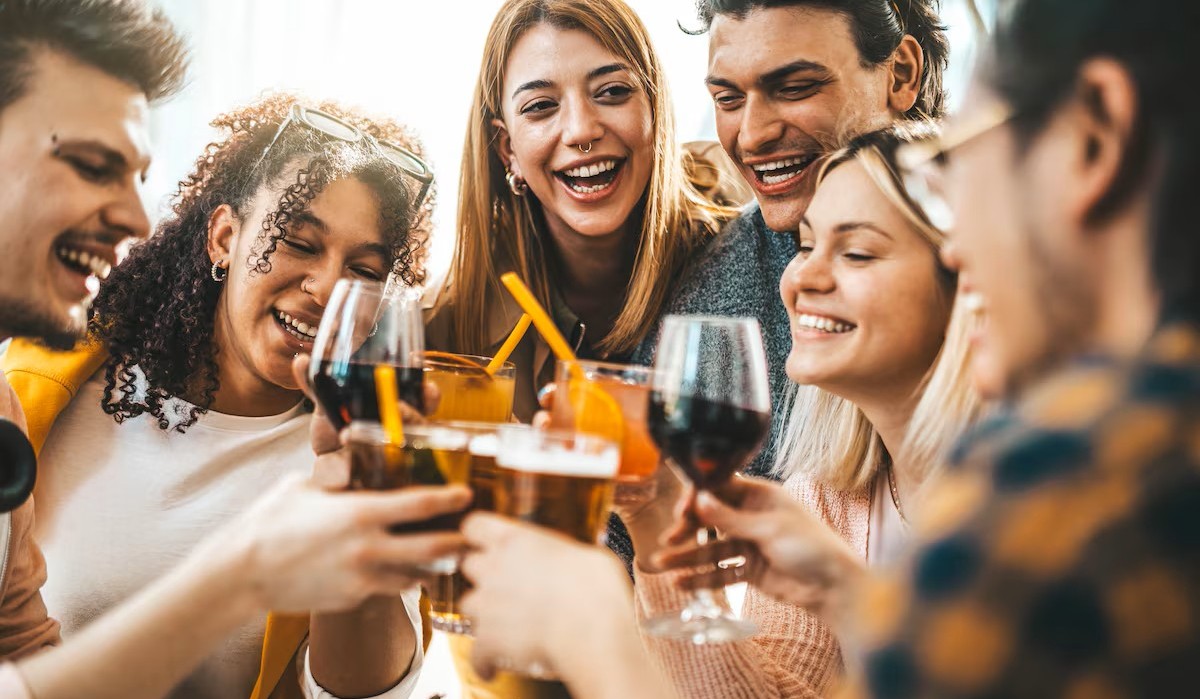
A new global consumer study from drinks market analyst IWSR is prompting a reassessment of that long-held assumption. According to its latest Bevtrac research, 74% of legal drinking-age Gen Z consumers reported having consumed alcohol during the previous six months, up sharply from 66% just three years ago. That’s now remarkably close to the overall adult average of 76%, effectively erasing what many believed was a significant generational divide. It now seems Gen Z isn’t necessarily averse to having a drink or two… they were just late to the party.
DRINKING DIFFERENTLY, NOT ABANDONING ALCOHOL
The findings don’t suggest that Gen Z has suddenly embraced the drinking habits of previous generations. Instead, they paint a more nuanced picture, but it’s one that challenges the myth that an entire generation of potential consumers was collectively turning its back on drinking.
Today’s young adults are entering the drinks category later, consuming alcohol more intentionally, and placing greater emphasis on quality than quantity. Cocktails, premium ready-to-drink beverages, and drinks that offer a more social, curated experience are proving particularly popular. They also remain the generation most likely to pay attention to official health guidance surrounding alcohol consumption.
In other words, Gen Z isn’t rejecting alcohol. Perhaps they just started a bit later than previous generations, or perhaps they’re simply engaging with it on their own terms. Drinking… but drinking differently.
Many of the earlier studies that fueled the “Gen Z doesn’t drink” narrative were conducted when much of the overall cohort was either below the legal drinking age or just emerging from the severe social disruption of the Covid-19 pandemic. Lockdowns delayed many of the traditional milestones associated with early adulthood, from university life and nightlife to travel and large social gatherings. As those experiences have returned, so too, it seems, has alcohol consumption.
Interestingly, the latest research also challenges assumptions about which generation is actually moderating its drinking the most.

THE REAL GENERATION OF MODERATION?
While Gen Z has attracted most of the headlines, the new data suggests Baby Boomers are now reducing their alcohol consumption more noticeably than any other generation.
Boomers posted the lowest participation rate among all age groups at 71%, while also reporting fewer drinking occasions and lower consumption per session. Millennials, meanwhile, continue to lead the pack with an 81% participation rate, followed by Gen X at 77%.
That doesn’t mean moderation is disappearing. Far from it.
Across virtually every generation, consumers report drinking less frequently and consuming fewer drinks when they do indulge. Average consumption per occasion has fallen from 4.4 drinks to 3.9, suggesting moderation is becoming a broader lifestyle choice rather than a trend driven by one particular age group.
For the drinks industry, that’s an important distinction. The opportunity may no longer lie in selling more alcohol, but in offering better experiences, more targeted products, and beverages that align with changing consumer expectations.
A GENERATION REWRITING THE RULES
Perhaps the biggest lesson is that many in the alcohol industry misunderstood what Gen Z was actually telling them. The generation was never necessarily anti-alcohol. It was anti-excess.
They’re less interested in drinking for the sake of drinking and more interested in social occasions, premium experiences, authenticity, and moderation. They may order a craft cocktail instead of a cheap lager, or enjoy two well-made drinks instead of five average ones. That’s merely a different drinking culture, not the absence of one. And who’s to say it won’t shift again as Gen Z gets a little older? After all, predicting future trends has never been anything close to an exact science.
For years, marketers, analysts, and commentators declared that Gen Z was leaving alcohol behind. The latest evidence suggests they simply arrived at the party a little later than everyone else.
The “sober generation” label may have been catchy, albeit to the panic and chagrin of the entire alcohol industry… but it now appears it was also a little premature.
Sources: IWSR Bevtrac research; Business Insider; The Drinks Business; The Spirits Business; Financial Times.