


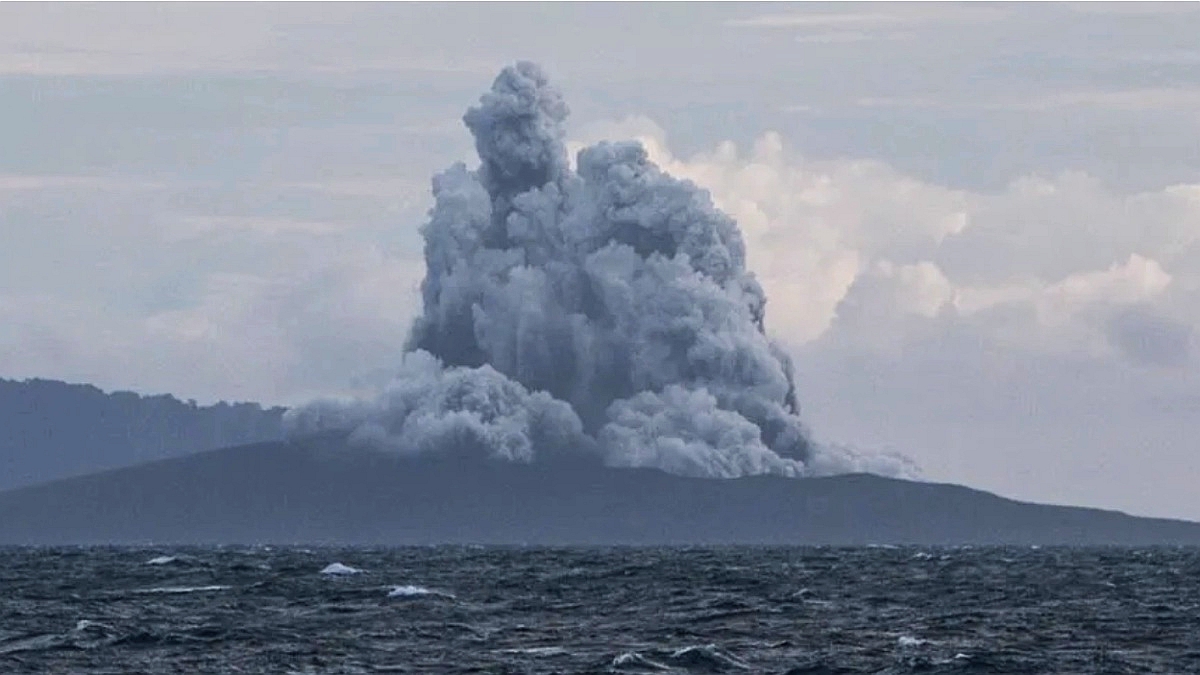
Volcanic ash from the ongoing Anak Krakatau eruption has disrupted Jakarta’s main airport and affected flights between Kuala Lumpur and the Indonesian capital, with authorities warning that conditions remain unpredictable.
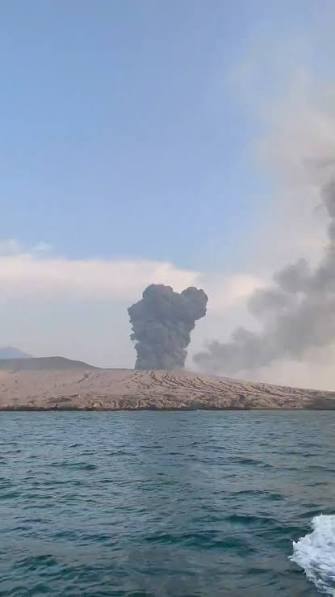
Indonesia’s Anak Krakatau volcano has come dramatically to life again, erupting overnight Friday into Saturday, spewing rocks and volcanic ash as intense volcanic activity continued, the country’s Geological Agency said.
“As of September 5, 2026, at 4:40 a.m. Western Indonesian Time, the eruption is still ongoing, and rumbling can still be heard from the Krakatau Pasauran PGA Post,” the agency said in a statement issued yesterday.
The height of the latest eruption column could not be observed initially, but a bright red eruption plume was clearly visible at times. Eruptions of varying intensity have been ongoing since July 2, when authorities raised the volcano’s alert status to Level III, local media outlet Tempo reported. Additionally, by mid-afternoon on Sunday, satellite data showed that the ash cloud had risen to over 14 km above sea level.
Anak Krakatau erupts in Indonesia’s Sunda Strait. Video: BBC News Indonesia
FLIGHTS DISRUPTED
The eruption of Anak Krakatau is continuing to disrupt air travel, with volcanic ash forcing the temporary closure of Jakarta’s Soekarno-Hatta International Airport and affecting flights between Malaysia and the Indonesian capital.
For Malaysian travelers, the disruption is particularly relevant. Batik Air Malaysia has cancelled eight scheduled flights between Kuala Lumpur and Jakarta on September 6, while AirAsia has also cancelled or rescheduled a number of services to and from Jakarta because of the volcanic ash.
Batik Air said the cancellations were a precautionary measure because the volcanic activity had affected the airspace around Jakarta. The affected services include OD398 from Kuala Lumpur to Jakarta and OD399 in the opposite direction. AirAsia likewise said ash posed a significant threat to aircraft safety and that selected services had been adjusted where flight paths could be affected.
Travelers should therefore check directly with their airline before heading to KLIA or Jakarta, even if their particular flight has not yet been listed as cancelled. AirAsia said the situation remained fluid, while Indonesian authorities have warned that flight operations may be adjusted dynamically as the ash cloud moves.
The immediate problem is at Soekarno-Hatta, Indonesia’s principal international gateway. The airport was initially scheduled to reopen at 9:30am local time on September 6, but the closure was subsequently extended to 1:30pm local time, or 2:30pm Malaysian time, and may indeed be extended again if conditions warrant. The extension reflects continuing concerns about volcanic ash in the airport’s operating environment.
The initial closure alone affected 209 flight movements and approximately 22,798 passengers, according to Indonesia’s Directorate-General of Civil Aviation. Earlier monitoring recorded 16 international cancellations, seven delays, and five rescheduled flights, with affected international routes including Kuala Lumpur, Singapore, Hong Kong, Sydney, Seoul, Doha, and Amsterdam.
The disruption has also extended beyond Soekarno-Hatta. Halim Perdanakusuma Airport in Jakarta, Radin Inten II Airport in Lampung, and Budiarto Airport in Tangerang were also temporarily closed at various times because of the ash. Indonesian authorities have warned that even after individual airports reopen, the disruption could cascade through aircraft rotations, fleet availability, subsequent flight schedules, and terminal capacity.
The eruption began late on September 4, with Indonesia’s National Disaster Management Agency (BNPB) reporting continuing eruptive activity accompanied by booming and rumbling sounds. Lava fountains were observed during the early hours of September 5, while the volcano remains at Level III, or Alert, with a three-kilometer exclusion zone around the active crater.
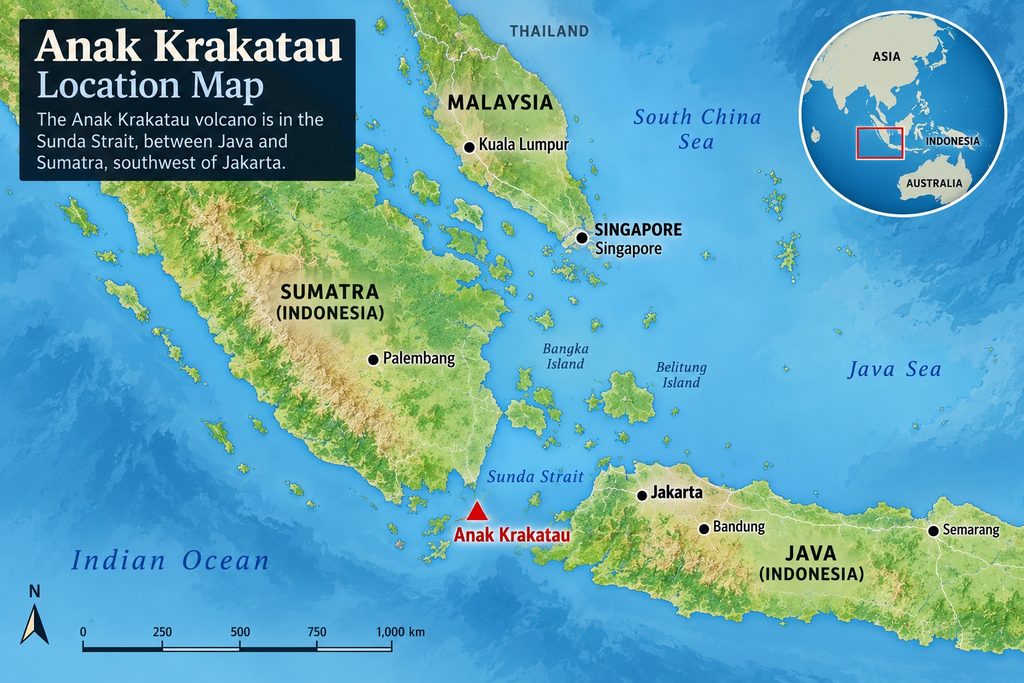
The scale of the ash plume is particularly significant for aviation. Indonesia’s meteorological agency, BMKG, said satellite imagery on the morning of September 6 showed two major ash-distribution areas extending across parts of Banten, Jakarta, West Java, Lampung, and toward Bengkulu and the Indian Ocean. At different altitudes, ash was moving in different directions, making its eventual spread difficult to predict.
That unpredictability is precisely why aviation authorities are taking a cautious approach. Volcanic ash is hazardous to aircraft because it can impair visibility and, more seriously, enter jet engines, where the material can melt and subsequently interfere with engine operation. Airlines therefore have little choice but to avoid affected airspace when ash concentrations present a potential safety risk.
Authorities have also advised people in affected areas to limit outdoor activities, wear masks and eye protection, cover water sources, and take care when driving because ash can reduce visibility. Schools and fishing activities have been disrupted in parts of Banten and Lampung. There is currently no imminent tsunami threat, according to Indonesian disaster authorities.
THE VOLCANO BORN FROM KRAKATAU’S RUINS
The name Anak Krakatau means “Child of Krakatau,” and the description is remarkably literal. The volcano sits within the vast submarine caldera created when the original Krakatau volcano catastrophically collapsed during the infamous 1883 eruption. That cataclysmic eruption ranks among the most destructive volcanic events in recorded history, killing more than 36,000 people, most through tsunamis that swept the coasts of Java and Sumatra.
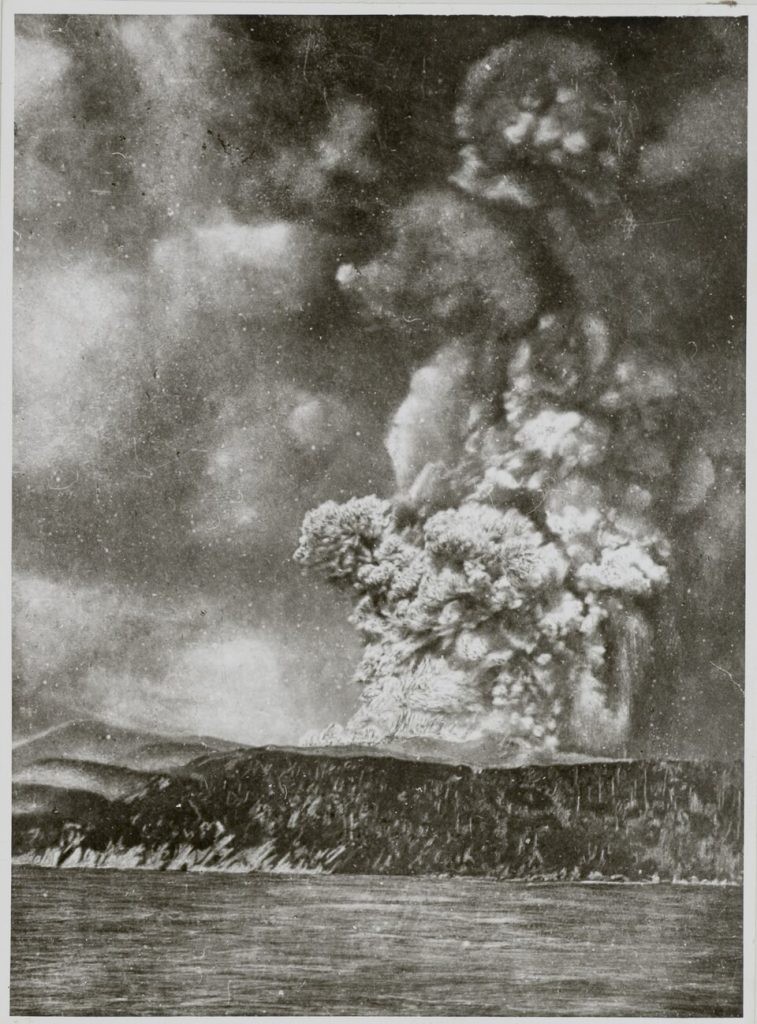
The present volcano began emerging from the sea more than four decades later. Submarine eruptions began in 1927, building a new volcanic cone inside the 1883 caldera. An ephemeral island appeared in 1929, and by 1930 Anak Krakatau had become a permanent island. Since then, repeated eruptions have continued to build and reshape the volcano.
Its history also explains why the current eruption inevitably attracts attention. In December 2018, a partial collapse of Anak Krakatau’s flank during an eruption generated a tsunami that killed more than 400 people around the Sunda Strait. The current volcanic structure is considerably smaller following that collapse, and Indonesian authorities have said it is not presently considered capable of collapsing on a scale sufficient to trigger a similar tsunami.
For now, the principal concern for travelers is therefore ash rather than a tsunami. With the eruption ongoing and ash distribution changing with altitude and wind direction, passengers traveling between Malaysia and Jakarta should check their flight status directly with their airline before leaving for the airport.
Sources: Reuters; Associated Press; Channel NewsAsia; Bernama; Indonesia’s Meteorology, Climatology, and Geophysical Agency (BMKG); Indonesia’s National Disaster Management Agency (BNPB); Indonesia’s Geological Agency (Badan Geologi); ANTARA News; Metro TV; Merdeka.com; Free Malaysia Today; Malaysia Airlines.