

Remote work offers flexibility, convenience, and often a better work-life balance. But new research suggests that spending too much time working alone can quietly erode social connection, raising questions about how employers and employees should design the future of work.
For many years – my entire working life, in fact – all my jobs involved going to a physical location, whether that was a professional kitchen in a restaurant, a school classroom, or an office. It didn’t really matter the job or the industry; my work was always connected to a specific place.
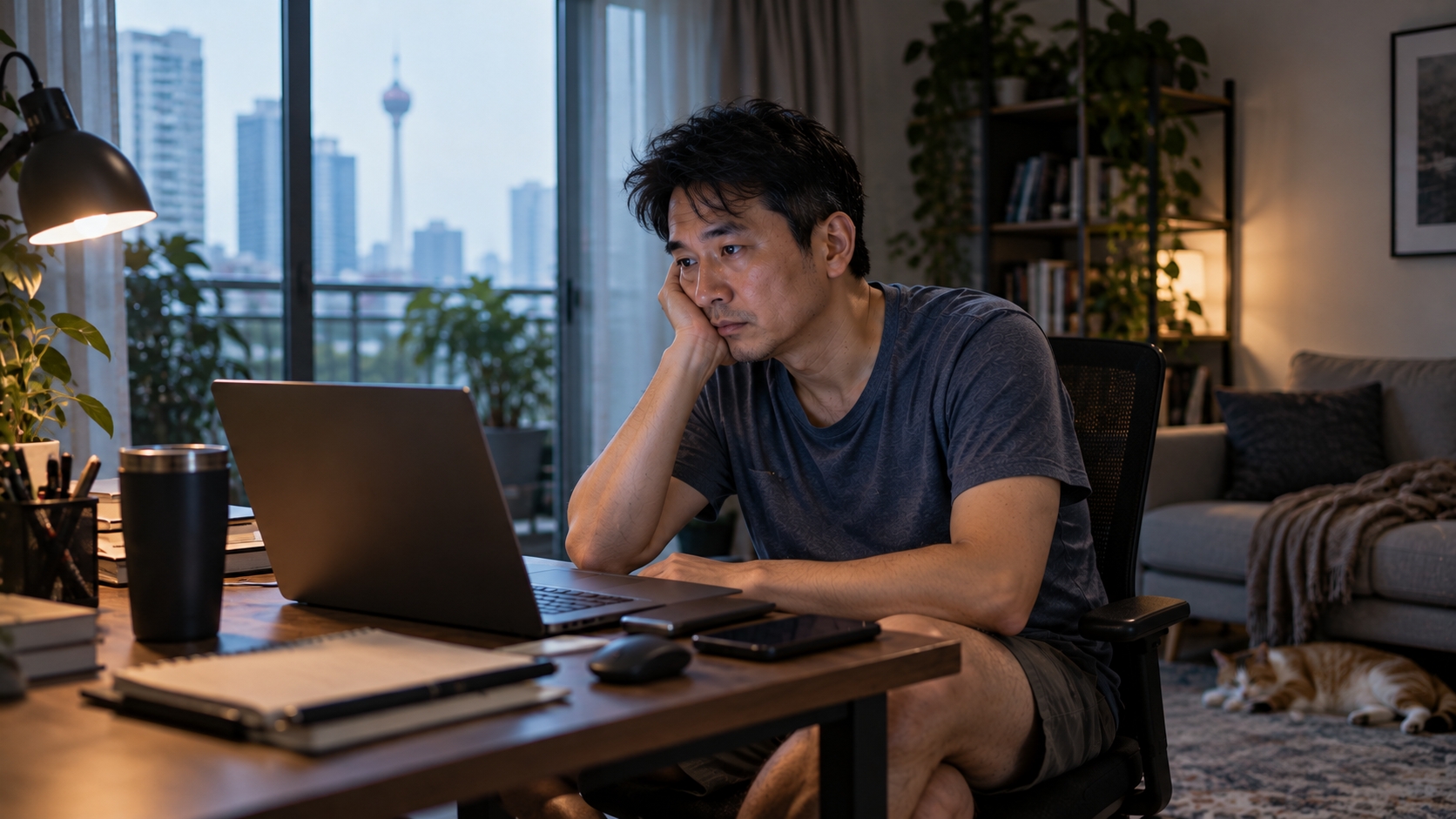
Then, in March 2020, the pandemic arrived and upended everything. Suddenly, working from home wasn’t just an option. For most of us, it became a mandatory new reality. My first thought was that I would hate it. But it didn’t take long for me to change my mind. Not having to get up early and get ready, only to spend 45 minutes in a slow-moving jam to get to the office, was a dream! I could sleep in for an extra hour or so, roll out of bed, and head directly to the laptop. Sort a few things, then make a coffee. Later, I’d shower and actually get dressed – but in shorts, naturally. The whole working from home thing soon came to fit me like a glove.
After those lean pandemic years, though, many companies required a return to the office. Ours did not. We adopted a hybrid model that, for many on our staff, still endures today. I’m included in that. I go to the office once or twice a week, but for the most part, my work is still done remotely. And from my friends, I often hear little moans of envy.
And I suppose I understand that. For many people, working from home still sounds like an ideal arrangement. There is no hideous rush-hour traffic, no crowded train, no need to dress formally, and no colleague stopping by for an impromptu chit-chat just as a critical deadline approaches. A laptop, a reliable internet connection, and a quiet corner may be all that is required to begin the working day.
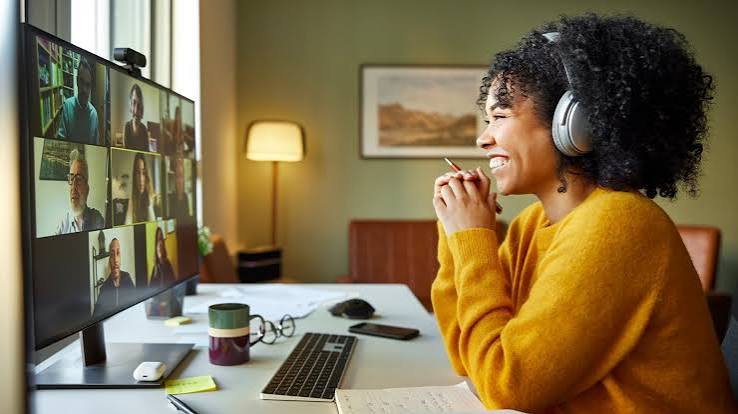
Yet the very privacy that makes remote work attractive can also become its greatest weakness.
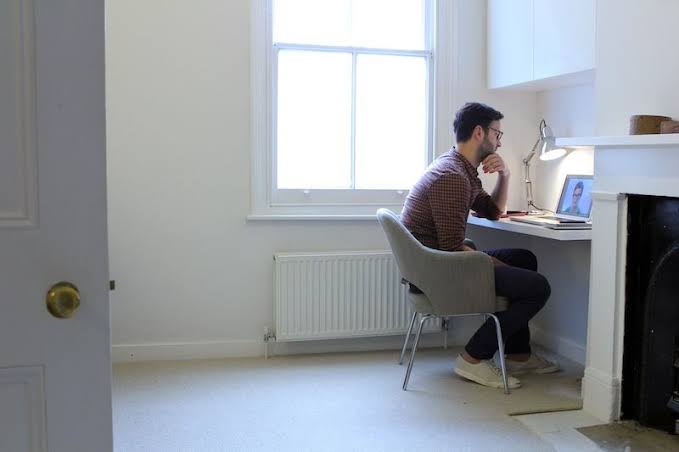
A person may spend eight or nine hours answering emails, attending video meetings, preparing reports, and exchanging messages with colleagues without having a single meaningful face-to-face conversation. By the time the working day ends, the outside world can feel strangely distant. For people who live alone, the experience may be even more pronounced. And the timeframe matters, as well: For a day or two, this relative isolation is not a problem, but cumulatively – over a period of months or years – the effect may be quite profound.
A major study published in Science in June 2026 suggests that this is more than a matter of personal preference. Researchers analyzed more than a decade of data from five nationally representative surveys involving 588,322 American workers, comparing people in occupations that could be performed remotely with those in jobs that generally required a physical presence, such as nursing or mechanical work.
The researchers did not track the individual working arrangements of every participant. Instead, they examined differences between occupations that became more amenable to remote work after the pandemic and those that remained largely site-based.
Their findings were striking. After the pandemic, workers in remote-friendly occupations spent approximately one additional hour alone per working day compared with workers in occupations that generally required them to be on site. They also became more likely to spend entire days without social contact and were considerably less likely to socialize with friends after work.
Unsurprisingly, the effects were most pronounced among people who live alone. Their likelihood of spending an entire day without social contact increased by seven percentage points, while their levels of psychological distress also rose. The researchers found related increases in depression, mental-health treatment, and antidepressant use.
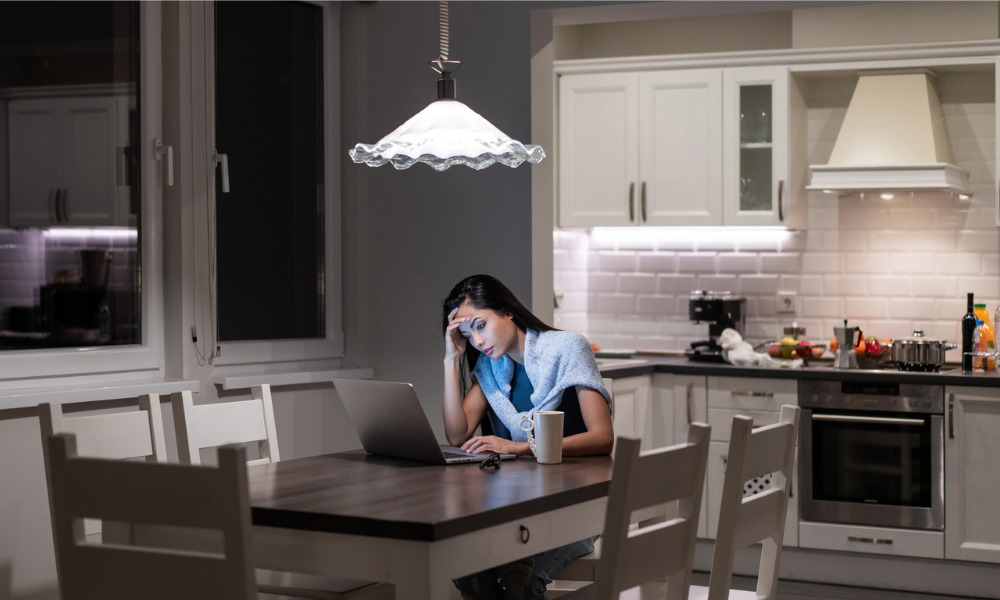
The study estimated that the growth of remote work accounted for approximately one-third of the overall increase in isolation and mental distress observed between the periods 2011–2019 and 2022–2024.
That doesn’t mean working from home is inherently damaging, or that everyone who works remotely is lonely. It does, however, suggest that the social costs of remote work may be easy to overlook, particularly when the arrangement is judged mainly through the lenses of productivity, convenience, and cost.
For me, I actually cherish the time spent in my office a bit more now, just for the social and ease of collaboration aspects. And I still attend work-related events and spend plenty of time with friends, so loneliness and isolation are fortunately not real problems. And yet, I would be remiss if I said there had been no impact at all, especially socially, from six years of a hybrid work-from-home arrangement. For those who work remotely 100% of the time, I would imagine the possible risks of social withdrawal and isolation would be quite a bit higher.
THE BENEFITS – AND BLIND SPOTS – OF REMOTE WORK
Remote and hybrid work remain popular for good reasons. Employees often value the flexibility to manage family responsibilities, avoid long commutes, and organize their days around periods when they are most productive. That’s certainly the case for me. You’ll be just as likely to find me perched at my laptop working at 11:30pm as you would at 11:30am. I am able to work in bursts, tending to things when I’m most focused – or free from distractions. The cumulative work time isn’t necessarily more or less, it’s just spaced out differently. The positives of this are pretty self-evident; the negatives, however, include the once-well-defined line between work and life becoming far more blurred, with considerably more overlap.
Beyond mere convenience, though, for some remote workers, a flexible work arrangement can also make it easier to remain in one’s job while managing disability, chronic illness, caregiving responsibilities, or other personal circumstances.
A healthcare sector study published in Frontiers in Psychology in July 2026 offered a more positive perspective. Surveying approximately 7,700 healthcare employees in fully remote, hybrid, and on-site roles, researchers found that remote workers reported the highest levels of positive well-being. The findings suggest that remote work alone cannot be blamed for poor mental health, and that its effects depend heavily on individual circumstances and the quality of the working environment.
I feel like that caveat is important. Someone living with family members, sharing a home with a partner, or working from a lively café may experience remote work very differently from someone living alone in a quiet apartment. Likewise, an employee who has regular video calls, team discussions, exercise classes, and social plans may be less vulnerable to isolation than someone whose working day consists almost entirely of solitary tasks.
Remote work can also provide relief from difficult office environments. A workplace may be physically busy but socially unfulfilling, particularly if relationships are competitive, strained, or superficial. Simply placing people in the same building does not automatically create belonging. Many of us have experienced a work environment that’s stressful, simply because of personality conflicts or people with very different agendas or approaches working together.
As organizational psychologist Constance Noonan Hadley has observed, employers should not assume that being in the office means employees are enjoying meaningful human contact. Someone can quite easily spend an entire day surrounded by colleagues while feeling ignored, undervalued, or disconnected.

This may help explain why a rigid return-to-office policy is not necessarily the solution. Many companies have recognized this, but certainly not all of them. The pandemic wasn’t just a temporary blip; it ended, but some of the changes born of necessity during the lockdowns often endured long after the restrictions were lifted. Forcing employees back to their desks five days a week of course increases opportunities for interaction, but it may also create resentment, longer commutes, and a sense that their needs are being dismissed. A socially supportive office can be beneficial. An unpleasant or highly controlled one may simply replace one form of dissatisfaction with another.
WHAT CAN WORK-FROM-HOME EMPLOYEES DO?
In a sense, the challenge isn’t so much to decide whether home or office work is universally superior. It is to understand what people actually need to remain connected, supported, and psychologically well.
For some employees, that may mean spending two or three days a week with colleagues. For others, it could involve a quieter office, a different team, more opportunities for collaboration, or greater freedom to choose where they work. Employers may also need to pay closer attention to workers who live alone, new employees who have not yet built workplace relationships, and people who are perhaps already struggling with social confidence.
Small interventions can make a difference. A manager who personally invites an isolated employee to lunch may be more effective than a generic company-wide social event. Mentoring arrangements, interest groups, regular team check-ins, and informal gatherings can help, provided they are genuinely welcoming rather than compulsory exercises in corporate enthusiasm.
For employees, the answer may lie in deliberately creating points of contact throughout the day. A brief conversation with a neighbour, a coffee bought from a familiar barista, a walk with a friend, or a shared lunch away from the desk can interrupt the sense of working in an isolated bubble.
Research into “third spaces” – places that are neither home nor the traditional office – offers another possibility. These might include coworking spaces, cafés, hotel lounges, libraries, or a friend’s home. In a 2023 study of more than 800 office workers, Hadley and her colleagues found that participants often regarded such environments as more socially fulfilling than either home or the office. These spaces allowed people to be around others without the same competitive pressures or workplace expectations.

The idea is particularly relevant in cities such as Kuala Lumpur, where cafés, coworking venues, libraries, shopping-centre lounges, and public spaces offer numerous alternatives to the home office. The goal is not necessarily to recreate the traditional workplace. It is to introduce a little variety, movement, and – most importantly – human presence into the day.
Ultimately, loneliness is not solved by proximity alone. It is reduced by relationships in which people feel seen, valued, and understood. Remote work can support that kind of life, but it rarely happens by accident.
The most sustainable future may therefore be neither a complete return to the office nor a permanent retreat into the home. It may be a more thoughtful arrangement in which flexibility is preserved, social connection is treated as an essential part of well-being, and employees are encouraged to work wherever they can do their best work while still feeling part of the world around them. And if, like me, you have the opportunity to work from home with the option of being in the office, too, it might be worth it to suffer through that morning commute from time to time just to personally connect face-to-face with your colleagues and team members!
SOURCES: Science, “Home Alone: Remote Work, Isolation, and Mental Health”; Frontiers in Psychology, “Rethinking Return-to-Office: The Positive Impact of Remote Work on Well-Being, Connection, and Employee Retention”; CNN Asia; Harvard Business Review, “Research: How Coworking Spaces Impact Employee Well-Being”; Harvard Business Review, “We’re Still Lonely at Work.”