


Tokyo and Manila have signed a new defence logistics pact that strengthens military cooperation, disaster preparedness, and shared deterrence at a time of growing pressure in the East and South China seas.
Japan and the Philippines have taken another decisive step in strengthening their security partnership, signing a defence logistics agreement that allows their armed forces to share supplies such as ammunition, fuel, food, and other essentials during joint activities. The pact comes as both countries face increasing strategic pressure from China’s expanding military footprint and assertive – and at times aggressive – behaviour across contested waters in the Indo-Pacific.
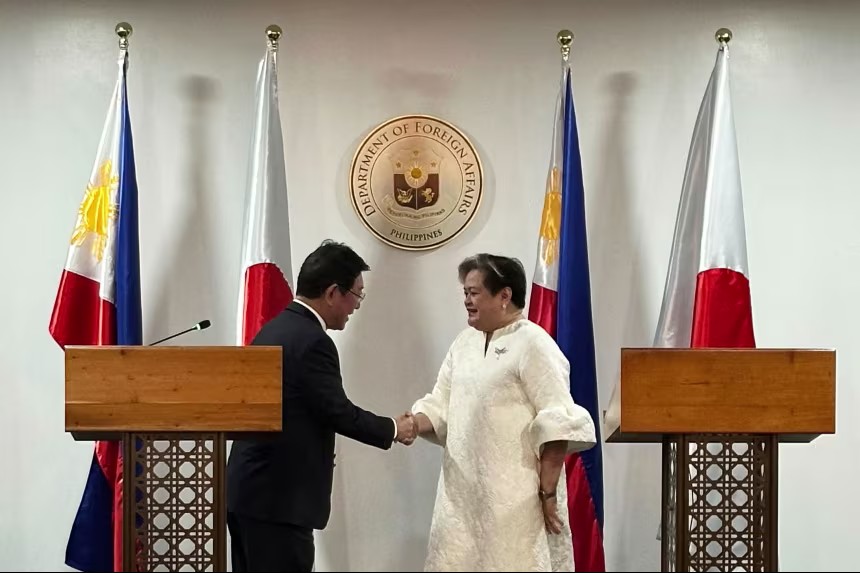
The agreement, formally known as the Acquisition and Cross-Servicing Agreement, was signed in Manila by Japanese Foreign Minister Toshimitsu Motegi and Philippine Foreign Secretary Theresa Lazaro. Once ratified by Japan’s legislature, it will allow both countries to provide logistical support to one another on a tax-free basis during joint military training, disaster relief operations, and peacekeeping missions.
While framed publicly as a practical arrangement, the pact carries clear strategic weight. Japan and the Philippines are among the Asian countries most directly affected by Beijing’s maritime ambitions, and both have seen their security environments grow more complex over the past decade.
Japan has faced sustained pressure in the East China Sea, where Chinese coast guard vessels and aircraft regularly operate near the Senkaku Islands, a group of uninhabited islets administered by Tokyo but claimed by Beijing. These encounters have at times prompted Japan to scramble fighter jets, underscoring the frequency and seriousness of the confrontations.
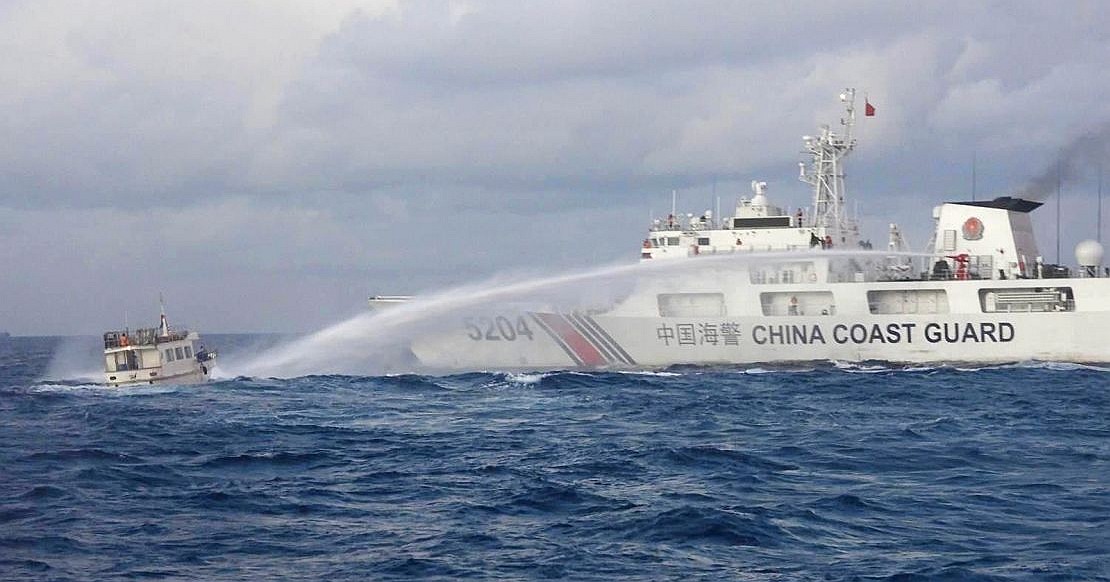
The Philippines, meanwhile, has been locked in increasingly tense stand-offs with China in the South China Sea. Chinese and Philippine coast guard ships have collided, blocked resupply missions, and exchanged water cannon blasts near disputed features, particularly since President Ferdinand Marcos Jr. took office in 2022. Beijing claims nearly the entire waterway, despite an international arbitration ruling in 2016 that rejected the legal basis of those claims.
At the signing ceremony, Lazaro said both countries had reaffirmed the importance of upholding the rule of law, including freedom of navigation and overflight, particularly in the South China Sea. Motegi echoed those sentiments, saying both sides agreed to continue opposing unilateral attempts to change the status quo by force or coercion in the East and South China seas, a pointed reference to China’s actions without naming it directly.
The logistics pact builds on a series of recent defence agreements between Tokyo and Manila, reflecting a broader convergence of strategic interests. In mid-2024, the two countries signed a Reciprocal Access Agreement, which allows troops from each nation to be deployed to the other’s territory for joint exercises, including large-scale and live-fire drills. That agreement came into force in September and marked a significant expansion of military cooperation.
Negotiations are also ongoing for a separate accord aimed at enhancing the protection of classified defence and military information shared between the two governments. Together, these agreements form the backbone of a steadily deepening security alliance.
NOT JUST ABOUT DEFENCE
Beyond military considerations, the new pact also highlights shared concerns over natural disasters. Both Japan and the Philippines are among the most disaster-prone countries in the world, frequently affected by earthquakes, typhoons, volcanic eruptions, and flooding. Officials from both sides said the agreement would improve their ability to coordinate humanitarian assistance and disaster response, an area where logistical interoperability can be as important as combat readiness.
During the visit, Japan also announced additional security and economic development assistance for the Philippines. This includes funding for the construction of shelters for security boats and initiatives to expand internet access in parts of the southern Philippines that were previously affected by a long-running separatist insurgency involving Muslim minority groups.
The timing of the agreement is notable. Japan’s relations with China have been under renewed strain following comments by Prime Minister Sanae Takaichi, who suggested that a potential Chinese move against Taiwan could draw Japan into a conflict. Beijing reacted sharply, adding to an already fraught relationship shaped by trade disputes, historical grievances, and competing security priorities.
For the Philippines, the pact reflects a clear shift away from the foreign policy approach of former president Rodrigo Duterte, who pursued closer ties with China and Russia while distancing Manila from traditional allies. Under Marcos, the Philippines has re-emphasized its alliance with the United States and expanded security cooperation with partners such as Japan and Australia.
Washington has repeatedly warned Beijing over what it describes as escalating acts of aggression against its treaty allies in Asia, including Japan and the Philippines. The United States has also reaffirmed that its mutual defence treaties apply to attacks on armed forces, vessels, and aircraft in the Pacific, a message aimed at deterring further escalation.
REGIONAL SECURITY CONTEXT
The agreement must be seen against the backdrop of an increasingly crowded and contested Indo-Pacific. China has expanded its coast guard and naval presence across disputed waters, built artificial island bases equipped with runways and missile systems, and increased patrols near rival claimants’ territory. Malaysia, Vietnam, Brunei, and Taiwan are also involved in overlapping claims in the South China Sea, adding further complexity to the region’s security dynamics.
For Japan and the Philippines, closer cooperation is not about forming a formal alliance against China, but about building resilience, interoperability, and options. The logistics pact allows both countries to operate together more smoothly, whether responding to a typhoon, participating in a United Nations peacekeeping mission, or conducting joint exercises designed to deter aggression.
SOURCES: CNN Asia; statements from the Japanese Ministry of Foreign Affairs and the Philippine Department of Foreign Affairs