


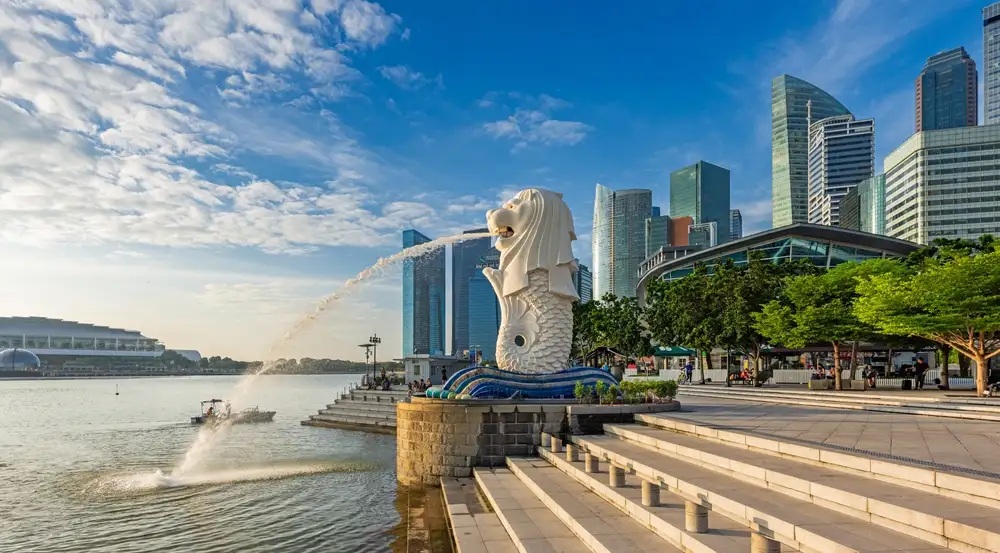
Singapore has added more than 160 square kilometres of land since independence, much of it through reclamation. But the sand used to build that extra territory has left a complicated environmental and political legacy across Southeast Asia.
Talk about nation-building! Singapore has spent decades doing something that sounds almost absurd until you look at the numbers: actually making more country.
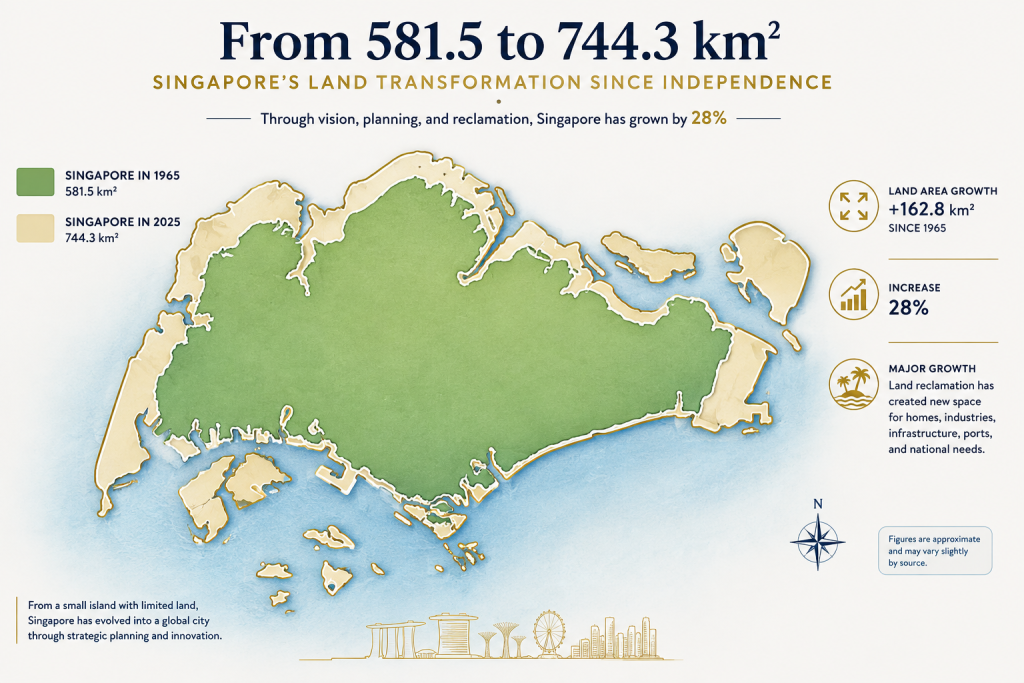
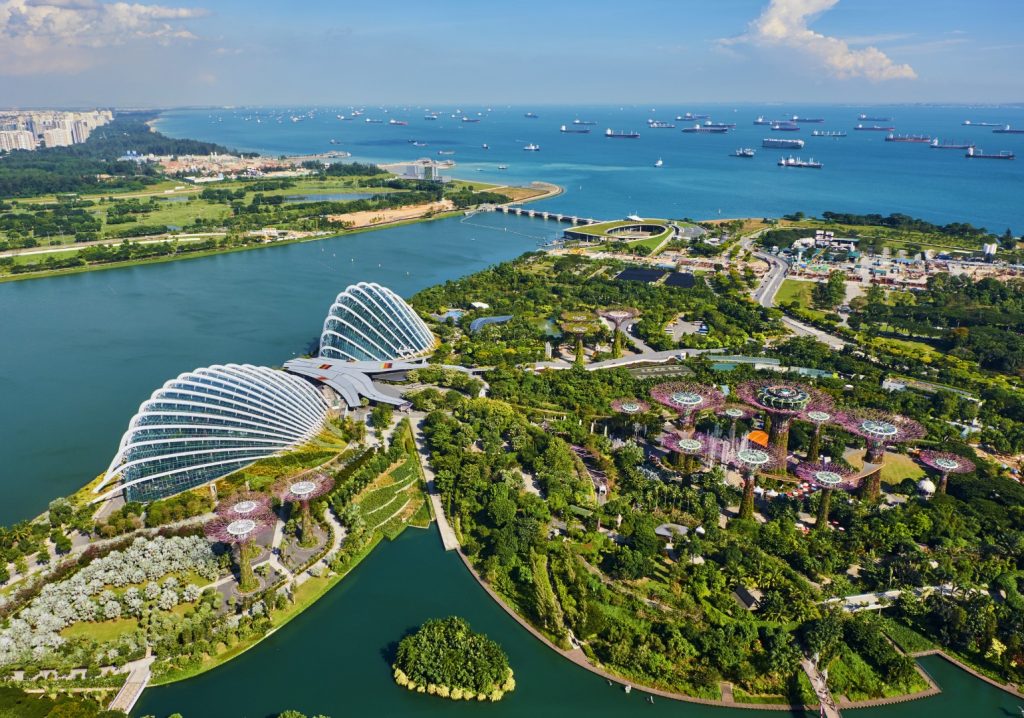
At its independence in 1965, Singapore had 581.5 square kilometres of land. By the end of 2025, that figure had reached 744.3 square kilometres – an increase of about 28%. Much of that expansion has come through land reclamation, allowing the city-state to create space for housing, industry, infrastructure, airports and one of the world’s busiest ports.
But reclaimed land needs enormous quantities of fill, and for decades, a significant proportion of that material was sand imported from neighbouring countries.
A 2019 UN-linked analysis estimated that Singapore had imported 517 million tonnes of sand over the preceding two decades, making it the world’s largest sand importer. The figure has been widely cited ever since, although trade statistics from exporting and importing countries have sometimes differed dramatically.
That discrepancy is at the heart of a much larger story about environmental degradation, national sovereignty, regional politics and the extraordinary quantities of a resource that most people still regard as practically limitless.
THE SAND THAT BUILT SINGAPORE
The basic proposition is straightforward. If a country has very little land but considerable wealth, and much of its territory is low-lying, reclaiming shallow coastal areas can provide a remarkably effective way to create space.
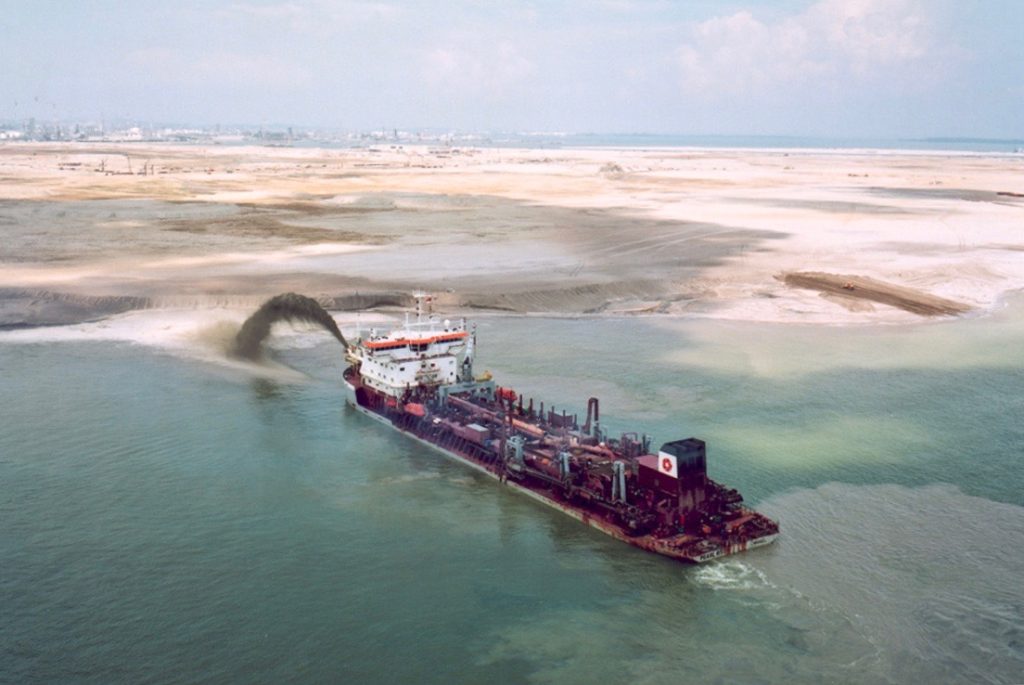
Singapore has used reclamation extensively since the 1960s, pushing its coastline outward and creating entirely new areas for development. The process generally involves containing an area, filling it with suitable material, and then allowing or engineering the ground to settle and strengthen sufficiently for construction.
The problem is that sand is not simply an inert commodity waiting to be scooped up.
Sand and gravel are the world’s most heavily consumed solid resources, with roughly 50 billion tonnes used each year, according to the UN Environment Programme. Demand is being driven by construction, urbanization and infrastructure development, while natural replenishment takes geological timescales. UNEP has warned that extraction is increasingly outpacing sustainable supply and can damage river systems, coastlines, fisheries and marine ecosystems.
For Singapore, the nearest sources were naturally the most attractive. Indonesia was a major supplier, with Reuters reporting that it shipped an average of more than 53 million tonnes of sea sand annually to Singapore between 1997 and 2002. Indonesia banned sea-sand exports in 2003 and reaffirmed the prohibition in 2007. Malaysia, another major supplier, imposed its own sea-sand export ban in 2018, while Vietnam and other countries also tightened restrictions.
The environmental consequences were particularly contentious in Indonesia. Reports and research have linked extensive sand extraction in the Riau Islands to coastal erosion, damage to marine ecosystems and the disappearance of small islands. One widely cited UN report attributed the disappearance of 24 Indonesian sand islands to sand exports.
Cambodia subsequently became another important source, and the trade generated its own controversy. In 2017, Cambodia permanently banned coastal sand exports following years of allegations of environmental damage and irregularities in the trade.
The controversy was partly about volume. Cambodian authorities reported that roughly 16 million tonnes of sand had been exported to Singapore between 2007 and 2015, while Singapore’s records indicated a much larger figure. Mother Nature Cambodia has previously documented an even larger discrepancy, claiming Singaporean records showed more than 75 million tonnes imported from Cambodia between 2008 and 2016, compared with less than 3 million tonnes recorded by Cambodian authorities.
Those figures should be treated carefully because international trade statistics can contain discrepancies and different reporting classifications. But the gap was large enough to become a major political and environmental issue.
Singapore, meanwhile, has consistently maintained that its sand is purchased commercially from multiple sources and that it has been reducing its reliance on the material.
That effort is becoming increasingly important because Singapore’s need for land has not disappeared simply because some of its traditional suppliers stopped selling sand.
THE SAND TRADE ISN’T OVER
Singapore has increasingly looked at ways to make reclamation more efficient and less dependent on conventional sand filling.
One notable example is the polder project at Pulau Tekong. Rather than simply creating a large artificial island by filling the sea to a higher level, the Dutch-inspired approach uses a perimeter of dikes to enclose low-lying land, with drainage and pumping systems controlling water levels. Singapore says the technique can significantly reduce the amount of sand required. The Pulau Tekong project, covering about 800 hectares, is expected to use roughly 50 percent less sand than conventional reclamation. That is significant, but it does not eliminate the underlying problem.
In 2023, Indonesia lifted its two-decade ban on sea-sand exports under new rules governing the management of marine sediment. The regulations allow exports under certain conditions, including requirements relating to domestic needs and environmental considerations. The decision immediately prompted concern from environmentalists, who argued that renewed dredging could damage marine habitats and coastal communities.
And now, in 2026, the Cambodian chapter appears to be reopening – although the facts remain contested.
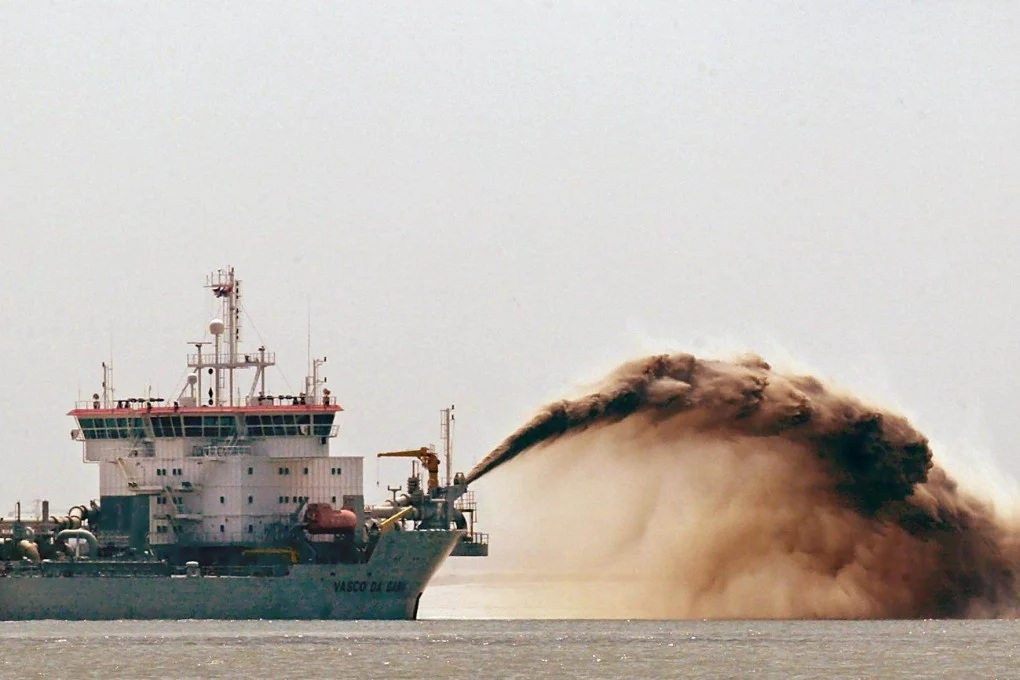
In July, environmental organization Mother Nature Cambodia alleged that sea-sand exports to Singapore had resumed despite the country’s 2017 ban. The group published footage showing dredging operations in Koh Kong province and tracked vessels that it said were carrying Cambodian sand towards Singapore. Mongabay reported that some of the dredging barges appeared to belong to Catalyst Marine and Resources, a Singaporean-directed company registered in Cambodia in 2024.
That does not, however, establish that the sand was illegally exported to Singapore. Cambodian officials have defended sand mining for navigation, infrastructure and construction purposes while acknowledging concerns about environmental impacts. Mongabay reported that Cambodia’s mining minister did not directly address the allegation that exports to Singapore had resumed, while Singapore’s Ministry of Trade and Industry had not responded to questions at the time of publication.
There is therefore an important distinction between what has been demonstrated and what has been alleged.
What is beyond much dispute is that Singapore has an extraordinary appetite for land and that meeting that appetite has historically required extraordinary quantities of sand. The city-state’s transformation is one of the great urban-planning achievements of the modern era, but some of the environmental costs have been displaced beyond its borders.
That makes the sand story more complicated than a simple tale of a wealthy country buying a cheap natural resource from poorer neighbours. Those countries made commercial and political decisions to sell the material, while Singapore had a very clear incentive to buy it. The consequences, however, could be borne by coastal communities, fisheries and ecosystems far from the skyline being built.
Singapore’s response – diversifying suppliers, improving reclamation techniques and finding ways to use less sand – suggests that the country understands the problem… but, still, the underlying demand remains.
As global sand consumption continues to rise, and UNEP warns that extraction is already exceeding sustainable replenishment in many places, Singapore’s experience offers a useful warning about a resource that is easy to overlook precisely because it is everywhere.
The skyscrapers, ports and airports built on reclaimed land may be highly visible. The seabeds, riverbanks and coastlines that supplied some of the material are considerably less so.
And that may be the real lesson of Singapore’s sand story: when the world’s most ordinary materials become the foundation of extraordinary growth, someone, somewhere, eventually has to pay the environmental bill.
Sources: Space Daily, Singapore Ministry of Foreign Affairs, Channel NewsAsia, Reuters, United Nations Environment Programme, University of Queensland Sustainable Minerals Institute, Mongabay, and data.gov.sg.