



One country leads Southeast Asia’s beer production by a considerable margin, while a handful of others also brew on a reasonably formidable scale. As it turns out, Malaysia’s familiar beer brands are part of a much bigger regional story.
Beer may be synonymous with Germany’s beer gardens, Czech pilsners, and American sporting events, but some of the world’s biggest brewing operations are thousands of kilometers away, right here in Southeast Asia. The region’s beer industry ranges from Vietnam’s industrial-scale production to the more modest brewing operations of Malaysia and Singapore, with local favorites often backed by some of the largest international brewing groups.
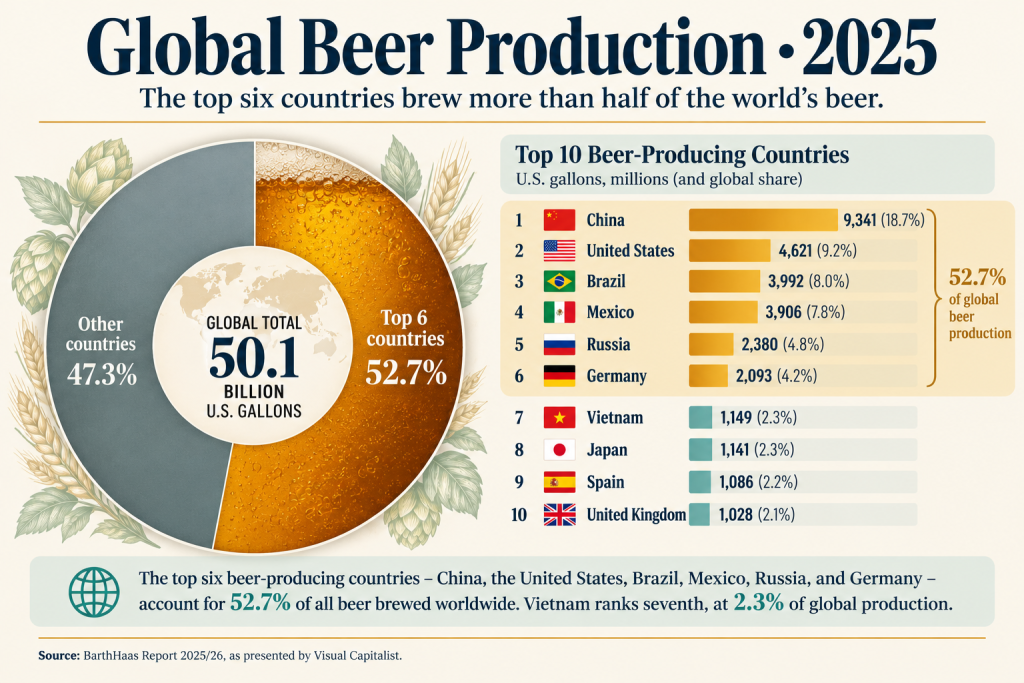
Visual Capitalist’s figures for 2025 put global beer production at approximately 50.1 billion U.S. gallons, equivalent to about 1.9 billion hectoliters. A hectoliter, or hl, is 100 liters – roughly 303 standard 330 ml bottles of beer. At that scale, the numbers quickly become difficult to fathom, but we’ll give it a go. The world brewed enough beer in 2025 to fill a mind-boggling number of glasses, bottles, cans, and kegs – in fact, if we’re considering those 330-ml bottles, we’re talking enough beer to fill nearly 576 billion of them. That’s more than 18,000 bottles produced every second of every hour of every day, year-round, day and night. In the time it took you to read that last sentence, the world churned out another 130,000 bottles of beer.
THE GLOBAL HEAVYWEIGHTS
So who’s brewing all this beer? Well, China led the world by a substantial margin, producing an estimated 9.34 billion U.S. gallons in 2025, or a whopping 18.7% of global output. With about half of China’s production, the United States followed with 4.62 billion gallons, while Brazil and Mexico ranked third and fourth, respectively. Russia and Germany completed the top six, which together accounted for more than half of all beer produced worldwide.
Germany’s sixth-place ranking might surprise anyone whose image of brewing is dominated by Bavarian beer halls and the annual Oktoberfest. It’s understandable: Germany’s brewing heritage is formidable, but sheer production volume is another matter. The truth is, countries with huge populations and vast domestic markets can turn out far more beer than nations which are far better known for their brewing traditions.
Aficionados of Belgian beer might be equally surprised to learn that even countries like Thailand, France, South Africa, and Poland ranked higher. Belgium placed 18th worldwide, producing 541.6 million U.S. gallons, just 1.1% of the worldwide output, and less than half of Vietnam’s total production, which leads us to Southeast Asia, and how it fares in the beer-soaked scheme of things.
VIETNAM TAKES THE REGIONAL CROWN
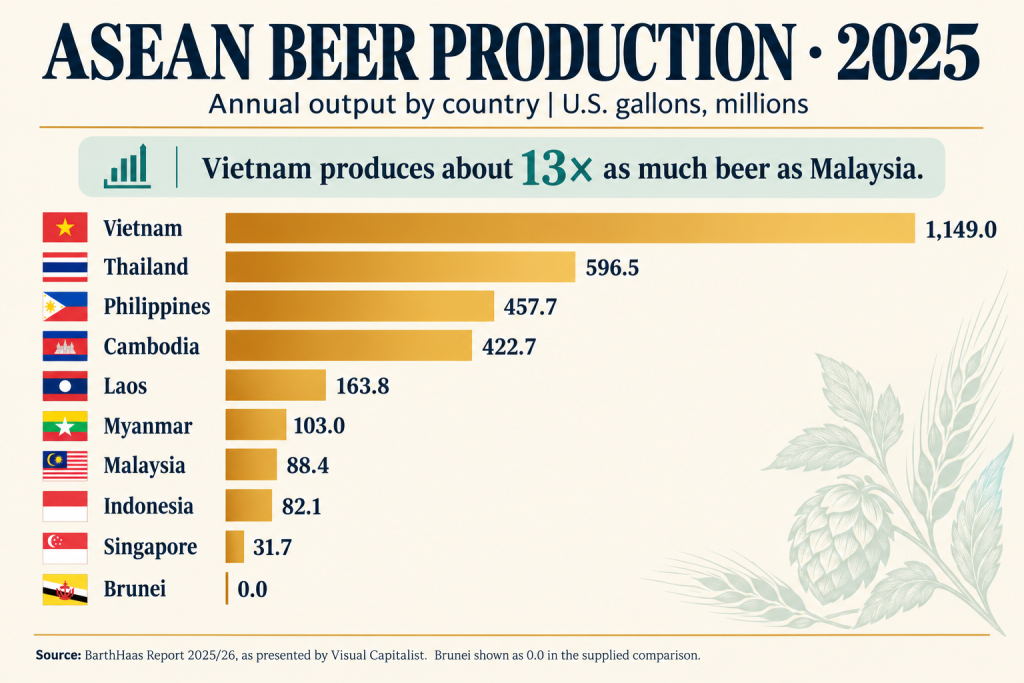
Within Southeast Asia, the aforementioned Vietnam is the clear leader. Its estimated 1.149 billion U.S. gallons of beer in 2025 represented 2.3% of global production, placing it seventh in the world – ahead of Japan, Spain, and the United Kingdom.
That output is equivalent to about 43.5 million hectoliters, or more than 13 billion 330 ml bottles. The scale becomes easier to appreciate when set beside Malaysia, which produced an estimated 88.4 million U.S. gallons, or approximately 3.35 million hl. Vietnam’s output was therefore about 13 times Malaysia’s. (In actual fact, Vietnam produces a fair bit of craft beer for Malaysian labels, but that’s another story entirely.)
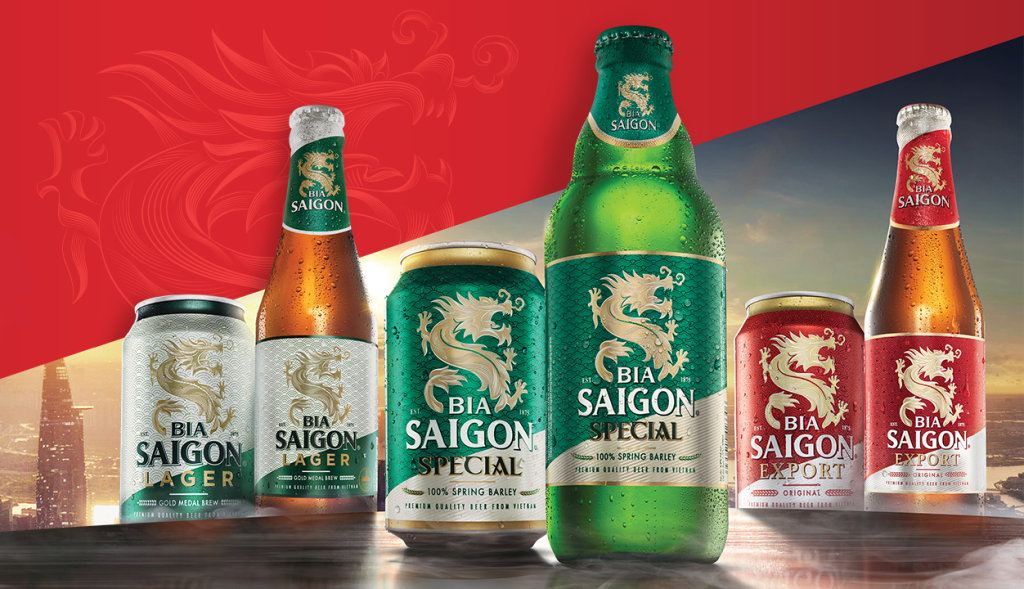
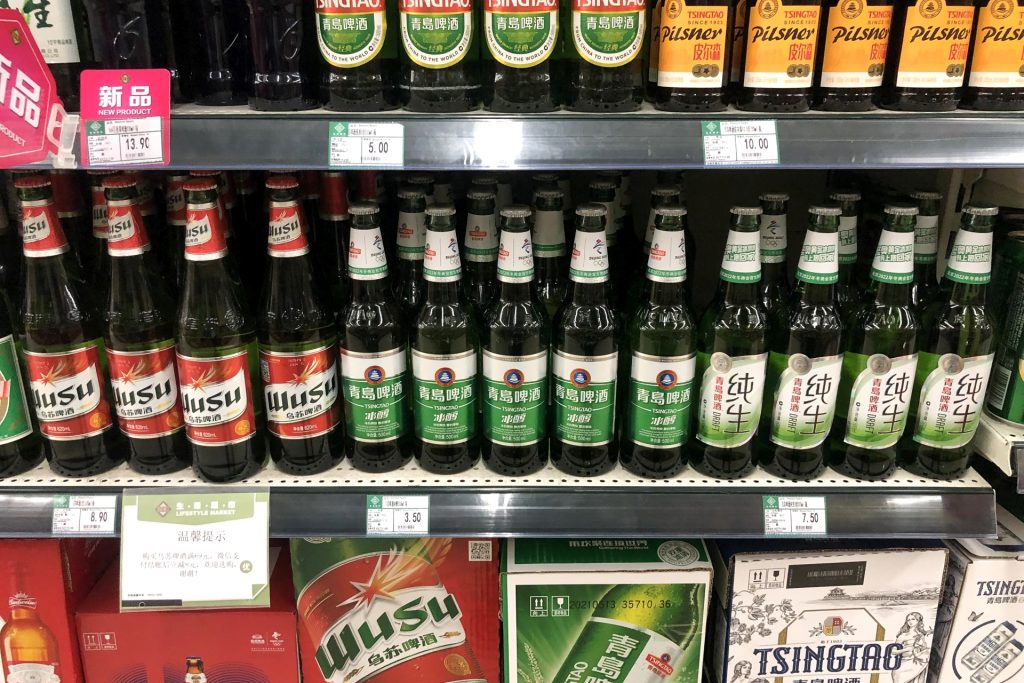
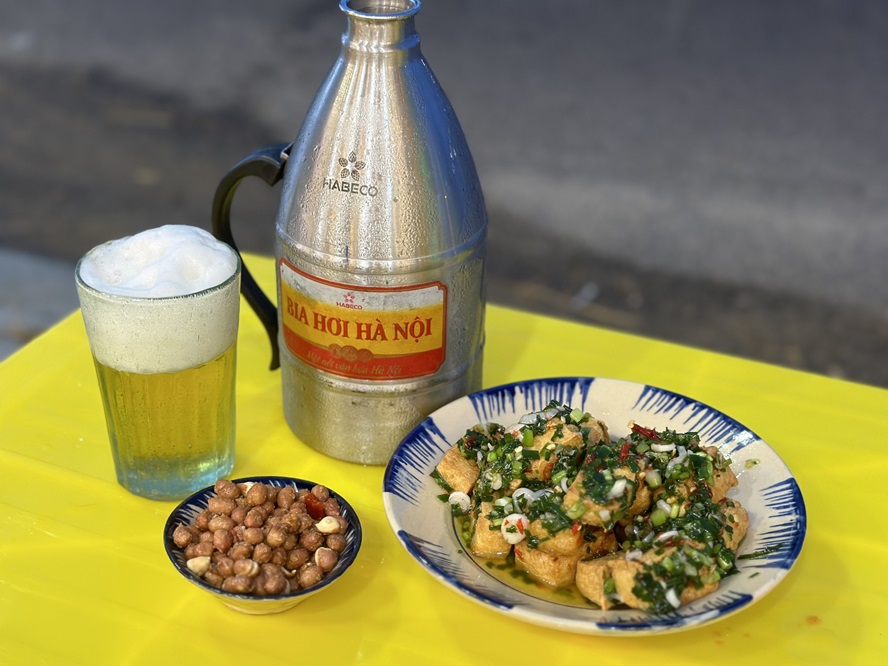
Vietnam’s brewing history stretches back to the late 19th century. SABECO, the producer behind Bia Saigon and 333, traces its roots to a small brewery established in Saigon in 1875 by Frenchman Victor Larue. The company grew through successive political and economic changes and eventually became one of the country’s most prominent brewers. Its portfolio also includes Bia Lac Viet, while its modern production network serves a nationwide market. To get a better sense of the variety and output of Vietnam’s breweries, just pay a visit to Sarawak. You’ll find plenty of unfamiliar brands, and those that aren’t from China are most likely from Vietnam.
Thailand ranked second in Southeast Asia, with 596.5 million gallons, followed by the Philippines at 457.7 million and Cambodia at 422.7 million. Together, these figures illustrate the strength of beer production across mainland and maritime Southeast Asia, where local brands remain important even as global brewers expand their reach.
Laos produced an estimated 163.8 million gallons, while Myanmar reached 103 million. With 88.4 million U.S. gallons brewed, Malaysia came next among the region’s larger producers, followed closely by Indonesia at 82.1 million gallons and distantly by Singapore at 31.7 million. Brunei, where alcohol sales and consumption are heavily restricted, if not outright forbidden, is unsurprisingly listed at zero in this comparison, as there are no breweries operating in the tiny country.
MALAYSIA’S BIG TWO
On a global scale, Malaysia’s brewing market is comparatively small by volume, but its two major brewers nevertheless have a long history and a sizeable economic footprint. Heineken Malaysia Berhad and Carlsberg Brewery Malaysia Berhad are the country’s two established commercial breweries, and their familiar labels represent only part of their portfolios.
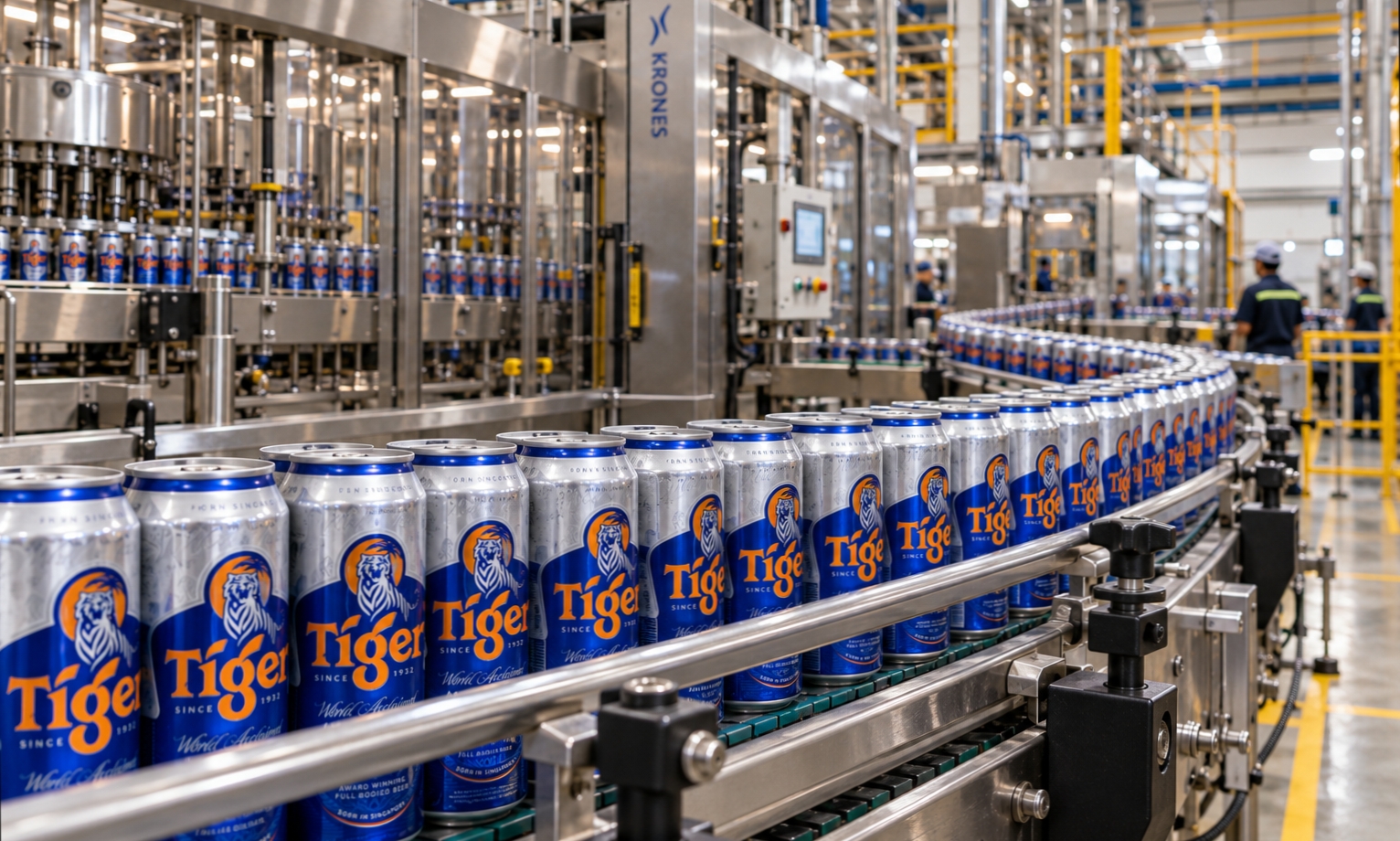
Heineken Malaysia’s story began in 1964, when Guinness Malaysia was incorporated. Its Sungei Way Brewery began operating in 1965, and Guinness stout production started that year. The company’s history also connects with the arrival of Tiger Beer: the brand was launched in Singapore in 1932 and became a staple across the region. A merger in 1989 brought Guinness Malaysia and Malayan Breweries (Malaya) together under Guinness Anchor Berhad, which later adopted the Heineken Malaysia name.
Today, the company’s portfolio includes Heineken, Tiger, Tiger Crystal, Guinness, Anchor Smooth, Kilkenny, Strongbow, and other drinks, including non-alcoholic malt beverages. In its 2025 financial year, the group reported revenue of approximately RM2.8 billion. Its annual report shows that excise duties, customs duties, and sales tax represented a substantial part of its revenue outflow, alongside corporate tax and employment costs.
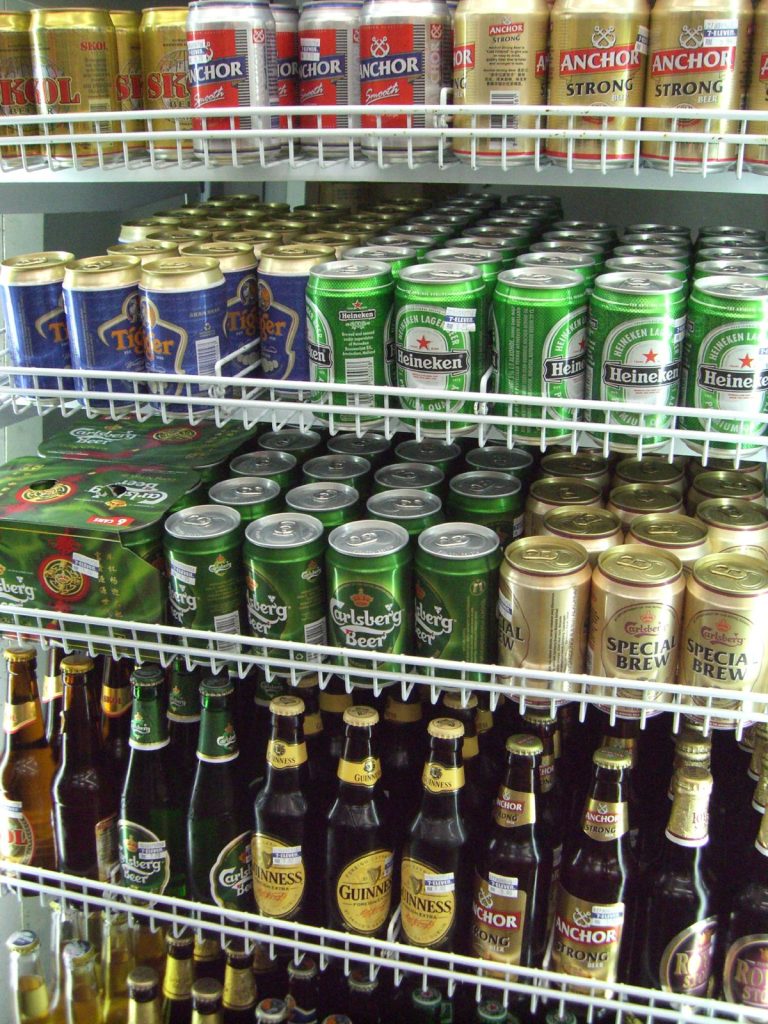
Carlsberg Malaysia arrived later, incorporating in 1969 and selling its first locally brewed Carlsberg beer in 1972. Its Shah Alam brewery was the first brewery built in Asia by the Carlsberg Group. More than five decades later, its portfolio extends well beyond Carlsberg Danish Pilsner to include 1664 Blanc, Somersby cider, Connor’s Stout Porter, Sapporo, Brooklyn Brewery, SKOL, and Royal Stout.
For 2025, Carlsberg Malaysia reported revenue of RM2.3 billion and net profit of RM375.6 million. The company says its operations across Malaysia and Singapore contributed RM1.2 billion in excise duties and taxes that year and directly employed 878 people across the two markets. Those figures exclude the wider network of suppliers, distributors, retailers, hospitality businesses, and other partners that depend on the industry.
The numbers are a reminder that brewing contributes to the economy in ways that go well beyond the beer itself, and benefits – either directly or indirectly – many people who may themselves never touch a beer in their lives. Excise duties and sales taxes are significant, while breweries support skilled manufacturing jobs, logistics, packaging, agriculture-related supply chains, and, lest we forget, the enormous hospitality trade.
A DIFFERENT KIND OF BEER MAP
Production volumes tell only part of the story. Malaysia’s beer market is shaped by its tax regime, cultural and religious context, and the fact that beer is not consumed by the entire population. Indonesia and Brunei have their own restrictions and market conditions, while Vietnam, Thailand, the Philippines, and Cambodia have much larger beer-producing industries by volume.
Nor does production automatically translate into the highest per-capita consumption. The Czech Republic, for example, is renowned for its beer consumption despite ranking far below the global leaders in total output.
Southeast Asia’s beer story is therefore not simply one of familiar international labels. Vietnam’s enormous brewing industry, Thailand’s major producers, and the sizeable markets of the Philippines and Cambodia demonstrate that the region has its own brewing powerhouses. Malaysia’s Heineken and Carlsberg may dominate the local shelves, but in the wider ASEAN picture, they are part of a much larger – and increasingly interesting – beer landscape.
Sources: Visual Capitalist; BarthHaas Report; Heineken Malaysia; Carlsberg Malaysia; SABECO.