

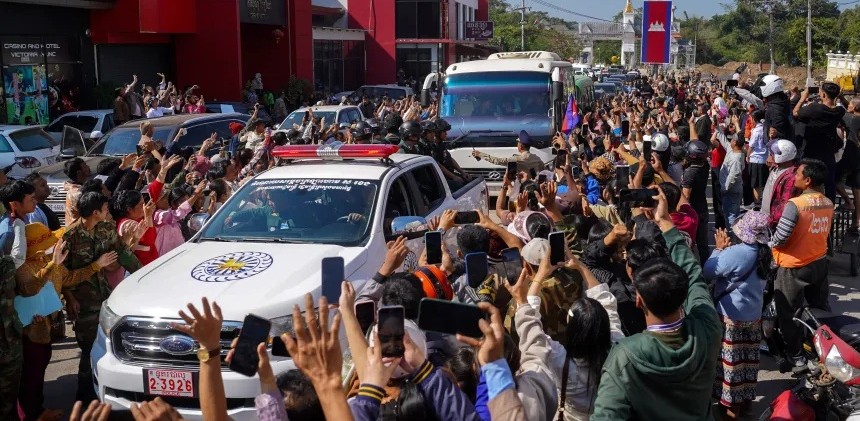
Thailand has released 18 Cambodian soldiers following a renewed ceasefire, offering a cautious easing of tensions after weeks of deadly border clashes that displaced hundreds of thousands and drew international mediation.
Thailand’s decision to release 18 Cambodian soldiers on Wednesday marked a rare moment of de-escalation in a border conflict that has tested regional diplomacy and underscored how quickly long-standing disputes in mainland Southeast Asia can spiral into violence.
The soldiers were handed over at a border checkpoint at around 10.00 a.m. local time, after being held in Thai custody for more than five months. The release followed a renewed ceasefire agreement reached at the weekend, which halted nearly three weeks of intense fighting between the two neighbours.
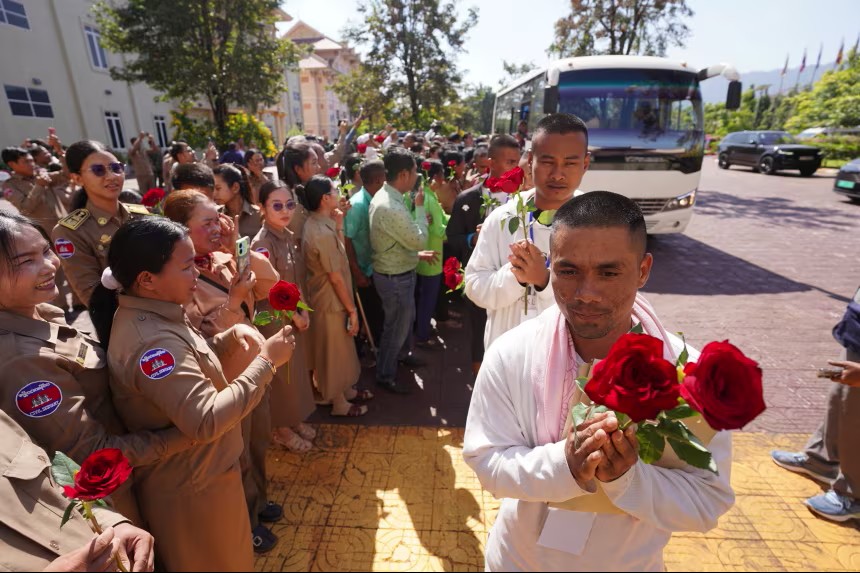
Officials on both sides confirmed the transfer, which came after the ceasefire held for the required 72-hour period, despite fresh accusations of violations that briefly threatened to derail the process. Cambodian Defence Ministry spokesperson Maly Socheata said the soldiers had been detained for 155 days, while Battambang provincial governor Sok Lou described them as “heroic soldiers” upon their return.
Thailand’s Foreign Ministry said the detainees had been treated in accordance with international humanitarian law during their detention, a statement aimed at reassuring both domestic and international observers amid heightened scrutiny of the conflict.
The release was supervised by the International Committee of the Red Cross, which has played a quiet but central role throughout the crisis. ICRC president Mirjana Spoljaric said the repatriation allowed families to be reunited and represented a tangible step toward implementing commitments made under the ceasefire’s joint statement.
A CONFLICT ROOTED IN HISTORY AND ESCALATION
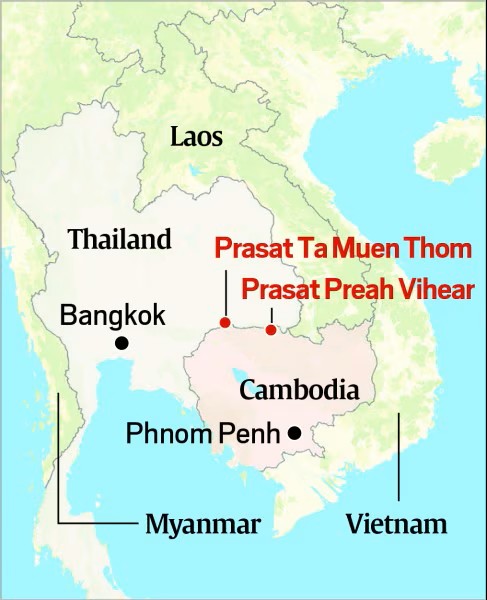
The clashes that erupted along the Thai–Cambodian border are the latest chapter in a dispute with roots stretching back more than a century, tied to colonial-era maps and competing claims over territory near ancient temple complexes. While tensions have flared periodically in the past, the most recent fighting marked one of the deadliest escalations in years.
Over roughly 20 days, the conflict claimed at least 101 lives and forced more than half a million civilians on both sides to flee their homes. Villages were emptied, schools closed, and temporary shelters sprang up as families sought safety from artillery fire and air strikes.
The fighting was notable not only for its duration but also for its unusual intensity. Both sides deployed heavy weaponry, including artillery barrages, rocket fire, and fighter jet sorties, raising alarm across the region and prompting urgent calls for restraint from neighbouring governments and international partners.
The renewed ceasefire agreed on Saturday took effect at noon local time, halting the violence after an earlier truce collapsed earlier this month. That previous ceasefire had been brokered through high-level intervention involving United States President Donald Trump and Malaysian Prime Minister Anwar Ibrahim, underscoring the geopolitical sensitivity of the standoff.
Its hasty breakdown highlighted the fragility of such agreements in the absence of robust monitoring and mutual trust. Each side accused the other of violations, and skirmishes quickly escalated into broader confrontations, with civilians – as is so often the case – bearing the brunt of the fallout.
Under the terms of the latest deal, Thailand committed to releasing the Cambodian soldiers if the ceasefire held for 72 hours. While the deadline was met, the handover was delayed by a day after Thailand alleged fresh violations by Cambodian forces. Cambodia rejected those claims, insisting it had adhered to the agreement.
The eventual release suggests that, for now, both sides are seeking to demonstrate good faith, even as mutual suspicion and distrust both remain high.
REGIONAL IMPLICATIONS AND A PRECARIOUS PEACE
The border conflict has resonated beyond Thailand and Cambodia, raising concerns within ASEAN about stability along one of the region’s most sensitive frontiers. Both countries are key members of the bloc, which prides itself on non-interference and consensus, but as critics note has often struggled to respond decisively to internal disputes between member states, or even purely internal crises, such as the ongoing situation in Myanmar.
Some observers have noted that Malaysia’s involvement as a mediator between Cambodia and Thailand reflects Kuala Lumpur’s growing diplomatic role within ASEAN, particularly under Prime Minister Anwar Ibrahim, who has positioned Malaysia as a proponent of dialogue and regional stability. The collapse of the earlier ceasefire, however, clearly illustrated the limits of external mediation when underlying grievances remain unresolved.
For Cambodia, the return of its soldiers carries symbolic weight, reinforcing domestic narratives of resilience and sovereignty at a time when public sentiment has been inflamed by the loss of life and displacement. For Thailand, the release offers a chance to signal restraint and compliance with international norms, while easing pressure from humanitarian organisations and foreign partners.
Yet analysts caution that the ceasefire remains fragile. Past experience along the Thai–Cambodian border suggests that without sustained dialogue and credible mechanisms to prevent incidents on the ground, even minor provocations can reignite broader hostilities.
Both governments now face the challenge of managing nationalist sentiment at home while keeping communication channels open. The displacement of more than half a million civilians has created humanitarian and economic pressures that will not dissipate quickly, even if the guns remain silent.
Rebuilding trust among border communities, many of whom have lived with uncertainty for years, will require more than political statements. Safe returns, compensation, and assurances against renewed violence are likely to be central to any lasting resolution.
For now, the release of the 18 soldiers stands as a modest but meaningful gesture. It does not resolve the deeper territorial dispute, nor does it erase the scars left by weeks of fighting. It does, however, suggest that both sides recognize the cost of continued escalation and the value of incremental steps toward de-escalation.
Whether this fragile calm can be sustained will depend on what follows in the days and weeks ahead – and on whether commitments made at the negotiating table translate into restraint and accountability on the ground.
SOURCES: Reuters; International Committee of the Red Cross statements; regional diplomatic briefings