

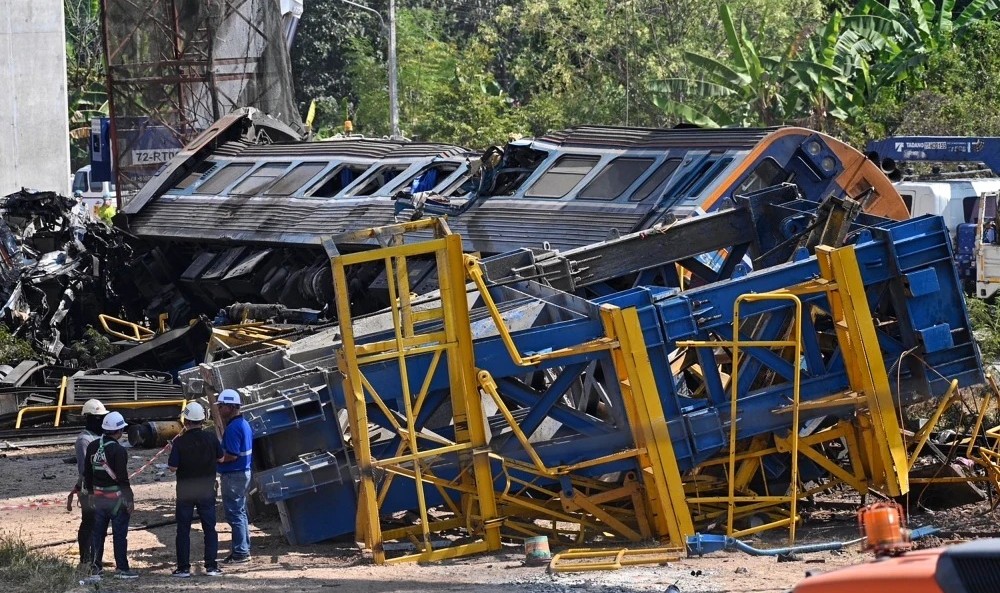
A major infrastructure accident in northeastern Thailand has left at least 29 people dead after a construction crane fell onto a moving passenger train, triggering a derailment and fire, and raising renewed questions about safety oversight at large-scale rail projects.
At least 29 people were killed and 64 others injured on Wednesday after a construction crane collapsed onto a passenger train in northeastern Thailand, causing multiple carriages to derail and catch fire, according to Thai authorities.
The incident occurred in Nakhon Ratchasima province, a key transport hub linking Bangkok to Thailand’s northeastern region. The train was travelling from Bangkok to Ubon Ratchathani when the crane, reportedly part of ongoing works on an elevated high-speed rail project, fell onto the tracks and struck the moving train.
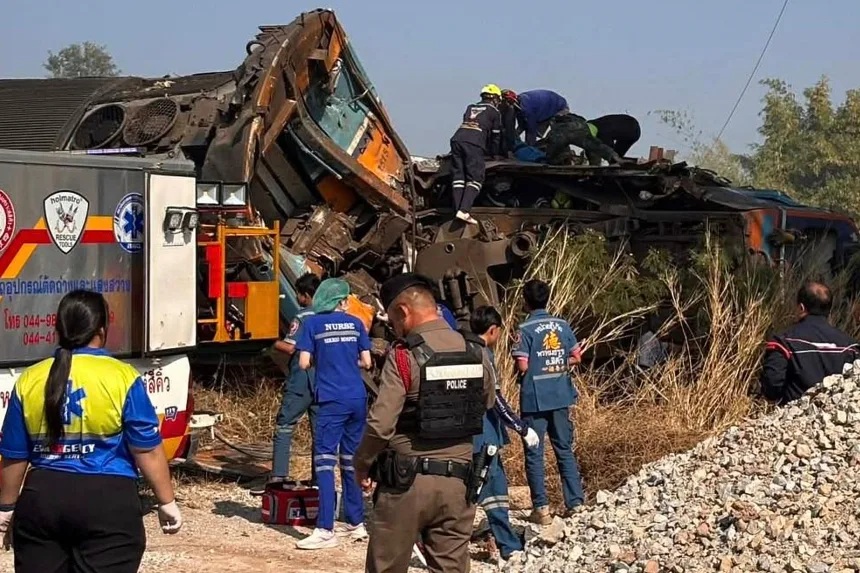
Officials said there were 195 passengers on board at the time of the crash. Emergency responders were dispatched to the scene shortly after the incident, with rescue operations continuing for several hours as firefighters worked to contain the blaze and search teams looked for passengers trapped inside damaged carriages.
According to Nakhon Ratchasima’s Public Relations Department, the crane collapse caused the train to derail immediately upon impact. Several coaches reportedly overturned, while others were engulfed in flames sparked by the collision. Authorities later confirmed that the fire had been brought under control, allowing rescuers to access the wreckage more safely.
Images and video shared by local media and government agencies showed extensive damage to the train and surrounding infrastructure, with twisted metal, scorched carriages, and debris scattered across the tracks. Emergency medical teams treated dozens of injured passengers at the scene before transferring them to nearby hospitals.
GOVERNMENT VOWS FULL INVESTIGATION
Thailand’s Transport Minister, Piphat Ratchakitprakan, confirmed the casualty figures and said he had ordered an urgent investigation into the cause of the crane’s collapse. He added that safety protocols at the construction site, as well as coordination between rail operators and contractors, would be closely examined.
The crane was being used as part of a broader effort to expand and modernise Thailand’s rail network, including the construction of elevated tracks designed to support future high-speed services. These projects form a central pillar of the country’s long-term infrastructure strategy, aimed at improving regional connectivity and reducing reliance on road transport.
While large-scale rail construction has accelerated in recent years, Wednesday’s accident highlights the inherent risks of undertaking major infrastructure works alongside active rail lines. Industry experts have long stressed the importance of stringent safety controls when construction activities take place near operational transport corridors.
At this stage, authorities have not confirmed what caused the crane to fail, or whether mechanical malfunction, human error, or procedural lapses may have played a role. Investigators are expected to review maintenance records, construction methods, and site supervision practices as part of their inquiry.
Rail services along the affected route were suspended following the crash, with passengers advised to seek alternative travel arrangements. Officials said services would only resume once the site had been fully secured and safety checks completed.
The tragedy has sent shockwaves across Thailand, particularly in the northeastern provinces that rely heavily on long-distance rail travel for work, family visits, and commerce. The Bangkok to Ubon Ratchathani route is among the country’s busiest intercity lines, serving thousands of passengers each week.
In recent years, Thailand has invested heavily in upgrading its rail infrastructure, including dual-tracking projects, station upgrades, and plans for high-speed connections linking major cities and border regions. While these developments are widely seen as essential to the country’s economic growth, the scale and complexity of such projects have also increased scrutiny around construction standards and regulatory enforcement.
Public reaction to the crash has been marked by grief and calls for accountability. On social media, many users expressed condolences to the victims’ families while questioning how a crane operating near an active rail line could collapse onto a passing train.
Government officials have pledged transparency in the investigation and said any parties found to have violated safety regulations would be held responsible. Further updates are expected as forensic teams complete their assessment of the scene and interview witnesses, contractors, and railway personnel.
SOURCES: NBC News; CNN Asia; Nakhon Ratchasima Provincial Public Relations Department; statements from Thailand’s Ministry of Transport