


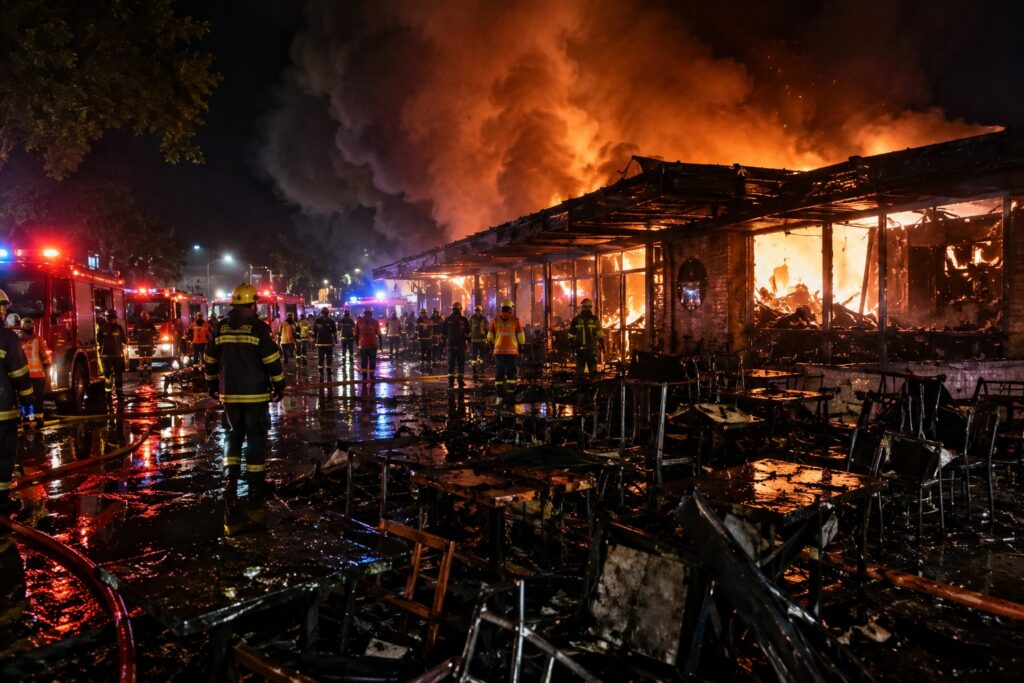
A devastating fire that swept through a packed Bangkok entertainment venue has claimed at least 28 lives and left more than 70 people injured, quickly prompting renewed questions about fire safety, emergency exits, and enforcement standards at nightlife establishments across Thailand.
Editor’s note: Authorities in Thailand have announced that as of July 15, the death toll has risen to 32.
A night of live music and celebration ended in unimaginable tragedy on July 12 and July 13 when a fast-moving fire tore through Rong Beer Na Lat Phrao, a popular live music bar in Bangkok’s Chatuchak district, killing at least 28 people and injuring 73 others.
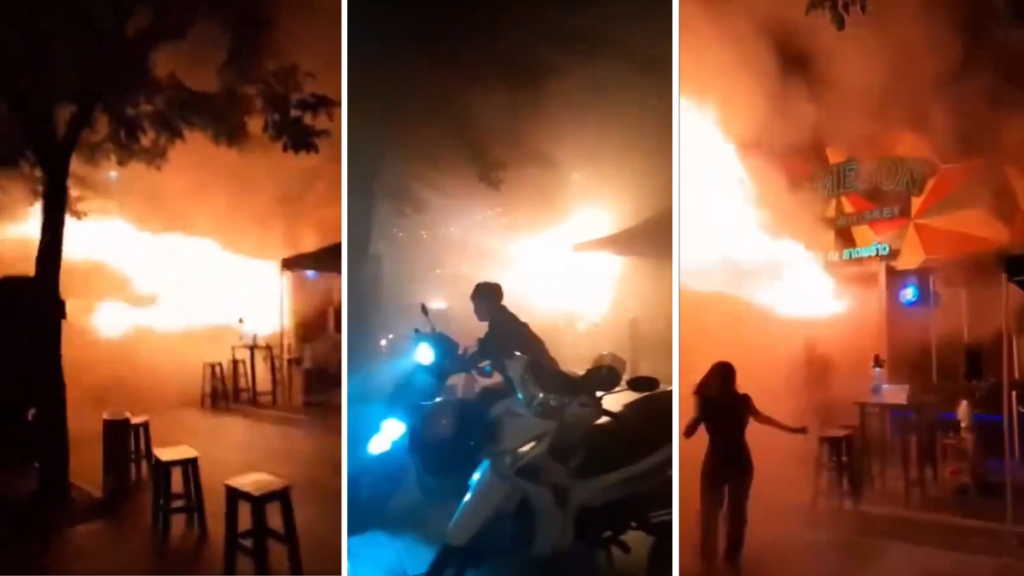
Authorities say the blaze erupted shortly before midnight (July 12, going into July 13) while the venue was crowded with patrons enjoying a live performance by Thai indie band Thotsakan. Firefighters managed to bring the inferno under control within about 30 minutes, but by then the damage had already been done.
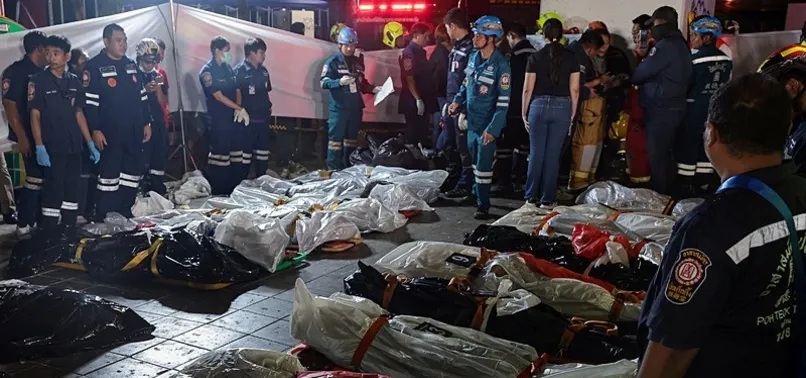
Many victims reportedly succumbed to smoke inhalation after becoming trapped inside the building. Officials said numerous bodies were discovered in windowless bathrooms at the rear of the premises, where patrons had apparently fled in a desperate attempt to escape the flames.
Among those who lost their lives were three members of Thotsakan: keyboardist Kwang, vocalist Breeze, and drummer Bew. The band’s manager, Ice Athipat Wijarn, survived the fire but later described the horrifying moments as smoke rapidly engulfed the venue before an explosion forced him through an exit.
Lead singer Tik Chaichana escaped only because he had briefly left the stage to use the restroom moments before the fire broke out, according to Thai media reports.
The victims included patrons, venue employees, musicians, and at least one passer-by. Authorities have identified one foreign national among the deceased, a citizen of Laos.
INVESTIGATION FOCUSES ON FIRE SAFETY
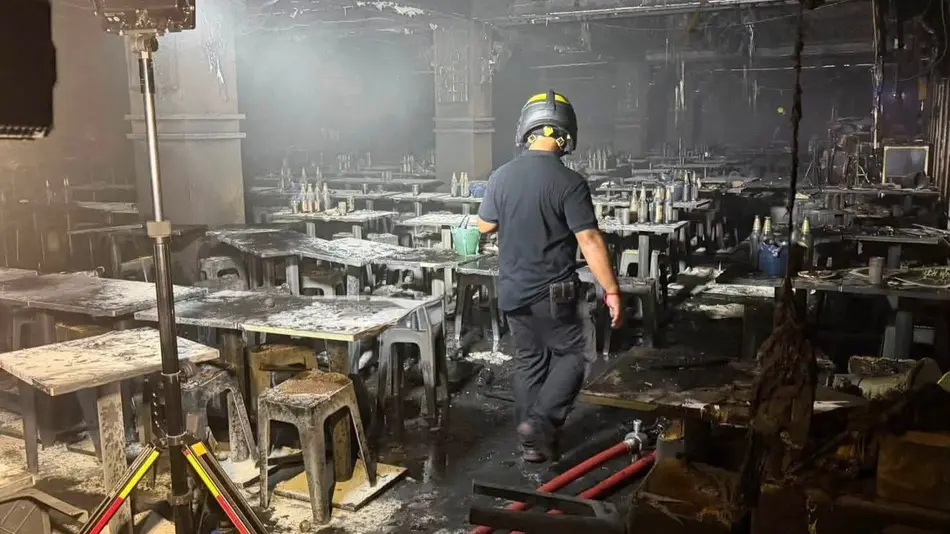
While investigators continue examining the exact cause of the blaze, preliminary findings point to an electrical fault near the stage, possibly involving a ceiling-mounted air-conditioning unit or nearby electrical equipment. Officials have also launched a broader investigation into whether negligence contributed to the high death toll.
Bangkok Governor Chadchart Sittipunt said early inspections suggested highly flammable decorative materials attached to the ceiling may have accelerated the spread of the fire, while reports of blocked or obstructed emergency exits are also being investigated.
Prime Minister Anutin Charnvirakul, who visited the scene, said many victims died after running toward the rear of the building instead of finding a clear escape route.
Authorities are examining whether emergency exits were adequately marked, whether any exits were obstructed during operations, and whether the venue complied with all fire safety regulations despite reportedly passing a recent inspection.
Survivor Usa Tadsree, who lost two friends in the blaze, described the terrifying speed with which the situation unfolded, saying there was “a very fast boom” and “no way to get out at all.”
Another witness, Kaewudon Pongpanee, said he desperately tried to reach his brother inside but was forced back by the intense heat and smoke, recalling that he heard people screaming but simply could not get inside.
Videos verified by Reuters show thick black smoke pouring from the building before a sudden jet of flame burst through the entrance as terrified customers scrambled to escape. Several people were seen running from the building with their clothing on fire.
FAMILIAR QUESTIONS AFTER ANOTHER DEADLY BLAZE
The disaster has inevitably revived painful memories of previous nightclub fires in Thailand, most notably the Santika Club fire in Bangkok on New Year’s Day 2009, which killed 66 people and injured more than 200 after pyrotechnics ignited soundproofing materials inside the venue.
In the years since, Thai authorities have tightened licensing requirements and strengthened building regulations for entertainment venues. Nevertheless, fatal fires continue to occur periodically, raising persistent questions about enforcement, occupancy limits, emergency planning, and the practical implementation of safety measures.
Fire safety specialists have long argued that regulations alone are insufficient if evacuation routes become obstructed, emergency lighting is inadequate, or staff are not properly trained to respond during emergencies.
The Bangkok tragedy has already prompted city officials to begin inspecting entertainment venues across the capital, with investigators examining not only the cause of the fire but also whether venue operators complied with fire safety requirements during normal business operations.
The incident also highlights the particular risks posed by enclosed nightlife venues. Low ceilings, maze-like interior layouts, decorative materials, loud music, reduced lighting, and unfamiliar floor plans can all hinder rapid evacuation when seconds matter.
Several former patrons interviewed by Thai media said they had previously noticed the venue’s dark interior and confusing layout, with one recalling wondering how customers would escape if a fire ever broke out.
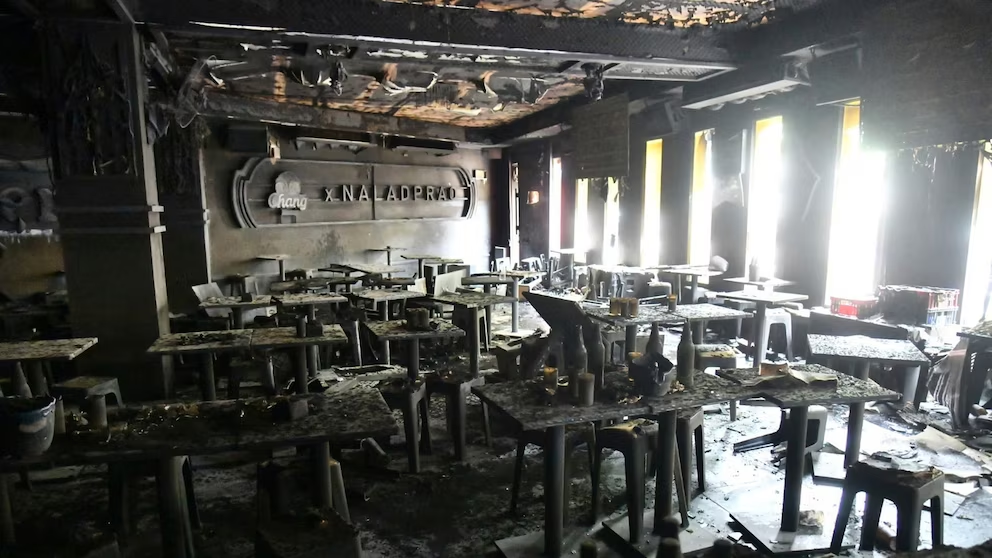
As forensic investigators continue piecing together exactly what happened, grieving families have gathered at Bangkok’s Institute of Forensic Medicine to identify loved ones, while Buddhist monks have conducted prayers at the devastated site.
For Thailand’s tourism industry, the tragedy is another sobering reminder that public confidence depends not only on memorable experiences, but also on ensuring visitors and residents alike can enjoy them safely.
Whether the investigation ultimately attributes the disaster to equipment failure, human negligence, inadequate fire protection, or a combination of factors, one conclusion already appears unavoidable: emergency exits, fire-resistant materials, regular inspections, and effective staff training are not optional extras in crowded entertainment venues. They are measures that save lives when the unthinkable happens.
Sources: BBC News, Reuters, Associated Press, Channel NewsAsia, Bangkok Post.