



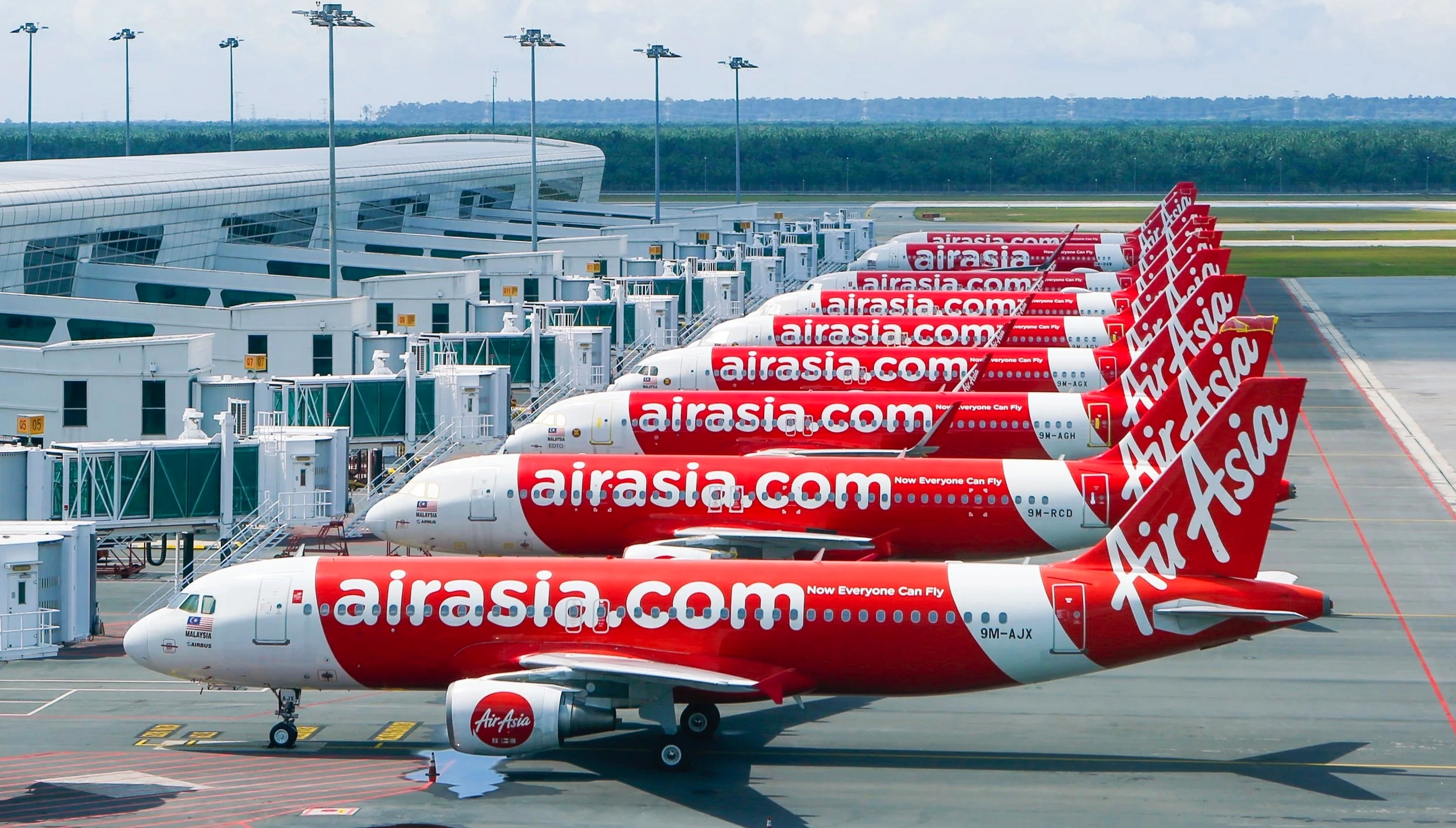
AirAsia says its operations remain stable and demand remains strong, but soaring fuel costs, heavy losses, mounting liabilities, and the need for fresh capital have prompted Malaysia to quietly prepare for what could happen if the region’s best-known budget airline cannot stabilize its finances.
For more than two decades, AirAsia has been one of the defining forces in Southeast Asian aviation. Its red-and-white aircraft helped turn flying from an occasional luxury into an everyday possibility for millions of people, connecting Kuala Lumpur with the region’s cities and islands at prices that once seemed almost too good to be true. And not only has AirAsia itself offered value fares to the flying public, it’s led to what in the US has been called “the Southwest Effect,” a term coined in the early 1990s. The most obvious result is that even other airlines lower their fares on routes served by Southwest Airlines in order to compete.
However, the Southwest Effect goes even further than simply compelling other airlines to lower fares on a particular route. When a major low-cost carrier enters a market, cheaper air travel can stimulate entirely new demand, bringing people into the air who might previously have driven, taken a train, or simply not travelled; the competitive pressure can also spill over into nearby airports and routes that the carrier does not serve directly, while established airlines may be pushed to adopt elements of the low-cost model themselves.
AirAsia has produced something quite similar across Southeast Asia – an “AirAsia Effect,” if you will – helping to transform flying from a relatively expensive form of travel into an everyday option for millions of people, stimulating new routes and passenger demand, forcing competitors to respond on price and capacity, and influencing markets beyond the routes on which its own aircraft actually fly. Its importance to the region’s aviation landscape, therefore, is measured in more than the number of passengers it carries: AirAsia has undeniably helped change the size and character of the market itself.
In a world where companies don’t always live up to their slogans, it’s pretty safe to say that AirAsia has. “Now Everyone Can Fly” isn’t just a tagline; it’s a true market reality that the low-cost airline built from scratch.

A RAPIDLY CHANGING BALANCE SHEET
Now, however, Malaysia is quietly preparing for a scenario that would have seemed almost unthinkable a few years ago: what happens if AirAsia’s financial problems become serious enough that the airline can no longer maintain its current scale? And more alarmingly, what happens if the airline reaches a point where it simply cannot continue operating?
The questions became considerably more urgent this week after Reuters reported that the Malaysian government has asked Malaysia Airlines and Batik Air whether they could absorb some of AirAsia’s domestic routes and market share if necessary. The discussions, involving the Ministry of Finance and Malaysia Airports Holdings Berhad (MAHB), are described as “scenario planning” rather than an actual rescue or takeover plan. Both rival airlines have indicated that they would be willing to expand organically, although any large-scale transfer would be considerably easier if they could also take on AirAsia’s aircraft leases. (Simply put, both airlines say they would require more aircraft than are currently in their respective fleets in order to take over those routes.)
That is a remarkable development for a company that remains Southeast Asia’s largest low-cost airline. AirAsia says it accounts for about 40% of Malaysia’s overall aviation market and approximately 60% of domestic flying. Its importance extends well beyond ticket sales: it is a major employer, a crucial provider of affordable regional connectivity, and a significant customer for airports and aviation suppliers.
The immediate problem is money.
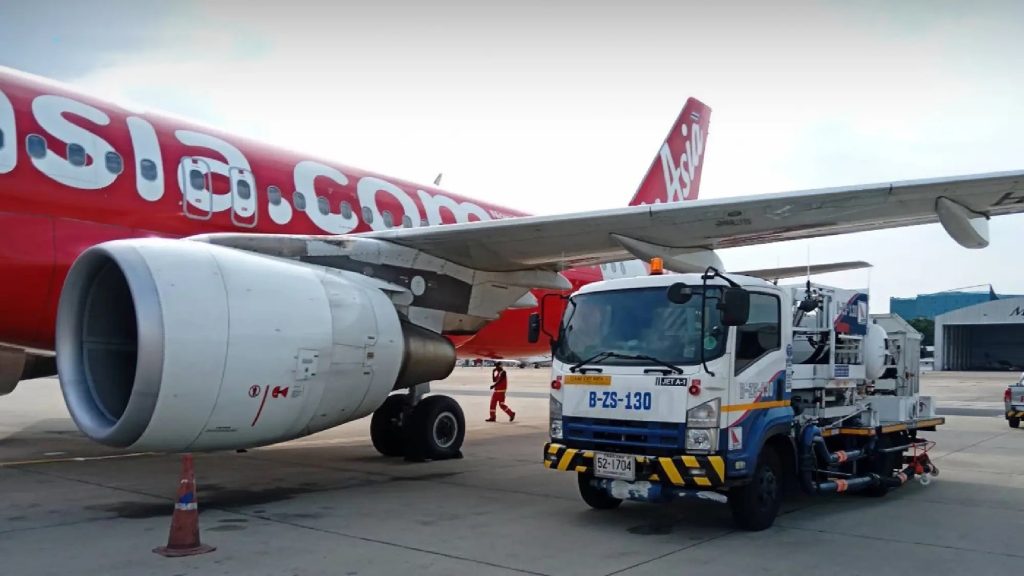
AirAsia reported a net loss of RM830.5 million for the second quarter of 2026, with RM331 million of that loss attributable to foreign-exchange movements. At the same time, its average jet-fuel price during the quarter surged to US$183 per barrel, a 66% increase from the previous quarter. As of June 30, AirAsia had RM18.4 billion in current liabilities against cash and bank balances of just RM954 million. Reuters has also reported that the airline owes at least RM500 million to MAHB for services including landing and parking fees, with repayment extensions already granted.
The fuel crisis is directly connected to the war involving the United States, Iran, and Israel, which has disrupted energy markets and sent aviation fuel prices sharply higher. AirAsia was hit particularly hard because the low-cost airline model depends on keeping costs extraordinarily tight while selling large volumes of relatively inexpensive seats. When fuel suddenly becomes dramatically more expensive, there is only so much of the increase that can be passed on to passengers before demand begins to suffer. Passengers have surely already noticed that flights now are more expensive than they were several months or a year ago.
AirAsia says it has nevertheless managed to recover around 70% of the increase in fuel costs through higher fares, fuel surcharges, and reductions in non-fuel expenses. It also says its underlying demand remains strong. In the second quarter, revenue remained at approximately RM5.1 billion despite an 11% reduction in capacity, while non-fuel unit costs fell 7%.
Those figures provide an crucial counterpoint to the admittedly alarming headlines. AirAsia is clearly under substantial financial pressure, but it’s important to point out that this is not the same thing as saying the airline is about to disappear.
A FIGHT FOR LIQUIDITY, NOT JUST SURVIVAL
The company has already been taking fairly dramatic steps to reduce the financial burden. According to AirAsia, it plans to return 25 older aircraft to lessors during 2026, and has cut underperforming routes, reduced capacity, renegotiated supplier arrangements, and temporarily suspended or restructured operations in weaker markets. Third-quarter capacity has been reduced by 20% to 25%, although AirAsia says this also reflects the traditionally weaker seasonal demand of the period and that it expects to restore capacity toward pre-war levels in the fourth quarter.
The company is also trying to raise money. AirAsia is targeting up to US$1 billion from international debt markets, together with RM700 million in local credit facilities. The company stresses that this is primarily intended to refinance and consolidate existing debt, rather than simply plug an immediate hole in day-to-day operations. It raised approximately US$300 million in March, which it says was used to extend debt maturities and reduce principal obligations.
The difficulty is that outside estimates suggest the proposed fundraising may not be enough. Two people familiar with the situation told Reuters that AirAsia could require at least US$3 billion in fresh capital to address its financial position. AirAsia disputes that assessment, however, saying its current funding targets are sufficient.
There are also signs that the pressure is reaching deeper into the airline’s relationships with suppliers and lessors. In June, The Straits Times, citing people familiar with the matter, reported that AirAsia had fallen behind on payments to some suppliers and had sought to defer lease payments on more than 16 aircraft. Rolls-Royce had also informed the airline that it had missed payments under an engine-maintenance agreement.
And the Malaysian government is now clearly paying attention. Earlier this month, the Finance Ministry hired Alton Aviation Consultancy to assess AirAsia’s funding requirements and financial position. Reuters reported at the time that the government was considering what support, if any, it might provide, although sources said there were no immediate plans for a bailout or government guarantee. However, it seems reasonable to assume that such a move is at least on the table for consideration.
That leaves AirAsia in an uncomfortable middle ground. It is too important to Malaysia’s aviation network for its failure to be treated as an ordinary corporate event, yet its sheer size does not automatically mean the government will write a blank cheque. Any intervention would raise difficult questions about public money, shareholders, creditors, competitors, and the precedent it would set for other companies.
For passengers, meanwhile, the immediate message is considerably less dramatic. AirAsia says its operations remain stable, it continues to see strong underlying demand, and it is working with stakeholders to manage its financial and operational requirements. Its network continues to operate, and there has been no announcement, nor any meaningful indication, that the airline is preparing to shut down.
But the fact that Malaysia is already asking other airlines how quickly they could pick up AirAsia’s routes is significant in its own right.
AirAsia has survived enormous challenges before, most notably including the pandemic, when its debts were restructured and much of the aviation industry effectively ground to a halt. Its current predicament is different: planes are flying, passengers are travelling, and the airline is still generating billions in revenue. The problem is whether that revenue, combined with new financing and aggressive cost-cutting, can keep pace with the financial obligations accumulated during a period of exceptionally high fuel costs and earlier debt.
For now, the iconic red-and-white aircraft remain firmly in the sky. Whether AirAsia emerges from the current crisis smaller and leaner, successfully refinanced, or fundamentally reshaped by events is another question entirely. What is clear is that Malaysia is no longer simply watching from the sidelines and is assuming its role as a key player in its own aviation future.
SOURCES: Reuters, AirAsia Group, The Straits Times, Bernama, and The Star.