


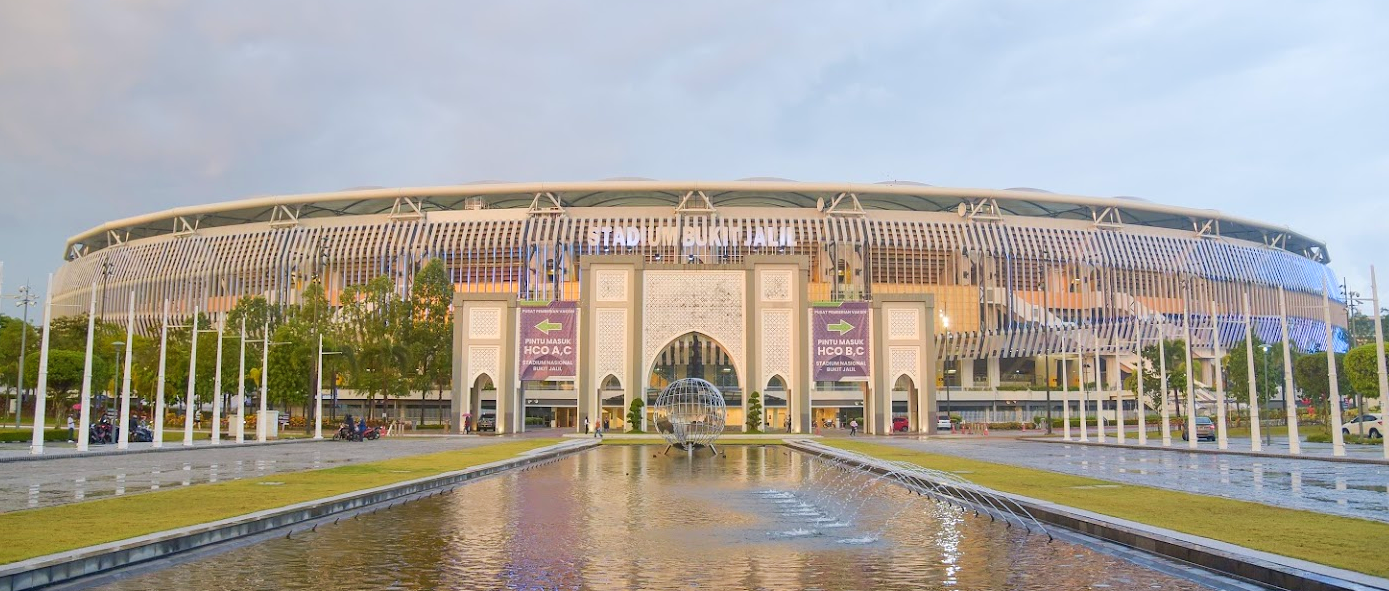
Malaysia’s flagship sports complex at Bukit Jalil is entering a new chapter as Telekom Malaysia secures naming rights for two major venues, reflecting a global trend that has transformed stadium financing for decades.
Two of Malaysia’s most well-known sporting and entertainment venues have officially entered a new branding era. Bukit Jalil National Stadium and Putra Indoor Stadium – widely known as Axiata Arena since 2017 – have received new corporate-backed identities following a naming rights agreement with Telekom Malaysia Berhad.
Under the partnership announced by Perbadanan Stadium Malaysia (PSM) on March 13, Bukit Jalil National Stadium will now be known as TM National Stadium, while Putra Indoor Stadium will be renamed Unifi Arena. The agreement runs for three years, with the new names taking effect on March 6.
According to PSM, the collaboration forms part of a broader strategy to maintain the venues as competitive hosts for international sporting events and major entertainment productions.
PSM chief executive officer Illiyas Jamil said revenue from the partnership will be channelled into upgrades and improvements across both facilities.
“As caretakers of the National Stadium and Putra Indoor Stadium, we are committed to ensuring these facilities remain at the highest standard for Malaysians,” he said.
A GLOBAL TREND WITH DEEP ROOTS
While the concept may feel relatively new in Malaysia, stadium naming rights have a long history elsewhere, particularly in the United States.
Although Chicago’s famed Wrigley Field may be the standard-bearer, dating back to the 1920s when the corporate owners basically named it for themselves, another similar early example dates back to 1953, when the baseball venue for the St. Louis Cardinals was named Busch Stadium after the Anheuser-Busch brewing company purchased the team. Although corporate involvement in stadium names appeared occasionally in earlier decades, the practice expanded dramatically in the 1990s.
During that period, professional sports leagues increasingly turned to private investment to fund new stadium construction. Naming rights agreements became an attractive way to offset costs, with companies paying millions of dollars for the branding exposure associated with high-profile venues.
Today, the model is standard practice around the world. Major facilities such as AT&T Stadium in Texas, Emirates Stadium in London, and the Allianz Arena in Munich all operate under corporate naming rights agreements.
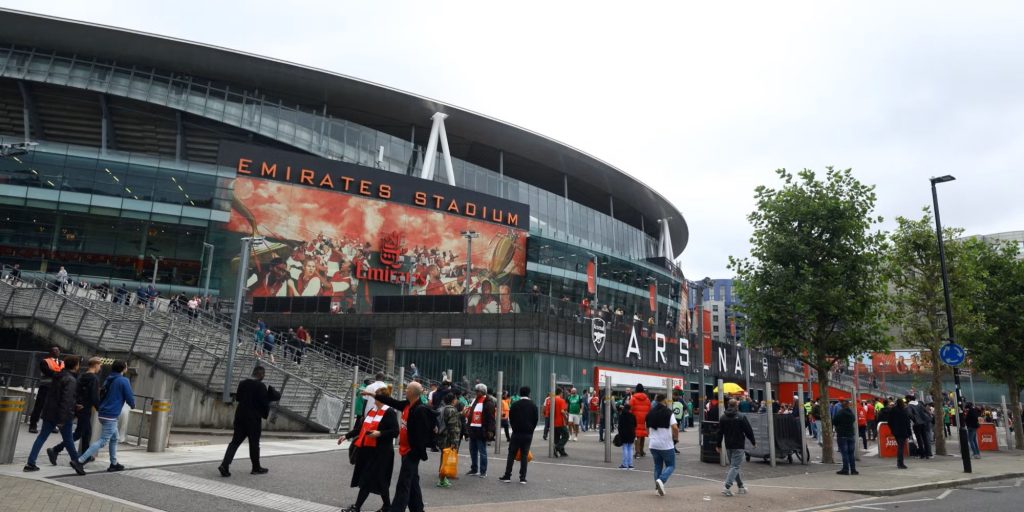
These deals can range from short-term partnerships to contracts lasting decades, often worth hundreds of millions of dollars. The costliest is also one of the most hated and controversial in sports naming rights history, that of Crypto.com Arena in Los Angeles, a deal inked in 2021 that was worth $700 million over 20 years.
MALAYSIA’S LANDMARK SPORTS VENUES
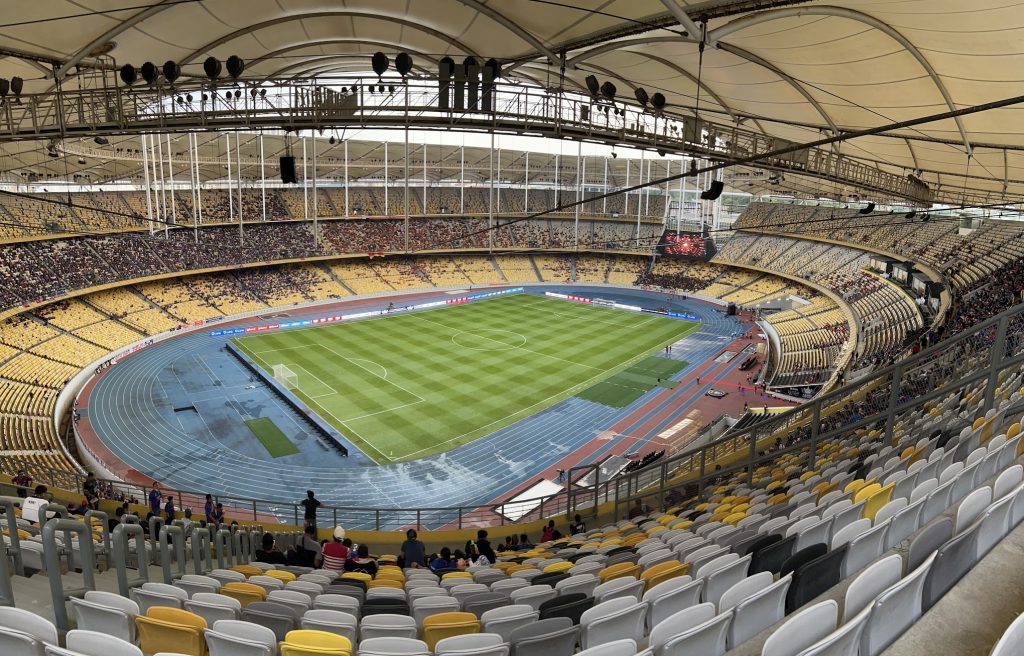
Malaysia’s National Stadium at Bukit Jalil is one of the largest football venues in Southeast Asia. Opened in 1998 for the Commonwealth Games, the stadium has a capacity of more than 80,000 and serves as the home ground for the national football team.
Over the years, the venue has hosted numerous historic moments in Malaysian sport, from major football tournaments to athletics competitions. It has also become a leading concert venue, attracting international performers such as Coldplay, Ed Sheeran, and Jay Chou.
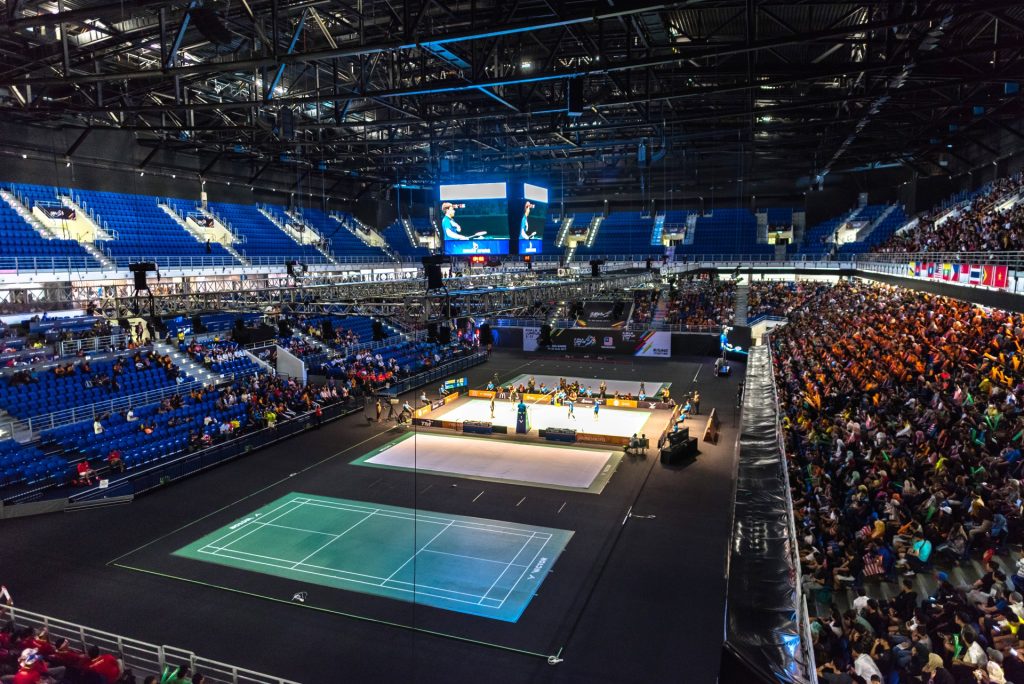
Adjacent to the stadium, Putra Indoor Stadium – now renamed Unifi Arena – forms part of the broader Bukit Jalil Sports Complex. With seating for roughly 16,000 spectators, the indoor arena has hosted badminton tournaments, basketball games, and international concerts.
The venue gained particular prominence through the Malaysia Open badminton championships, where fans regularly pack the stands to support the nation’s top shuttlers.
In 2017, the arena was renamed Axiata Arena following an earlier corporate partnership, marking Malaysia’s first major modern stadium naming rights agreement.
STRENGTHENING VENUES FOR THE FUTURE
Telekom Malaysia’s involvement signals the continued expansion of this funding model within the country’s sports infrastructure.
Group chief executive officer Amar Huzaimi Md Deris said the company views the partnership as an opportunity to support venues that hold deep cultural significance for Malaysians.
“The National Stadium and Putra Indoor Stadium have long been places where Malaysians gather to show support, celebrate achievements, and witness historic moments,” he said.
“Through this collaboration, we hope to further strengthen both stadiums so they remain places that unite communities and inspire national pride for future generations.”
For stadium operators, such partnerships provide a valuable source of funding as venues age and competition for international events intensifies. Upgrading facilities, improving fan experiences, and maintaining world-class standards all require substantial investment.
Naming rights agreements offer one practical solution.