



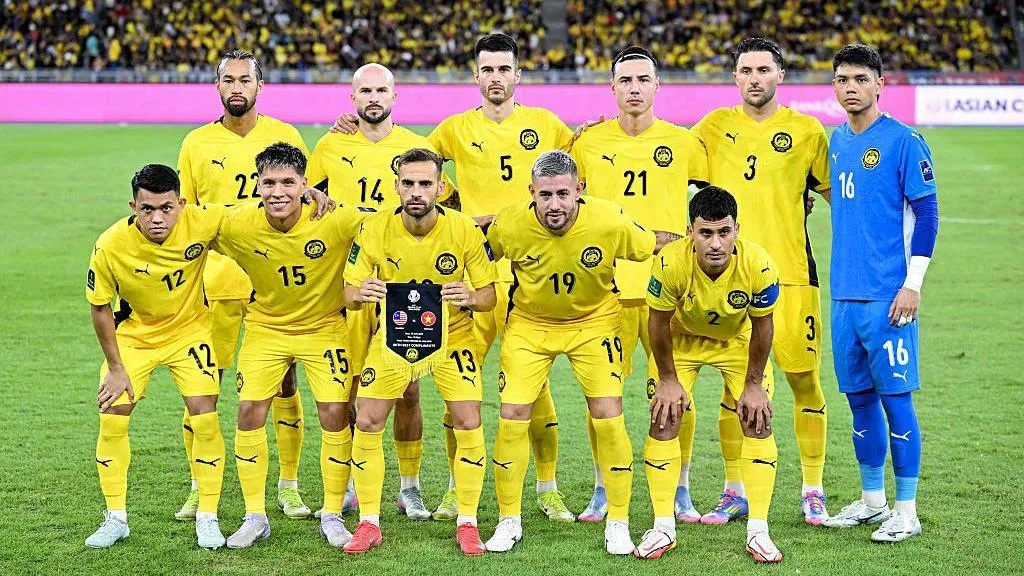
A shock ruling by the Asian Football Confederation has ended Malaysia’s Asian Cup hopes, with forfeited matches and player suspensions exposing serious compliance lapses within the national setup.
Malaysia’s hopes of qualifying for the 2027 AFC Asian Cup have been abruptly ended after the Asian Football Confederation (AFC) overturned two crucial results, ruling that the national team fielded ineligible players in recent qualifiers.
In a decision announced on March 17, the AFC Disciplinary and Ethics Committee declared Malaysia’s victories over Nepal and Vietnam as forfeits, awarding both matches as 3-0 wins to their opponents. The ruling leaves Malaysia six points behind group leaders Vietnam in Group F, eliminating any mathematical chance of progressing to the tournament with just one match remaining.
The decision represents a major setback for Malaysian football, particularly given the national team’s recent upward trajectory in regional competitions and growing ambitions on the continental stage.
The Football Association of Malaysia (FAM) has been fined US$50,000, payable within 30 days. In a statement, the governing body said it would request the full grounds of the decision from the AFC before determining its next course of action, leaving open the possibility of further appeal or clarification.
At the heart of the issue is the eligibility of several naturalised players, a strategy Malaysia has increasingly relied upon in recent years to strengthen its squad. While naturalisation is a common practice in international football, it is governed by strict regulations under FIFA statutes, requiring clear and verifiable documentation regarding citizenship, residency, and lineage.
The controversy intensified earlier in March when the Court of Arbitration for Sport (CAS) partially upheld sanctions imposed by FIFA on seven players who had represented Malaysia using falsified naturalisation documents. The ruling confirmed that the players would serve 12-month suspensions from official matches, although they are permitted to continue training with their respective clubs.
CAS also upheld FIFA’s financial penalty of 350,000 Swiss francs (approximately US$444,275) imposed on FAM, reinforcing the seriousness of the breach and its implications for governance within the sport.
Among the players affected is Facundo Garcés, currently with Spanish club Deportivo Alavés, along with Gabriel Arrocha (Unionistas de Salamanca), Rodrigo Holgado (América de Cali), Imanol Machuca (Vélez Sarsfield), João Figueiredo, Jon Irazabal, and Héctor Hevel, the latter three linked to Malaysian champions Johor Darul Ta’zim. These players had initially been handed suspensions from all football-related activities in September, though the CAS ruling has since allowed them to resume training while remaining barred from competitive fixtures.
The use of naturalized players has been a growing trend across Asian football, as federations seek to remain competitive in increasingly demanding qualification campaigns. Countries such as Indonesia, Qatar, and the United Arab Emirates have all pursued similar strategies with varying degrees of success. However, the Malaysian case underscores the risks involved when due diligence and regulatory compliance fall short.
For Malaysia, the consequences extend beyond the immediate disappointment of missing out on the 2027 Asian Cup. The episode raises broader concerns about administrative oversight, transparency, and adherence to international regulations. It also places added scrutiny on FAM at a time when expectations for the national team have been rising.
The forfeited matches are particularly significant given that one of them was a hard-fought result against Vietnam, traditionally one of Southeast Asia’s strongest footballing nations. Losing those points not only alters the group standings but also highlights how quickly progress can be undone by off-field issues.
Looking ahead, Malaysia will need to rebuild both confidence and credibility. This includes ensuring that all player eligibility matters are thoroughly vetted, strengthening governance processes, and restoring trust among fans and stakeholders. The situation may also prompt a reassessment of the country’s reliance on naturalized players, with greater emphasis placed on developing homegrown talent through domestic leagues and youth systems.
Sources: Asian Football Confederation (AFC), FIFA, Court of Arbitration for Sport (CAS), Reuters, Football Association of Malaysia