

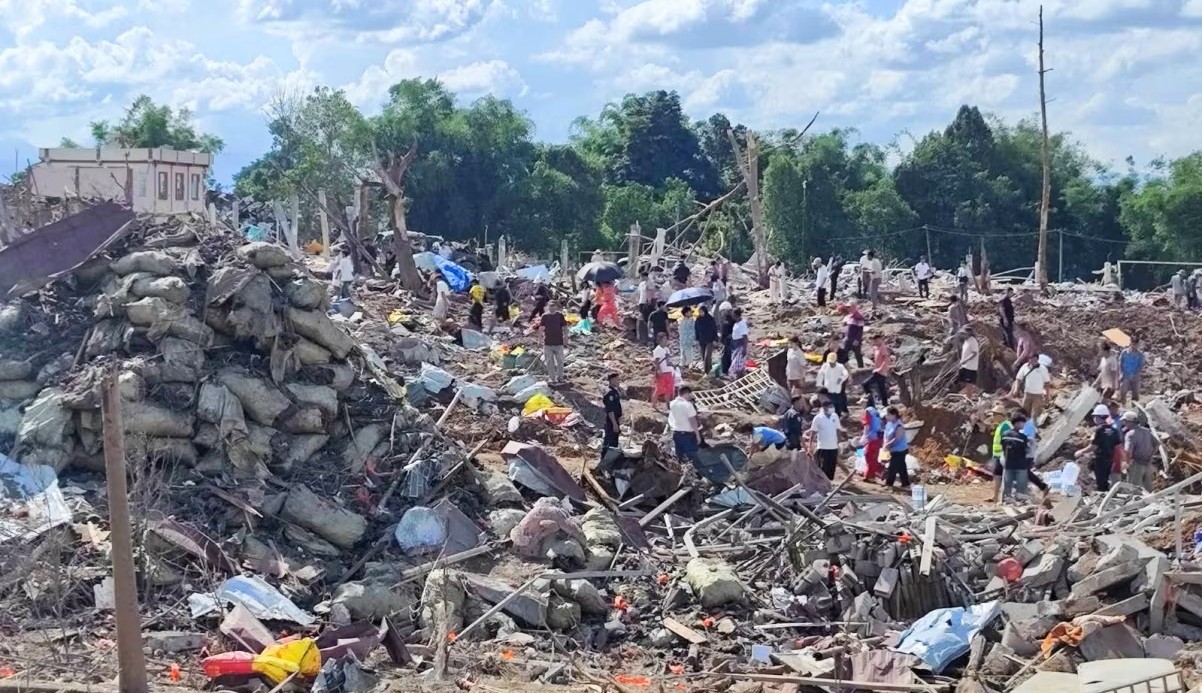
A catastrophic explosion at a mining explosives storage facility in northeastern Myanmar has killed dozens of people, injured scores more, and largely obliterated a village near the Chinese border, prompting investigations into what caused one of the region’s deadliest industrial disasters in recent years.
The scale of destruction left behind by a massive explosion in northeastern Myanmar is only now becoming clear, as rescue workers continue searching for victims and local authorities attempt to determine what triggered the deadly blast.
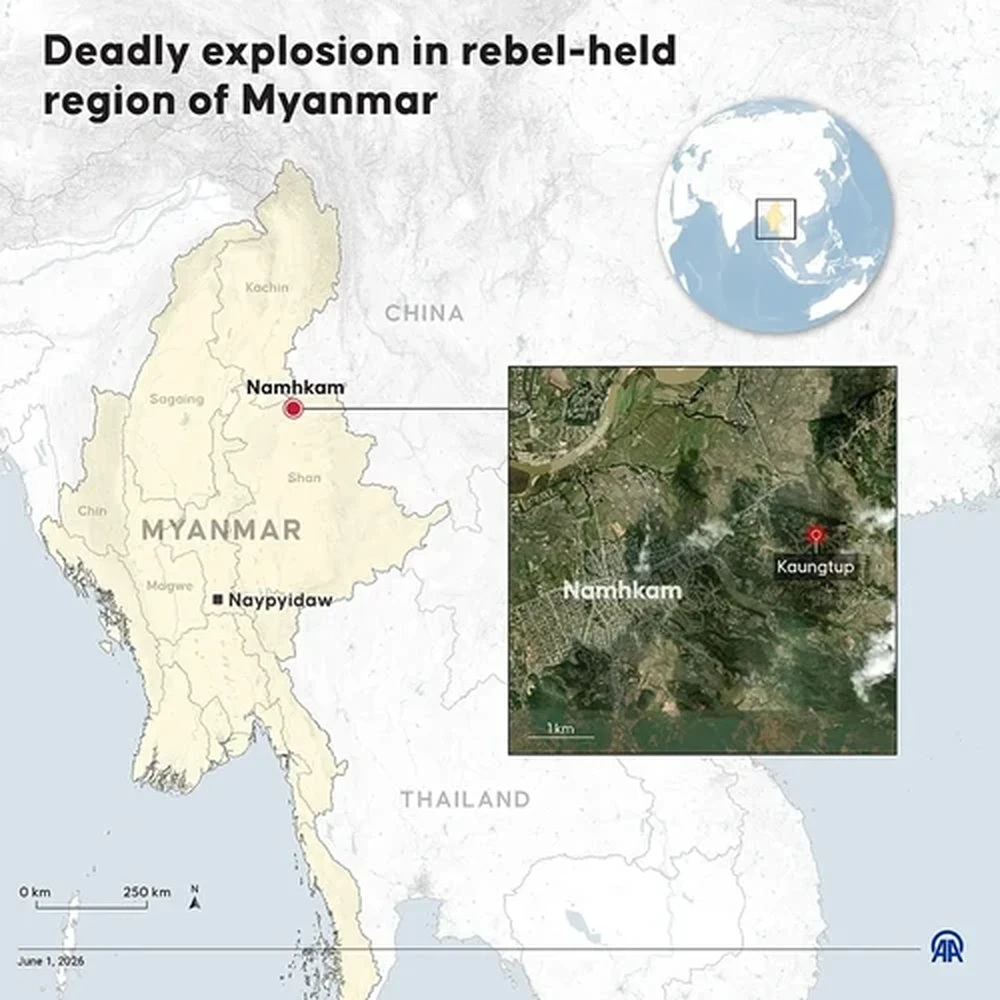
The immense explosion occurred around midday on Sunday, May 31 in Kaung Tat village, located in Namhkam Township in Shan State, just a few kilometres from the Chinese border. The area is controlled by the Ta’ang National Liberation Army (TNLA), an ethnic armed group that has held the territory since a major rebel offensive reshaped control of large parts of northern Myanmar in late 2023.
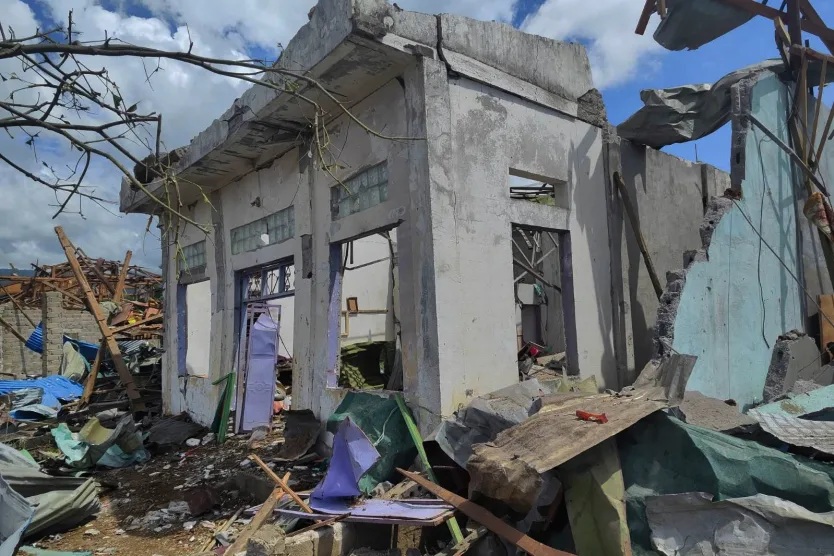
According to the TNLA, explosives stored for mining operations detonated at a facility in the village. The group has not yet identified the cause of the blast, and an investigation is ongoing.
Official figures released by the TNLA placed the early death toll at 39, with 75 people injured, later revising the count up to nearly 50. However, local media outlets, rescue workers, and eyewitness accounts have suggested the final number of fatalities could be significantly higher, with some reports already noting a death toll of more than 55, with recovery efforts still ongoing.
A CATASTROPHIC EXPLOSION
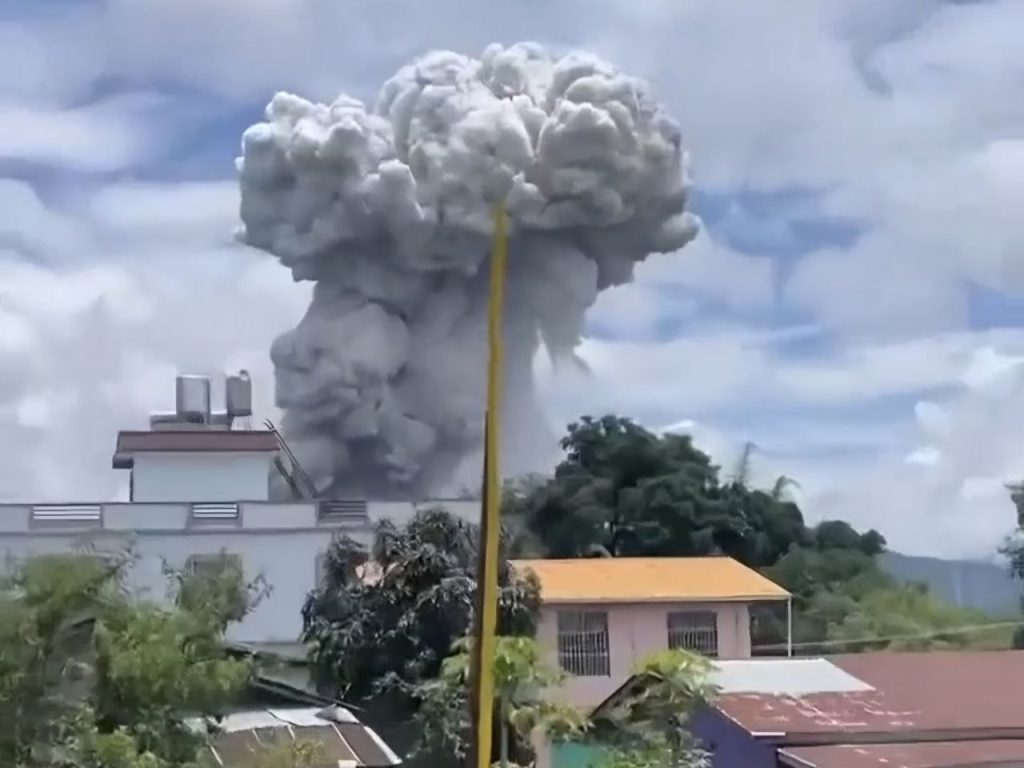
The blast on Sunday was reportedly so powerful that it could be heard and felt miles away. Witnesses described a towering mushroom cloud rising into the sky as homes, shops, and other buildings were torn apart by the force of the explosion.
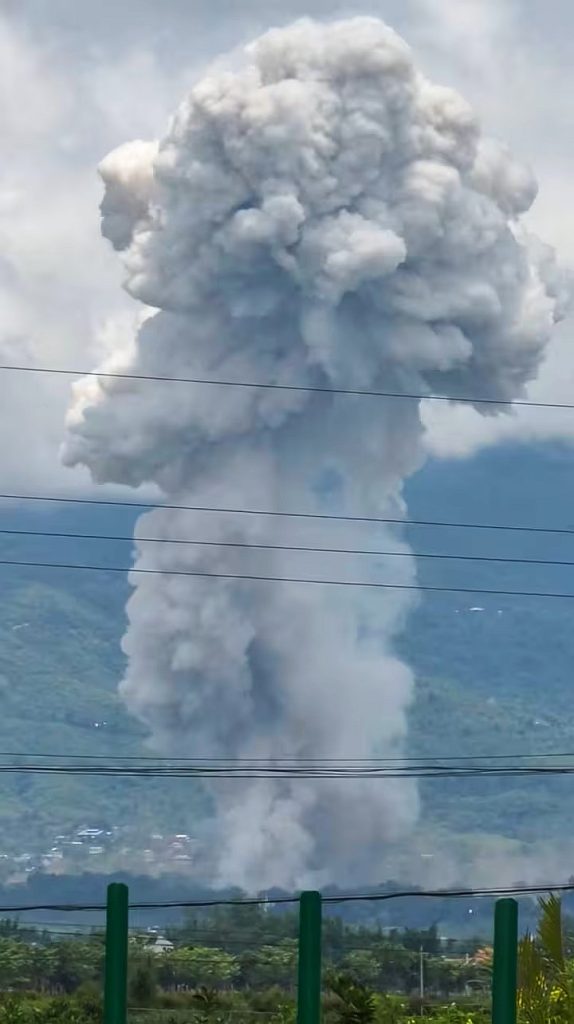
Resident Moe Z, who was travelling with friends about 2.5 kilometres from the site when the blast occurred, described the scene to Reuters.
“Everything was completely destroyed beyond recognition,” he said. Initially, he and others believed they were witnessing an airstrike, a common occurrence in parts of Myanmar’s ongoing conflict zone.
“Based on the explosive force and the sound we witnessed, this was no small explosion, it wasn’t the scale of a drone-drop bomb,” he said.
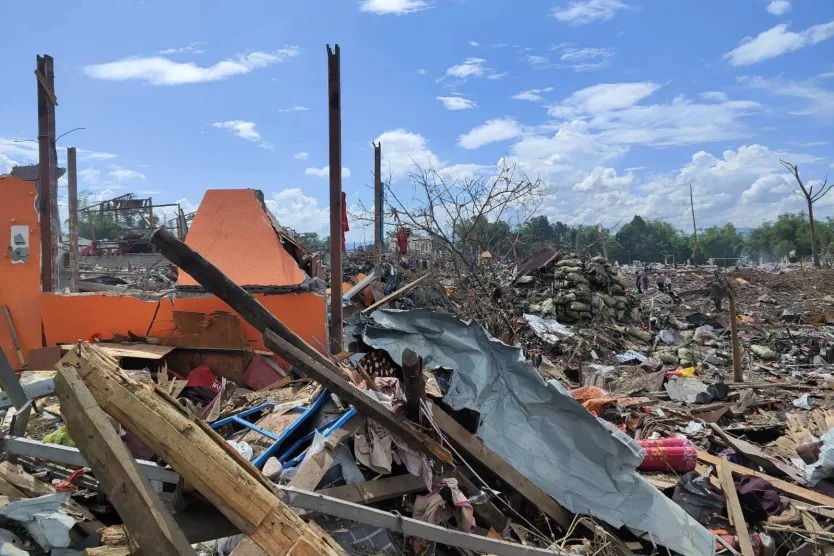
When he reached the village roughly an hour later, the devastation was unlike anything he had previously seen.
“It’s as if the entire village has just vanished,” he said.
The human toll has been particularly severe. Witnesses and rescue workers described bodies and body parts scattered across the area, while many victims remained trapped beneath collapsed structures. Excavators and backhoes have been deployed to help clear the enormous amounts of rubble covering parts of the village.
A local journalist told Reuters that some homes nearest the centre of the explosion had effectively disappeared.
“Over half of the village’s houses have been destroyed. The houses near the centre of the blast were blown completely to pieces, to the point where not even the house posts remain,” the journalist said.
RAPID RESPONSIBILITY
The TNLA has acknowledged responsibility for storing the explosives and issued a public apology following the disaster.
“We deeply apologize for this accident, which has resulted in a tragic loss of lives and immense devastation,” TNLA spokesperson Lway Yay Oo said. She added that more than 200 homes had been damaged, leaving many residents displaced and in urgent need of assistance.
The TNLA stated that the explosives had been stored by its economic department for use in mining and quarrying activities. Reports indicate that the materials included gelignite, a powerful industrial explosive widely used in mining, construction, and rock blasting operations.
While gelignite is commonly used throughout the mining industry, experts note that it can become unstable over time if improperly stored or exposed to unsuitable environmental conditions. Authorities have not yet indicated whether storage conditions played a role in the incident.
The disaster has also renewed scrutiny of Myanmar’s mining sector, particularly in areas controlled by armed groups. The country’s rich mineral deposits, including jade, rare earth minerals, rubies, copper, and other resources, have become increasingly important sources of revenue for both the military government and various ethnic armed organisations.
Many mining operations are located in remote regions where regulatory oversight is limited, creating challenges for safety enforcement and accountability.
THE LATEST TRAGEDY IN MYANMAR
The tragedy unfolded against the backdrop of Myanmar’s continuing civil conflict, which began after the military seized power in a coup in February 2021, overthrowing the elected government led by Nobel Peace Prize laureate Aung San Suu Kyi.
Since then, large parts of the country have become battlegrounds between the military and a wide range of resistance groups and ethnic armed organisations.
The TNLA is part of the Three Brotherhood Alliance, a coalition of rebel groups that launched a major offensive against Myanmar’s military in late 2023. Although the TNLA later entered into a China-mediated ceasefire with the military authorities, tensions remain high and sporadic clashes continue to occur in some areas.
China has been closely monitoring developments in northern Myanmar due to the proximity of the conflict to its border and its substantial economic interests in the region. Chinese state media confirmed that the explosion caused multiple casualties and extensive property damage, while reports indicated that at least one Chinese citizen was among those receiving medical treatment.
For now, attention remains focused on rescue and recovery efforts. Emergency teams continue to search for missing persons, while aid organisations and local authorities work to provide medical care, temporary shelter, and support for families who have lost homes and loved ones.
The TNLA has pledged to hold those responsible accountable once the investigation is complete.
“We will also dedicate our efforts toward ongoing rescue operations and rehabilitation for the affected areas,” said Lway Yay Oo.
As investigators sift through the rubble searching for answers, the disaster serves as a stark reminder of the dangers associated with storing large quantities of industrial explosives near populated communities. For the residents of Kaung Tat village, however, the immediate challenge is far more personal: rebuilding lives after a catastrophe that, in the words of one witness, left an entire village seemingly erased overnight.
Sources: CNN Asia, Reuters, NBC News, Associated Press, CCTV, Shwe Phee Myay News Agency