


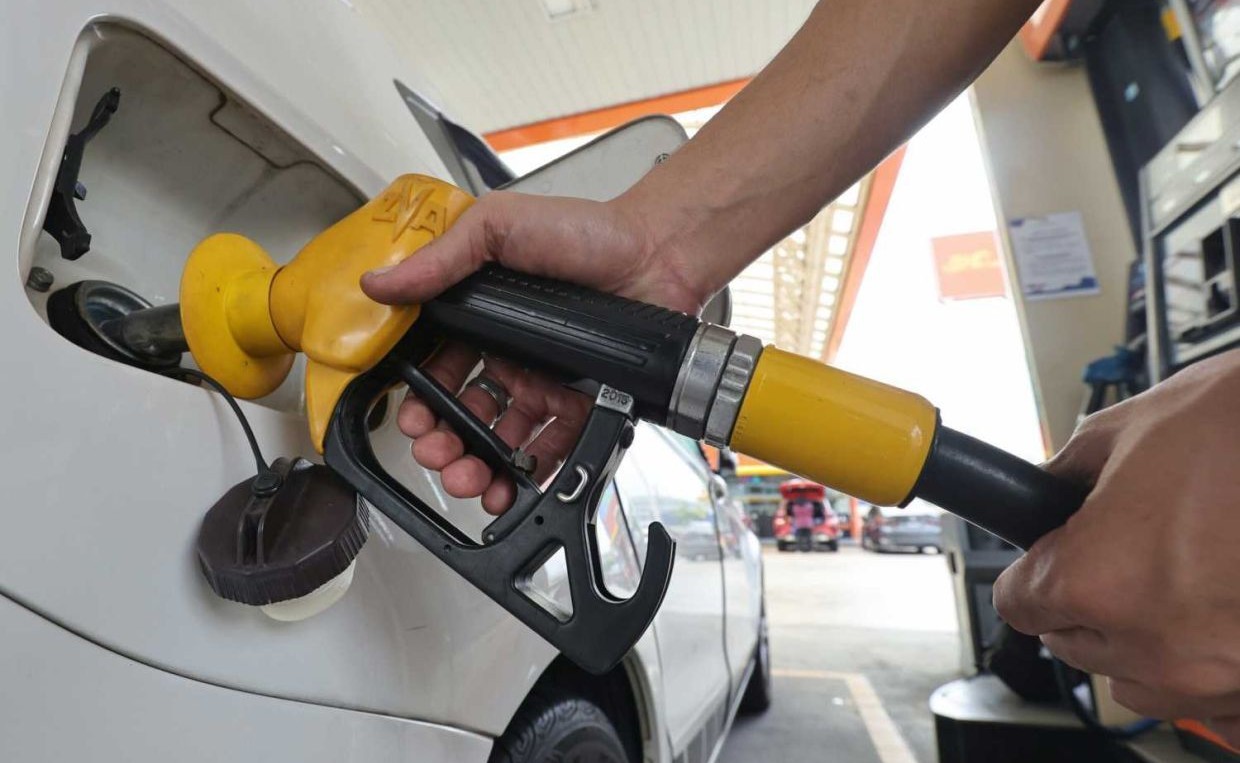
With global crude prices poised to jump as Western markets reopen, the prime minister says Putrajaya will “give the maximum effort” to keep Malaysia’s subsidized RON95 petrol at current prices — though no guarantees are offered.
Malaysia’s long-running fuel subsidy programme is once again in the spotlight.
On Sunday night, March 1, Prime Minister Datuk Seri Anwar Ibrahim said the government would try to maintain the price of RON95 petrol at RM1.99/litre despite mounting global uncertainty following expanding military action in the Middle East and disruptions around the Strait of Hormuz.
Anwar, who also serves as finance minister, acknowledged that rising geopolitical tensions — particularly involving Iran and joint US-Israel military strikes — were already unsettling markets ahead of the reopening of Western trading on Monday night (Malaysia time).
“InsyaAllah, for the people of Malaysia, I will try to ensure there is no increase in fuel prices.
“We will give the maximum effort to hold off (on raising prices). But (the market) is beyond our control, and we cannot guarantee there won’t be any price increase,” he told reporters after a breaking-of-fast event with local community leaders at the Seri Perdana Complex.
OIL MARKETS ON EDGE
The comments came just hours before oil futures were set to resume trading. Early indications from international brokers suggested a sharp reaction. According to London-based brokerage IG, US crude was on track to rise by around 9% when markets reopened. Energy consultancy Rystad Energy warned that Brent crude could spike by as much as US$20 per barrel if tensions escalate or shipping through the Strait of Hormuz is further disrupted.
The Strait remains one of the world’s most critical oil chokepoints, with roughly a fifth of global petroleum liquids consumption passing through it daily. Even limited interference can send prices sharply higher.
OPEC+ has pledged to increase output in an attempt to stabilize markets, but traders remain cautious. According to analysts, risk-off sentiment has already seeped into currency and equity markets, with emerging market currencies, including the ringgit, vulnerable to swings in oil and capital flows.
WHAT IT MEANS HERE IN MALAYSIA
Malaysia is both an oil producer and a net importer of refined petroleum products. While higher crude prices can boost government revenue through Petronas dividends, they also inflate subsidy bills, particularly for widely used fuels such as RON95.
Economists note that a sustained surge in crude prices would put fiscal pressure on Putrajaya, especially as the government works to narrow its budget deficit and reform broader subsidy structures. Fuel subsidies are politically sensitive and closely tied to cost-of-living concerns, particularly among lower- and middle-income households.
For now, Anwar’s message is one of reassurance — but a carefully worded one that stopped short of an absolute commitment.
Holding the RON95 price steady may help cushion consumers in the short term, but the global backdrop is fluid. Much will depend on how oil markets behave in the days ahead, whether shipping disruptions persist, and how OPEC+ production increases filter through supply chains.
Western markets reopening overnight on Monday (Malaysia time) could set the tone. A sharp spike in Brent and US crude benchmarks would immediately sharpen focus on Malaysia’s subsidy exposure.
For motorists, the immediate takeaway is stability — at least for now. It’s also unclear what effect the crisis in the Middle East might have on the higher-priced RON95 meant for foreigners driving Malaysian-registered cars, as well as for corporate fleets. That price currently sits at RM2.59/litre, while RON97 is RM3.15/litre, prices that will be in effect only through March 4. For policymakers, the coming days and weeks may prove a tough balancing act between fiscal prudence and political reality.
Sources: Bernama; The Guardian; Rystad Energy market commentary; IG market data.